Timeline
The Carpenter Center for the Visual Arts, established in 1964, has woven an inspiring timeline of creativity. With its original goals of fostering artistic discourse, it has showcased a diverse range of exhibitions and public programs, captivating audiences with its rich visual tapestry of expression.
2020s
The 2020s began with an unexpected interruption to the Carpenter Center’s exhibition programming when Tony Cokes’s If UR Reading This It’s 2 Late: Vol. 2 closed a month ahead of schedule due to the COVID-19 pandemic. The Center shifted to online programming, finding new ways to engage audiences and continue its commitment to artist-centered exhibitions and contemporary art.
In September 2021, the Carpenter Center reopened to the public with a two-person exhibition featuring tapestries by Diedrick Brackens and paintings by Katherine Bradford, marking a return to in-person exhibitions and public programming.
Since then, the Center has continued to present a range of solo and group exhibitions, including newly commissioned works, alongside public programs, publications, and artist residencies.
The following selection highlights exhibitions and programs that have shaped the Carpenter Center during the 2020s.
2026
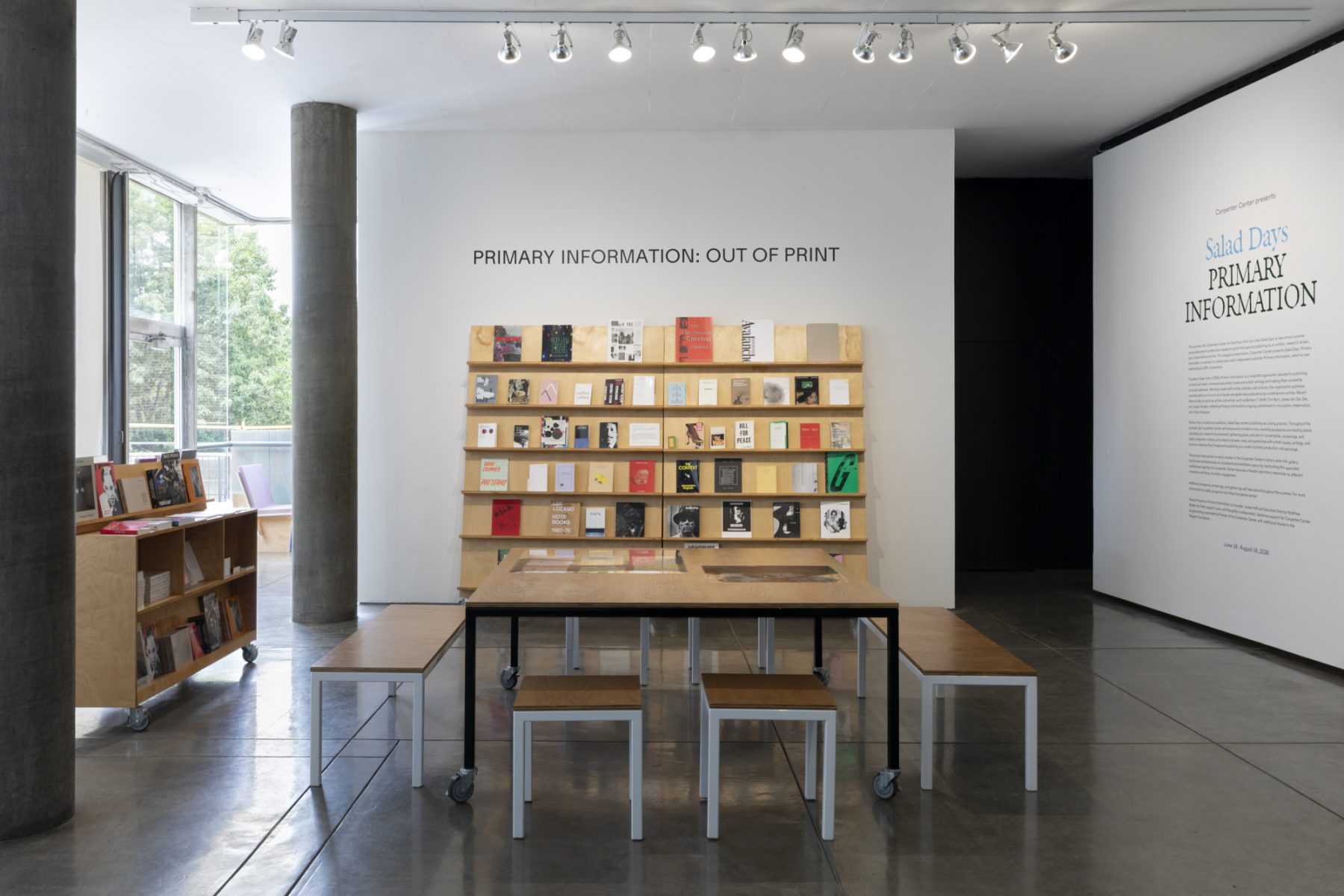
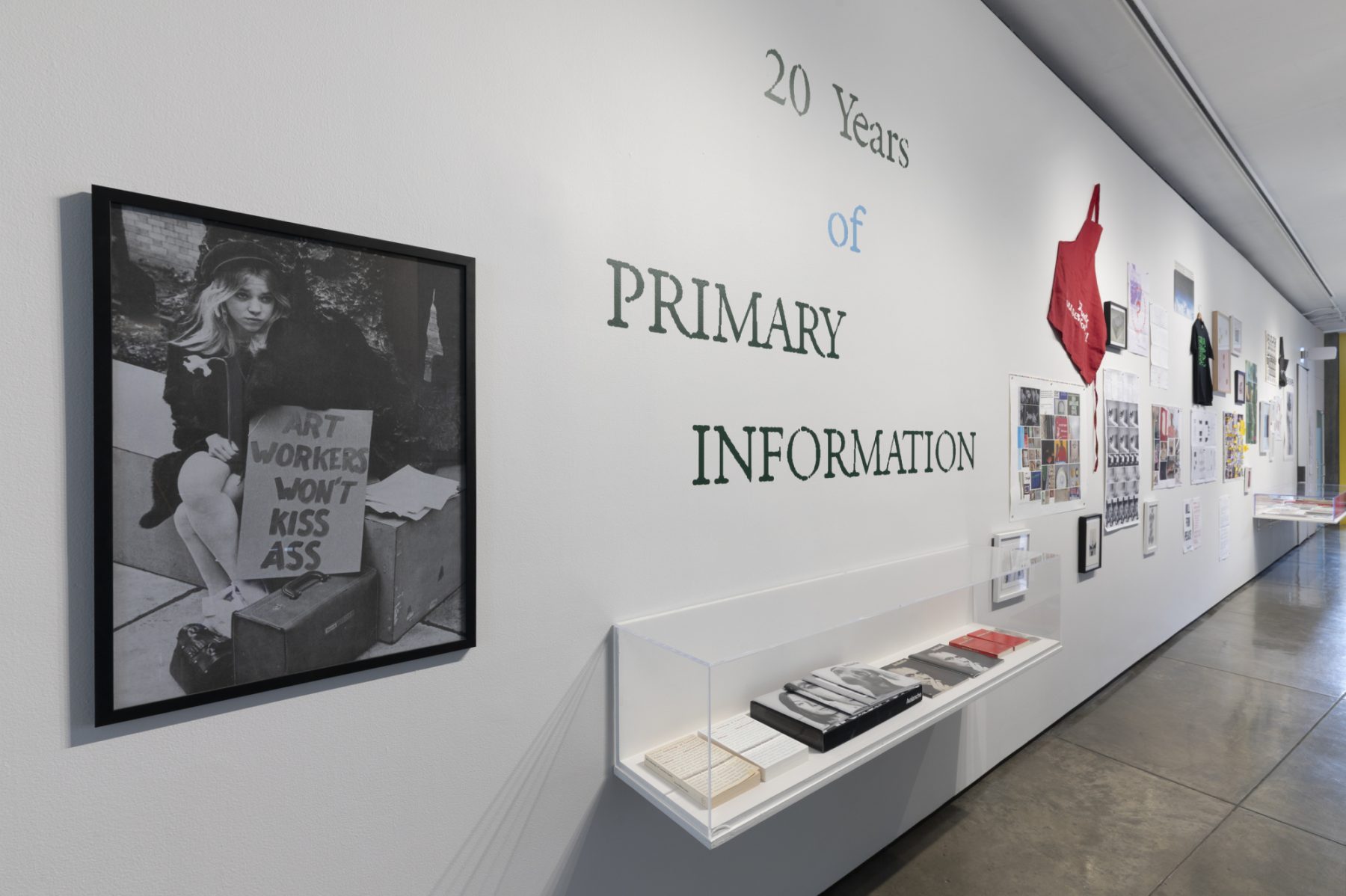
Carpenter Center presents Salad Days: Primary Information
This summer, the Carpenter Center for the Visual Arts launched Salad Days, a new annual summer series dedicated to publication-based projects that explore publishing as an artistic, research-driven, and collaborative practice. The inaugural presentation, Salad Days: Primary Information, is realized in collaboration with independent publisher Primary Information, which is now celebrating its 20th anniversary.
Rather than a traditional exhibition, Salad Days centers publishing as a living practice. Throughout the summer, the Carpenter Center will temporarily transform into a working bookstore and reading space, operating as a research environment, gathering place, and site for conversation, screenings, and public programs. Visitors are invited to browse, read, and spend time with artists’ books, writings, and archival materials that foreground publishing as a mode of artistic production and exchange.
The opening celebration on June 18, featured a conversation between Primary Information co-founder, James Hoff and Arthur Kingsley Porter Professor of Art, Film, and Visual Studies, David Joselit.
Accompanying Salad Days: Primary Information, a screening series expanded on the ideas, histories, and artistic practices represented in the project. Each week, the Carpenter Center presented a film by an artist published by or connected to Primary Information, offering audiences an opportunity to encounter their work beyond the page. Through film and video, the screening program highlights the ways artists have used moving images, performance, and experimental media alongside publishing as sites for artistic inquiry and exchange.
Art, Film, and Visual Studies 2026 Senior Thesis Exhibition: And Yet We Are Dreamers
Grace R. Bida, Katherrin Billordo, Namuungoo Enkhbat, Anne-Charlotte Gillard, Mailyn Gonzalez, Lisa Lin, Madelyn E. McKenzie, Zoë Price, Milo Schwalbe, Taylor Sean Johnson
The 2026 Senior Thesis Exhibition at the Carpenter Center for the Visual Arts, And Yet We Are Dreamers, presents the culminating work of students in Harvard’s Department of Art, Film, and Visual Studies (AFVS). Developed over the course of a year in close collaboration with faculty advisers, each thesis represents an extended inquiry into form, process, and perception.
Unfolding over two-floors, And Yet We Are Dreamers reflects a shared persistence of imagination shaped by lived experience. It holds a sense of looking back toward the dreams, memories, and aspirations that have guided each artist and with an appreciation for how those visions, however uncertain or evolving, have shaped the paths that led to this moment now. At the same time, it acknowledges that such dreams are rarely fixed or fully realized; they shift, fragment, and take on new forms over time. What remains is an ongoing relationship to imagining, making, and becoming.
Working across media including installation, painting, video, sculpture, and text, this year’s thesis cohort engages with themes of memory, repetition, ritual, and the translation of lived experience into material form. From immersive environments shaped by light and sound to process-driven works rooted in gesture and accumulation, the exhibition reflects a wide range of approaches to making and meaning. Together, the theses serve as a constellation of investigations into how we experience and reimagine the world.
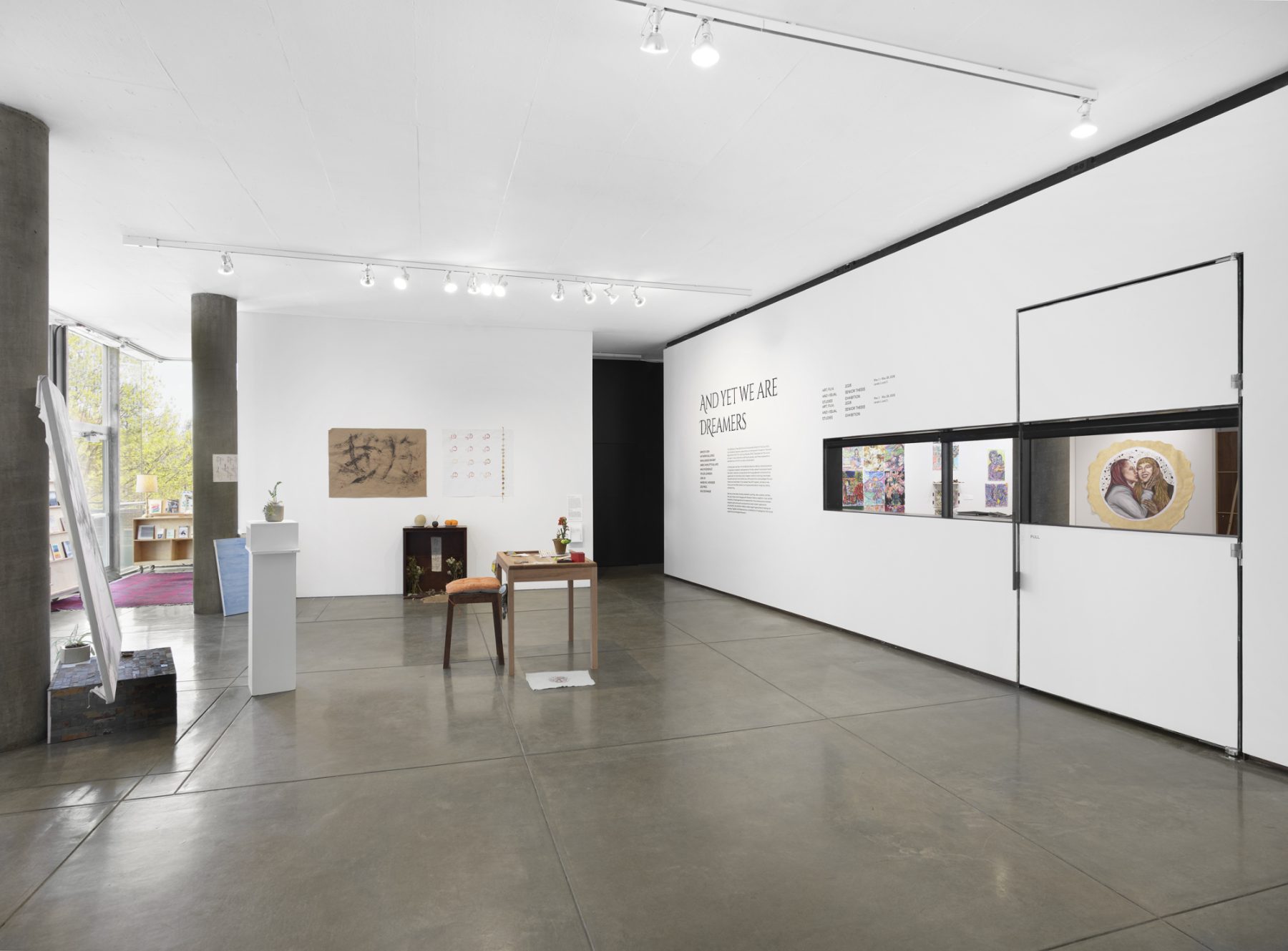
Installation view of Lisa Lin, A Primer in Learning to Fly, Mixed media installation, for Art, Film, and Visual Studies 2026 Senior Thesis Exhibition: And Yet We Are Dreamers. Courtesy of Carpenter Center for the Visual Arts. Photography: Julia Featheringill.
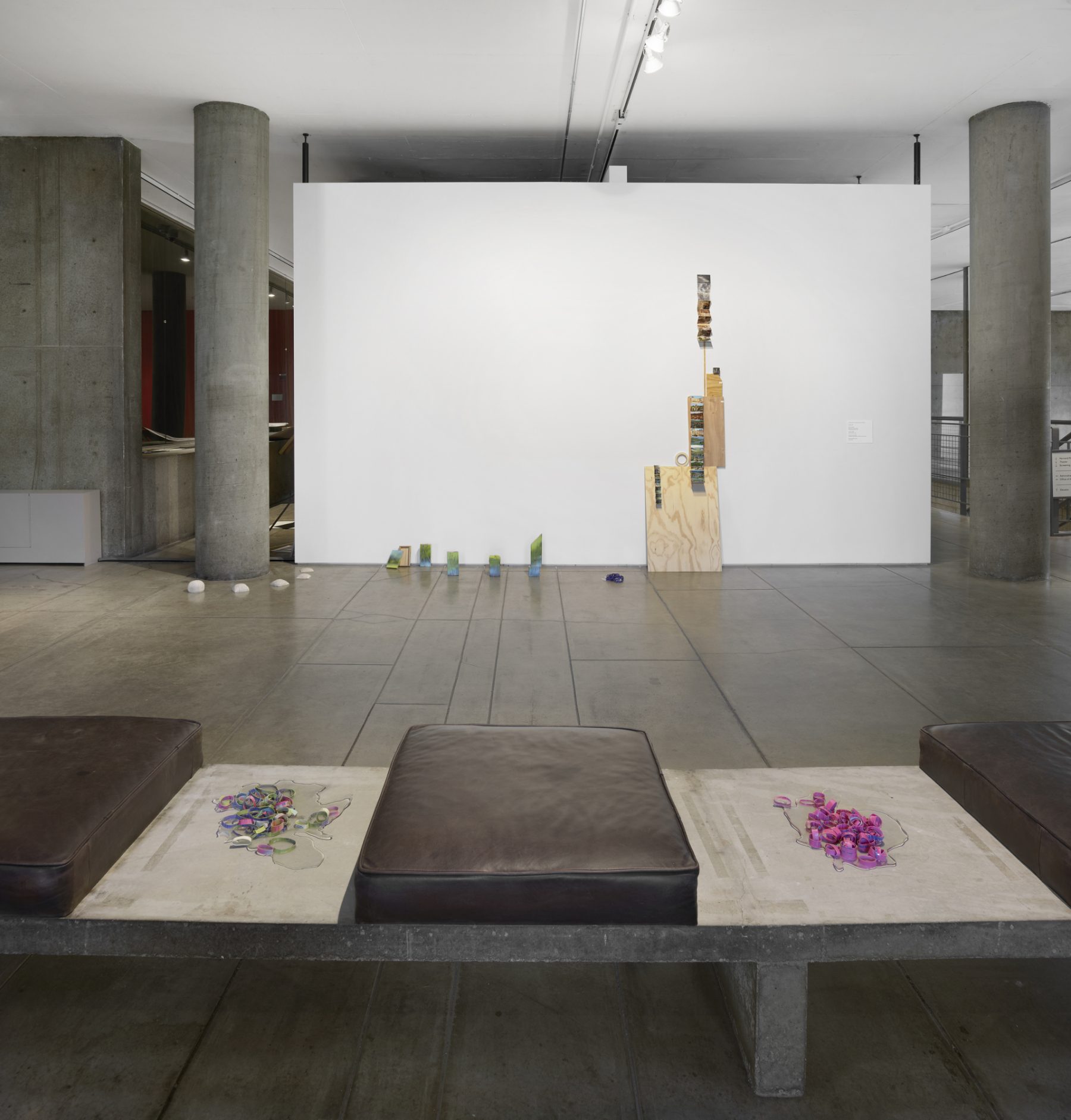
Installation view of Milo Schwalbe, .A353: Views of the Roundness of the Earth (2026) for Art, Film, and Visual Studies 2026 Senior Thesis Exhibition: And Yet We Are Dreamers. Courtesy of Carpenter Center for the Visual Arts. Photography: Julia Featheringill.
April 2, 2026 In Conversation: Professors Patricio del Real, Ana María León, and José Luis Falconi
Professors Patricio del Real, Ana María León, and José Luis Falconi in conversation on the exhibition Signal and Strata and its exploration of geology, capitalism, mythology, and cultural memory.
Patricio del Real is known for his expertise in the field of architecture and architectural history, with a focus in the Americas. He is Associate Professor in the Department of History of Art and Architecture at Harvard University.
Ana María León's work traces spatial practices and transnational networks of power, resistance, and solidarity. Her essays have been published in numerous journals and edited anthologies, she has edited and co-edited special issues on commodity cultures, settler colonialism, and revolution, and is co-founder of several collectives laboring to broaden the reach of architectural history. León is author of Modernity for the Masses: Antonio Bonet’s Dreams for Buenos Aires (2021) and is currently finishing two books, a monograph on spatial solidarities in 1970s Chile and a co-edited collection on spatial histories of unfreedom (with S.E. Eisterer). She is currently Associate Professor at the Harvard University Graduate School of Design.
José Luis Falconi, is a professor of art and human rights at the University of Connecticut, as well as the president of Cultural Agents, Inc., an NGO which promotes civic engagement and creativity through artistic education. From 2001 to 2011, Falconi was the art forum curator at the David Rockefeller Center for Latin American Studies at Harvard University, curating more than thirty shows of cutting-edge Latino and Latin American artists in an academic setting. His latest academic publications include Portraits of an Invisible Country: The Photographs of Jorge Mario Múnera (2010), A Singular Plurality: The Works of Darío Escobar (2013), The Great Swindle: A Project by Santiago Montoya (2014) and Ad Usum / To be used: The Works of Pedro Reyes (2017). His monograph on Mexican artist Pia Camil, There are no Friendly Fires, will be published in 2022.
Ana María León; Jose Luis Falconi; Patricio de Real
March 5, 2026 In Conversation: Danni Shen with Madison Brown and Eugene Wang
Curator Danni Shen in conversation on the exhibition Cosmos Falling, with Madison Brown, John R. and Barbara Robinson Family Curatorial Fellow in Photography at the Harvard Art Museums, and Eugene Wang, Abby Aldrich Rockefeller Professor of Asian Art.
MADISON BROWN is a writer and curator who specializes in the history and theory of vernacular media cultures. Situated at the intersection of photo archives and everyday life, her work explores the politics of visual culture through questions of memory, absence, and power differentials. Madison received her Ph.D. in Screen Cultures from Northwestern University and is currently the John R. and Barbara Robinson Family Curatorial Fellow in Photography at the Harvard Art Museums.
EUGENE WANG is the Abby Aldrich Rockefeller Professor of Asian Art at Harvard University, where he holds positions in History of Art and Architecture, Archaeology, Study of Religion, TDM (Theater, Dance, and Medium), and Inner Asia and Altaic Studies. A 2005 Guggenheim Fellow, he is the art history editor of the Encyclopedia of Buddhism (2004). His research covers Asian Buddhist art as well as Chinese art history. His book, Shaping the Lotus Sutra: Buddhist Visual Culture in Medieval China (2005), on art of worldmaking, received the Sakamoto Nichijin Academic Achievement Award from Japan. He was twice recognized in recent years by the FAS Dean’s Fund for Promising Scholarship. He is the founding director of Harvard CAMLab dedicated to turning cultural-historical knowledge into medial-sensorial experience. The exhibition he curated in 2024, Mawangdui: Art of Life, at the Hunan Museum, won the 2025 iF Design Award from Germany.
Video of this event is available to view here
Danni Shen; Madison Brown; Eugene Wang
February 5, 2026 Artist Talk & Opening Reception for Signal and Strata
Artists Elena Damiani and Ishmael Randall-Weeks joined by moderator Dr. Madeline Murphy Turner for a conversation in our Lower Level Theater, followed by an opening reception on Level 3.
The Artist Talk and Opening Reception for Signal and Strata is part of ArtsThursdays, a university-wide initiative supported by Harvard University Committee on the Arts (HUCA).
Video of this event is available to view here
Elena Damiani; Ishmael Randall-Weeks; Madeline Murphy Turner
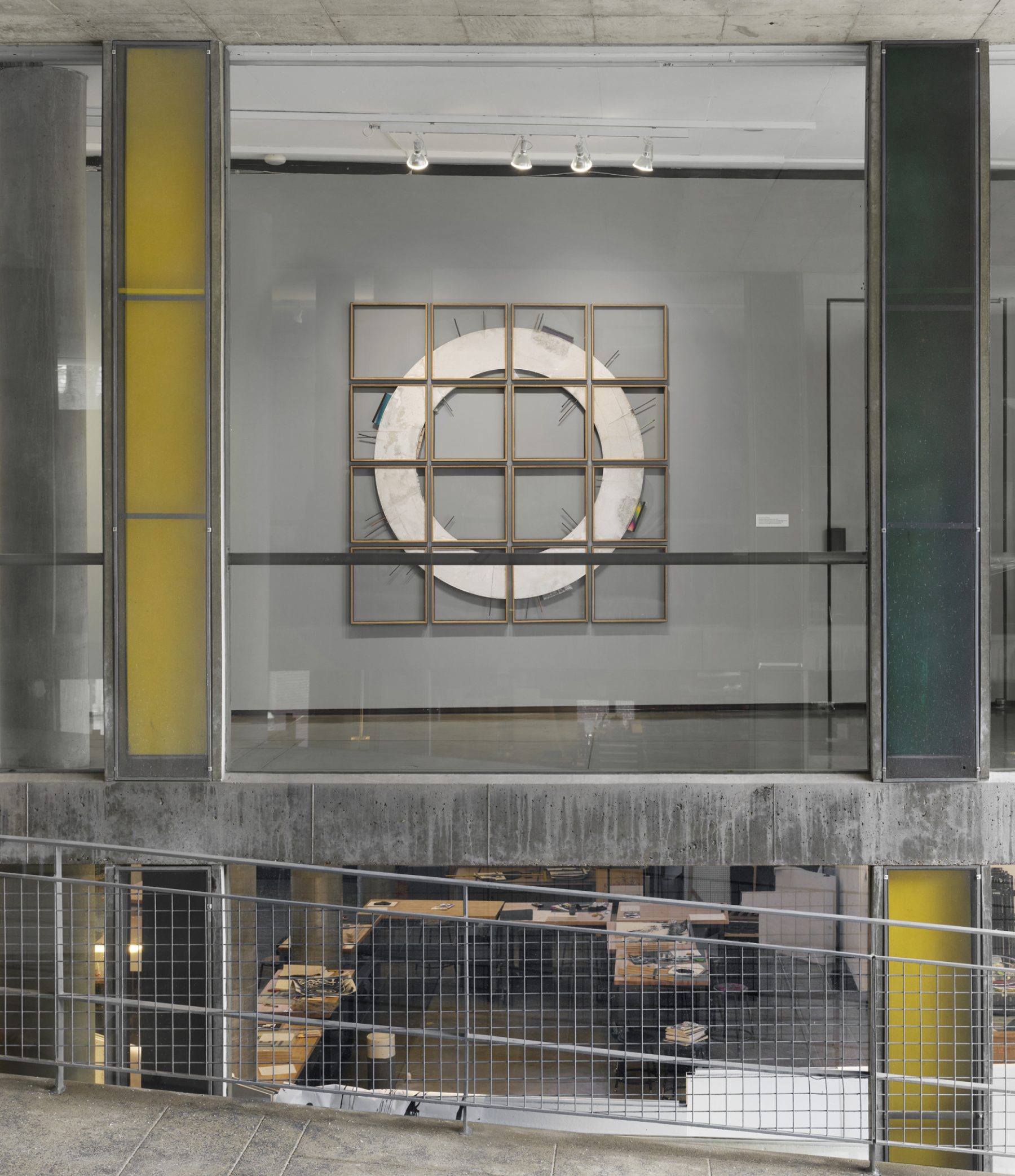
Installation view of Signal and Strata at the Carpenter Center for the Visual Arts at Harvard University, 2026. Ishmael Randall Weeks, Círculo concreto (Concrete Circle), 2021. Grout 700, wood, glass, iron, corrugated steel, 1/4" school pencils and school notebooks from the 1960s–80s. 78 3/4 × 78 3/4 inches (200 × 200 cm). Courtesy of Carpenter Center for the Visual Arts. Photo: Julia Featheringill.
February 5–April 5, 2026
Cosmos Falling
AUX: Intermedia Gallery, Level-1
Cosmos Falling includes works by Xin Liu, (The White Stone, 2021); Lawrence Lek (Geomancer, 2017); Yuyan Wang (The Moon Also Rises, 2023); and Angela Su (Cosmic Call, 2019), which employ pseudo-documentary and speculative fiction as filmic techniques to re-animate the afterlives of technical objects, while also questioning an aesthetics of failure that surrounds the cosmic, technological frontier. From missiles, rockets, comets, satellites, to artificial moons, each narrates what has been left in their wake and what emerges in the terrestrial ruin. Bordering on science fiction with Sinofuturist underpinnings that push beyond cyberpunk tropes, these works also enact a kind of embodied performativity between various bodies and subjectivities that reflect a reverse trajectory: falling from the heavens, cosmic frontier, lower orbit, sky, back to earth.
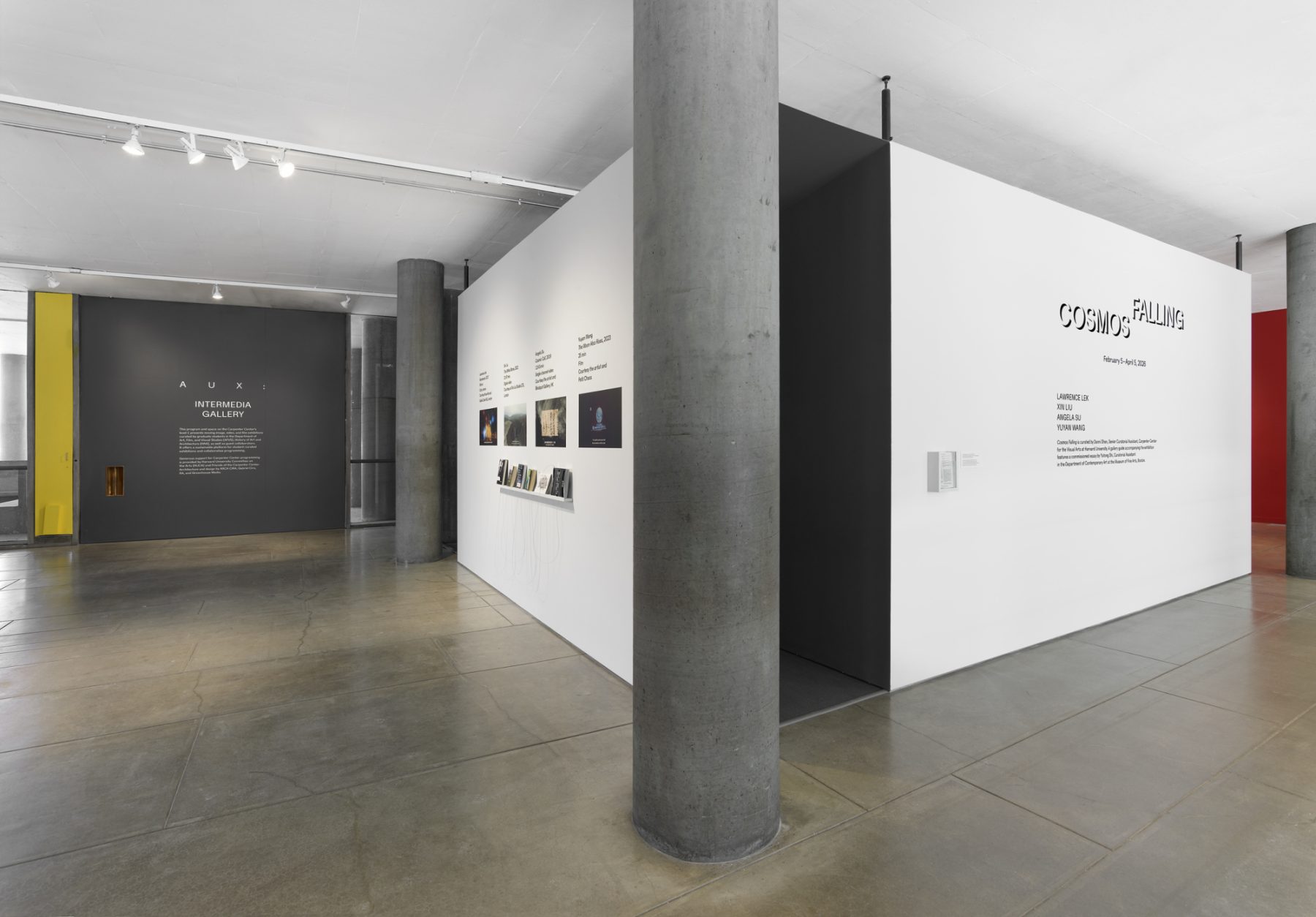
Installation view of Cosmos Falling at the Carpenter Center for the Visual Arts at Harvard University, 2026. Courtesy of Carpenter Center for the Visual Arts. Photo: Julia Featheringill.
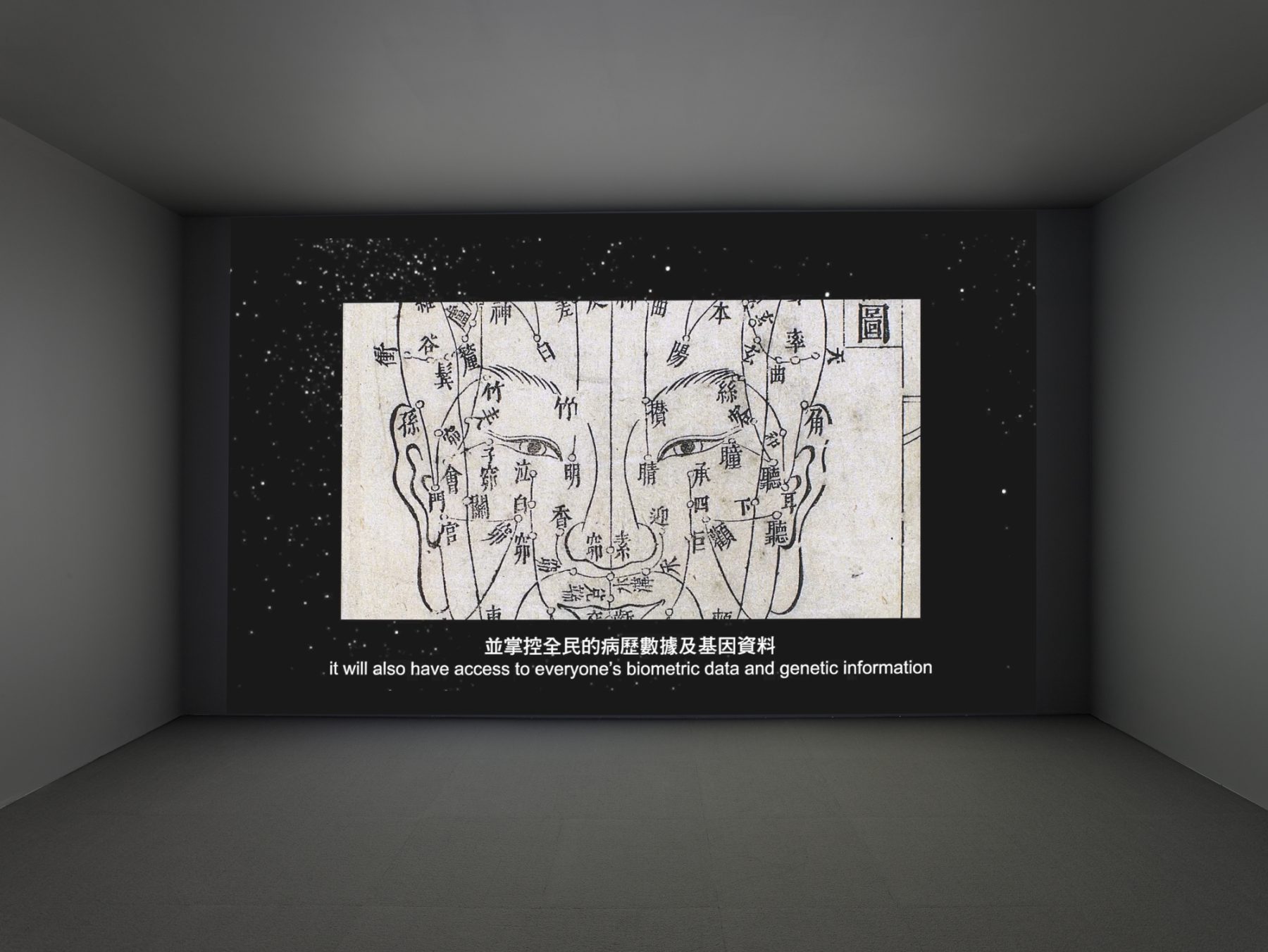
Installation view of Cosmos Falling at the Carpenter Center for the Visual Arts at Harvard University, 2026. Angela Su, Cosmic Call, 2019. Single-channel video,12:43 min. Courtesy of Carpenter Center for the Visual Arts. Photo: Julia Featheringill.
February 6–April 5, 2026
Signal and Strata
Signal and Strata brings together the work of three Peruvian artists—Elena Damiani, Ximena Garrido-Lecca, and Ishmael Randall-Weeks—whose practices examine the complex entanglements of land, history, and extraction through materially rich, architecturally resonant, and often pre-colonial forms. The exhibition marks the first U.S. institutional presentation to bring these artists into direct dialogue, tracing connections across their investigations of geology, capitalism, mythology, and cultural memory.
Working across sculpture, installation, and photography, Elena Damiani explores archeological and archival systems as frameworks for understanding time and perception. Her works reconfigure stratigraphic and sedimentary structures, revealing how natural and human processes become mutually and vitally inscribed in the geological layers of land. Ximena Garrido-Lecca examines the social and environmental consequences of colonization and resource extraction in Peru, often employing copper, clay, and other locally sourced materials that carry histories of labor, tradition, craft, exploitation, as well as possibilities of transformation. Ishmael Randall-Weeks reassembles found and recycled debris—copper, cement, brick, rubber, and earth—into hybrid architectural forms through labor-intensive processes. Each embodies cycles of production and decay, while questioning promises of progress, urbanization, and global supply chains and material culture.
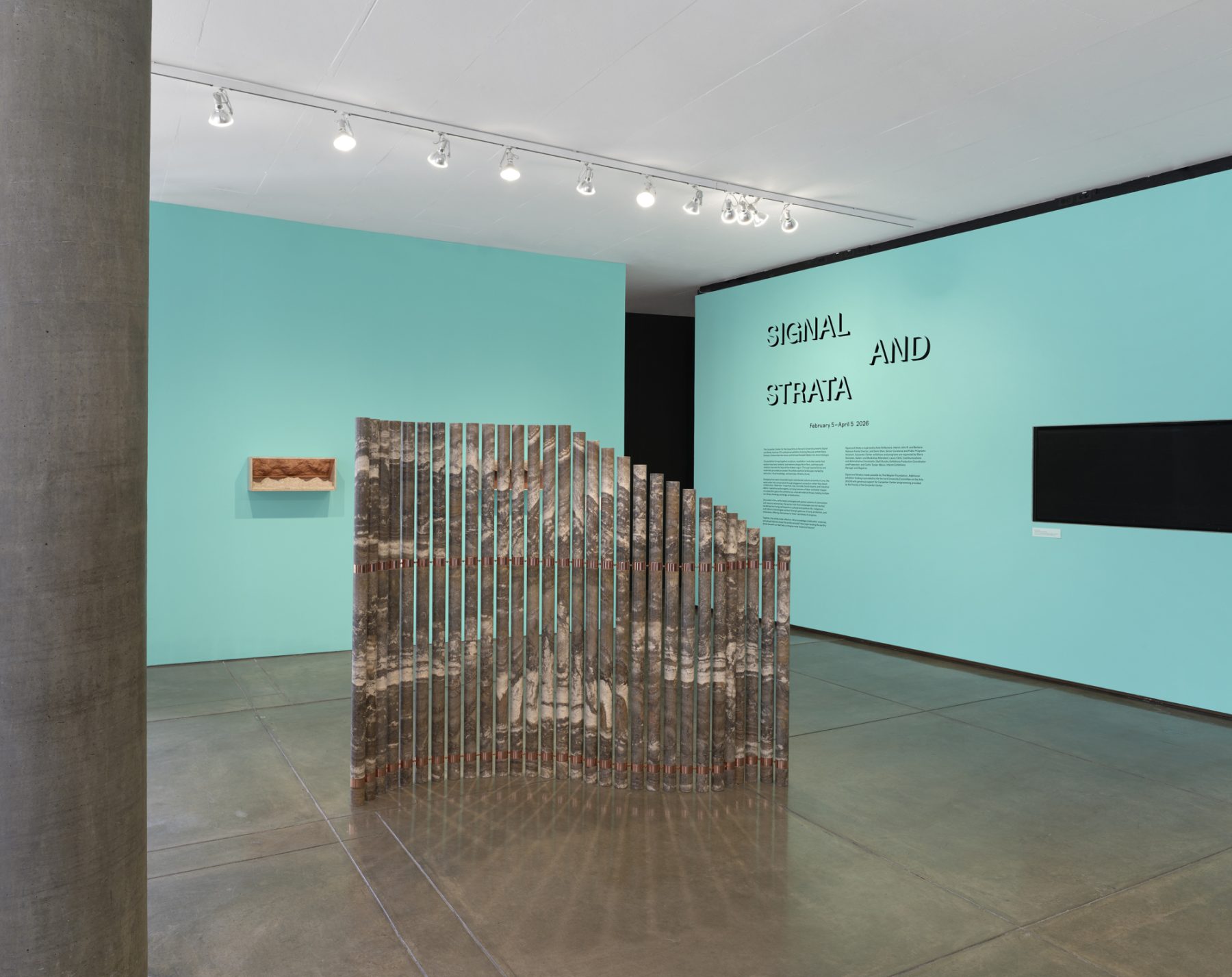
Installation view of Signal and Strata at the Carpenter Center for the Visual Arts at Harvard University, 2026. Elena Damiani, Testigos (after A. Aalto), 2023. 30 elements, hand-carved travertine, copper, steel. 70 7/8 x 95 7/8 x 2 5/8 inches (180 x 243.5 x 6.8 cm). Courtesy of Carpenter Center for the Visual Arts. Photo: Julia Featheringill.
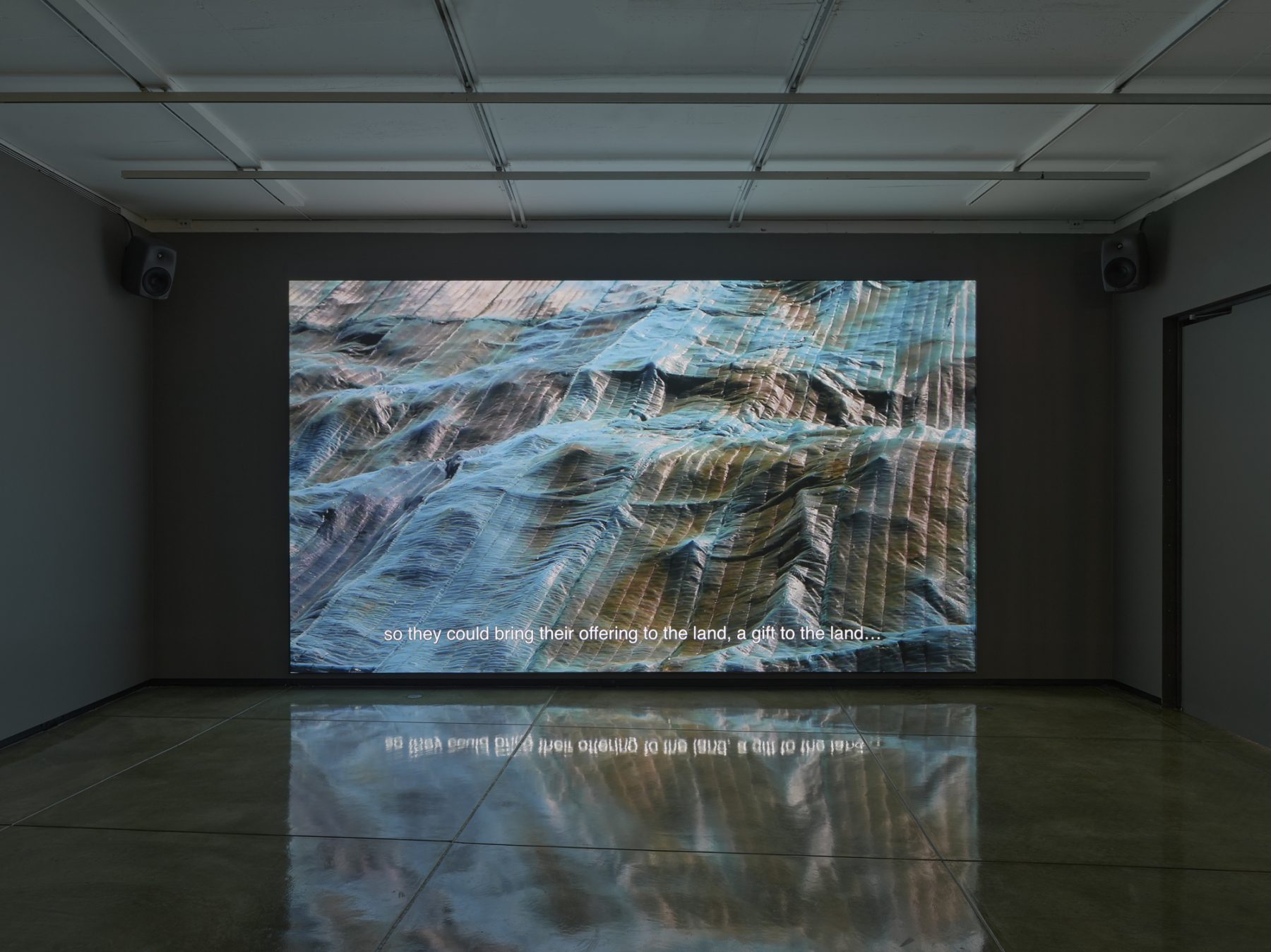
Installation view of Signal and Strata at the Carpenter Center for the Visual Arts at Harvard University, 2026. Ximena Garrido-Lecca, Contornos, 2014. 1-channel video (projection), 10:48 min. Courtesy of Carpenter Center for the Visual Arts. Photo: Julia Featheringill.
2025
October 17–December 21
Cinematic Involutions
Cinematic Involutions brings together six recent moving-image works (2019–2024) by four international artists—Simon Liu, Thuy-Han Nguyen-Chi, Tulapop Saenjaroen, and Yuyan Wang—who turn inward to explore the recursive, self-processing nature of images. The exhibition asks: why make moving images now? In an age marked by political silencing, fractured memory, and digital overstimulation, these artists reveal how the motion of cinema itself can become an act of resistance, reflection, and renewal. Through gestures of repetition, dissolution, and transformation, their works consider how movement—within both bodies and screens—can generate new forms of life and attention.
Dwelling in the recursive rhythms of cinema, the artists of Cinematic Involutions transform loops, glitches, and repetitions into generative acts. From the tactile explorations of slime in Yuyan Wang and Tulapop Saenjaroen’s works to Simon Liu’s dense montage of everyday imagery and Thuy-Han Nguyen-Chi’s cinematic storytelling, each artist offers a distinct engagement with the vitality and instability of the moving image. Together, their works propose that by looking deeper—into the motions that sustain and unsettle us—we might glimpse cinema not as a closed system, but as a living, breathing ecology of relation.
The exhibition is curated by Toby Wu, 2025 Graduate Curatorial Fellow, and Danni Shen, Senior Curatorial and Public Programs Assistant.
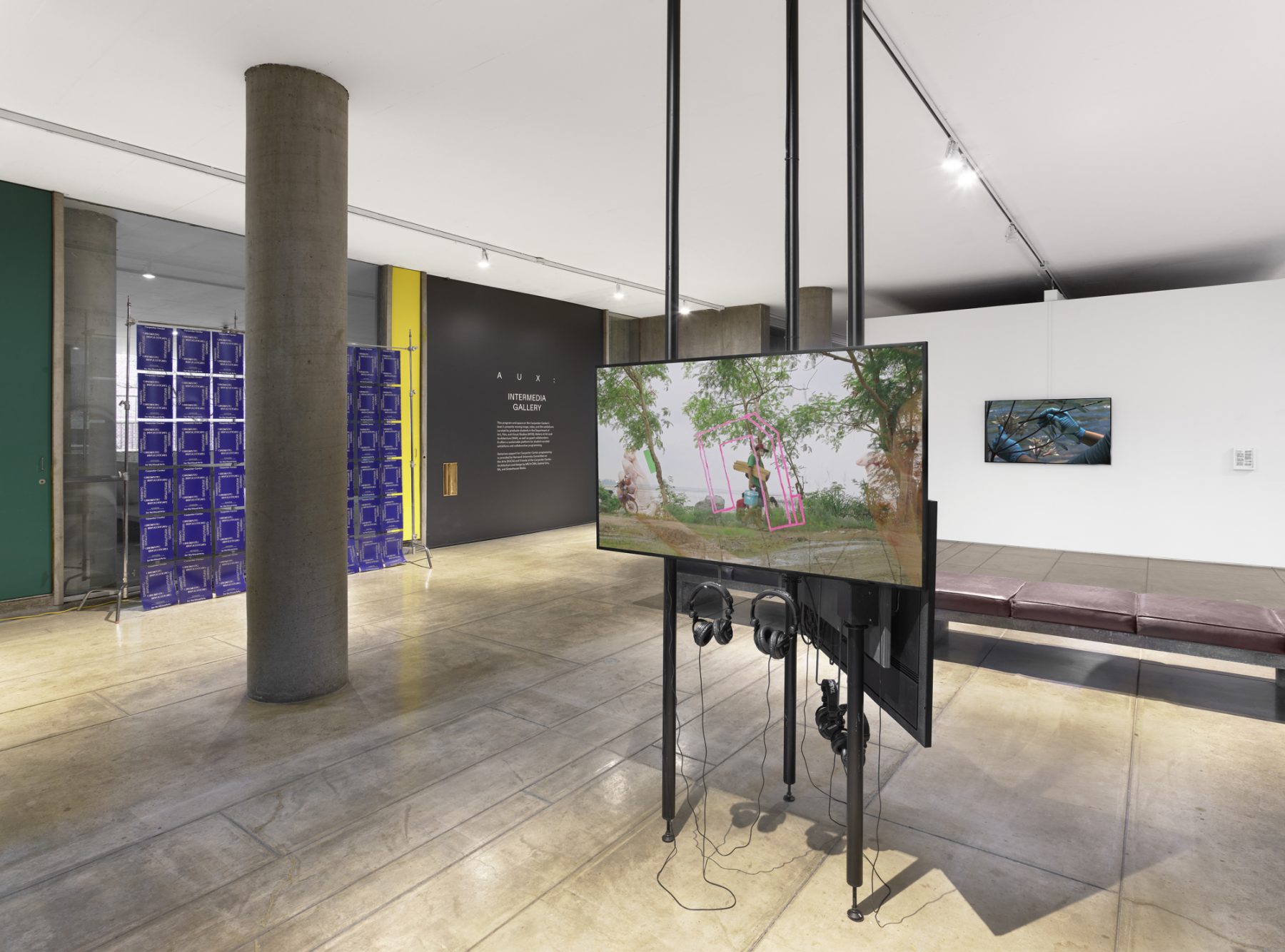
Installation view of Cinematic Involutions at the Carpenter Center for the Visual Arts at Harvard University, 2025. Courtesy of Carpenter Center for the Visual Arts. Photo: Julia Featheringill
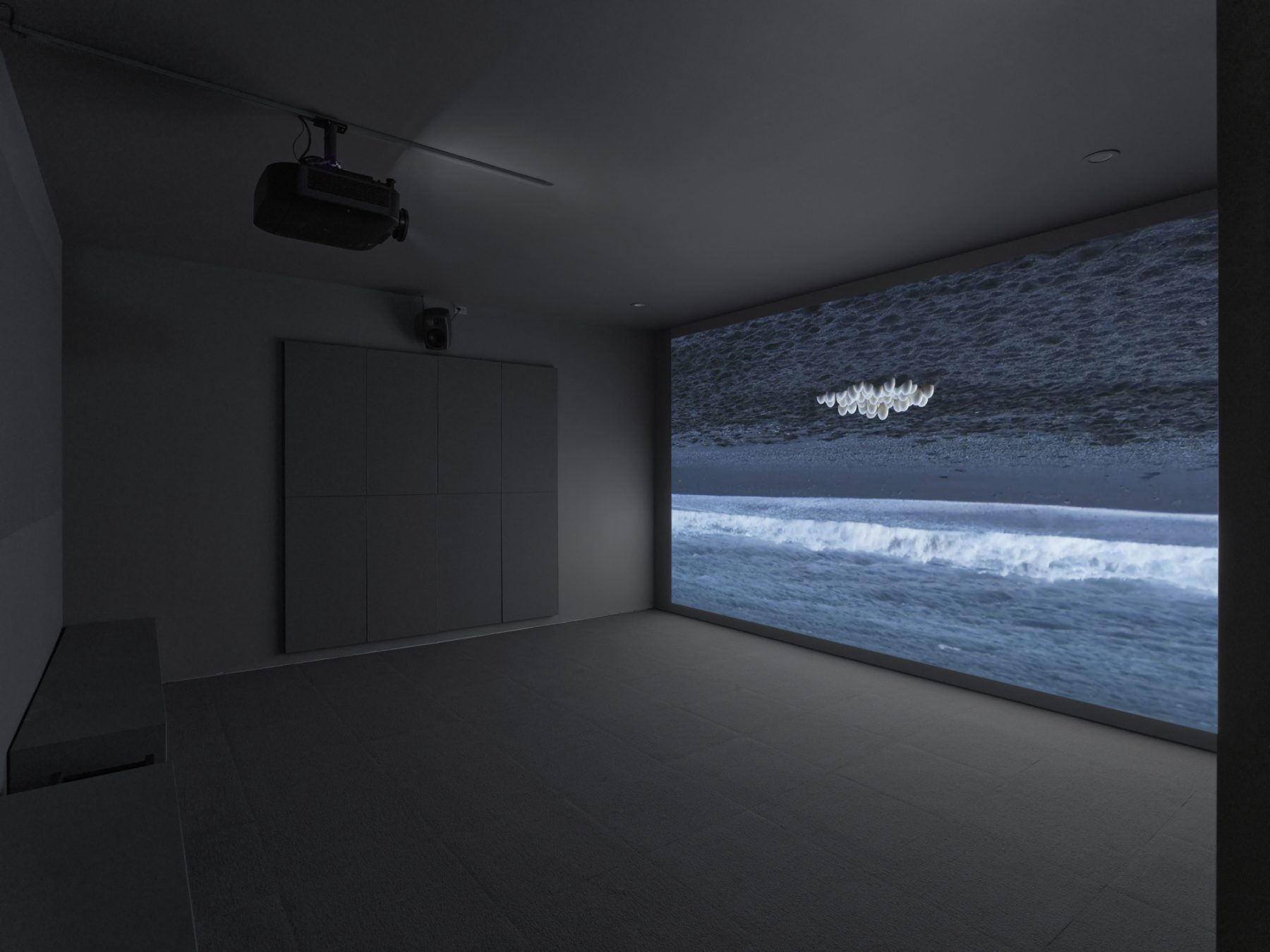
Installation view of Cinematic Involutions at the Carpenter Center for the Visual Arts at Harvard University, 2025. Courtesy of Carpenter Center for the Visual Arts. Photo: Julia Featheringill
October 1–December 21, 2025
Tourmaline: Lives of a Pollinator
The Carpenter Center for the Visual Arts at Harvard University is honored to present Tourmaline: Lives of a Pollinator, the artist’s first U.S. institutional solo exhibition and her first exhibition in her hometown of Boston. On view from October 1 – December 21, 2025, the exhibition features Tourmaline’s film Pollinator (2022), which first premiered in the 2024 Whitney Biennial, alongside a series of photographs— film stills, and archival outtakes—that expand the film’s visionary terrain.
Born and raised in Roxbury, MA Tourmaline is a celebrated artist, filmmaker, writer, and activist, whose deeply poetic practice centers Black trans life, care, and liberation. Grounded in historical reimagination and speculative possibility, her work resists dominate narratives of trauma and erasure, while offering lush, expansive portraits of Black trans kinship, ecological attunement, and radical pleasure. In the film Pollinator, Tourmaline appears in early 20th-century costume, moving slowly through the Brooklyn Botanical Garden and the Edwardian period rooms at the Brooklyn Museum. Her quiet gestures—brushing against petals, lingering among artifacts—are juxtaposed with archival footage of trans activist and Street Transvestite Action Revolutionaries (S.T.A.R.) co-founder Marsha P. Johnson, interspersed with home videos of the artist’s late father and interviews with Johnson’s friends. An intricate montage unfolds around a central motif: the flower. It appears in Tourmaline’s headdress, in Johnson’s flower crown, and eventually floats down the Hudson River during a memorial for Johnson. Through these tender connections, Tourmaline invokes the action of pollination—linking generations, transmitting memory, and nurturing community.
Tourmaline: Lives of a Pollinator will transform the Carpenter Center into an expanded site of memory, imagination, and community. In addition to the film and photographic works, a reading and engagement area—developed in close collaboration with the artist—will feature a curated library of texts on Black trans liberation, abolitionist thought, and queer ecologies. The space will also highlight Tourmaline’s recently published biography on Marsha P. Johnson, a vital contribution to queer and trans historical scholarship, and serve as the setting for a season of public programming, including reading groups, collaborative workshops, and intergenerational gatherings.
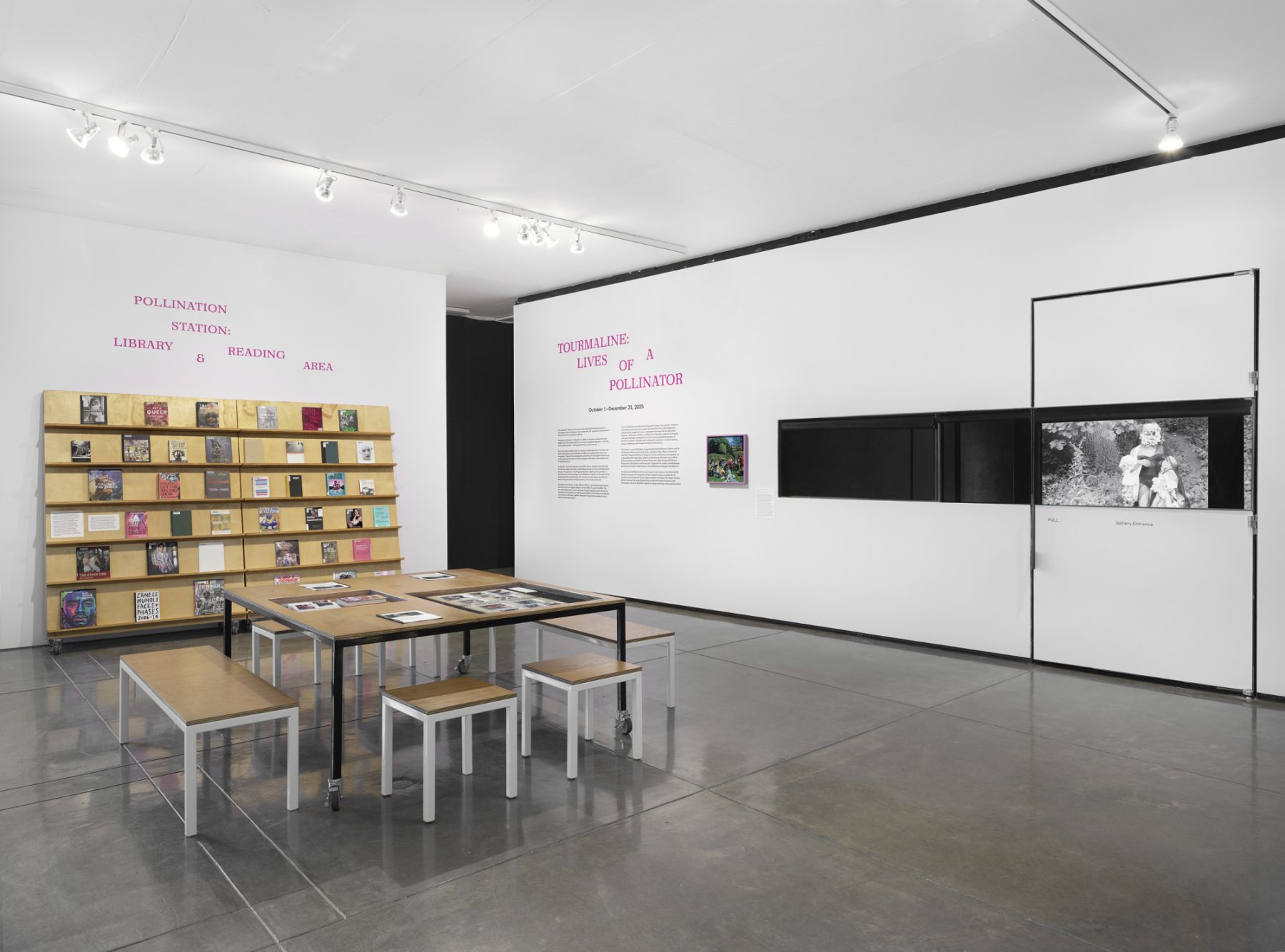
Installation view of Tourmaline: Lives of a Pollinator at the Carpenter Center for the Visual Arts at Harvard University, 2025. Courtesy of Carpenter Center for the Visual Arts. Photo: Julia Featheringill.
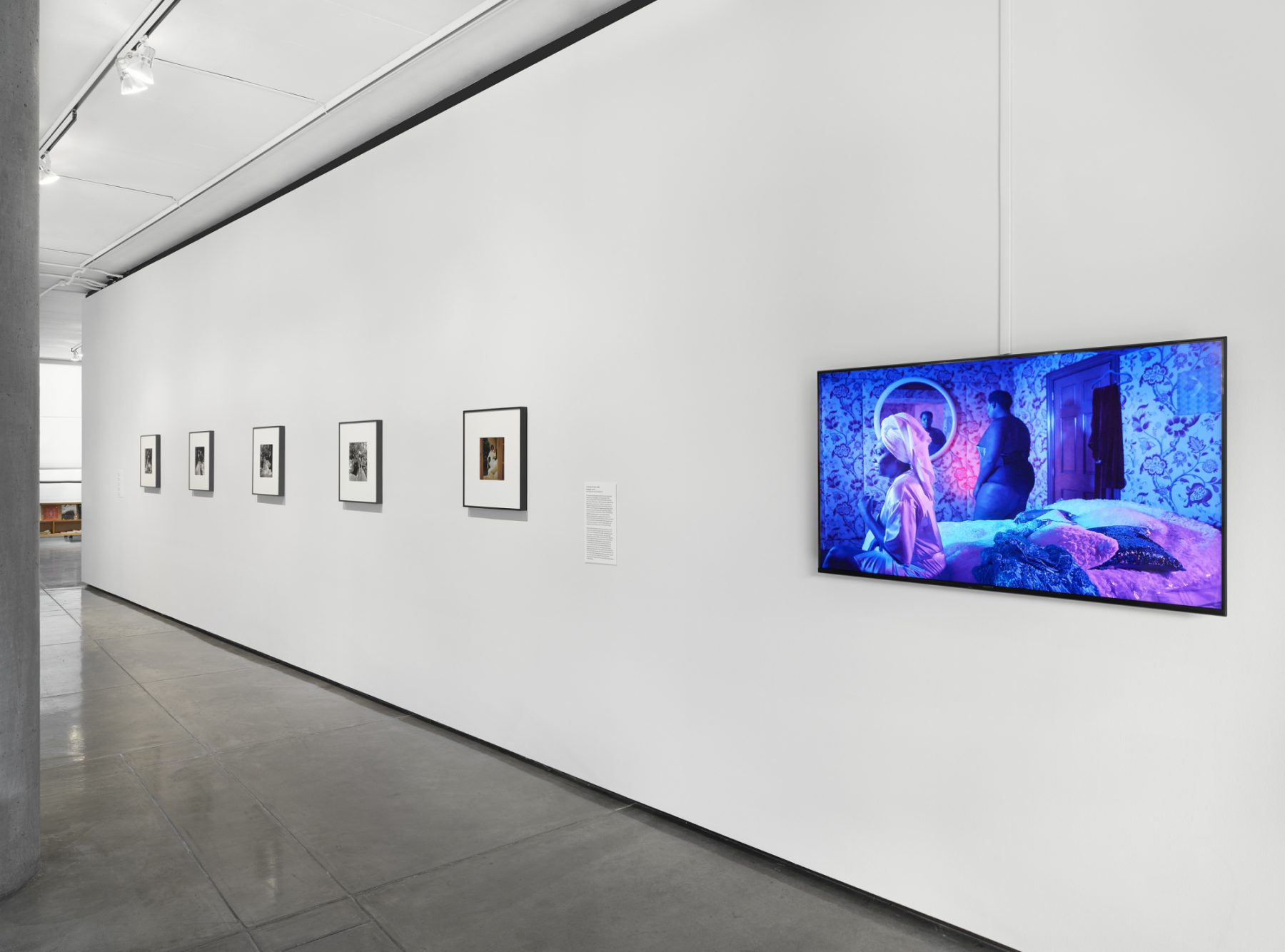
Installation view of Tourmaline: Lives of a Pollinator at the Carpenter Center for the Visual Arts at Harvard University, 2025. Courtesy of Carpenter Center for the Visual Arts. Photo: Julia Featheringill.
September 30, 2025
Talk and Opening Reception for Tourmaline: Lives of a Pollinator
This talk and Opening Reception celebrated the opening of Tourmaline: Lives of a Pollinator. Tourmaline was in conversation with Giselle Byrd. Tourmaline's publications, Marsha: The Joy and Defiance of Marsha P. Johnson and One Day in June will be available in the Carpenter Center's bookshop for the duration of the exhibition.
Giselle Byrd is the Executive Director of The Theater Offensive, located in Boston, MA, making her the first Black trans woman to lead a regional theatre company in the United States, where she is passionately continuing and amplifying the theater’s mission for uplifting and elevating the work of queer and transgender artists of color and LGBTQIA2S+ youth and their allies. She was recently appointed to the Massachusetts Commission on The Status of Women, making her the first trans woman of color to serve on the commission where she plans to continue their mission to advance women and girls toward full equity in all areas of life and to promote rights and opportunities for all women and girls, ensuring that trans women and girls are not an afterthought. As a producer, she holds the honor of being the first transgender woman to be accepted into Through Her Lens: The Tribeca and Chanel Women's Filmmaker Program. In November 2024, Boston’s 25th Annual Transgender Day of Remembrance Committee awarded her the inaugural Boston Trans Art & Culture Trendsetter Award, following the announcement that her efforts in conjunction with The Theater Offensive caused Boston’s City Council to officially commemorate Transgender Day of Remembrance.
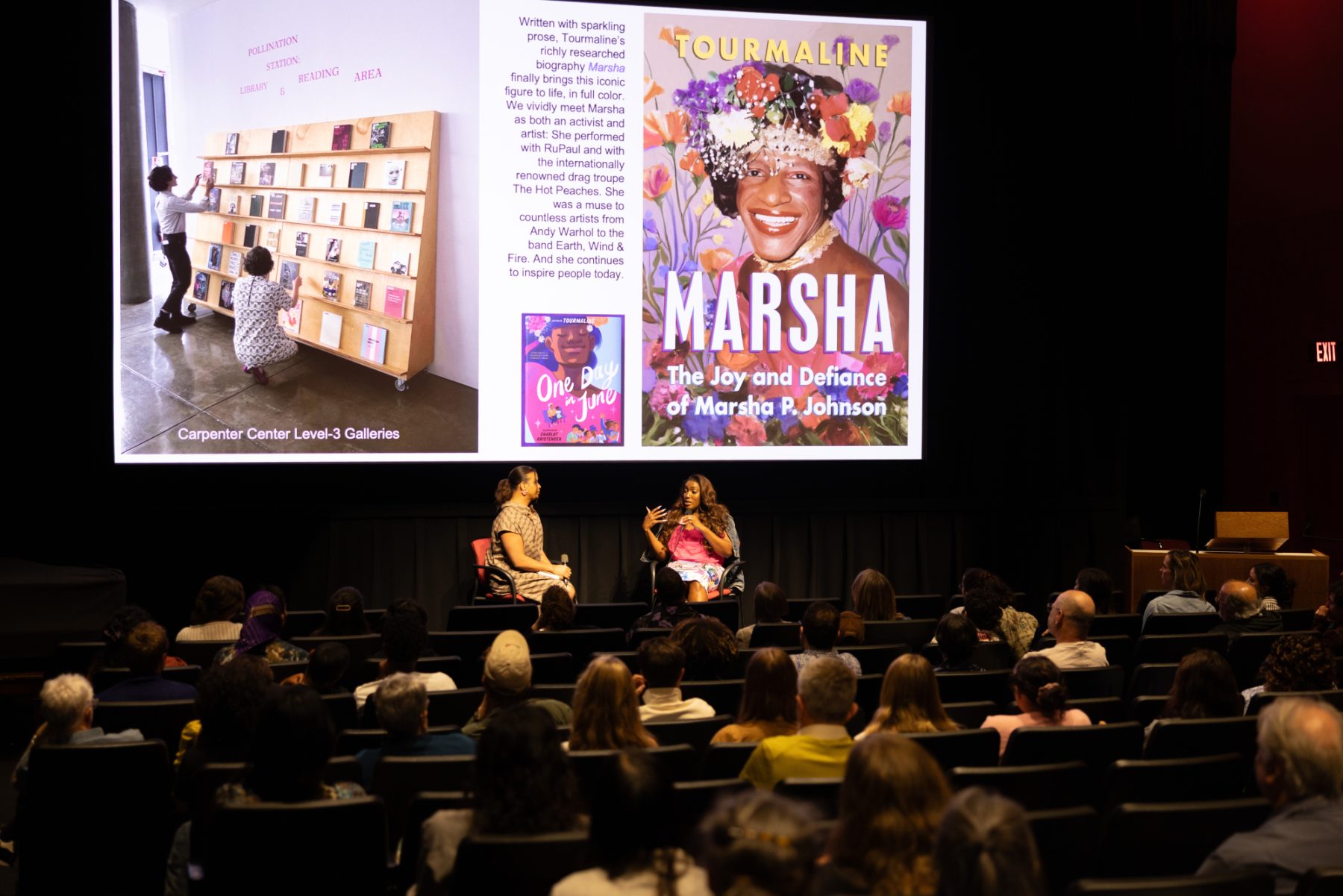
Photography by Susan Young
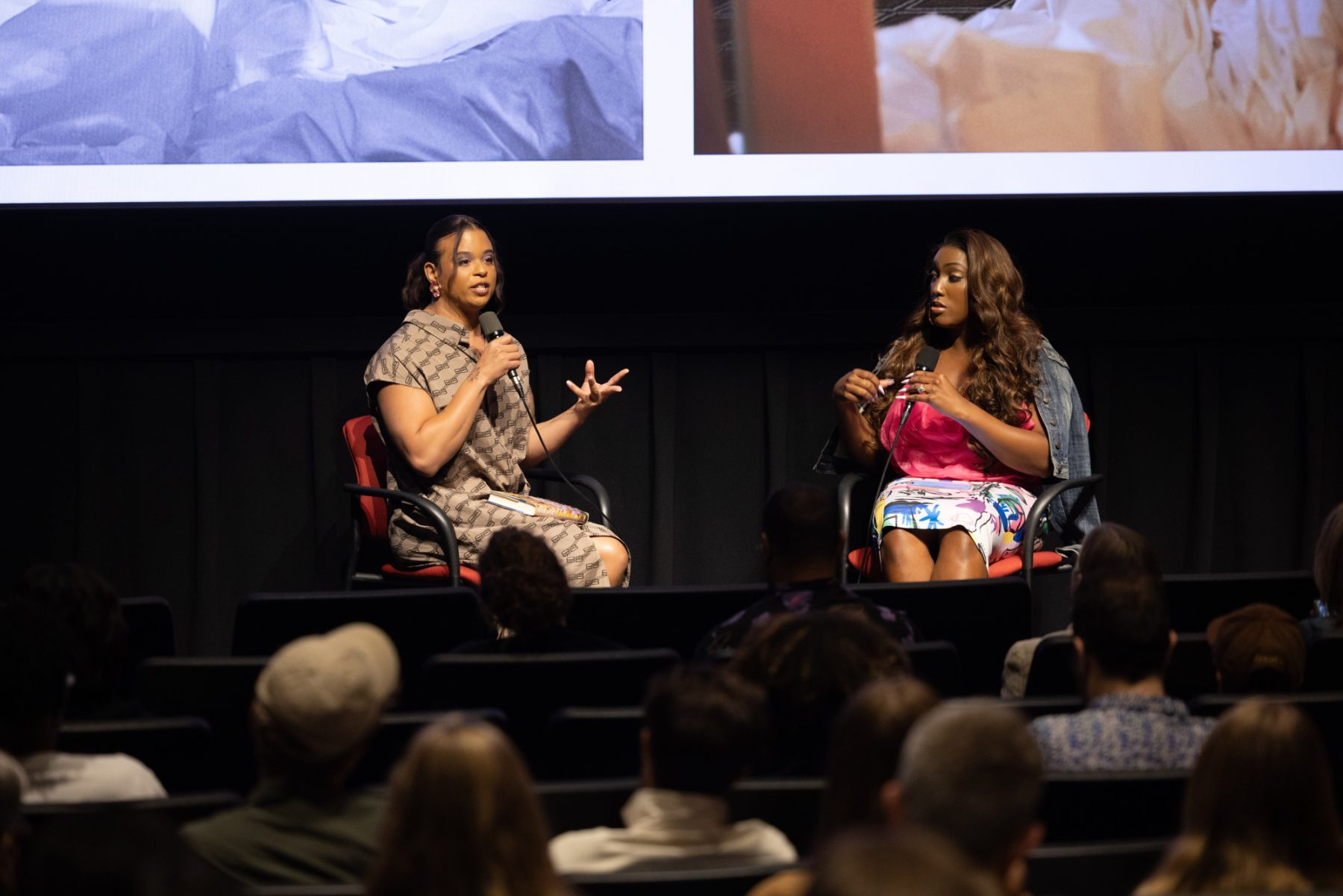
Photography by Susan Young
May 3–May 29
Art, Film, and Visual Studies 2025 Senior Thesis Exhibition: Woosah!
Woosah (wü-sah): a term that is commonly used to depict a state of calmness, relaxation, or stress relief. Today, ‘Woosah’ is often used as a way to remind oneself to stay calm and collected during stressful or overwhelming moments.
The exhibition featured works by Allanah Rolph, Alex Lee, Cameron Y. Hosein, Ciana King, Gabi Maduro-Salvarrey, Tiffany Onyeiwu, Tamar Sella, Rodrick Howard, and Haley H. Algrant.
For many Art, Film, and Visual Studies students, the senior thesis is the capstone experience in the department. Students conceive their theses in conjunction with the department and work closely with faculty members as principal advisers. Throughout the yearlong process, students develop and refine their ideas into a thesis work, concluding with its presentation in this annual exhibition.
The Department of Art, Film, and Visual Studies is home to a range of studio and theoretical studies in the arts at Harvard University. It offers courses in painting, drawing, sculpture, film, video, and animation, as well as photography, film history, the built environment, and contemporary art. The academic experience transpires in the Carpenter Center for the Visual Arts, where thinking and making intersect to enable students from a variety of disciplinary studies to be aware of their visual environment.
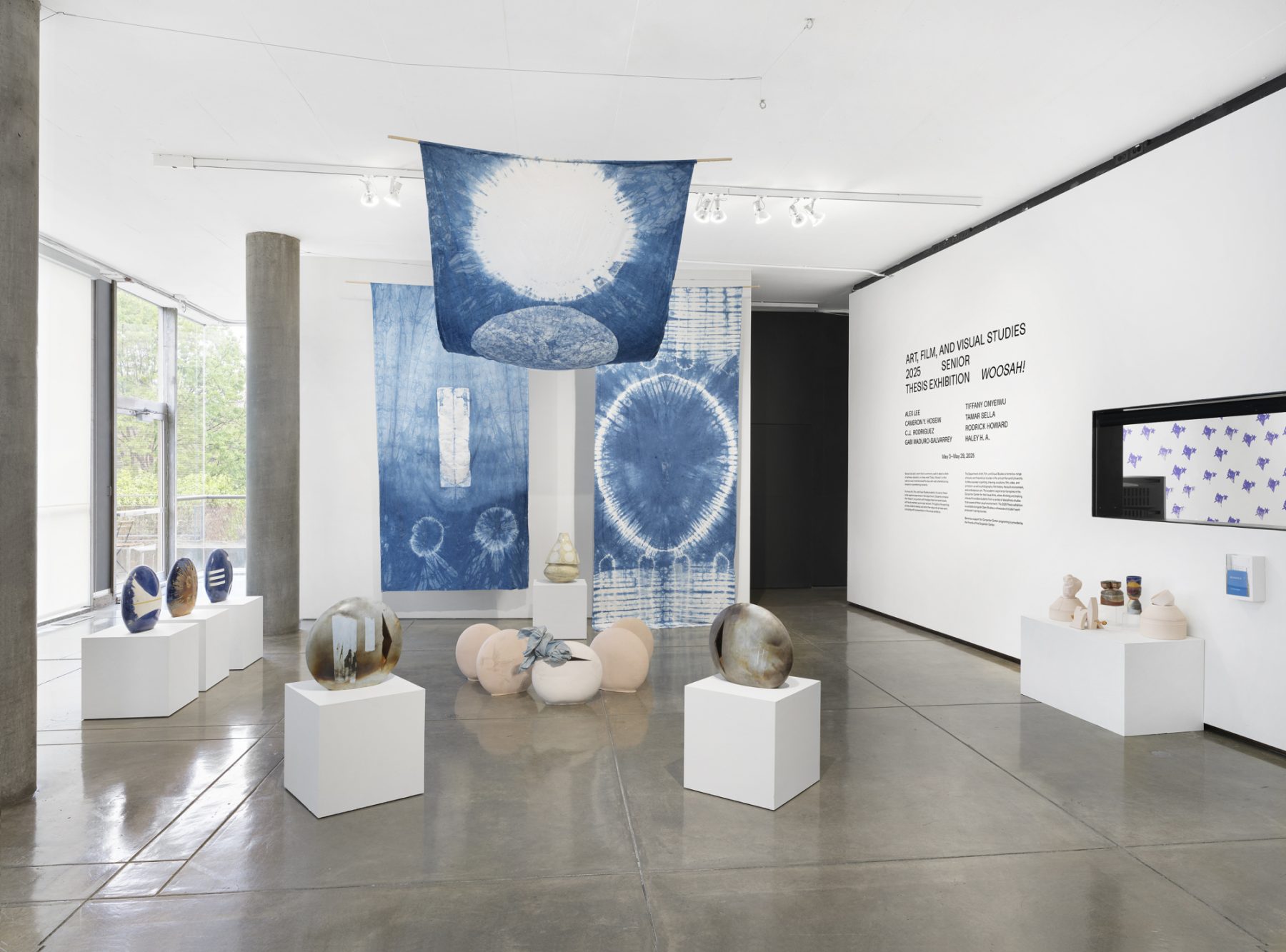
Installation view of Tiffany Onyeiwu, IHUNANYA II, 2025, for Art, Film, and Visual Studies 2025 Senior Thesis Exhibition: Woosah! Courtesy of Carpenter Center for the Visual Arts. Photography: Julia Featheringill.
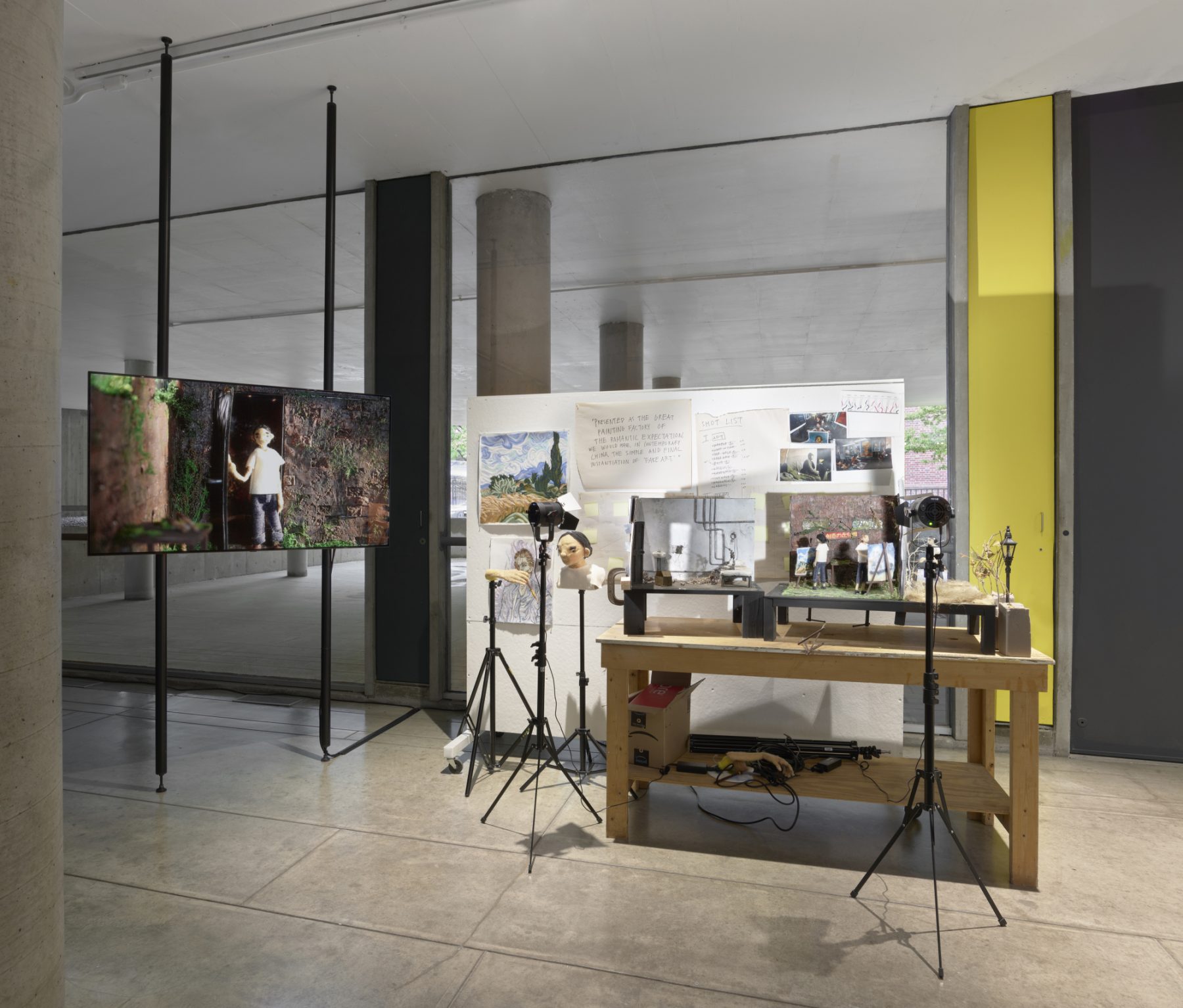
Installation view of My Van Goghs, 2024–25, for Art, Film, and Visual Studies 2025 Senior Thesis Exhibition: Woosah! Courtesy of Carpenter Center for the Visual Arts. Photography: Julia Featheringill.
January 30–April 6, 2025
Janiva Ellis: Fear Corroded Ape
In preparing for her exhibition at the Carpenter Center, Janiva Ellis reengaged with paintings that had remained unfinishable in her studio for years, floating in and out of her consciousness. The artist has called these “dust bunny ideas”—hard-to-resolve paintings that settle into corners of her studio to be continuously reworked, with long breaks in between. As a result, much has changed in the world during their long gestation. Fear Corroded Ape asks what it means to assemble a group of “unresolvable” images.
Ellis reconfigures a broad array of imagery from art historical portraiture and landscape conventions, animation, and popular culture into dissonant scenes. By turns explicit and obscuring, her paintings narrativize white existentialist mythology alongside social degradations and the brutal, nuanced forces that enable their denial. Employing a broad range of techniques and motifs, Ellis operates beyond the mere exposure of these forces, manipulating their sentimental resonances to reveal the desires inherent in cultural canonization.
In her recent works, Ellis has excavated historic architectures and landscape as sites of modern ruin, imbued with cultural myths and violence. Amid debris, seemingly recognizable characters hover over crevices and fragments, unfinished passages that function beyond abstraction or as portals to other worlds. Here Ellis pictures our contemporary moment of falling empires and epistemologies often fronted by shining symbols. This is an aesthetics of aspiration becoming failure, providing a kind of forensics that reveals how Western painting has glorified moments of violence as art history. Ellis’s work intervenes at the junction of destruction and creation by showing the painting’s ability to conceal, for example, the institution of whiteness as a quasi-heroic yet insidious specter in the canon. Ellis demonstrates how mythologies, once created, may be destroyed or fractured and refracted into newly estranged elements and arrangements. In moments where the dust never quite settles, each painting moves beyond the weight of finality, embracing possibility within precarity.
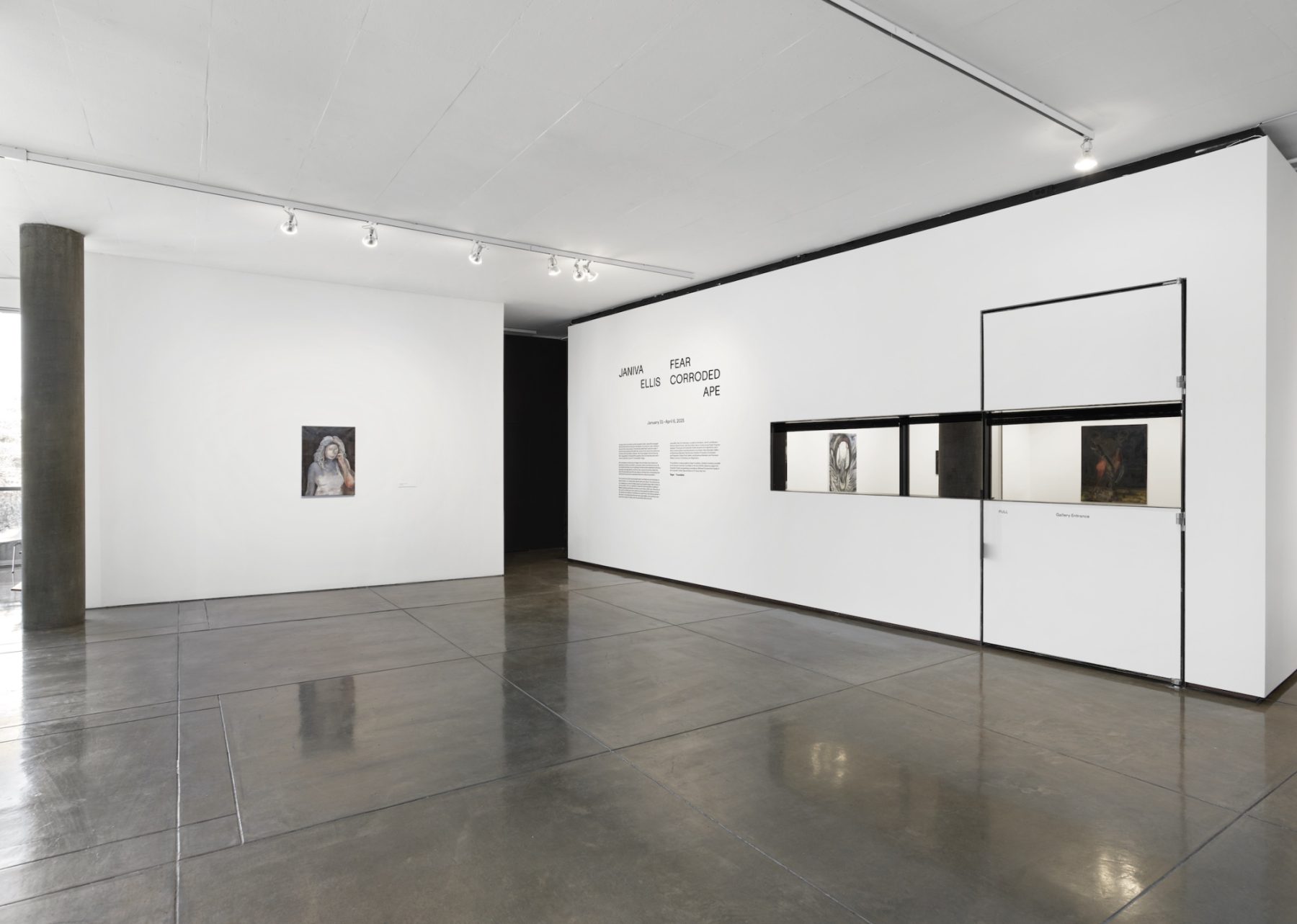
Installation view of Janiva Ellis: Fear Corroded Ape at the Carpenter Center for the Visual Arts at Harvard University, 2025. Courtesy of Carpenter Center for the Visual Arts. Photo: Julia Featheringill.
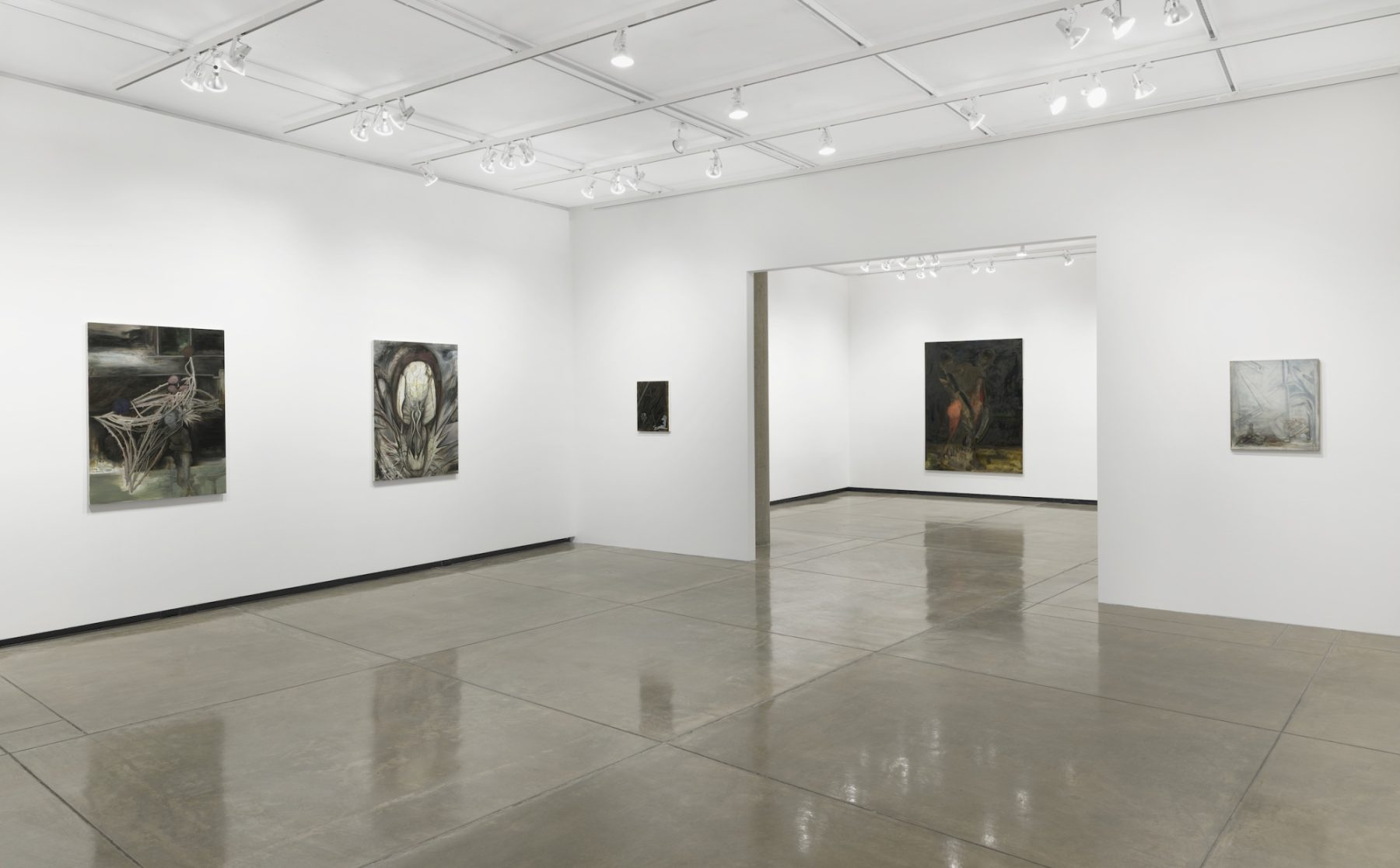
Installation view of Janiva Ellis: Fear Corroded Ape at the Carpenter Center for the Visual Arts at Harvard University, 2025. Courtesy of Carpenter Center for the Visual Arts. Photo: Julia Featheringill.
2024
July 12–December 1
Fragments of a Faith Forgotten: The Art of Harry Smith.
Harry Smith (1923–1991) was a painter, filmmaker, folklorist, musicologist, and collector as well as a radical nonconformist whose work defies categorization. Although his creative output includes paintings, films, poetry, music, and sound recordings, it also consists of extensive collections of overlooked yet revealing objects, such as string figures and found paper airplanes. His best-known work, a compilation of recordings from the 1920s and 1930s titled the Anthology of American Folk Music, achieved cultlike status among many musicians and listeners since it was first published in 1952.
Fragments of a Faith Forgotten: The Art of Harry Smith put the artist's life on display alongside his art and collections. It followed him from an isolated Depression-era childhood in the Pacific Northwest—a time when he was immersed in ecstatic religious philosophies and Native American ceremony—to his counterculture youth of marijuana, peyote, and intellectualism in postwar Berkeley, California. The exhibition traced his path through the milieus of bebop and experimental cinema in San Francisco to his decades in New York, where he was an essential part of the city's avant-garde fringe. The exhibition’s design is by artist Carol Bove. This exhibition is co-organized by the Carpenter Center for the Visual Arts at Harvard University with the Whitney Museum of American Art where the exhibition opened in New York in October 2023.
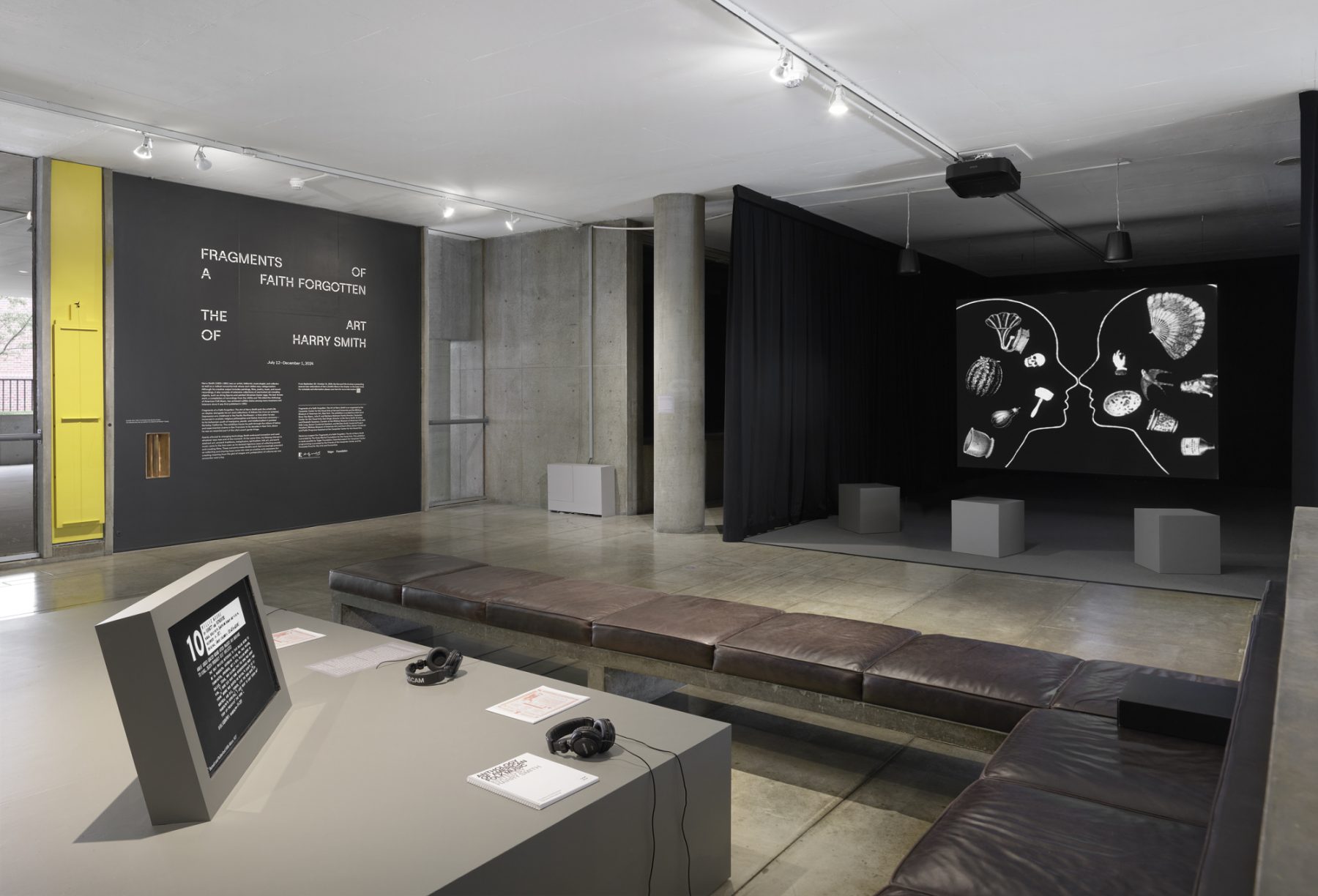
Installation view of Fragments of a Faith Forgotten: Harry Smith at the Carpenter Center for the Visual Arts, 2024. (Left) Anthology of American Folk Music listening station (Right) Film No. 12 (Heaven and Earth Magic), c. 1956–61.16mm film transferred to digital video (black-and-white, sound), 66 min. Courtesy of Carpenter Center for the Visual Arts. Photo: Julia Featheringill.
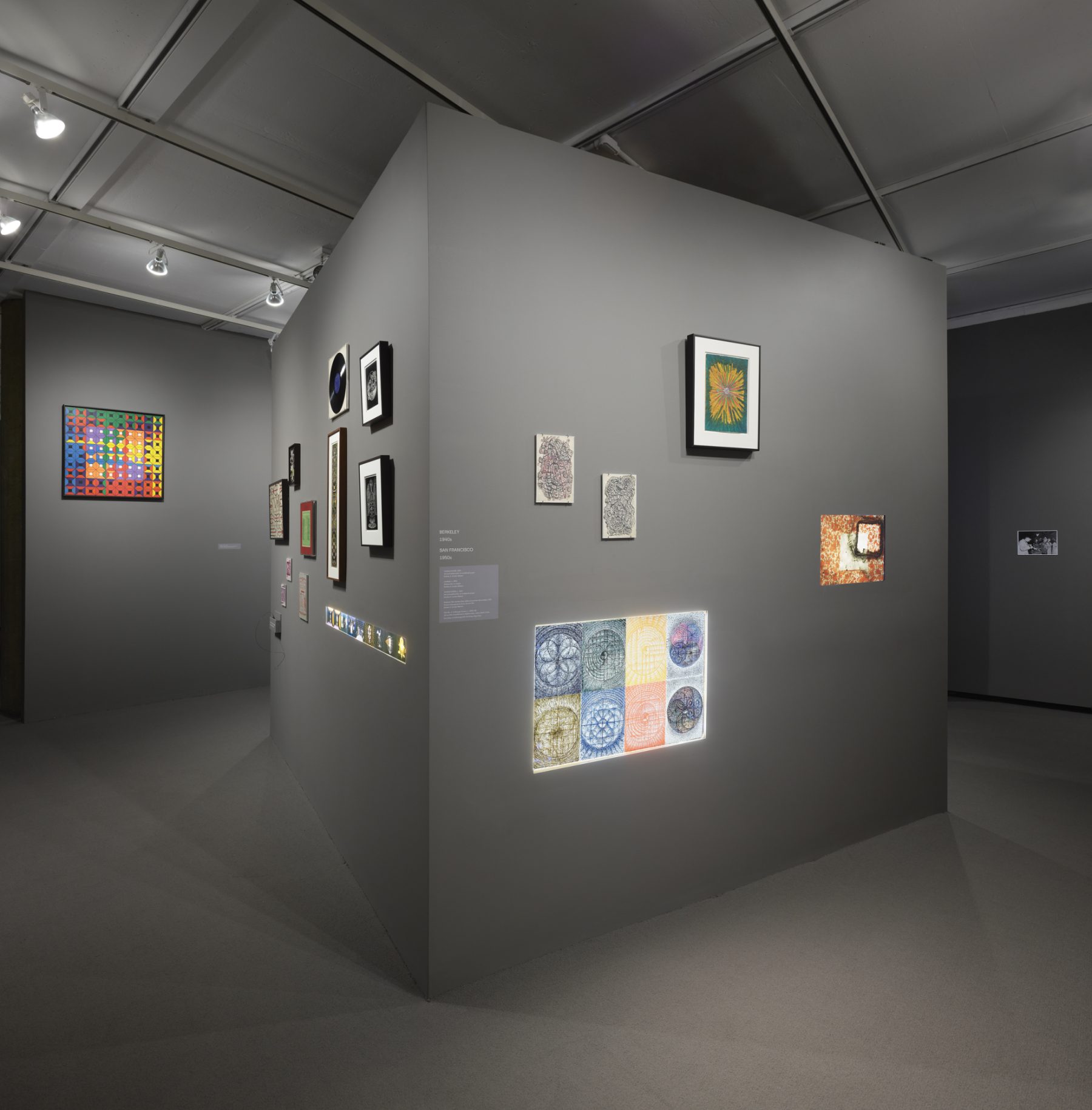
Installation view of Fragments of a Faith Forgotten: Harry Smith at the Carpenter Center for the Visual Arts, 2024. Courtesy of Carpenter Center for the Visual Arts. Photo: Julia Featheringill.
April 26–May 23, 2024
Art, Film, and Visual Studies 2024 Senior Thesis
The exhibition featured works by Allure, Isabel Haro, Marieta Rojas Agüeros, Marleigh Belsley, Mika Simoncelli, Meiqin Peng, and Rivers Sheehan
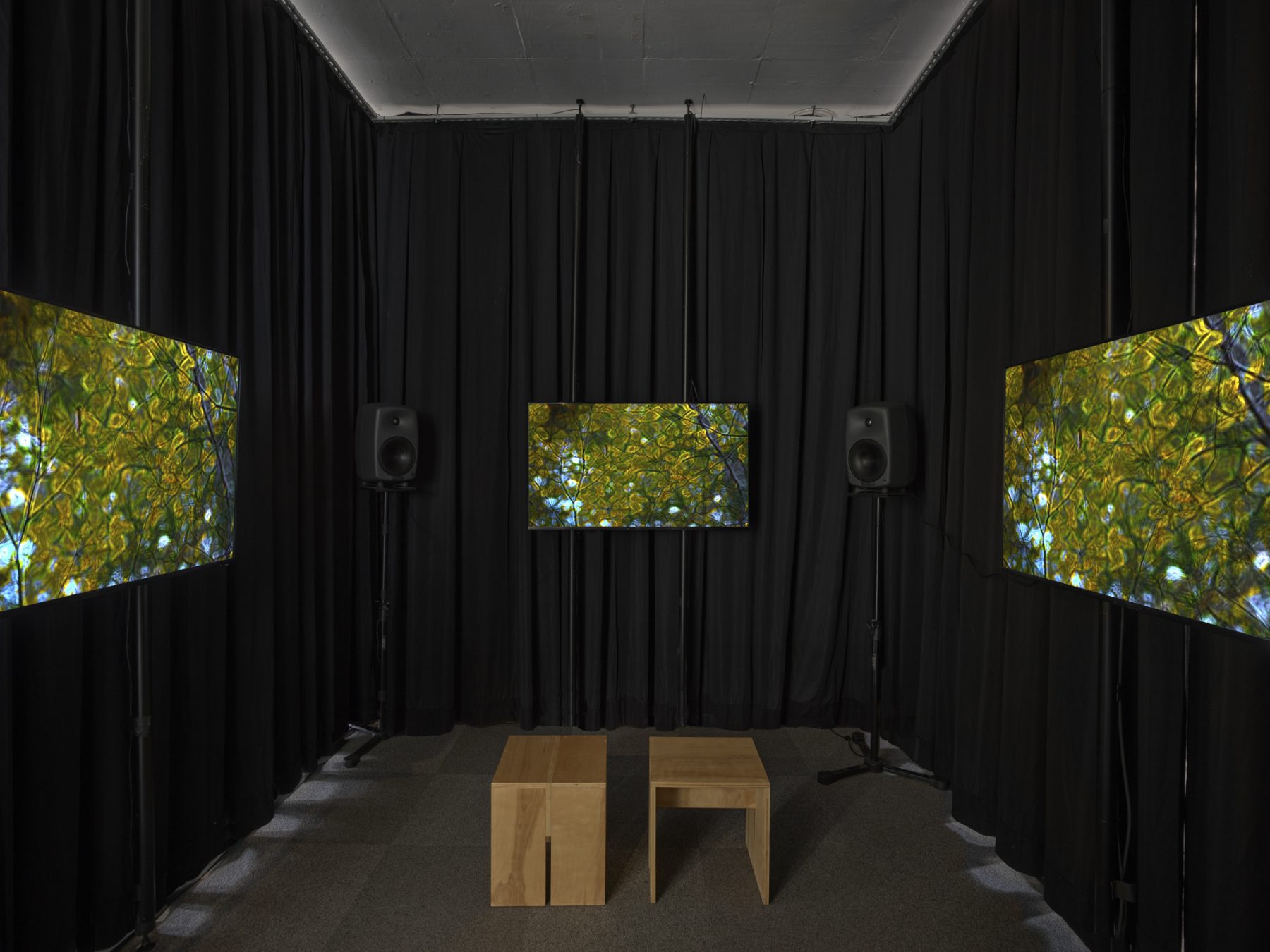
Installation view of Marleigh Belsley, Landscape of the Medium, 2024, four-channel video, 17 minutes, for Art, Film, and Visual Studies 2024 Senior Thesis Exhibition: Opening Reception. Courtesy of Carpenter Center for the Visual Arts. Photography: Julia Featheringill.
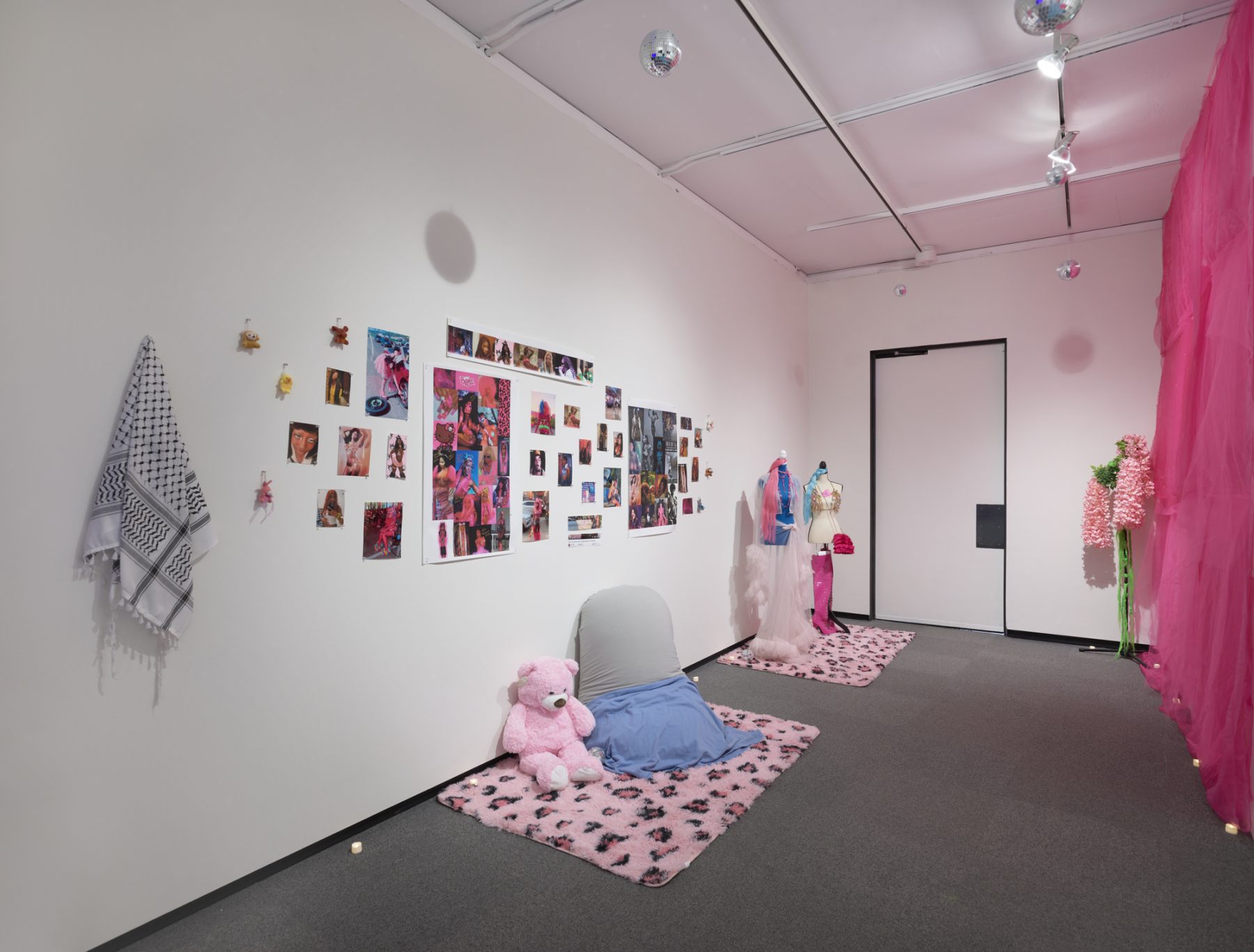
Installation view of Allure, PAST UNDERGROUND, 2023-24 for Art, Film, and Visual Studies 2024 Senior Thesis Exhibition: Opening Reception. Courtesy of Carpenter Center for the Visual Arts. Photography: Julia Featheringill.
February 2–April 7, 2024
Jacqueline Kiyomi Gork: Poems of Electronic Air
The Carpenter Center presented Jacqueline Kiyomi Gork’s (b. 1982) first East Coast institutional solo exhibition, Poems of Electronic Air. With a background in digital music composition and archaeoacoustics, as well as involvement in noise, electronic, and dance music scenes, Kiyomi Gork creates spatialized environments that operate at the collaborative intersections of sound, communications technologies, sculpture, architecture, and performance.
On view in the Level 3 galleries was a series of larger-than-life “sound blanket” sculptures made of wool and silicone that resemble different styles of coats; a sound and sculptural installation comprising a dense cluster of wool and fiberglass columns, black river stones, and an interactive sound component featuring contact microphones and bespoke amplified playback. Made from hand-felted wool, the artist’s own hair, synthetic hair, satin and mesh lining, and steel hardware, these “sound blanket” sculptures function as massive outerwear—referencing overcoats, puffer jackets, and kimonos. Within the central gallery, the artist created an installation that continues her series Solutions to Common Noise Problems. A rippling, suggestively corporeal wall sculpture made of felt joins a dense cluster of colored wool and fiberglass columns that mimic the Carpenter Center’s existing concrete columns. These works, which soften and recast the concrete stability of Le Corbusier’s modernist architecture, rose from a layer of black river stones covering a platform raised above the gallery floor. Visitors were encouraged to walk across the stones, under which contact microphones pick up sounds that are fed through signal-processing software and amplified back into the gallery environment.
A new outdoor commission on Level 1 brought together soft architecture that inflates and deflates alongside a new musical composition sited within the center’s public, column-filled, sunken concrete plaza. The new commission was installed in the outdoor plaza. Viewed from the space’s perimeter, the kinetic sculptures resemble an inflatable bounce house, accompanied by music played through loudspeakers. The musical composition, keyed to the sonic identity of the sunken plaza, is designed to integrate the blaring sound of the air blowers, affectively mixing the thrum of industrial mechanics with recorded string instruments.
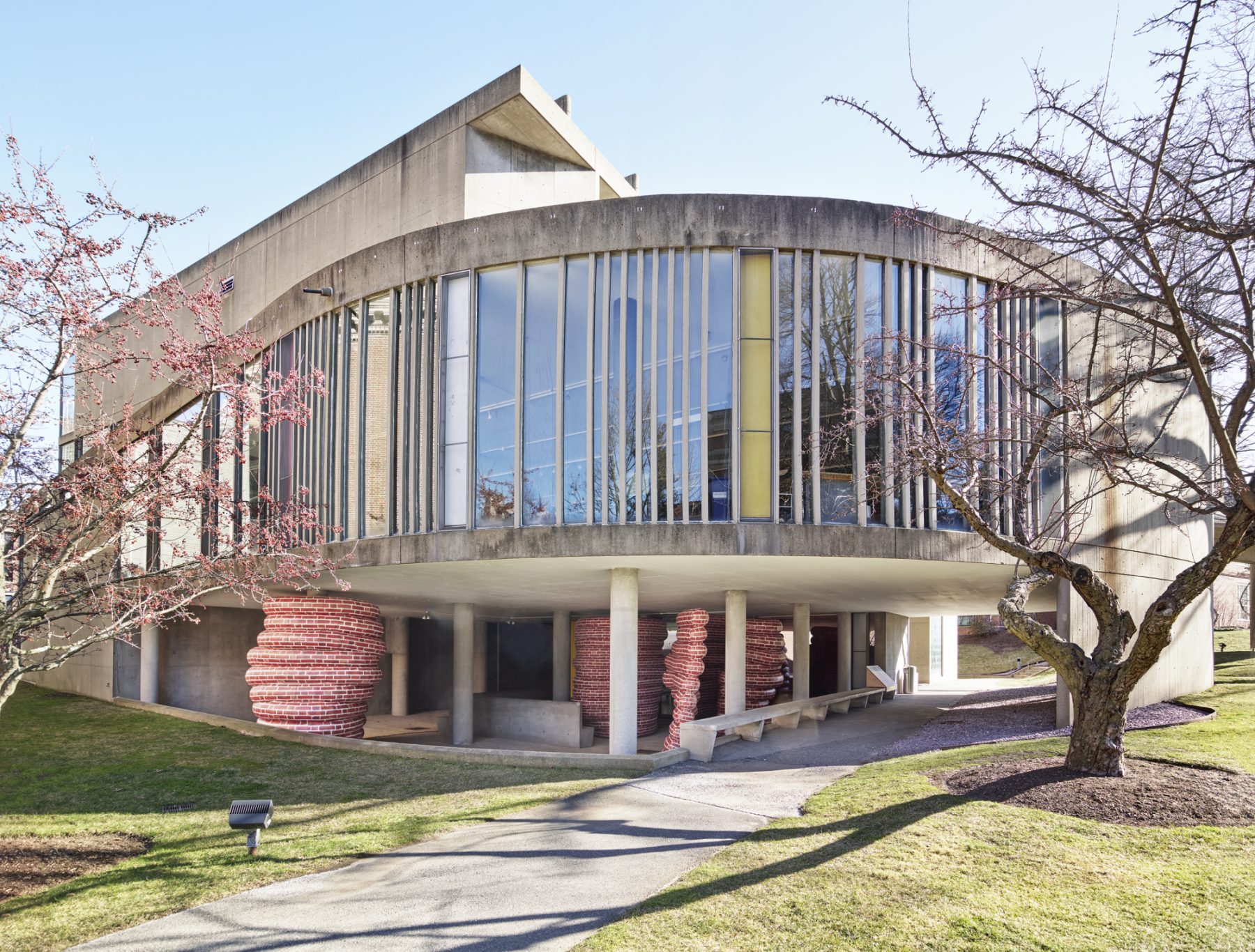
Installation view of Jacqueline Kiyomi Gork: Poems of Electronic Air at the Carpenter Center for the Visual Arts, 2024. Variations in Mass Nos. 5, 6, 7, 2024, vinyl, blowers, electronics, and speakers. Collaborators: Viola and violin, Daniel Jacobs; Cello, Zack Reaves; 3D design, Rhett LaRue. Courtesy of Carpenter Center for the Visual Arts. Photo: Julia Featheringill.
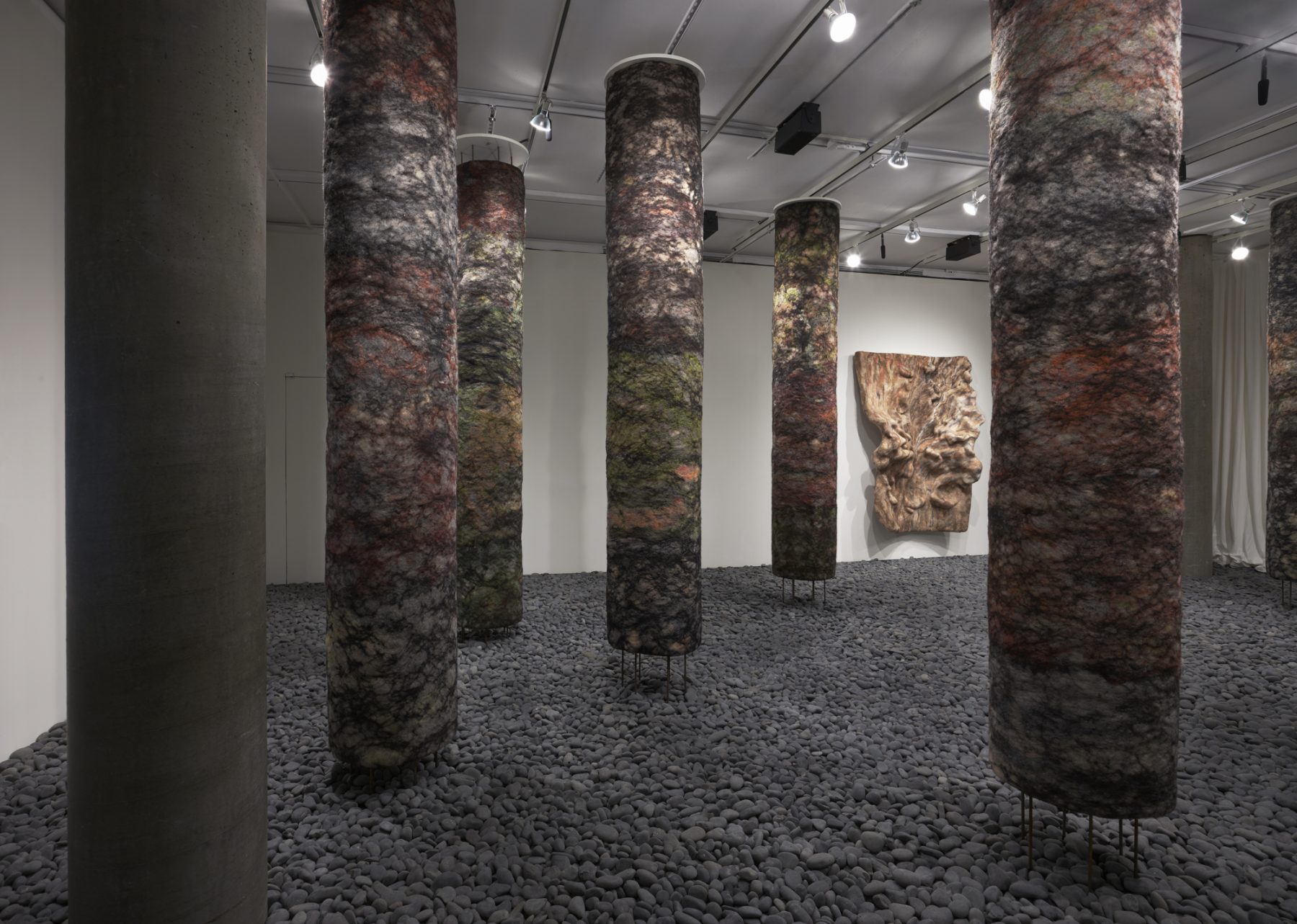
Installation view of Jacqueline Kiyomi Gork: Poems of Electronic Air at the Carpenter Center for the Visual Arts, 2024. Courtesy of Carpenter Center for the Visual Arts. Photo: Julia Featheringill.
February 1, 2024
Artist Talk and Opening Reception for Jacqueline Kiyomi Gork: Poems of Electronic Air
This artist talk celebrated the opening of "Jacqueline Kiyomi Gork: Poems of Electronic Air.", which was followed by an opening reception. Artist Jacqueline Kiyomi Gork was in conversation with exhibition curators Dan Byers and Danni Shen.
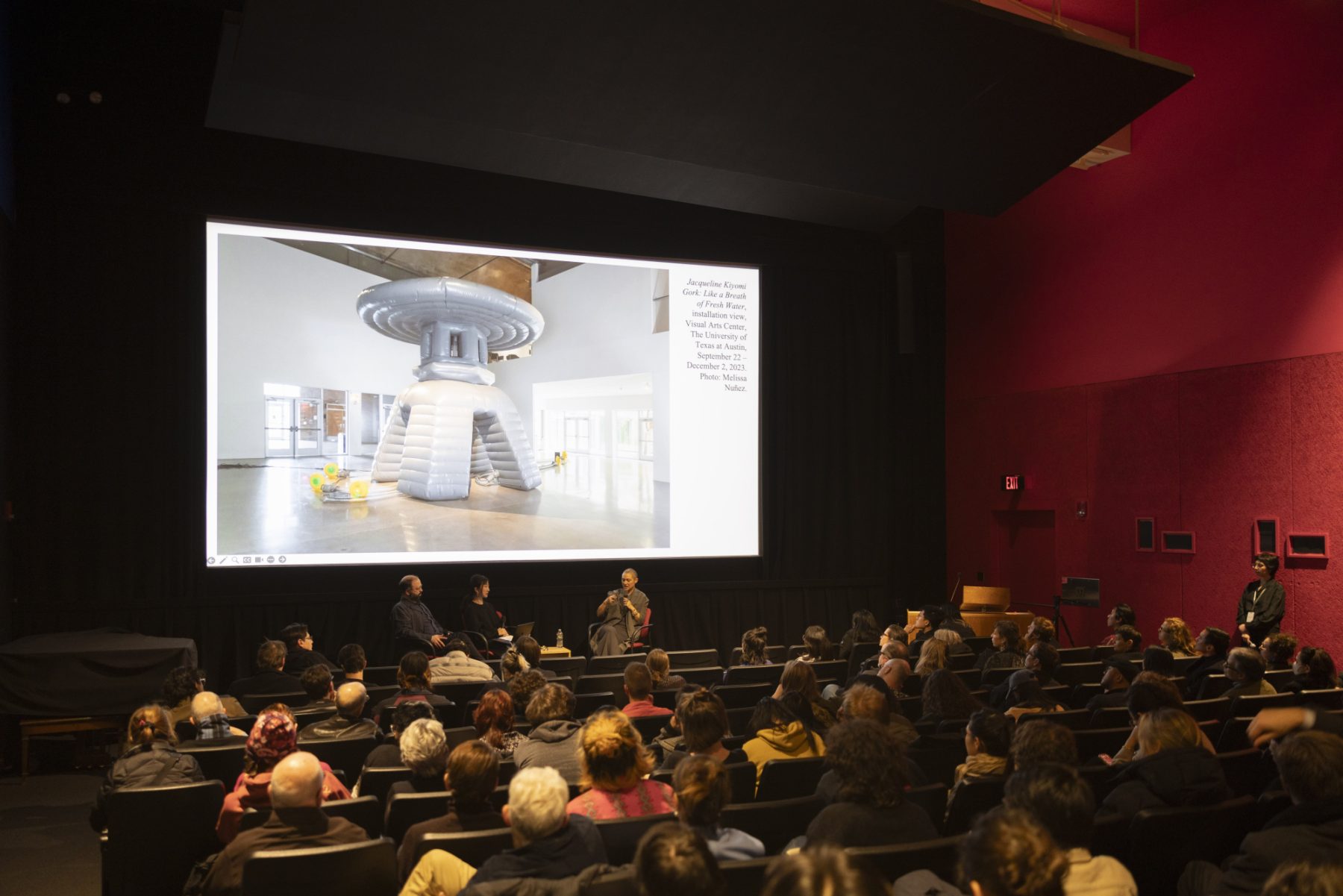
Photography by Susan Young
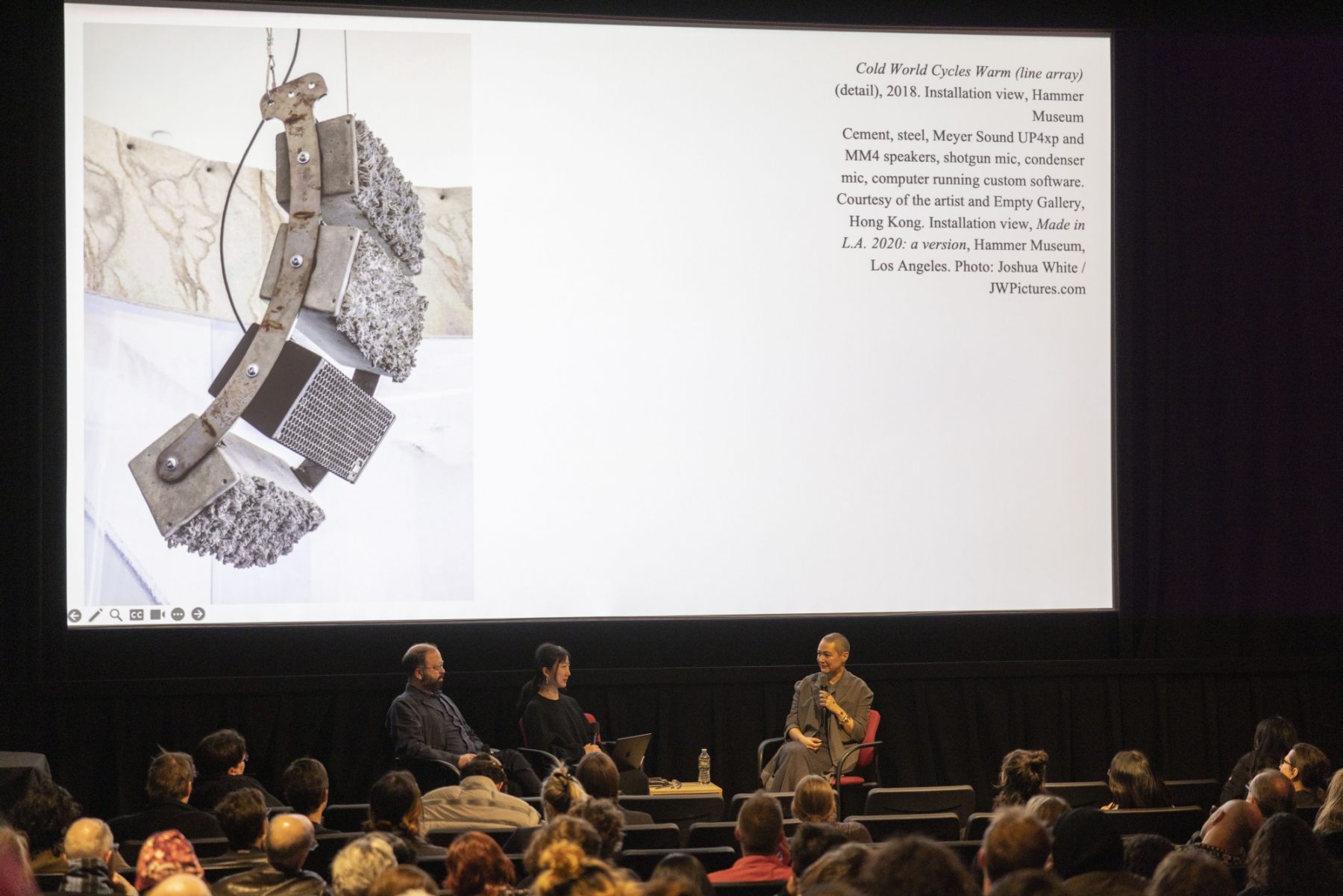
Photography by Susan Young
2023
October 6–December 22
This Machine Creates Opacities: Robert Fulton, Renée Green, Pierre Huyghe, and Pope.L
On the occasion of the Carpenter Center’s 60th anniversary, This Machine Creates Opacities restaged four major works by artists Robert Fulton, Renée Green, Pierre Huyghe, and Pope.L that examine the ways buildings choreograph, shape, and control social life, learning, and cultural structures. With its title borrowed from statements the artist Pope.L made about navigating the Carpenter Center building upon an invitation to make a new commission, the exhibition reflects on the program, affect, history, and various complexities of Le Corbusier’s iconic architecture. Each one of the included film-based works was created directly in response to the Carpenter Center as an institutional site and explores architecture through the lens of experimental cinematography and the expansive formal, technological possibilities of video installation to excavate a building’s aesthetic and social functions. This Machine Creates Opacities was divided between two floors of the building and presented Pierre Huyghe’s video This is Not a Time for Dreaming (2004), alongside documentation of the performance and sculptural elements from Pope.L’s Corbu Pops (2009) on level 3, while Reality’s Invisible by Robert Fulton (1971), and Renée Green’s Americas: Veritas (2018) were screened on level 1.
This Machine Creates Opacities revived these important past site-specific commissions to both celebrate the building’s capacity to inspire but also to reflect on the Carpenter Center’s institutional memory since it opened to often skeptical audiences in 1963.
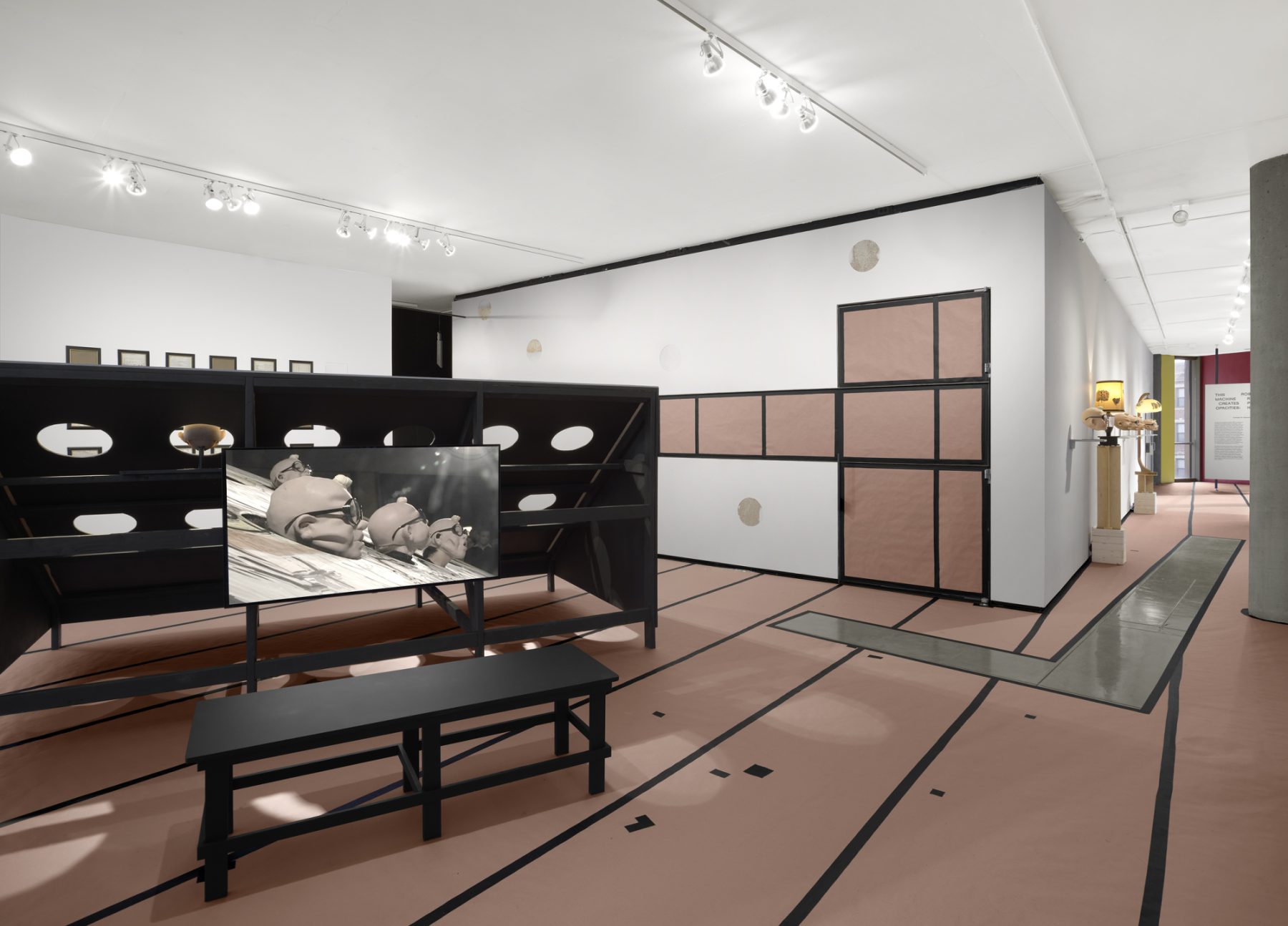
Installation view of “This Machine Creates Opacities: Robert Fulton, Renée Green, Pierre Huyghe, and Pope.L” at the Carpenter Center for the Visual Arts, Fall 2023. Pope.L. Courtesy of Carpenter Center for the Visual Arts. Photo: Julia Featheringill.
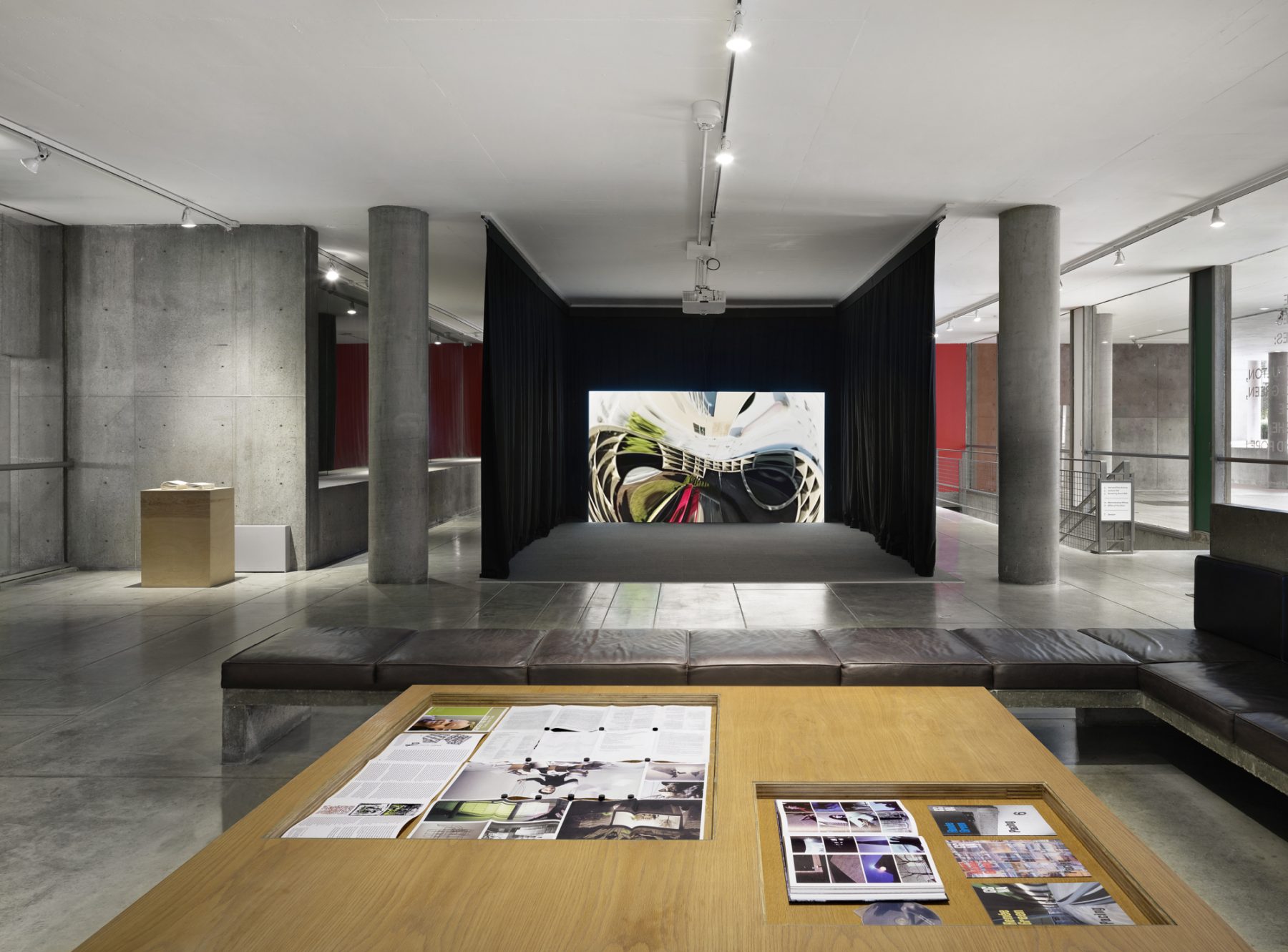
Installation view of “This Machine Creates Opacities: Robert Fulton, Renée Green, Pierre Huyghe, and Pope.L” at the Carpenter Center for the Visual Arts, Fall 2023. Renée Green, “Americas : Veritas Vitrine”, 2023. Archival materials. Image courtesy of Carpenter Center for the Visual Arts. Photo: Julia Featheringill.
October 26, 2023
Linda Norden on Pierre Huyghe’s This is Not a Time for Dreaming (2004)
Linda Norden, curator and writer and co-commissioner of Pierre Huyghe’s This is Not a Time for Dreaming (2004) spoke on Huyghe’s work.
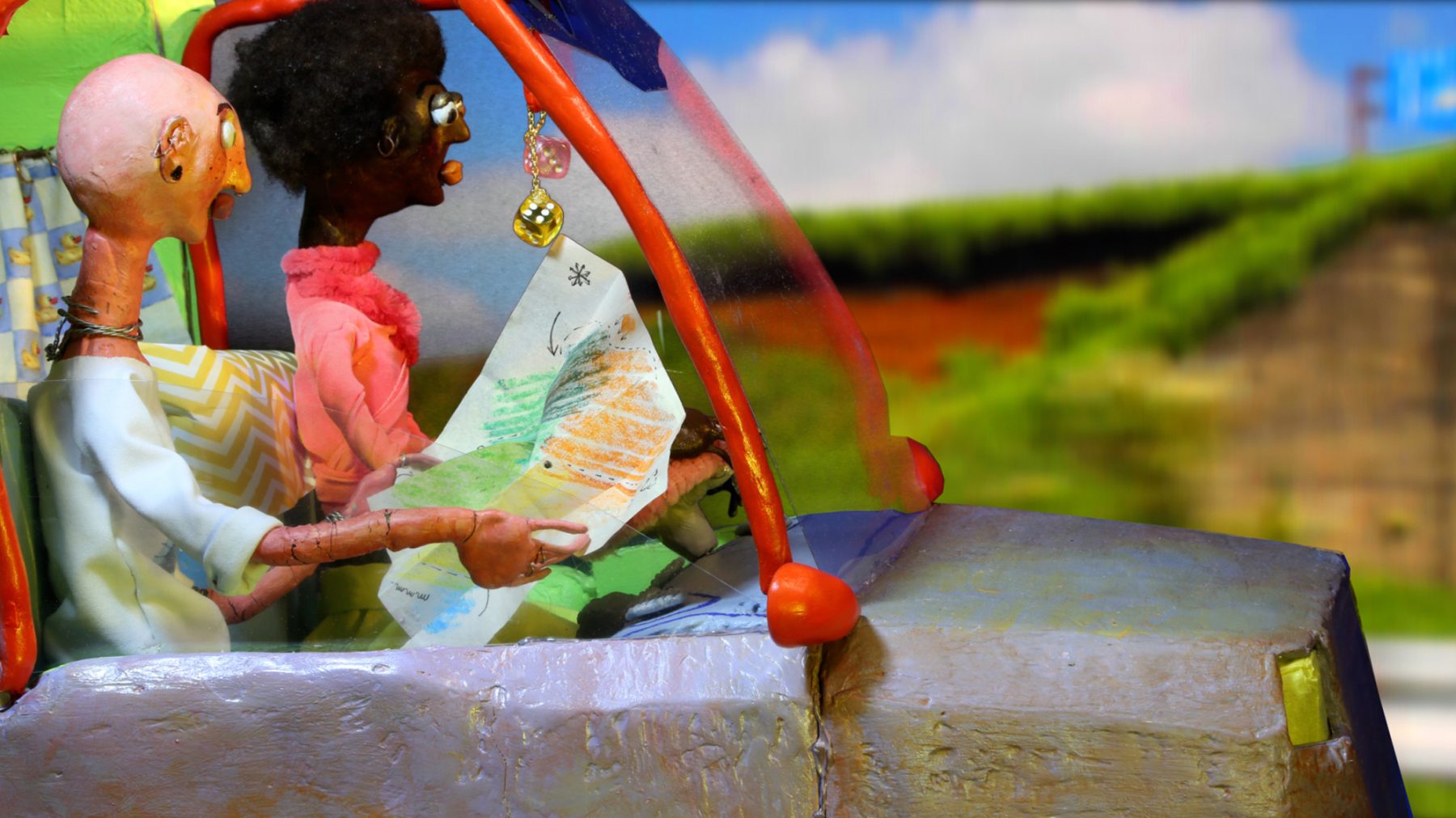
As Norden herself writes on This is Not a Time for Dreaming (2004): “This project with the French artist Pierre Huyghe–co-curated with Scott Rothkopf (then still a grad student) and originally titled Huyghe + Corbusier: Harvard Project–was commissioned by the Harvard Art Museums, but produced in collaboration with The Graduate School of Design and the Carpenter Center, under the aegis of what was then called the Department of Visual and Environmental Studies. Conceived by Huyghe as "a puppet allegory" on the complex anxieties around the institutional commission of an artist's project and a portrait of the Corbu building, the film has come to stand in for the broader implications of a project that underscores what Liam Gillick, the voice of the film's Corbusier/ Huyghe author-avatar, described as "the self-consciousness" around "the act of thinking hard about the what you might represent in terms of future content or past potentials," a self-consciousness "the author" was intent on suppressing.
This program took place on the occasion of the Carpenter Center's 60th anniversary exhibition This Machine Creates Opacities: Robert Fulton, Renée Green, Pierre Huyghe, and Pope.L.
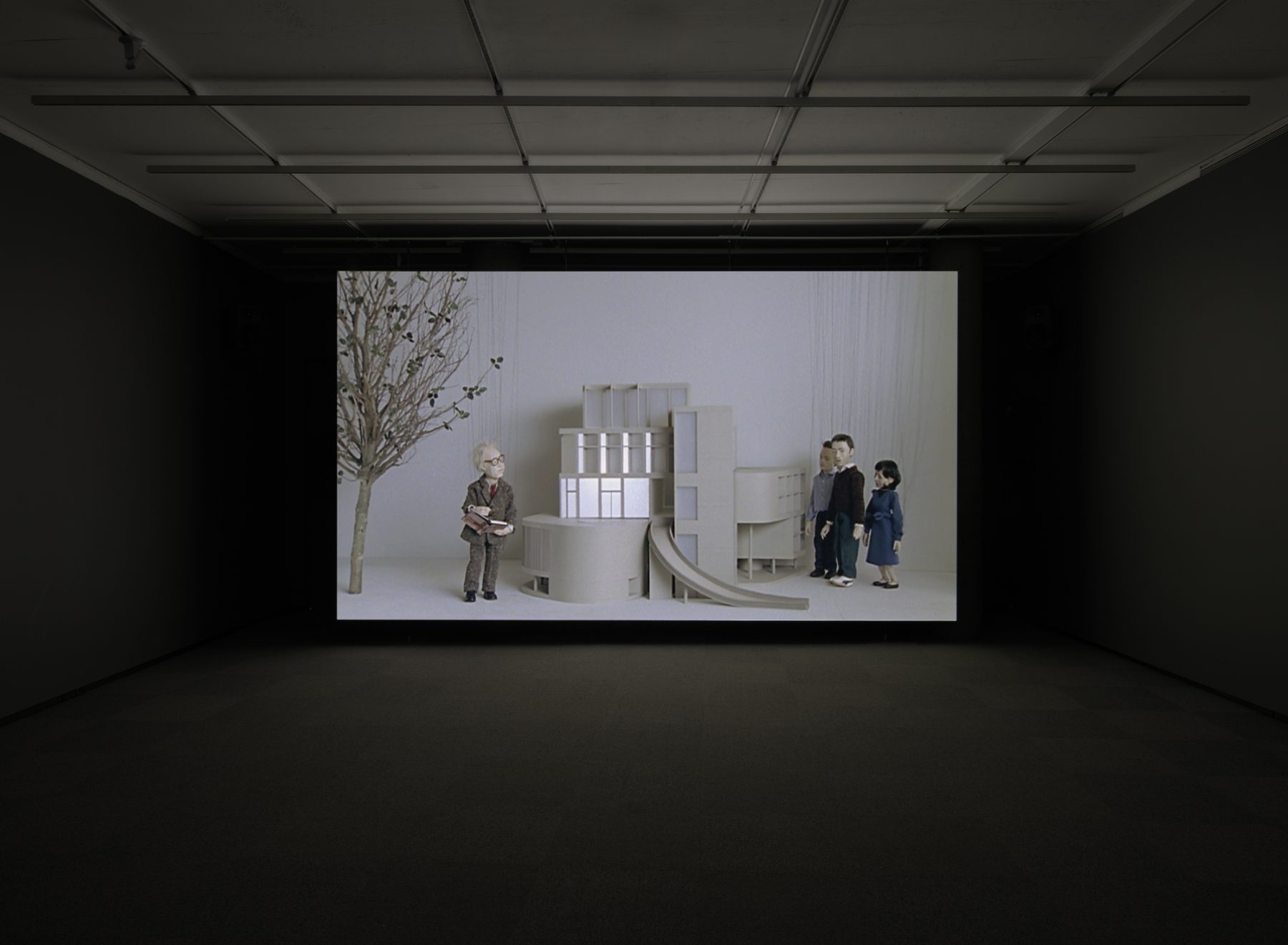
Installation view of This Machine Creates Opacities: Robert Fulton, Renée Green, Pierre Huyghe, and Pope.L at the Carpenter Center for the Visual Arts, Fall 2023. Pierre Huyghe, This is Not a Time for Dreaming, 2004, super 16mm film, transferred to DigiBeta, color, sound, 24 minutes. Courtesy of Carpenter Center for the Visual Arts. Photo: Julia Featheringill.
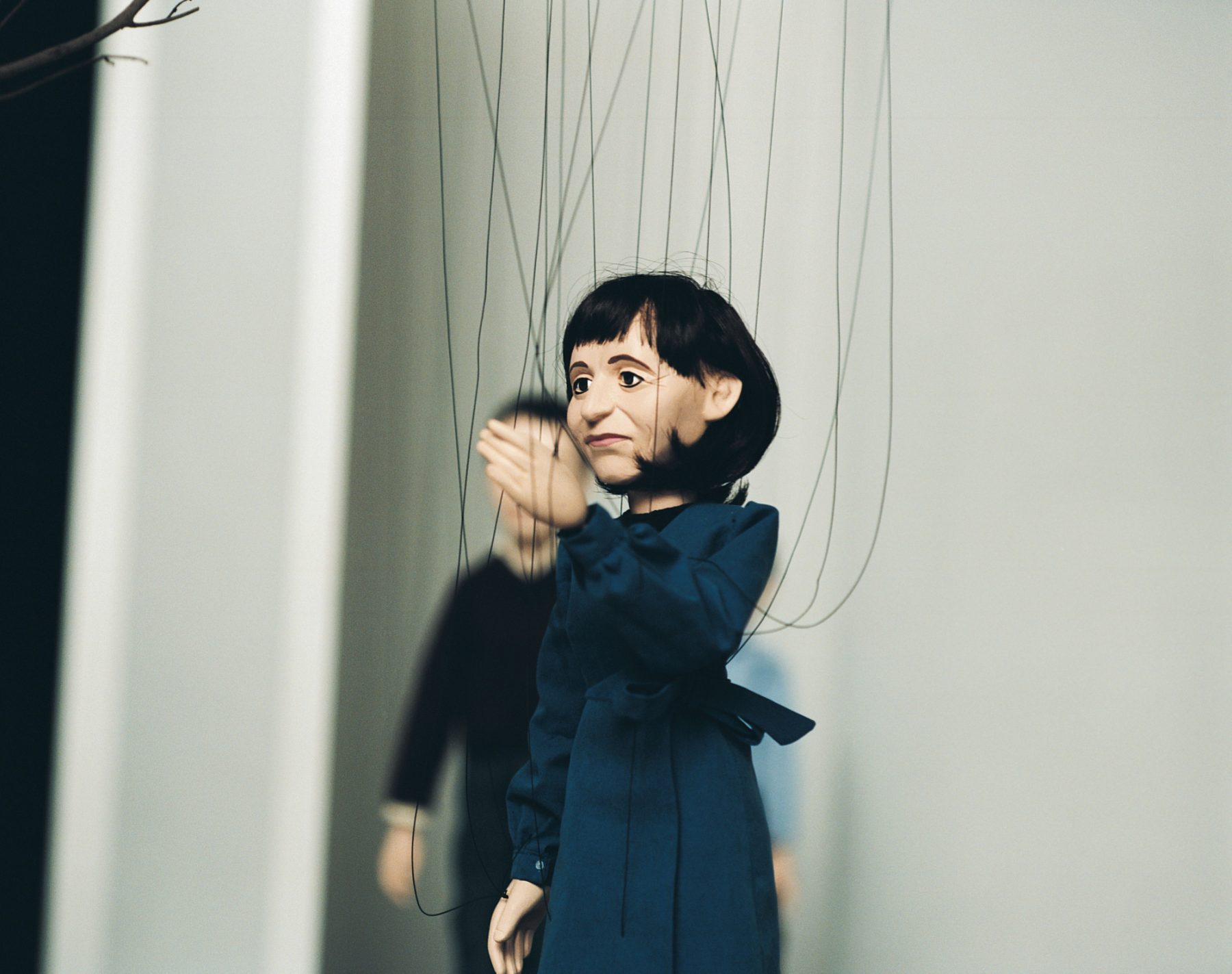
Pierre Huyghe, This is Not a Time for Dreaming, 2004. Live puppet play and super 16mm film, transferred to DigiBeta. 24 minutes, color, sound. Courtesy Marian Goodman Gallery, New York/Paris. Photo credit: Michael Vahrenwald
October 5, 2023
Pope.L Artist Talk and Opening Reception for This Machine Creates Opacities
Artist Pope.L presented an artist talk that touches on his project Corbu Pops, which was originally commissioned for the Carpenter Center’s level 1 space in 2009. Various installation elements of this pivotal work were restaged for the exhibition This Machine Creates Opacities.
On the occasion of the Carpenter Center’s 60th anniversary, This Machine Creates Opacities restaged four major works by artists Robert Fulton, Renée Green, Pierre Huyghe, and Pope.L that examine the ways buildings choreograph, shape, and control social life, learning, and cultural structures. With its title borrowed from statements the artist Pope.L made about navigating the Carpenter Center building upon an invitation to make a new commission, the exhibition reflects on the program, affect, history, and various complexities of Le Corbusier’s iconic architecture.
Pope.L (b. 1955, Newark, NJ. d. 2023, Chicago, IL) was a Chicago-based visual and performance-theater artist and educator who makes culture out of contraries. Exhibitions, performances, and projects include Between A Figure and A Letter at Schinkel Pavillion, Berlin (2022); Misconceptions at Portikus, Frankfurt (2021); Four Panels at Mitchell-Innes & Nash, New York (2021); Instigation, Aspiration, Perspiration, a trio of complementary exhibitions of his work in New York organized by the Museum of Modern Art, the Whitney Museum of American Art and Public Art Fund (2019), Flint Water Project at What Pipeline, Detroit (2017); Whispering Campaign at documenta 14, Athens and Kassel (2017).
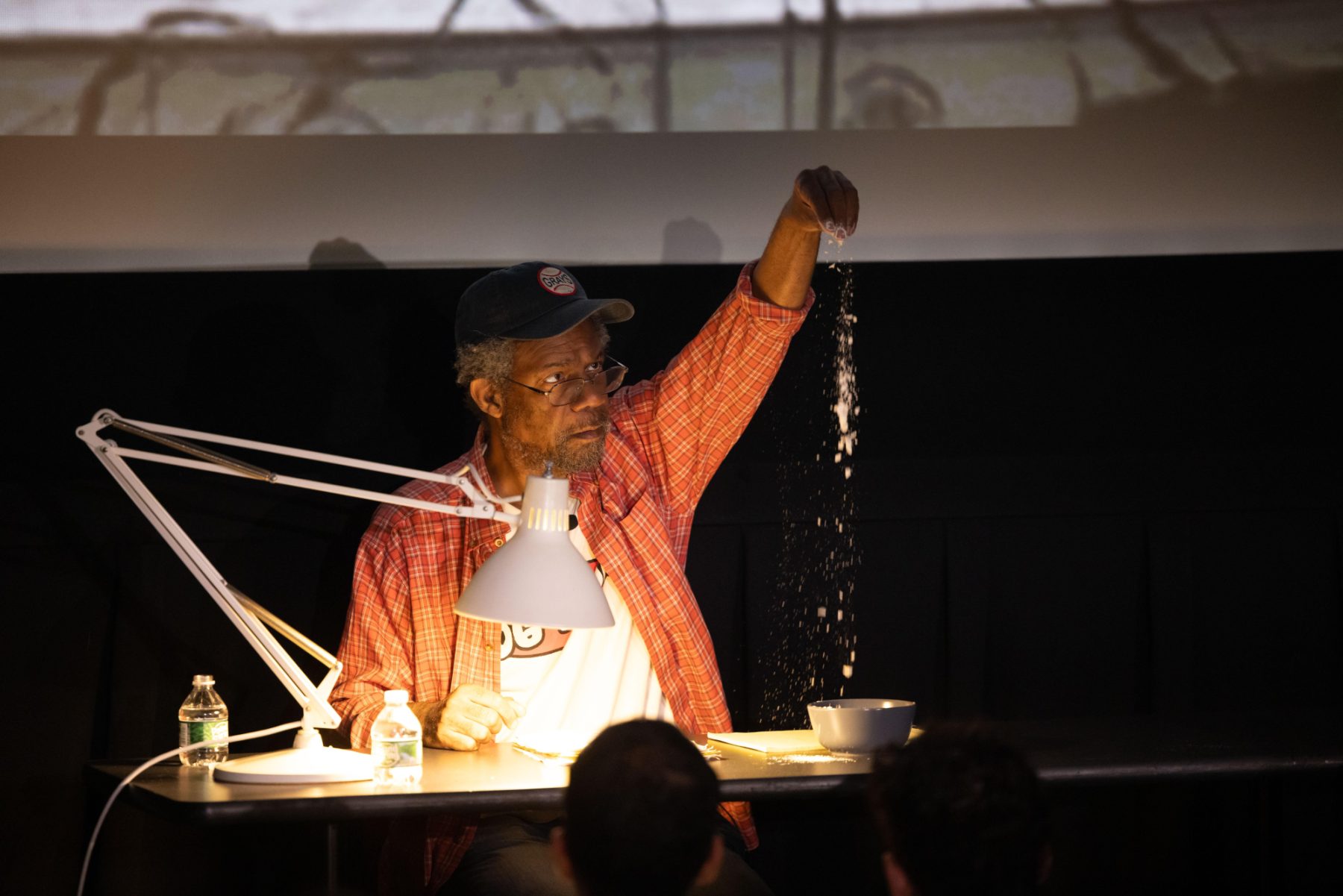
Photography by Susan Young
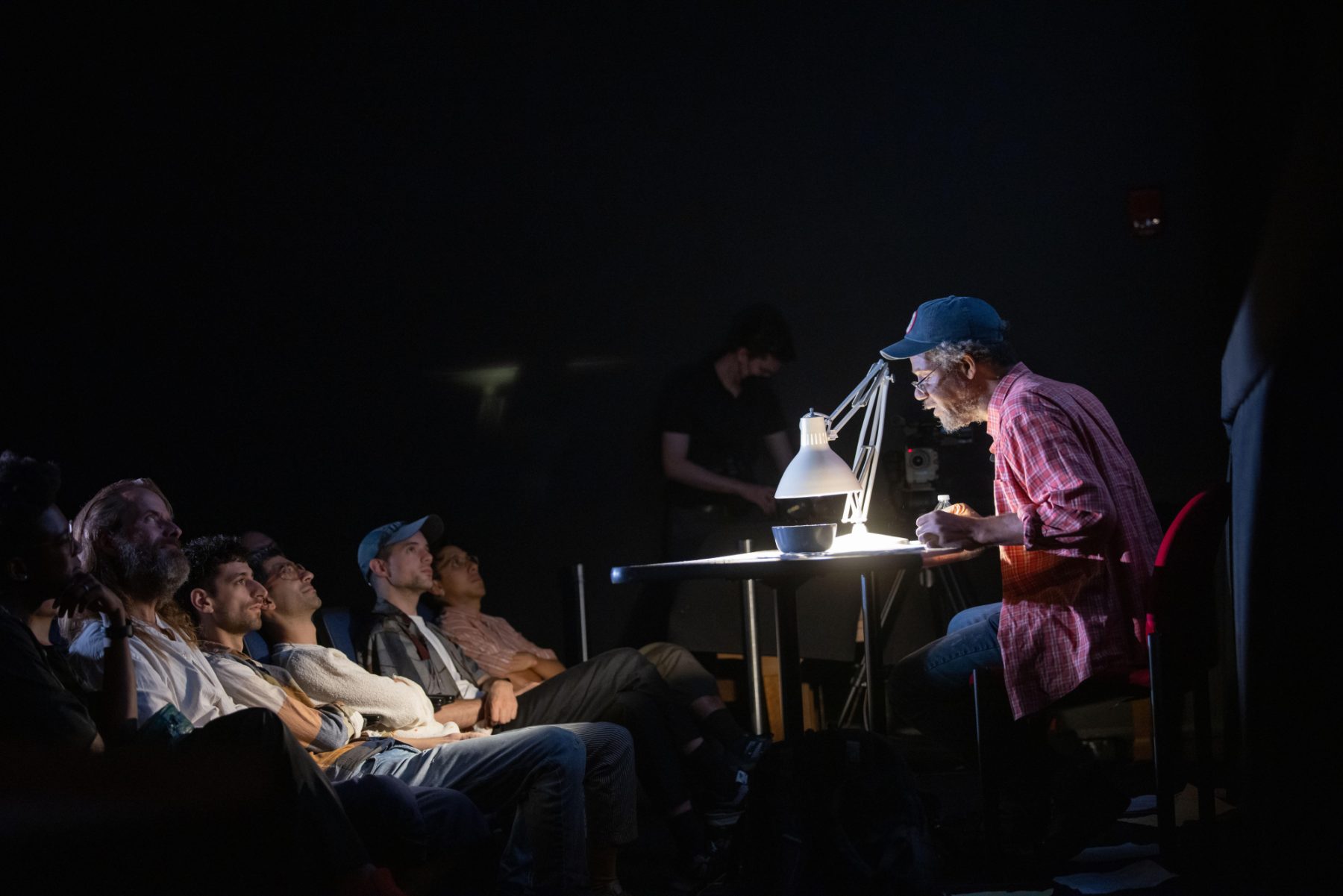
Photography by Susan Young
June 30–September 3, 2023
Morgan Bassichis: More Little Ditties
Morgan Bassichis: More Little Ditties, Was the first institutional exhibition by comedic performer Morgan Bassichis. For More Little Ditties, the artist brought together performance, video, and text-based works–created both before and during the COVID-19 pandemic–that mark time, loss, desire, disappointment and joy through playful musical gestures. The exhibition was co-organized with the Institute of Contemporary Art at Virginia Commonwealth University.
Two new works were created for the exhibition. First, a new young adult anthology, published by Wendy’s Subway, and co-edited by Bassichis, Jay Saper, and Rachel Valinsky, titled Questions to Ask Before Your Bat Mitzvah. The book brings together thirty-six artists, activists, writers, and rabbis to open-heartedly reflect on questions about Jewish tradition, Zionism, and solidarity. Questions to Ask Before Your Bat Mitzvah reimagines the rite of passage of the B’nai Mitzvah as an opportunity for people of all ages and genders to explore assumptions about ritual, nationalism, and community. The exhibition also debuted a new music video for what Bassichis hopes will be a “gay pop hit about seltzer,” animated by Daniel Pineda. Taken together, these works expand the artist’s interdisciplinary research into modes of transmission across generations.
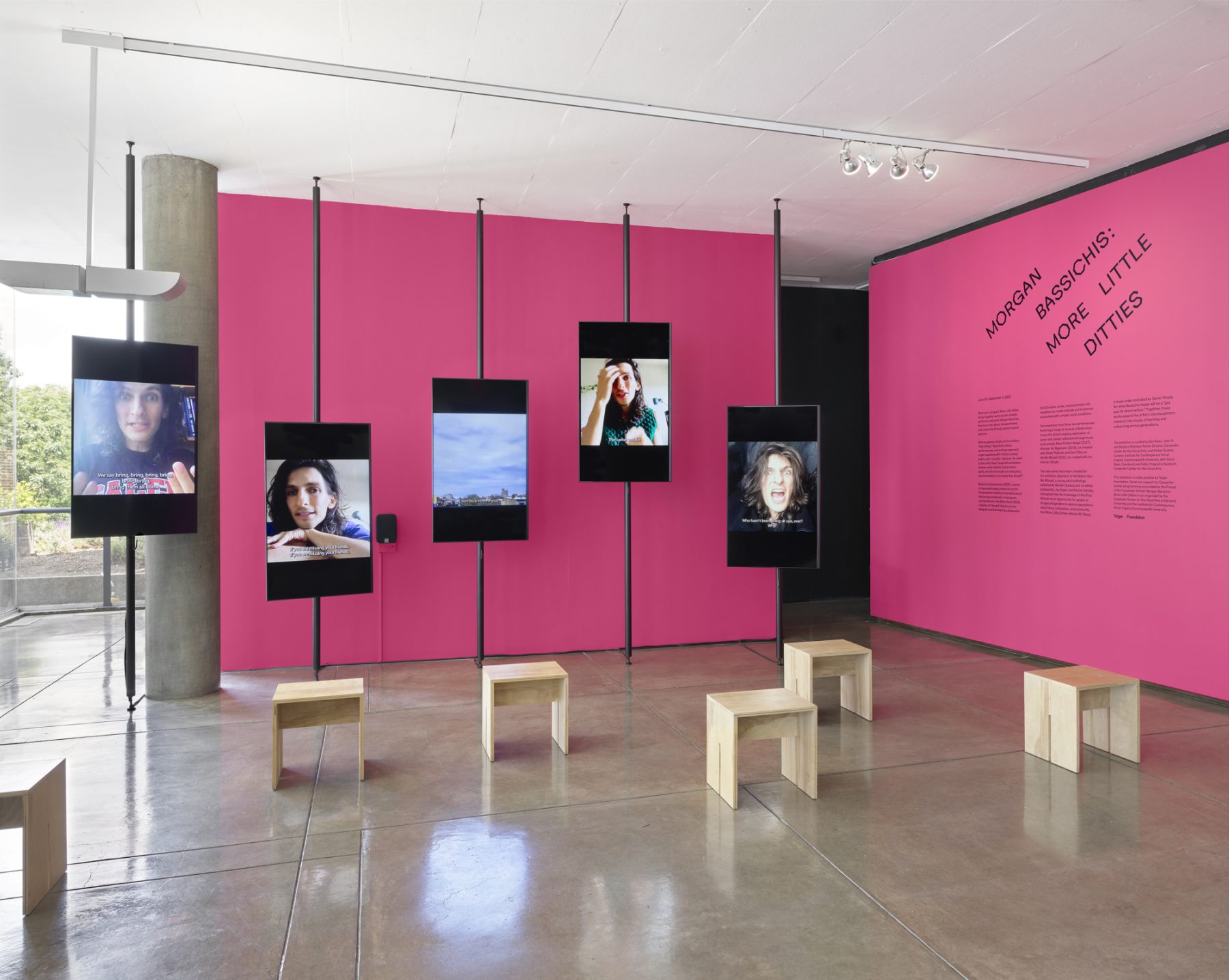
Installation view of Morgan Bassichis: More Little Ditties at the Carpenter Center for the Visual Arts, 2023. Morgan Bassichis, Quarantunes, 2020, 26 one-minute videos on five monitors. Image courtesy of Carpenter Center for the Visual Arts. Photo: Julia Featheringill.
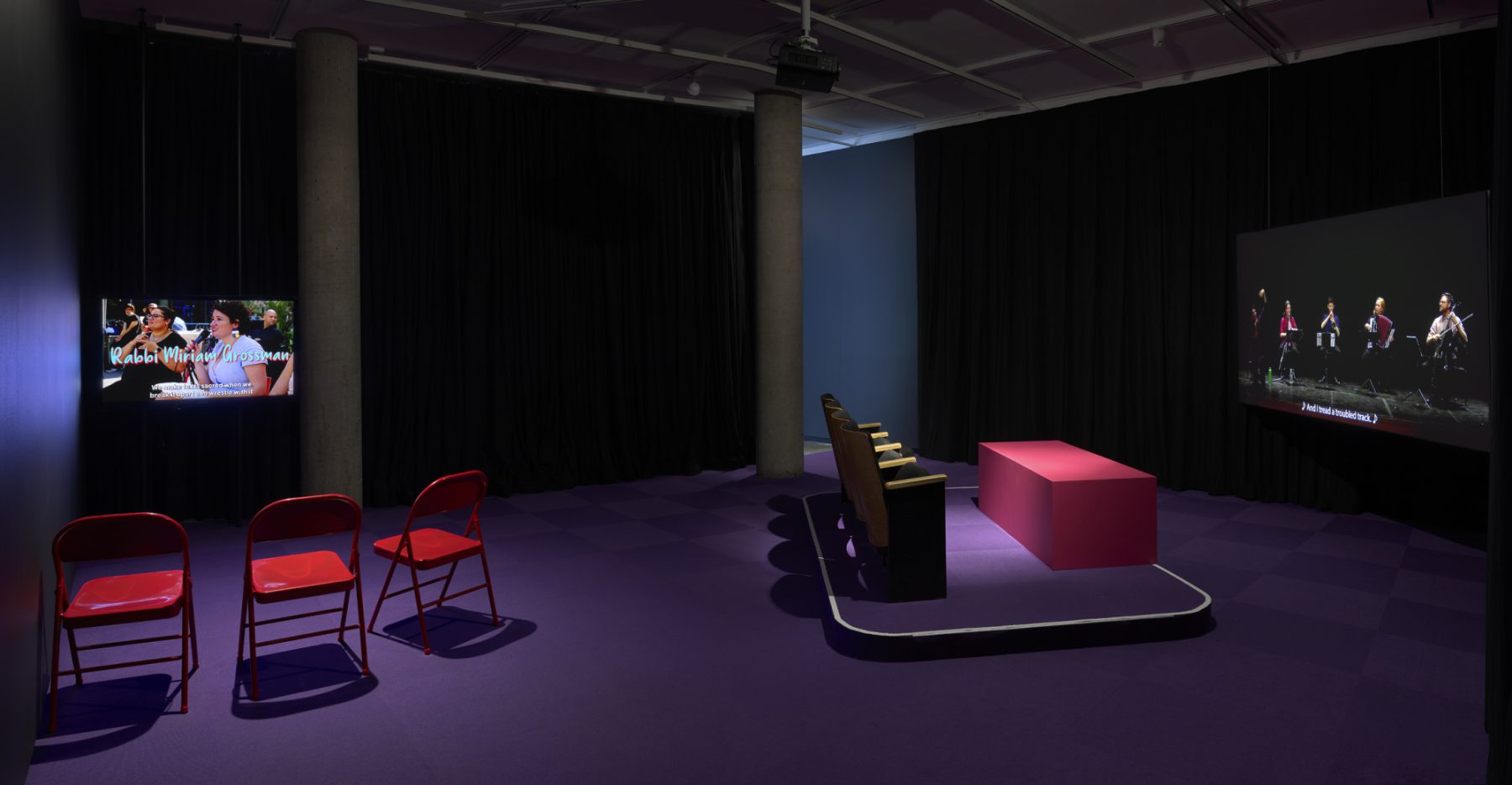
Installation view of Morgan Bassichis: More Little Ditties at the Carpenter Center for the Visual Arts, 2023. (Left) Morgan Bassichis and Ira Khonen Temple, Don’t Rain On My Bat Mitzvah, 2021, performance video documentation,14:37 minutes. Filmed and edited by Aleksei Wagner. Commissioned by Creative Time for Rashid Johnson’s Red Stage, June 5–July 4, 2021. (Right) Morgan Bassichis and Ethan Philbrick, Klezmer for Beginners, 2019, performance video documentation, 70:29 minutes. Commissioned by Abrons Arts Center through the Performance AIRspace Residency, supported by the Jerome Foundation. Image courtesy of Carpenter Center for the Visual Arts. Photo: Julia Featheringill.
July 8, 2023
Morgan Bassichis: More Little Ditties Opening Reception and Book Launch
The opening celebration of Morgan Bassichis: More Little Ditties and a book launch for Questions to Ask Before Your Bat Mitzvah (Wendy’s Subway 2023), featured readings and conversation with editors Morgan Bassichis, Jay Saper, and Rachel Valinsky, and contributors Lukaza Branfman-Verissimo, Khury Petersen-Smith, and Sandra Tamari.
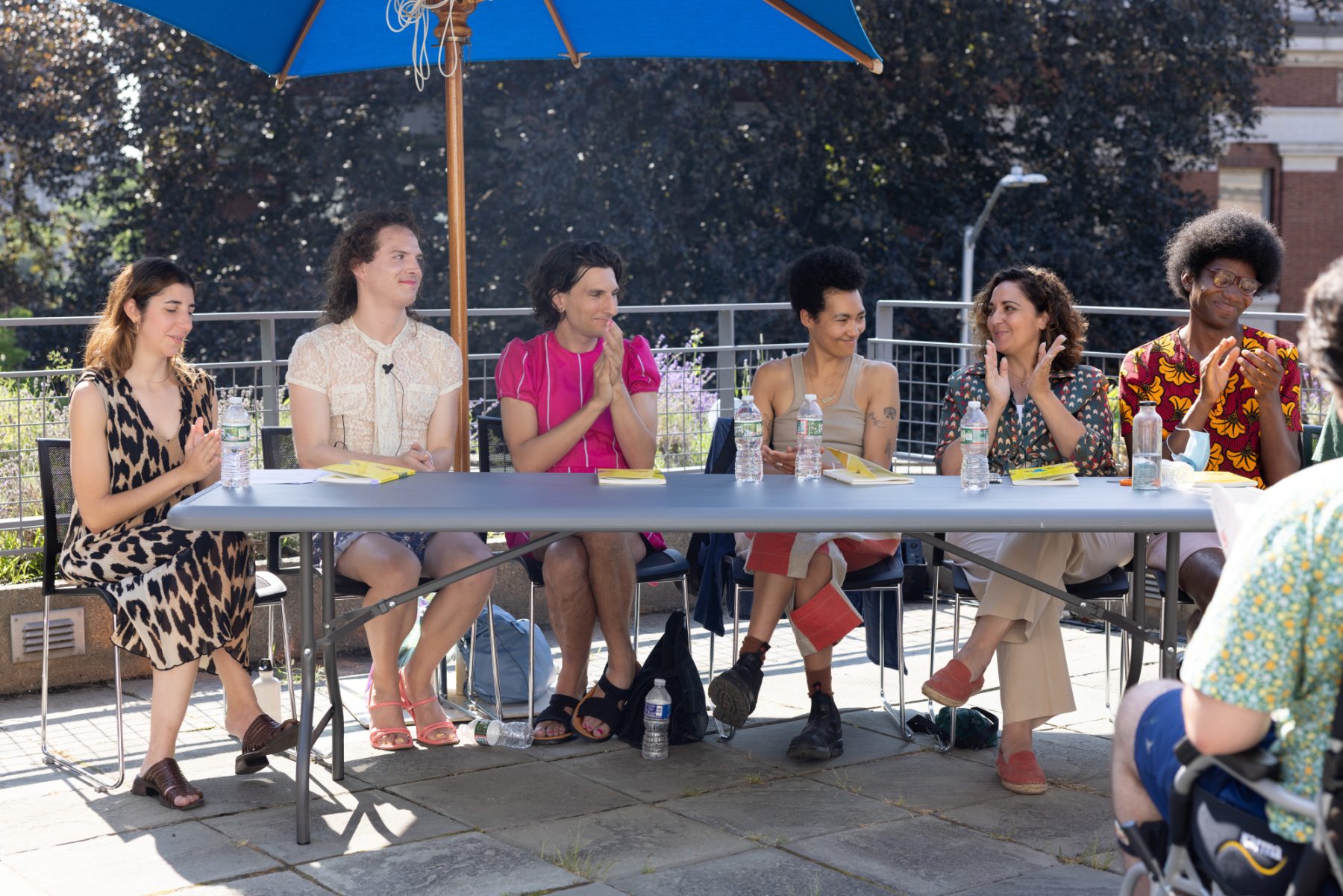
Photography by Susan Young
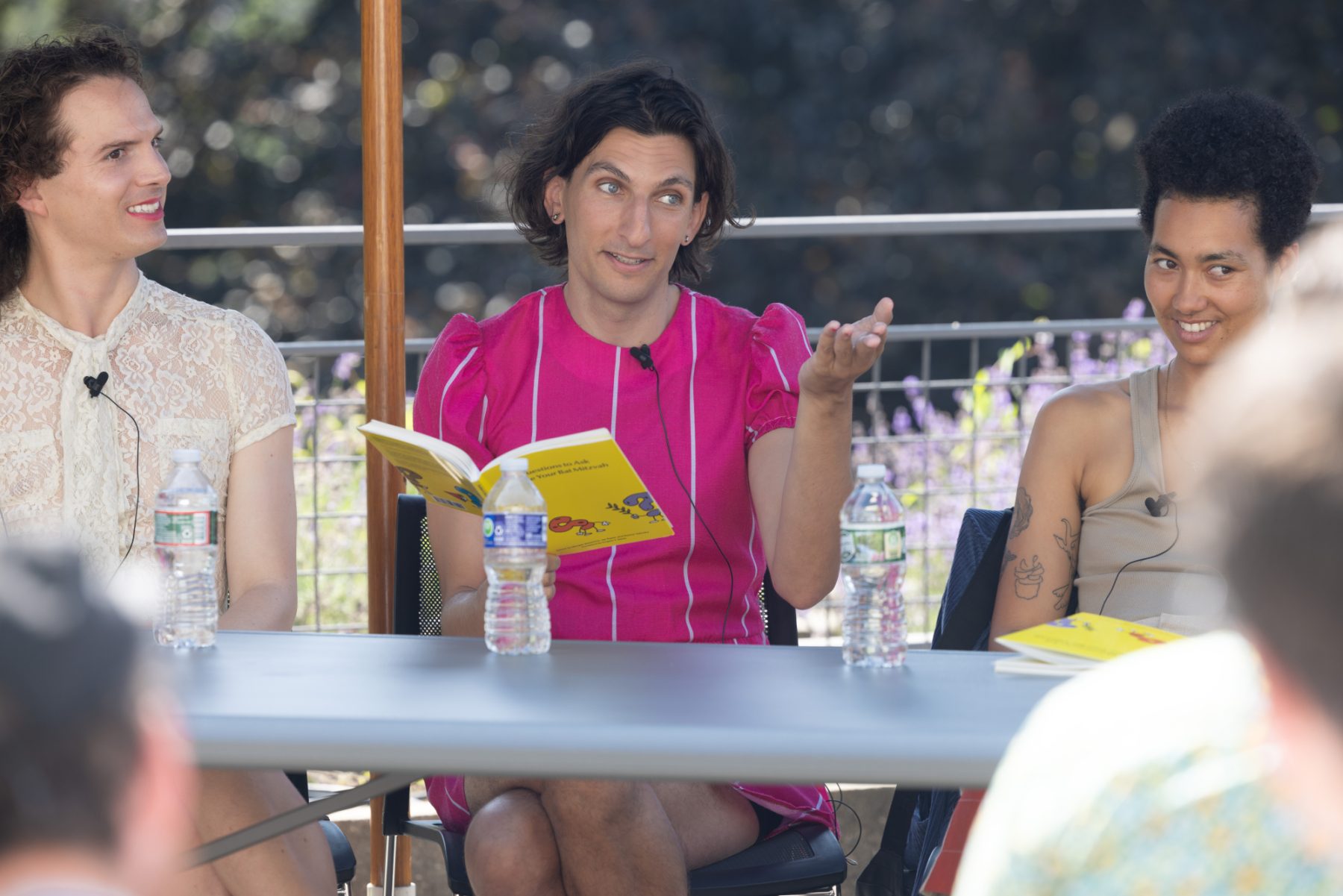
Photography by Susan Young
April 29–May 25, 2023
Art, Film, and Visual Studies 2023 Senior Thesis Exhibition: What Goes Up Keeps Going Up
The exhibition featured works by Sophia Armenakas, Anna Correll, Céline Cuadra, Liliana Cunningham-Perini, Meghan Grady, Caitlin Lam, Hannah Micah Neri, and Albert Zhang.
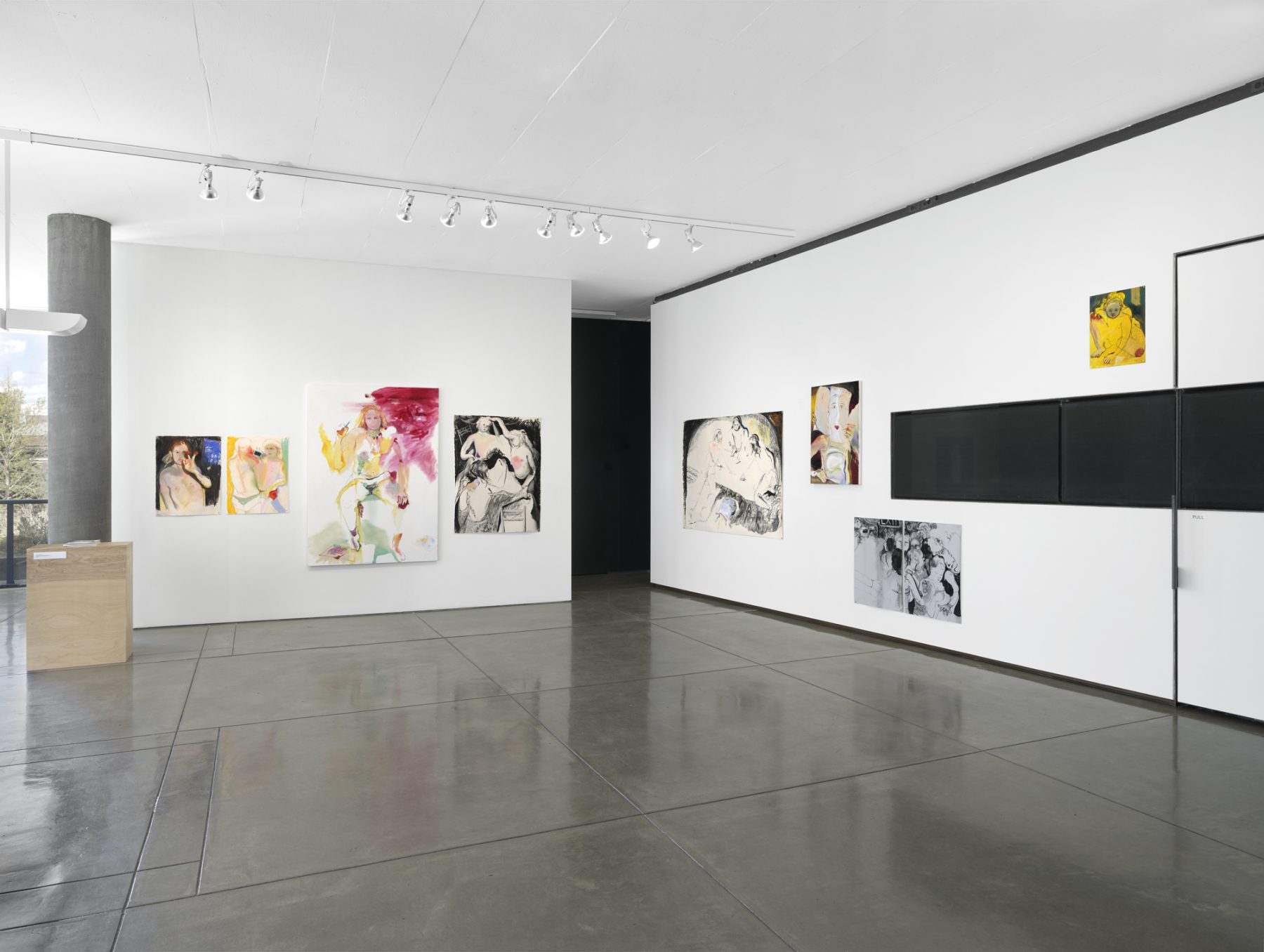
Installation view of work by Anna Correll, from left to right: I Know You Are But What Am I, book, 2023; Raspberry Show, oil pastel on paper, 2023; Stop Filming Me, oil pastel on paper, 2023; I Can Paint Myself!, oil paint and oil pastel on canvas, 2023; The Tent Builders, charcoal on paper, 2023; Drawing Together, charcoal and oil pastel on paper, 2023; Try Her On, oil paint and oil pastel on canvas, 2023; Club Drama, charcoal on paper, 2023; No Bra News, oil and oil pastel on paper, 2023. Courtesy of Carpenter Center for the Visual Arts. Photo: Julia Featheringill.
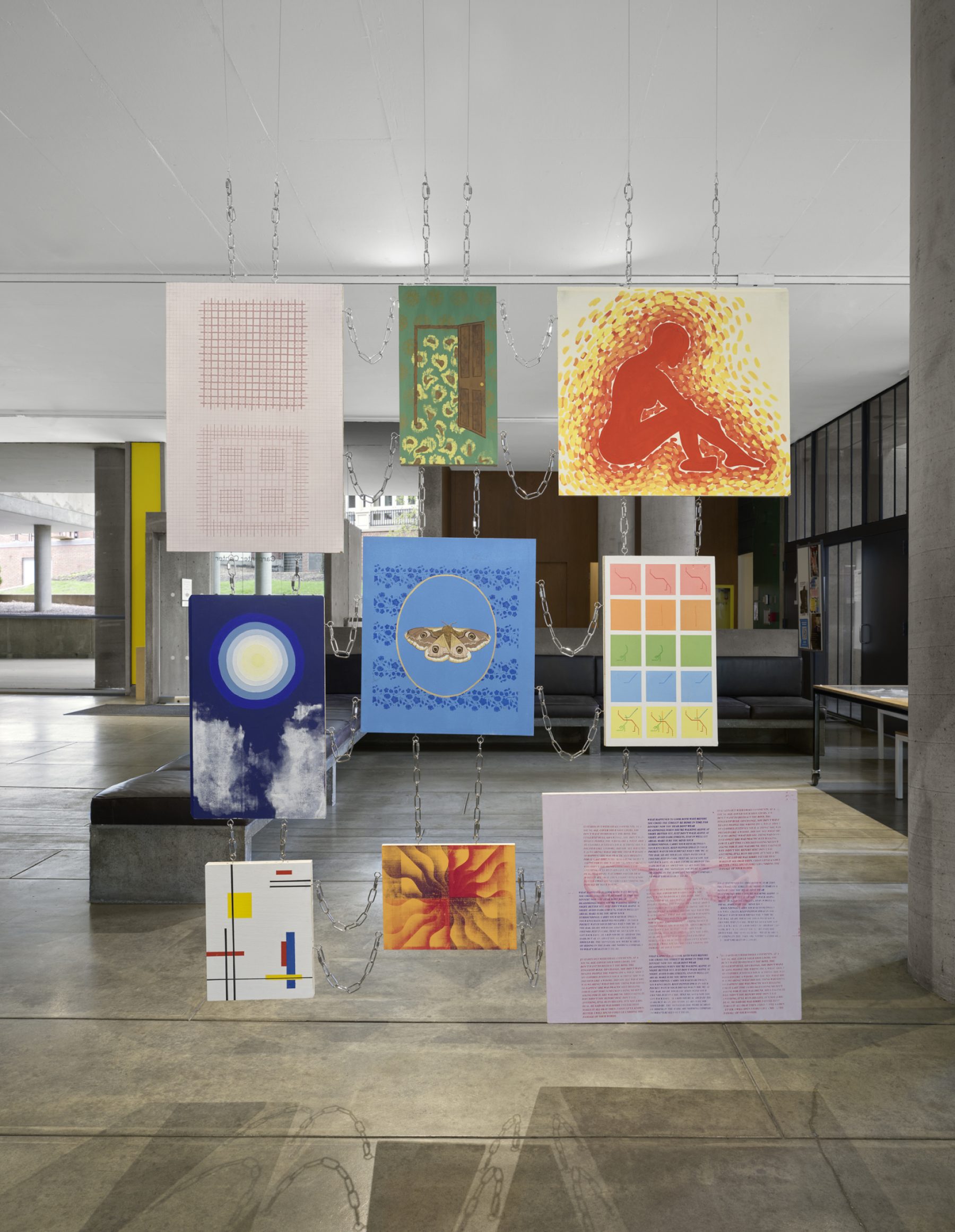
Installation view of Meghan Grady for Art, Film, and Visual Studies 22 Senior Thesis exhibition: What Goes Up Keeps Going Up Photo credit: Julia Featheringill
February 3–April 9, 2023
Please Stay Home: Darrel Ellis in Dialogue with Leslie Hewitt and Wardell Milan
Through a groundbreaking experimental art practice that fluidly merged painting, printmaking, and photography, Bronx-born artist Darrel Ellis’s (1958-1992) work engages intergenerational memory, photographic practice, representation, and place. Ellis is known for his unusual technique that involved photographing images projected by an enlarger and introducing sculptural objects into the picture plane. The resulting works convey a sense of perpetually uncertainty and yet visceral tactility. Please Stay Home will pair Ellis with artists Leslie Hewitt (b. 1977) and Wardell Milan (b. 1977), who will create new work responding to his practice. The untimely death of Ellis at age 33 of AIDS-related causes cut short the career of a visionary artist, who is finally being recognized as a forerunner to key contemporary interests in appropriation, re-photography, and intersections between photography and sculpture. For nearly 30 years, Ellis’s friend the artist, curator and writer Allen Frame archived and preserved the Ellis archive in consultation with his family. This exhibition focuses specifically on his interiors – scenes that feature his mother, sister, and extended family members, as well as places he only knew through photographs. These intimate scenes invite us to consider the role of the family archive, self-expression, photography’s social and cultural contexts, and impact on the formation of Black identities. Artists Leslie Hewitt and Wardell Milan debuted newly commissioned projects made in dialog with Ellis’s life and work.
Please Stay Home featured the work of Darrel Ellis, Leslie Hewitt, and Wardell Milan, with an additional contextual installation including photographs by the artist’s father, Thomas Ellis, and close friend, artist Allen Frame. Centered on a less recognized body of Ellis’s work and featuring new commissions by Hewitt and Milan, Please Stay Home was guest-curated by Makeda Best, Richard L. Menschel Curator of Photography at the Harvard Art Museums.
Pairing Ellis with artists Leslie Hewitt (b. 1977) and Wardell Milan (b. 1977), who created new work responding to his practice. The untimely death of Ellis at age 33 of AIDS-related causes cut short the career of a visionary artist, who is finally being recognized as a forerunner to key contemporary interests in appropriation, re-photography, and intersections between photography and sculpture.
Taking its title from a text Ellis inscribed on one of his drawings, Please Stay Home foregrounds Ellis’ prescient vision.

Installation view of Please Stay Home: Darrel Ellis in Dialogue with Leslie Hewitt and Wardell Milan at the Carpenter Center for the Visual Arts, 2023. Courtesy of Carpenter Center for the Visual Arts. Photo: Julia Featheringill.
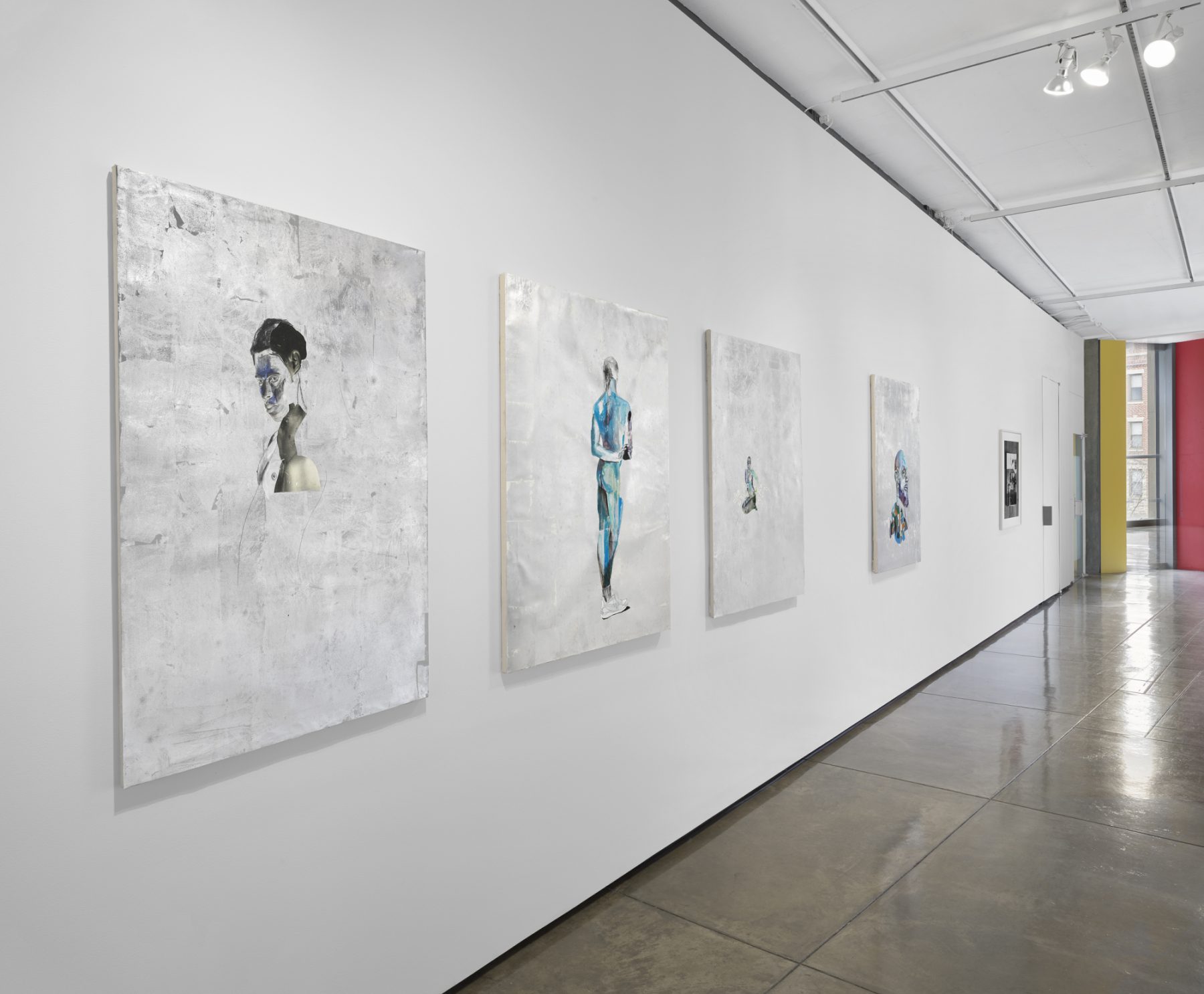
Installation view of Please Stay Home: Darrel Ellis in Dialogue with Leslie Hewitt and Wardell Milan at the Carpenter Center for the Visual Arts, 2023. Courtesy of Carpenter Center for the Visual Arts. Photo: Julia Featheringill.
February 2, 2023
Artist Talk : Leslie Hewitt and Wardell Milan in conversation with Robert F. Reid-Pharr and Makeda Best
Artists Leslie Hewitt and Wardell Milan was in conversation with Robert F. Reid-Pharr, Chair of Studies of Women, Gender, and Sexuality and Professor of African and African American Studies at Harvard University. The conversation was moderated by Makeda Best, Richard L. Menschel Curator of Photography at the Harvard Art Museums.
This conversation was prior to the reception for the exhibition, "Please Stay Home: Darrel Ellis in Dialogue with Leslie Hewitt and Wardell Milan" on view from February 3, 2023 to April 9, 2023.
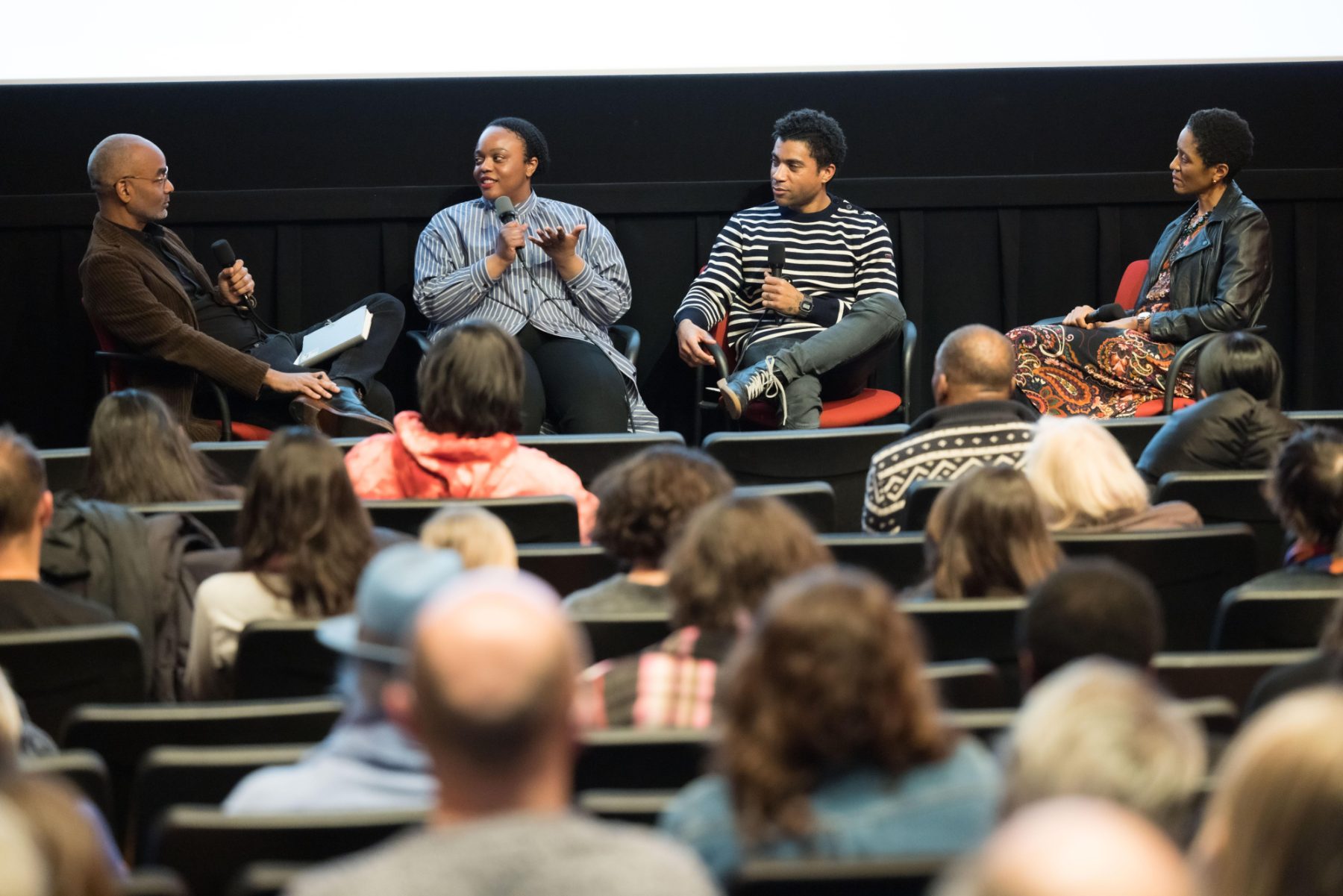
Photography by Susan Young
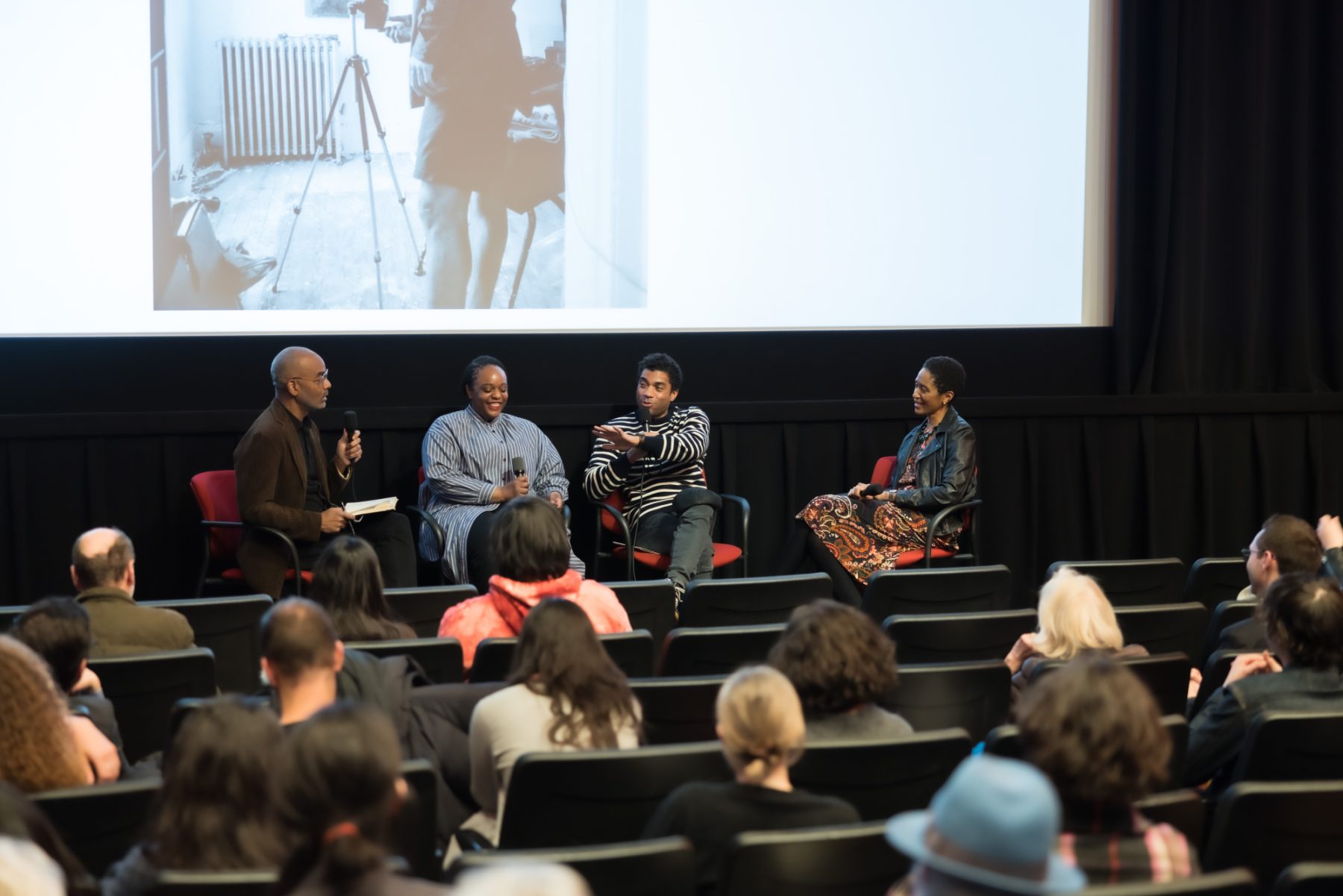
Photography by Susan Young
2022
July 22–December 23
B. Ingrid Olson: History Mother, Little Sister
Two simultaneous solo exhibitions by artist B. Ingrid Olson: History Mother and Little Sister, were hosted each on a separate floor of the Carpenter Center’s landmark Le Corbusier building. The exhibitions featured site-specific installations informed by a feminist engagement with experiences of doubling and mirroring, gendered forms, reciprocity between photography and sculpture, and ways the artist’s body and each viewer’s body relate to the built environment.
In the Carpenter Center’s Level 3 Sert Gallery, History Mother took an unconventional approach to the “history” of Olson’s practice. A selection of photographic works from the past decade joins new works, together articulating how Olson uses her own body as subject matter, as well as the archival impulse that runs through her practice.
Meanwhile, Little Sister, presented in the Carpenter Center’s Level 1 Gallery, debuts an ambitious suite of new sculptures scaled to the building’s spaces, surfaces, and forms, and in critical conversation with its affects and ideological origins.
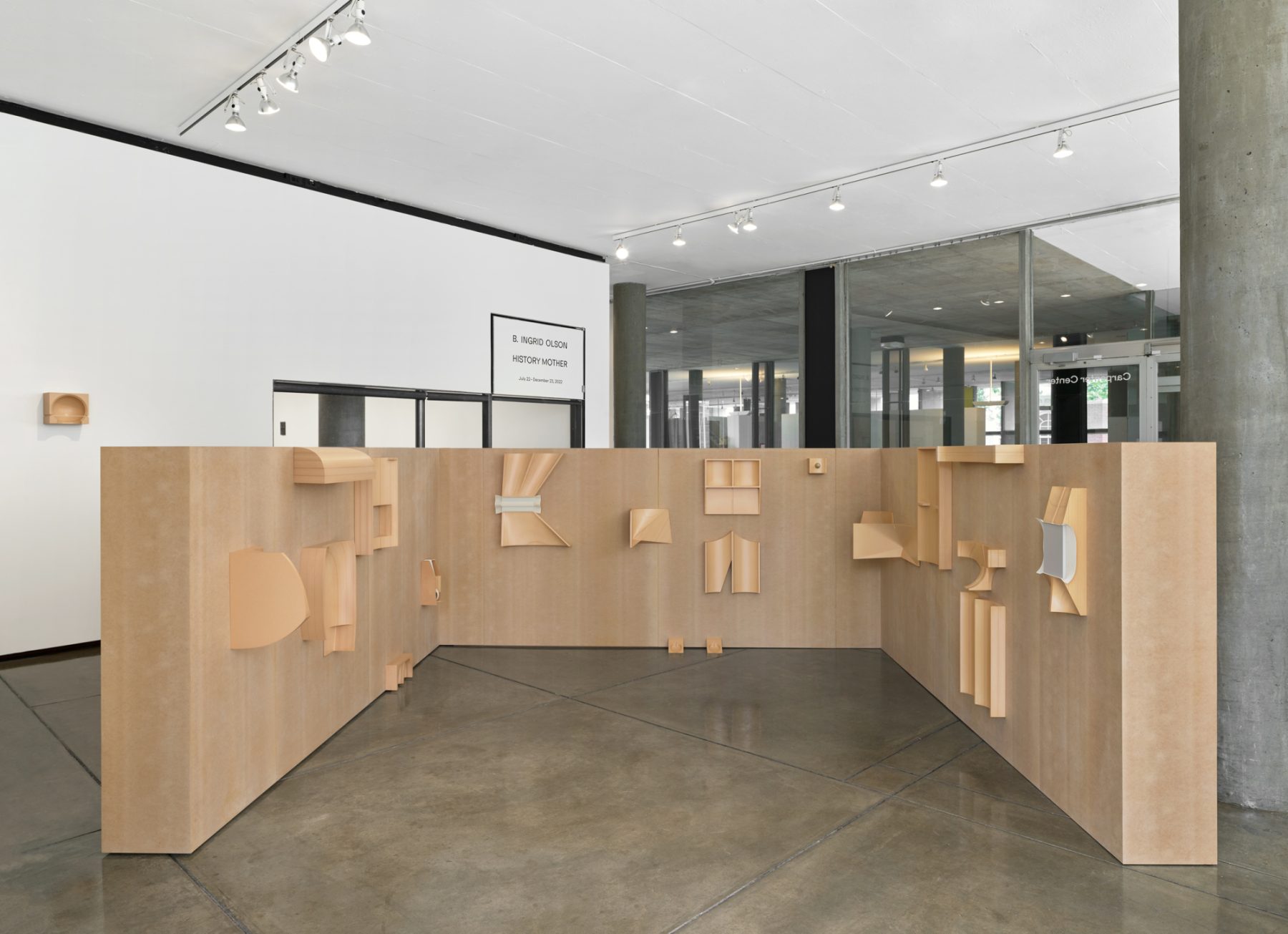
Installation view of B. Ingrid Olson: History Mother, Little Sister at the Carpenter Center for the Visual Arts, 2022. Proto Coda, Index, 2016–22. MDF, Polyacrylic, plywood, glue, vinyl, eggshell, aluminum, latex paint. 30 parts. Courtesy of Carpenter Center for the Visual Arts. Photo: Julia Featheringill
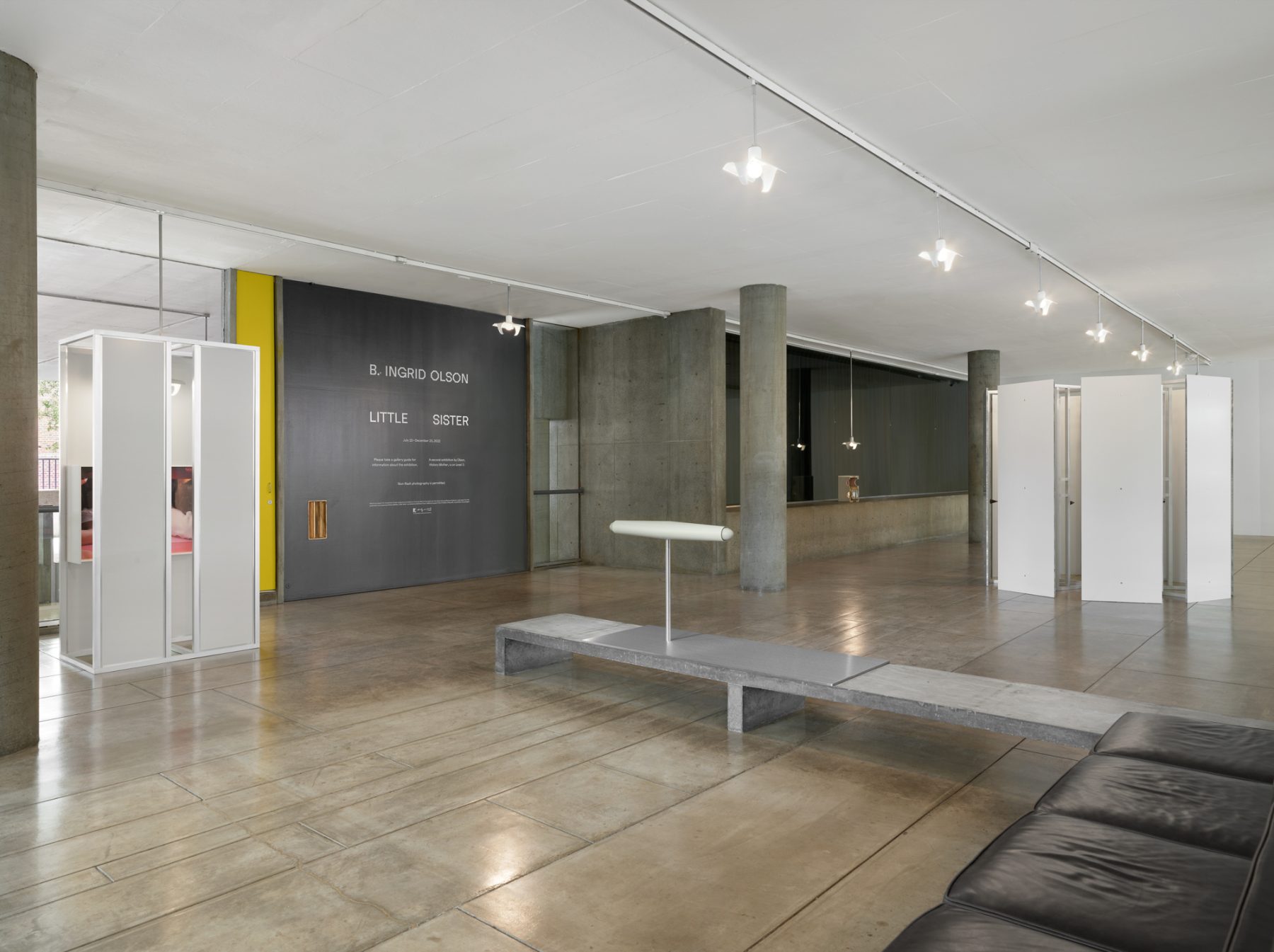
Installation view of B. Ingrid Olson: History Mother, Little Sister at the Carpenter Center for the Visual Arts, 2022. Courtesy of Carpenter Center for the Visual Arts. Photo: Julia Featheringill.
September 29, 2022
B. Ingrid Olson in conversation with Leah Pires and Dan Byers
Artist B. Ingrid Olson was in conversation with curator, and then Carpenter Center Director, Dan Byers, along with catalogue contributor Leah Pires.
B. Ingrid Olson was born in 1987 in Denver, Colorado. She lives and works in Chicago. In addition to her Carpenter Center exhibitions, Olson opened a solo show at Secession, Vienna in June 2022. Recent solo and two-person exhibitions include Fingered Eyed, i8 Gallery, Reykjavík (2019); Forehead and Brain, Albright-Knox Art Gallery, Buffalo (2018); Kiss the architect on the mouth, Simone Subal Gallery, New York (2018); and Klein / Olson, The Renaissance Society, Chicago (2017). Selected group exhibitions include Fata Morgana, Jeu de Paume, Paris (2022); The Inconstant World, Institute of Contemporary Art, Los Angeles (2021); Dependent Objects, The Museum of Contemporary Art, Chicago (2021); New Visions: The Triennial for Photography and New Media, Henie Onstad Kunstsenter, Høvikodden, Norway (2020); Personal Private Public, Hauser & Wirth, New York (2019); Being: New Photography 2018, The Museum of Modern Art, New York (2018); and Lost Without Your Rhythm, Aspen Art Museum, Aspen (2018).
Leah Pires is an art historian whose work analyzes the politics of representation in modern and contemporary art. She teaches at the University of Chicago, where she is Assistant Instructional Professor in the MA Program in the Humanities and the Department of Art History and an affiliate of the Center for the Study of Gender and Sexuality.
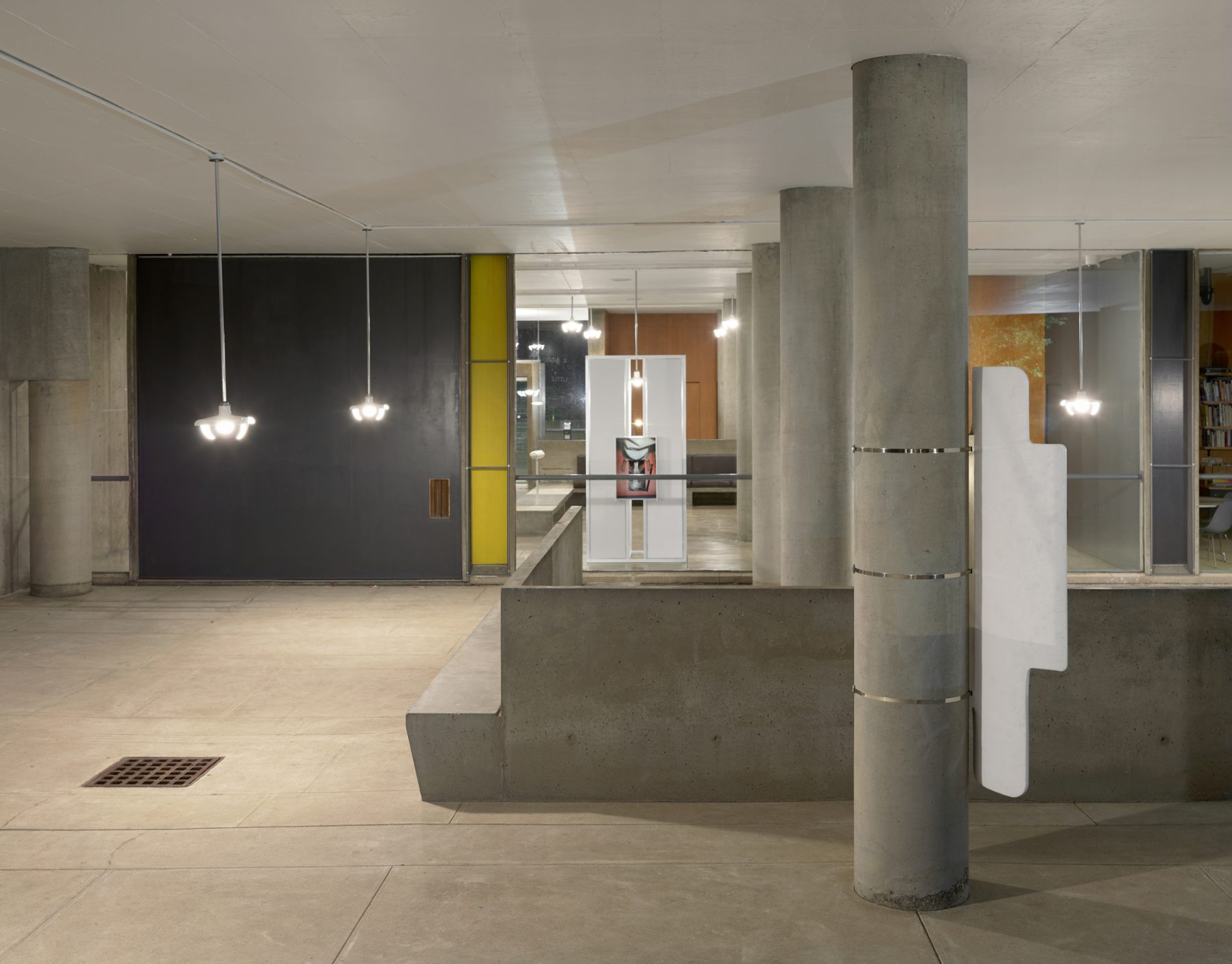
Installation view of B. Ingrid Olson: History Mother, Little Sister at the Carpenter Center for the Visual Arts, 2022. Courtesy of Carpenter Center for the Visual Arts. Photo: Julia Featheringill.
April 29–May 26, 2022
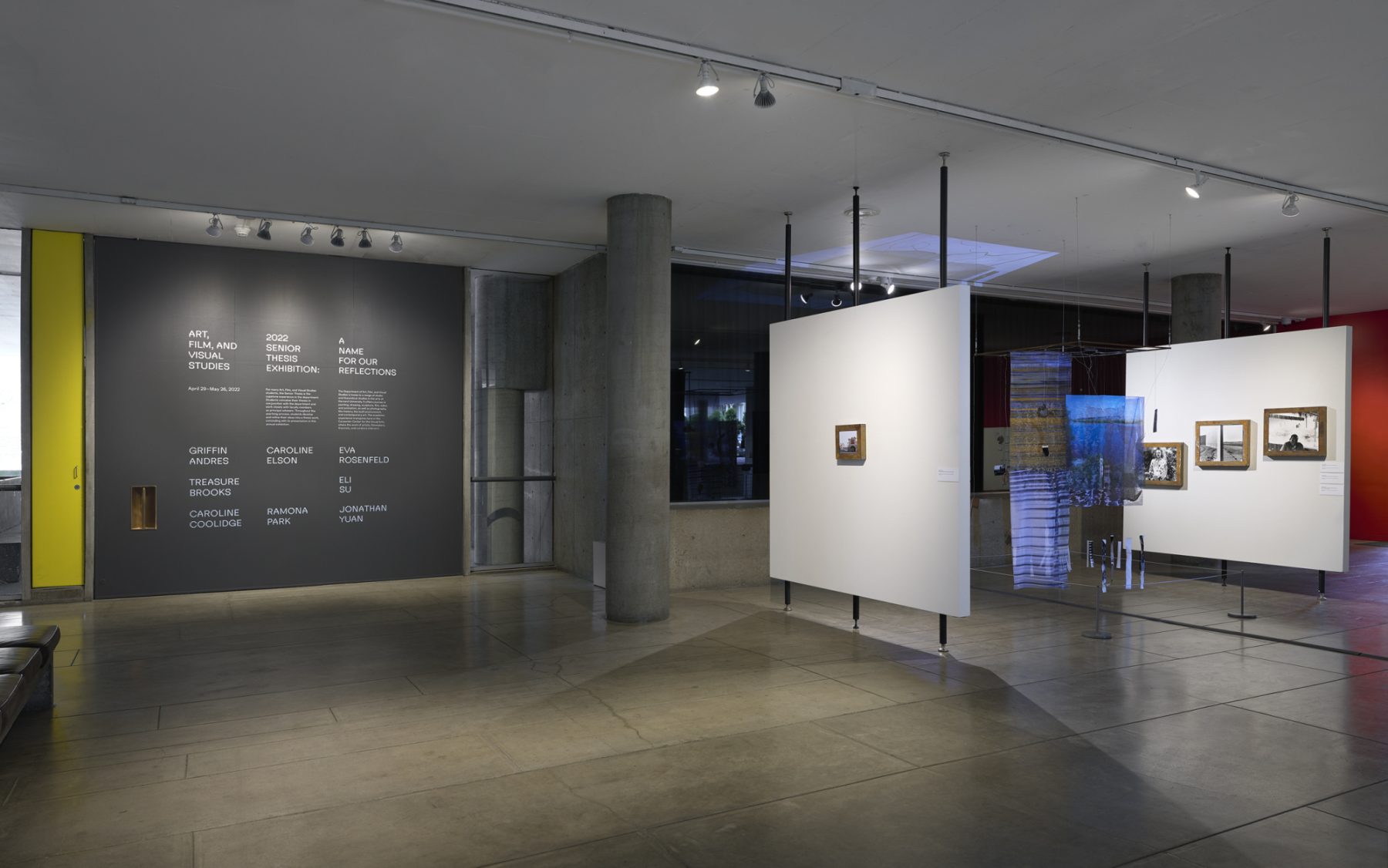
Art, Film and Visual Studies 2022 Senior Thesis Exhibition: A Name for Our Reflections
A Name for Our Reflections featured works by Griffin Andres, Treasure Brooks, Caroline Coolidge, Caroline Elson, Ramona Park, Eva Rosenfeld, Eli Su, and Jonathan Yuan.
The Department of Art, Film, and Visual Studies is home to a range of studio and theoretical studies in the arts at Harvard University. It offers courses in painting, drawing, sculpture, film, video, and animation, as well as photography, film history, the built environment, and contemporary art. The academic experience transpires in the Carpenter Center for the Visual Arts, where thinking and making intersect to enable students from a variety of disciplinary studies to be aware of their visual environment. The exhibition is available alongside Open Studios, a showcase of student work produced in spring courses.
Installation view of the Art, Film, and Visual Studies 22 Senior Thesis exhibition: A Name For Our Reflections. Photo credit: Julia Featheringill
Installation view of the Art, Film, and Visual Studies 22 Senior Thesis exhibition: A Name For Our Reflections. Photo credit: Julia Featheringill
February 4–April 10, 2022
Candice Lin: Seeping, Rotting, Resting, Weeping
Candice Lin creates multisensory environments that combine ceramics, textiles, drawing, video animation, and other art forms. She often investigates the legacies of colonialism by tracing the trade routes and material histories of a range of colonial goods, layering her work with cross-cultural imagery discovered through this process. Drawing from this imagery and years of material research, Lin has created a new body of work that is grounded in our uncanny sense of isolation and collective experience still shaping these pandemic years.
Seeping, Rotting, Resting, Weeping was composed of richly tactile elements that encourage communal gathering. Created in her California studio during the first year of the pandemic, while increasingly frequent wildfires raged nearby, Lin has devised a set of experiences choreographed by often participatory works that take us through rituals of moving our bodies, touching, and sharing space. The exhibition title references the hands-on nature of her art-making—in particular, the process of fermenting indigo plants to make blue dye, one of the installation’s central materials.
Each work features imagery of anxiety and hope, intimacy and estrangement, and an excess of bodily mutations and hybrid states. They picture relationships that combine animal species in ways that are by turn comic, tragic, heartening, and cathartic. The exhibition also imagines an existence where humans—such neglectful caretakers of our world—are no longer the protagonists. Cats abound in the space in forms ranging from ceramic pillows to a video’s animated cat demon. These complicated feline figures guide us through a world where animals and other nonhuman actors rule.
The exhibition was accompanied by a richly illustrated catalogue documenting the artist’s research materials and process, with contributions by Mel Y. Chen, Julia Bryan- Wilson, Sir Porte and the exhibition’s curators.
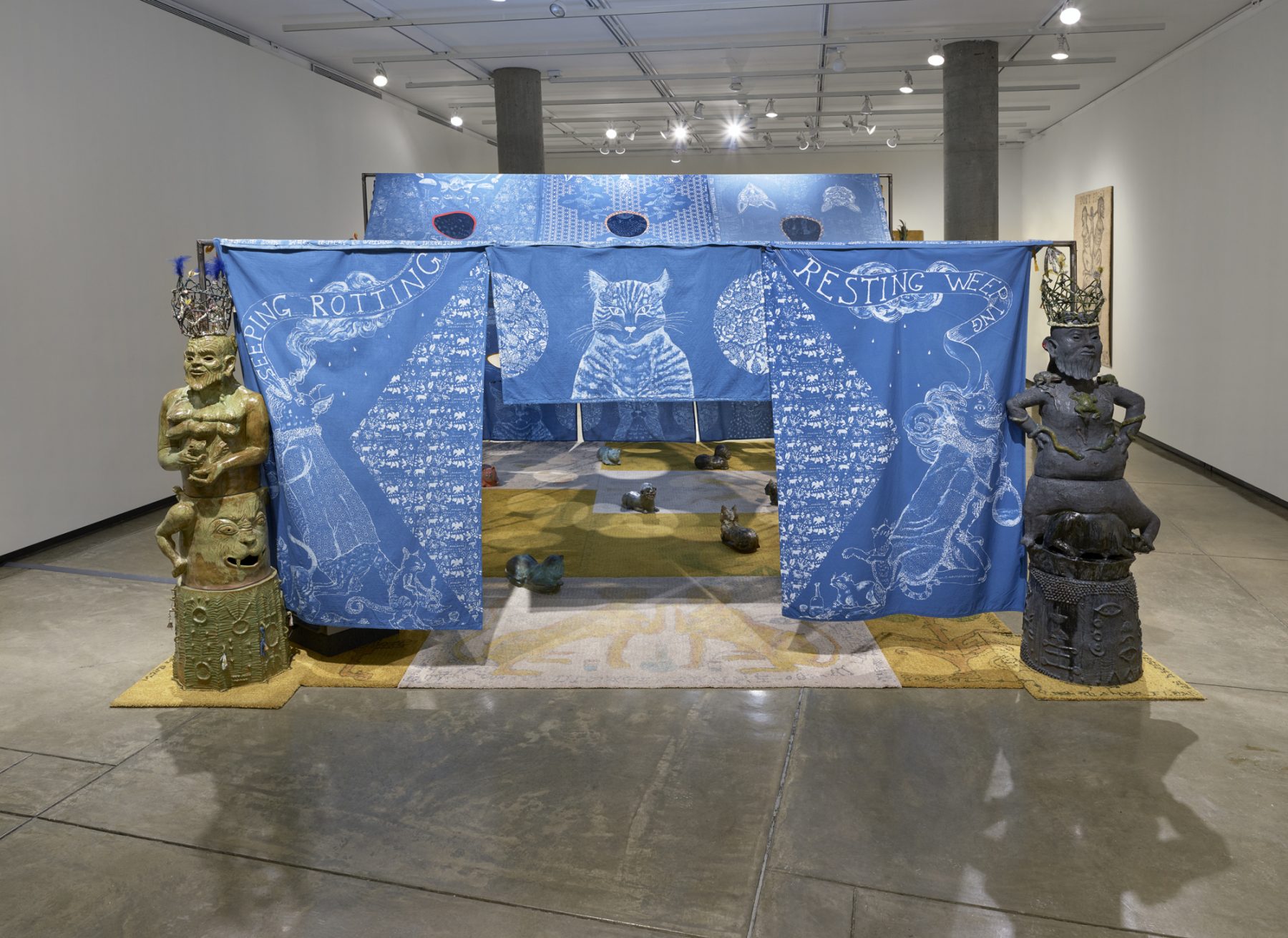
Installation view of Candice Lin: Seeping, Rotting, Resting, Weeping at the Carpenter Center for the Visual Arts, 2022. Center: Seeping, Rotting, Resting, Weeping, 2021. Courtesy of Carpenter Center for the Visual Arts. Photo: Julia Featheringill.
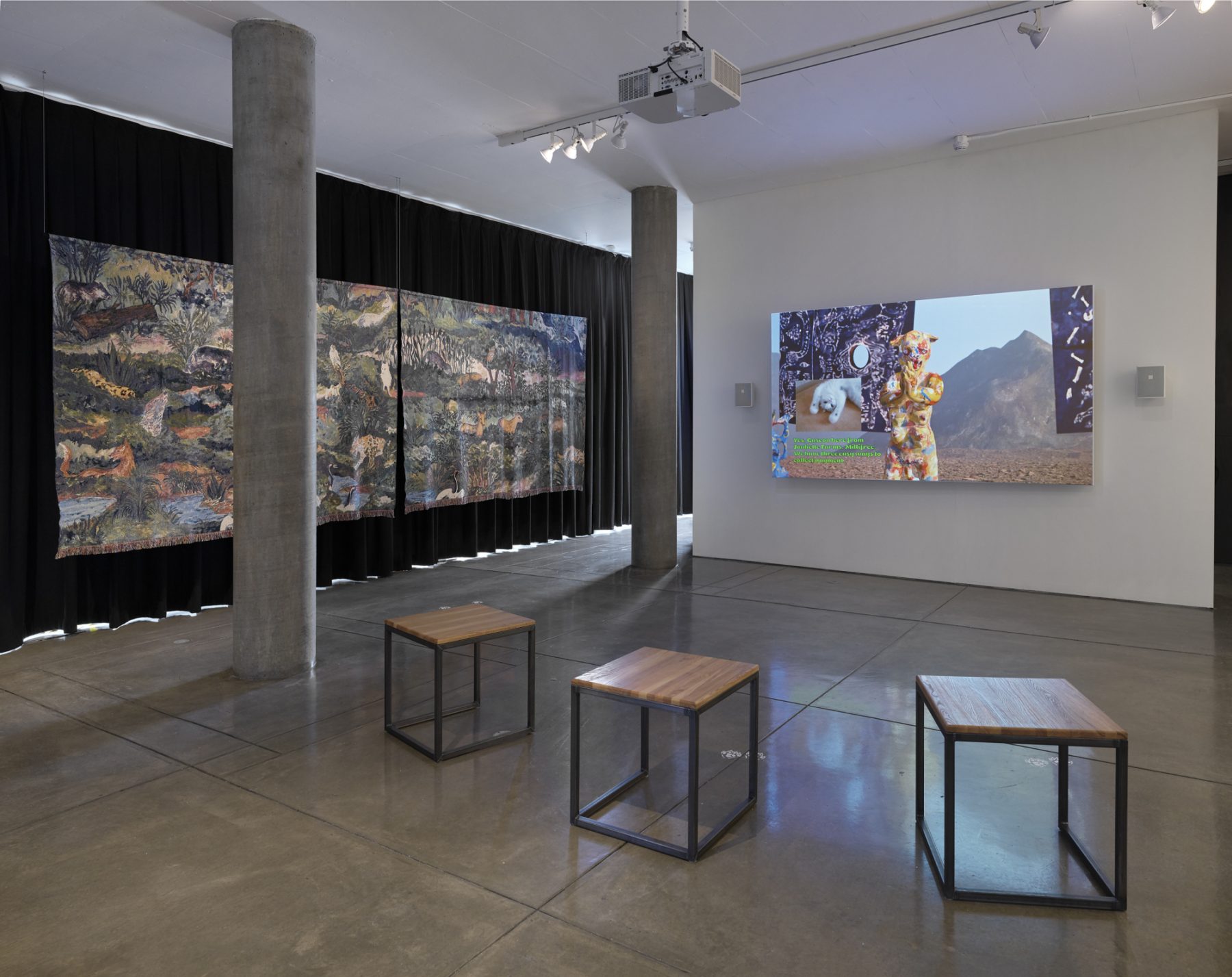
Installation view of Candice Lin: Seeping, Rotting, Resting, Weeping at the Carpenter Center for the Visual Arts, 2022. Center: Seeping, Rotting, Resting, Weeping, 2021. Courtesy of Carpenter Center for the Visual Arts. Photo: Julia Featheringill.
2021
September 24–December 23
Diedrick Brackens and Katherine Bradford
The Carpenter Center for the Visual Arts was pleased to present a two-person exhibition of tapestries by Diedrick Brackens and paintings by Katherine Bradford. Brackens and Bradford's works resonated within our moment of heightened emotion, isolation, and introspection in the midst of profound change to our social, economic, and public health realities. Both artists create dreamlike scenes that snap back and forth between the symbolic and the specific. Details speak to lived experiences as well as collective histories and memories. With parallel interests in materiality and the act of making, both artists use the specific physical and chromatic qualities of their chosen mediums—paint and yarn—to create ambiguous pictorial spaces that frame relationships between bodies. Their scenes seem to exist both outside and deeply embedded within this uncertain time, evoking cautions, questions, and desires about our bodies in relation to each other.

Installation view, Diedrick Brackens and Katherine Bradford, Carpenter Center for the Visual Arts, on view September 24 - December 23, 2021. Left: Diedrick Brackens, american wedding, 2019. Right: Katherine Bradford, Brothers, 2017. Photo: Julia Featheringill.
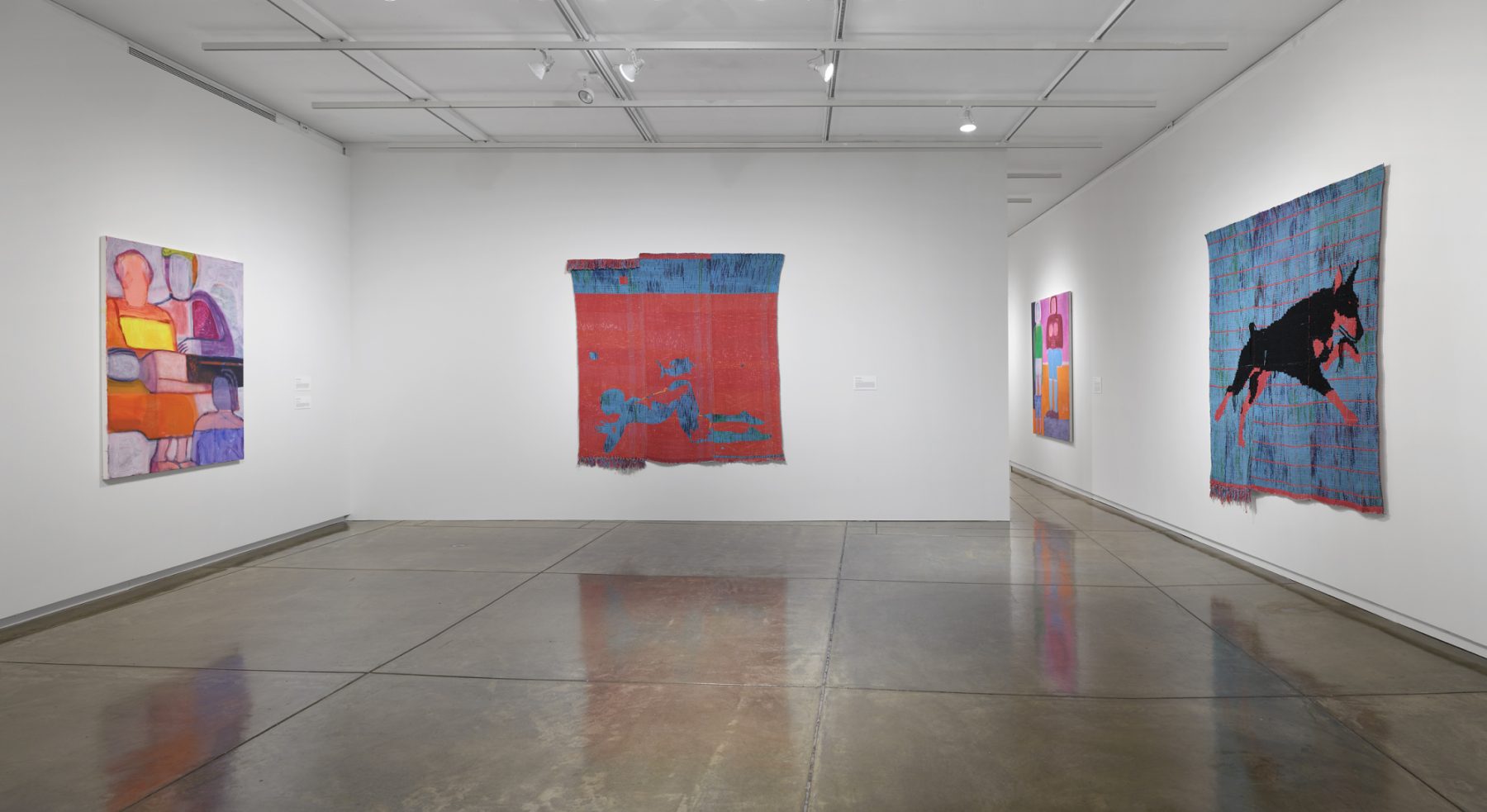
Installation view, Diedrick Brackens and Katherine Bradford, Carpenter Center for the Visual Arts, on view September 24 - December 23, 2021. Photo: Julia Featheringill.
May 4–August 31, 2021
Art, Film, and Visual Studies 2021 Senior Thesis Show: What is Created Through Struggle
The exhibition featured works by Ashley Akaeze, Nicole Araya, Georgia Bowder-Newton, Natalie Gale, Caitlin Jones, Marie Alejandra Konopacki, Brett McLoughlin & Alex Medlin, Sally O’ Keeffe, Dani Pérez, Vivian Tian, and Christina Yee.
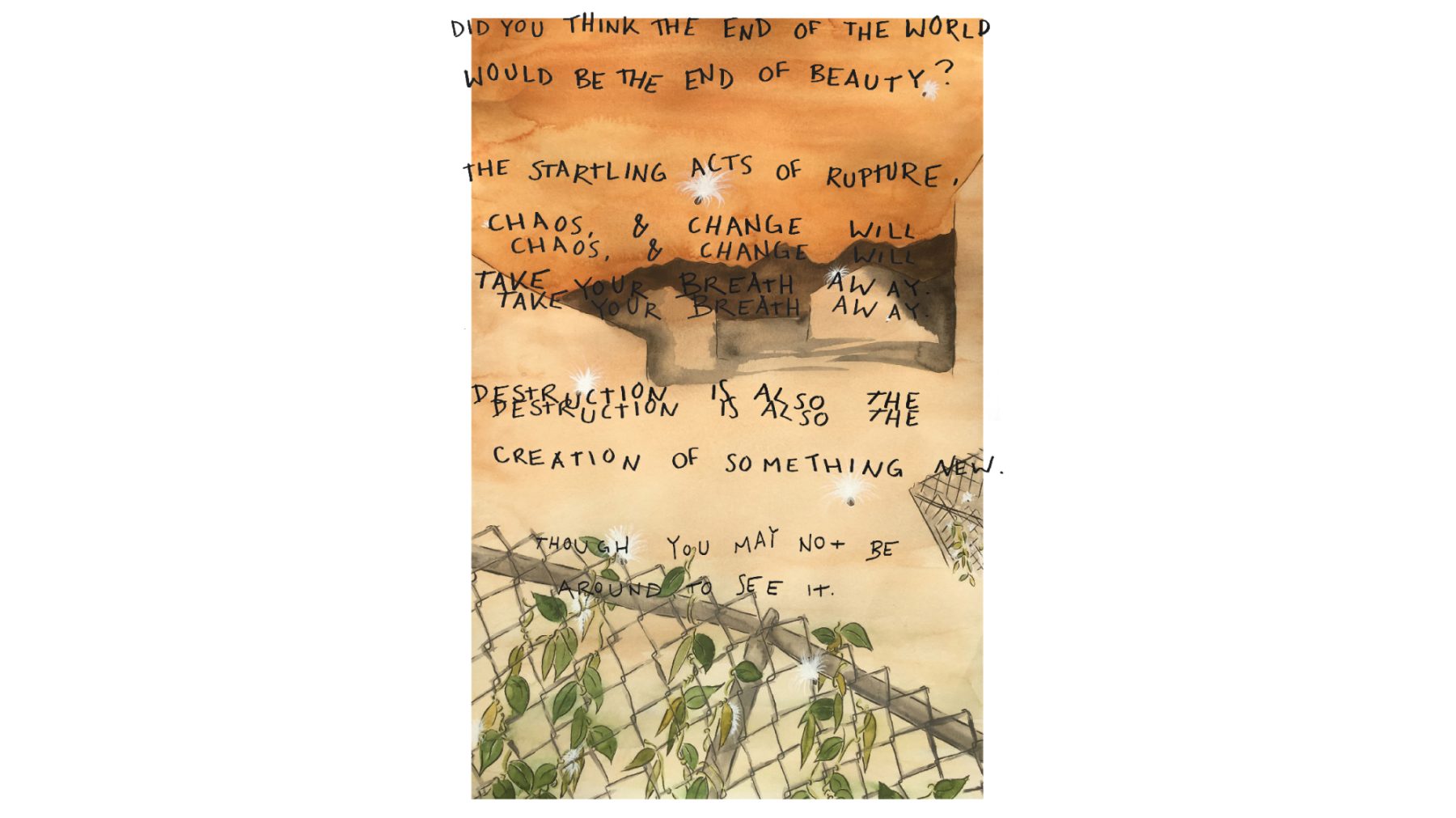
Georgia Bowder-Newton, Beauty at the End of the World, 2021. Watercolor and ink. 12 x 18 inches. Courtesy of the artist.
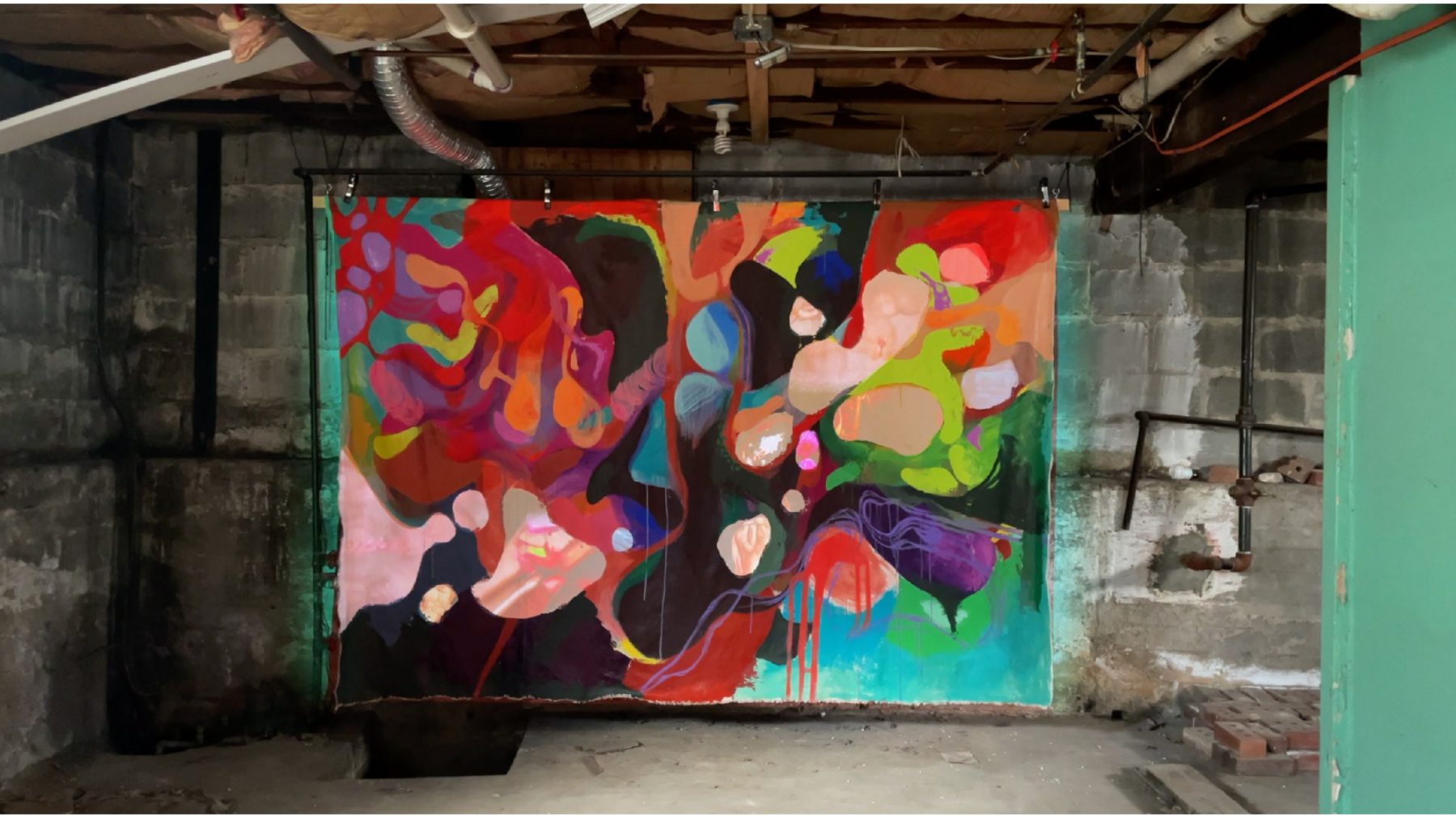
Marie Konopacki, Primeval Forests, 2021 (still). 2:35 min. HD video, color. Courtesy of the artist.
2020
September 1, 2020–May 31, 2022
Carpenter Center Conversations
When the COVID-19 pandemic forced us to close our galleries, we sought new ways of fostering the sense of artist-centered community that lies at the heart of the Carpenter Center’s mission.
Beginning with an online program featuring artist Tony Cokes and philosophy professor and critic Christoph Cox, the Carpenter Center hosted a series of nine conversations between artists, curators, and scholars from April 2020 to April 2021. Many of the participants had existing relationships, coloring the conversations with warmth, camaraderie, and the easy yet rigorous exchange that can occur between familiars.
After transcribing audio recordings of these conversations, we worked closely with the program participants to edit them into a keepsake illustrated booklet that would be mailed—for free—to anyone who wanted one. Zoom events can feel ephemeral, and translating these conversations to print and pairing transcripts with images and bibliographic references offered a tangible and vibrant mode of persevering and disseminating these vital exchanges.
Following the release of the of nine booklets, we compiled the conversations in a book publication, In Conversation, 2020–2021: Dialogues with Artists, Curators, and Scholars. This collection emerges in the aftermath of the pandemic as a time capsule of sorts, charting the insights and practices of artists and their interlocutors as they grappled with profound social rupture.
Each video recording and corresponding booklet PDF can be accessed via the links below.
In Conversation, 2020–2021: Dialogues with Artists, Curators, and Scholars can be purchased in-person or online at the Carpenter Center Bookshop.
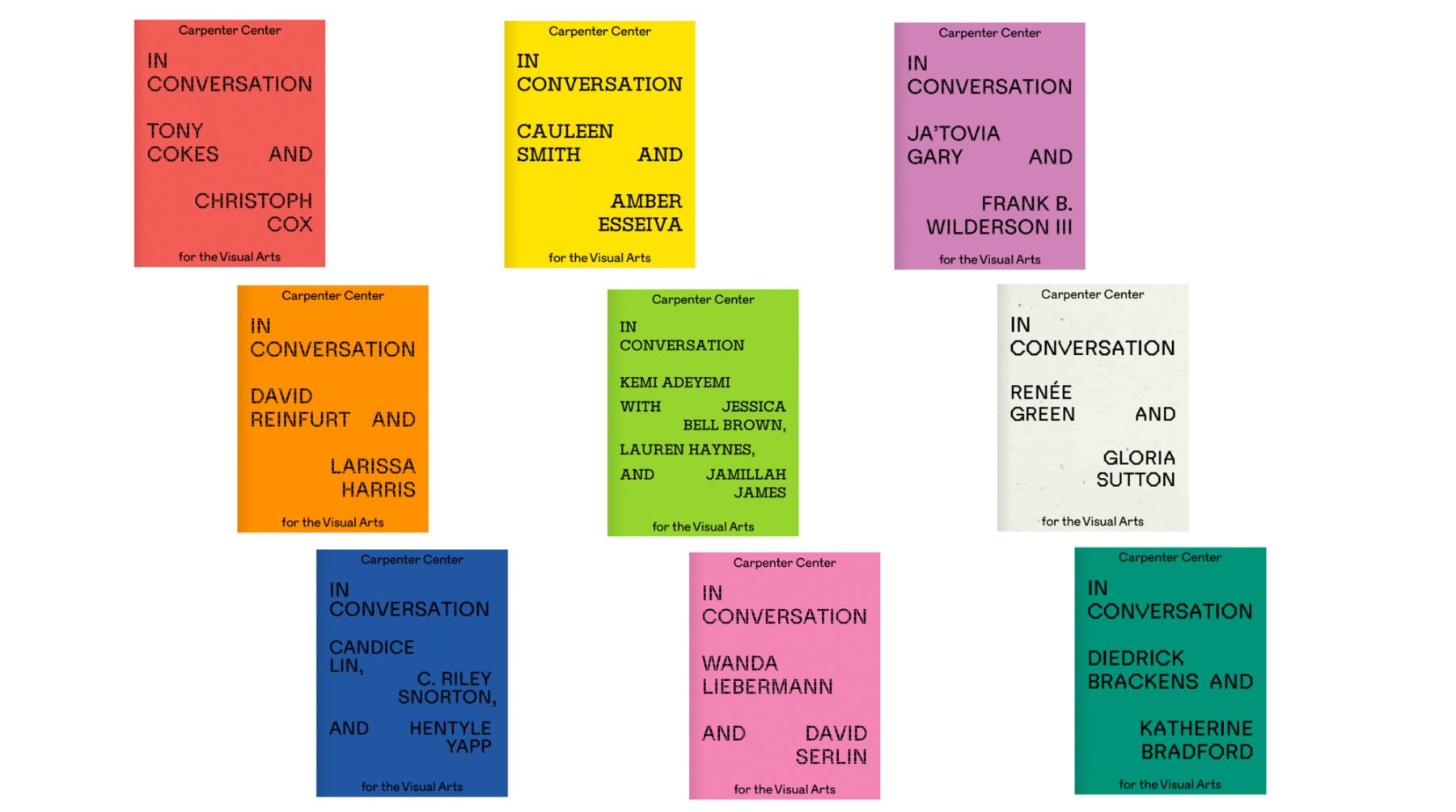
In Conversation Series, 2020–2021. Carpenter Center for the Visual Arts.
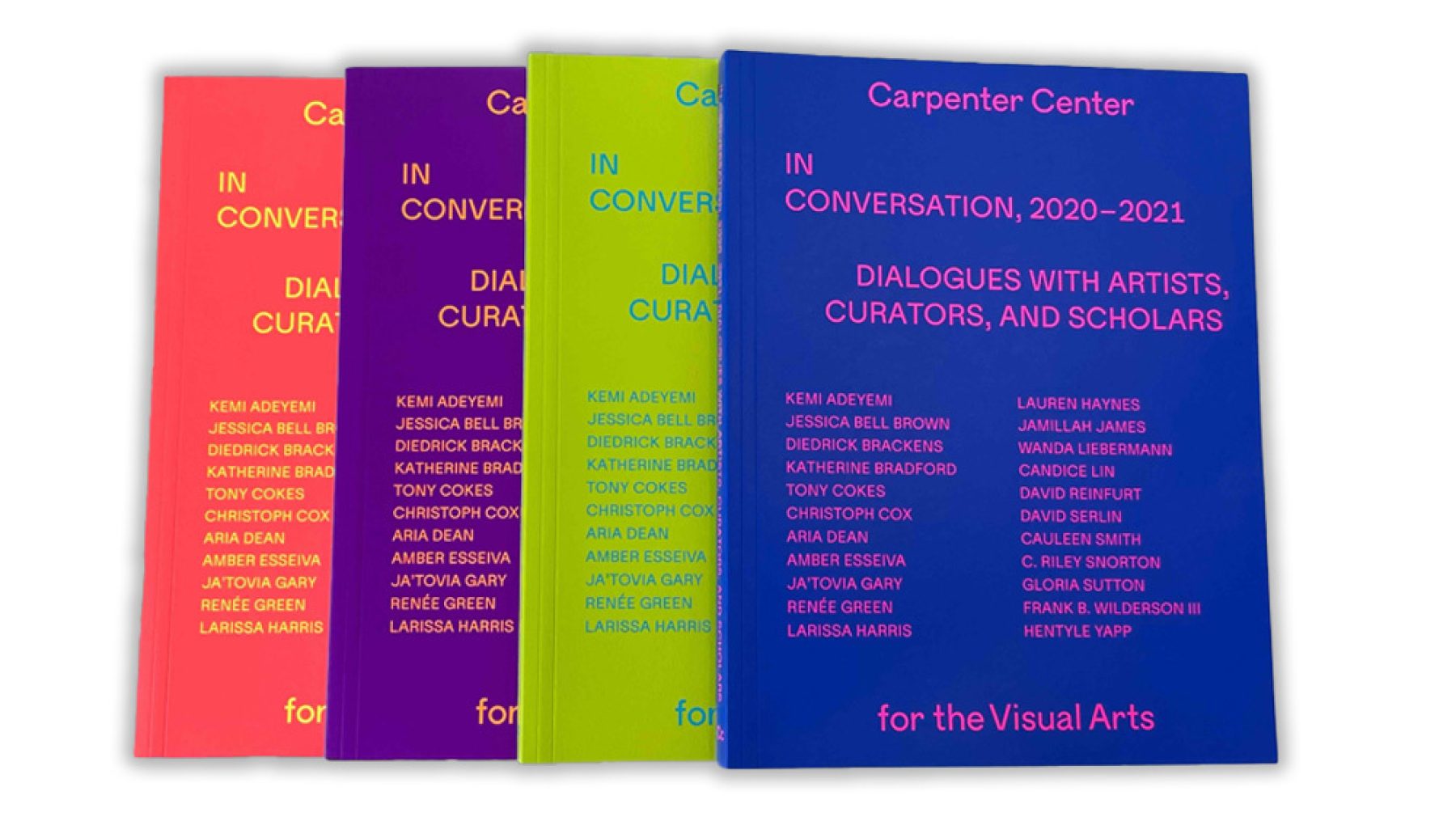
In Conversation, 2020–2021 Dialogues with Artists, Curators, and Scholars. Carpenter Center for the Visual Arts.
May 13–August 31, 2020
Art, Film, and Visual Studies 2020 Senior Thesis Exhibition: Separation is Natural
The exhibition was presented online and featured works by Berezi Arango, Casper Dehnavi, Joyce Fung, Jules Kardish, George Liu, Sabrina Richert, Iva Ruzic, Jeanine Zheng, and Gabriel Ziaukas.
Iva Ruzic, ‘Gatalinka’ (still), 2020. Stop motion animation. 6:39 min. Courtesy of the artist.
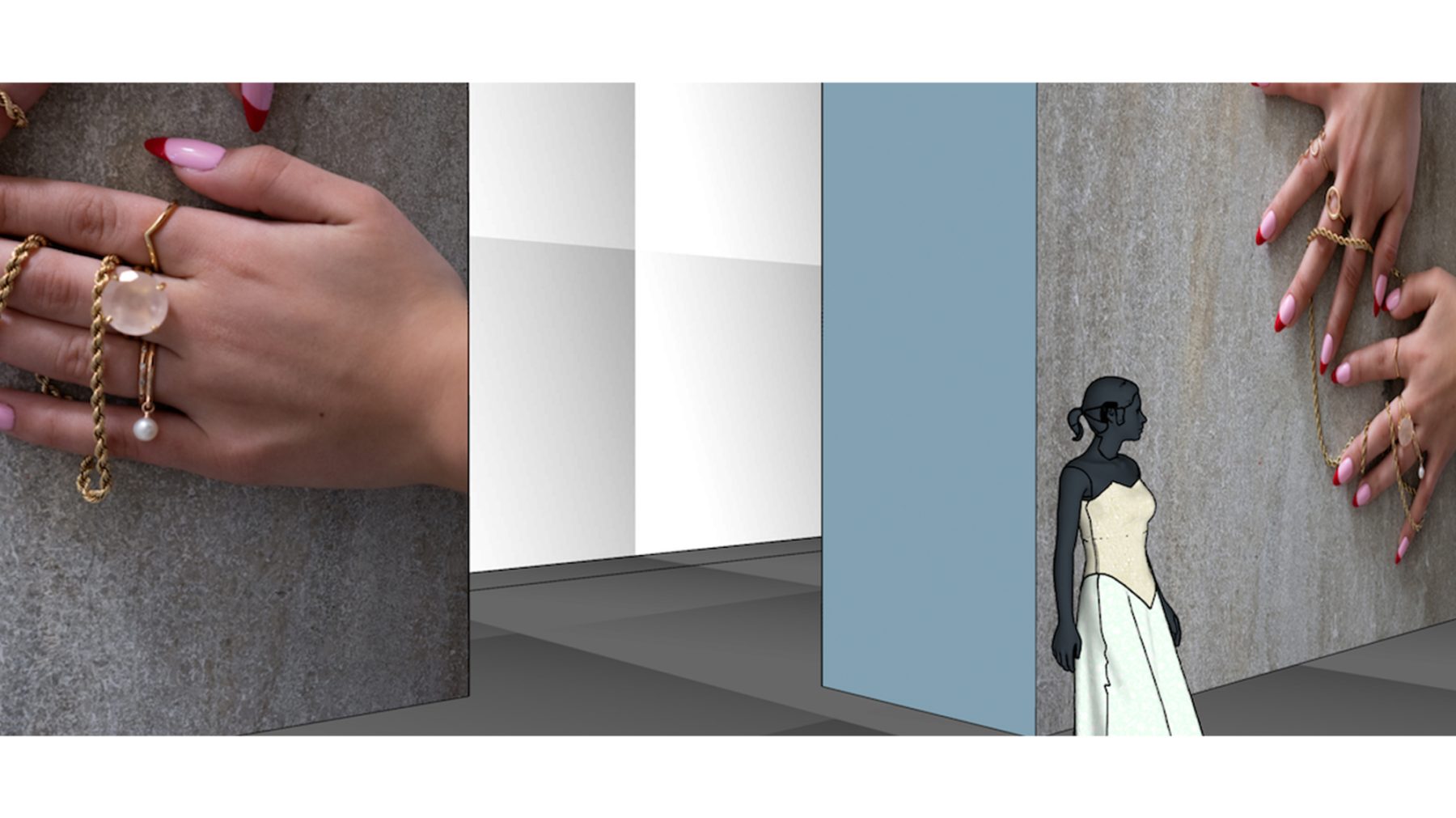
Berezi Arango
January 31–July 16, 2020
Tony Cokes: If UR Reading This It's 2 Late: Vol. 2
Tony Cokes: If UR Reading This It's 2 Late: Vol. 2 provided an opportunity to see a broad range of powerful artworks made by Cokes since the 1980s, alongside two newly commissioned films. Cokes’s video works are eviscerating critiques and affective art works, bringing together color theory, sound, music, and texts quoting a polyphony of voices such as Louis Althusser, Malcolm X, David Bowie, Public Enemy and Donald Trump. Meeting political and social commentary with cultural theory and a critique of capitalism, Cokes’s films starkly confront the social conditions, as well as the specific prejudices and threats encountered by black subjects. Recent works range across minimal techno, the Bush administration’s use of color to engender a perpetual culture of fear, and music used to torture detainees during the so-called “war on terror.”
The COVID-19 outbreak compelled us to close Tony Cokes’s exhibition If UR Reading This It’s 2 Late: Vol 2, a month before its scheduled end. In light of this closure, we put together a digital alternative to the gallery experience. On the exhibition page you will find Cokes’s Carpenter Center-commissioned video work, Untitled (m.j.: the symptom) (2020), a soundtrack for a future work, Of Lies & Liars Pt. 3 of 3 (2020), and a video and transcript of a Zoom conversation between Cokes and Christoph Cox, Professor of Philosophy at Hampshire College.
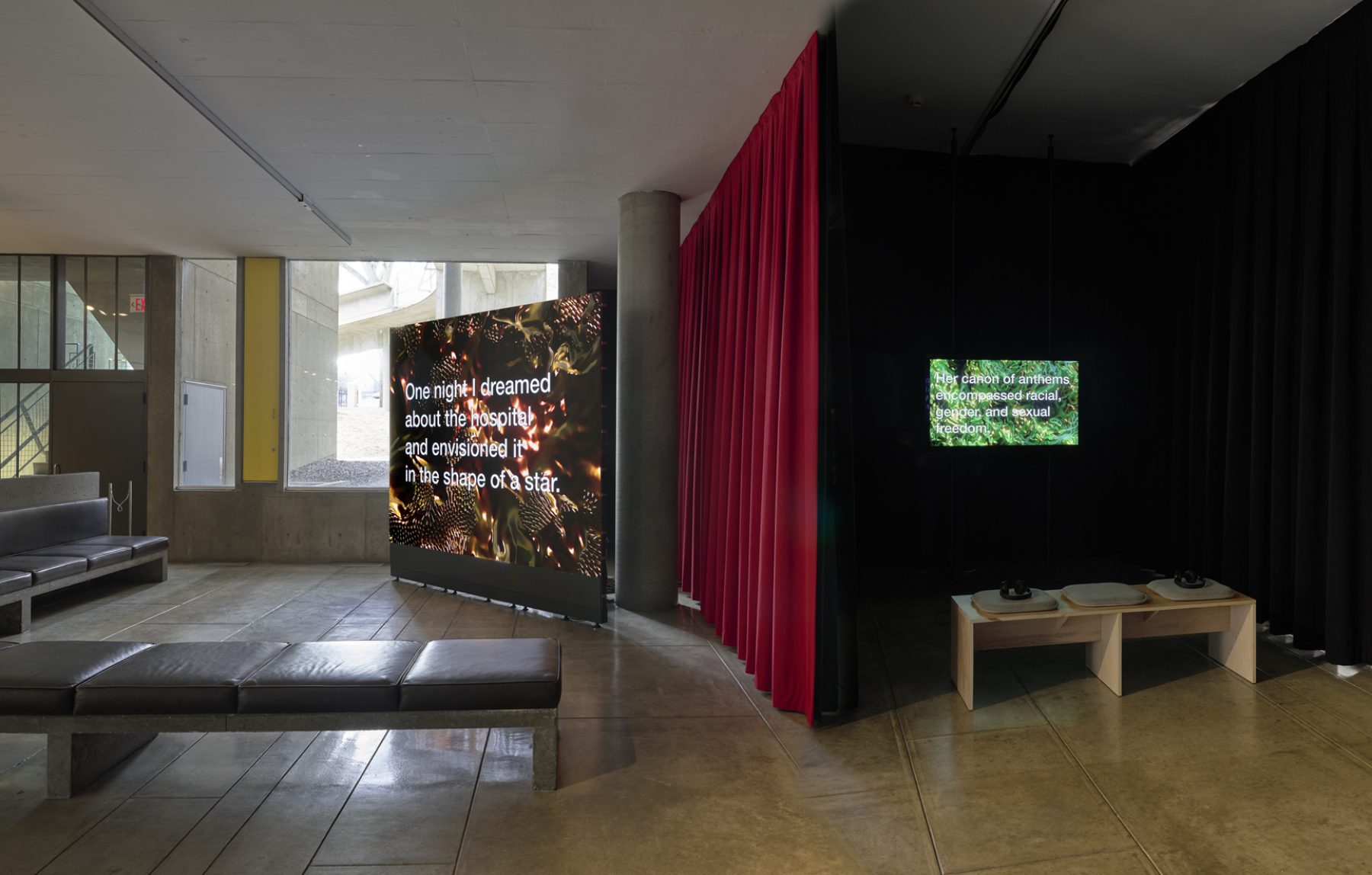
Installation view, Tony Cokes: If UR Reading This It’s 2 Late: Vol 2, Carpenter Center for the Visual Arts, on view January 31–April 12, 2020. Pictured: Tony Cokes, The Will and The Way...Fragment 2 (video), 2019. Courtesy of the Carpenter Center for the Visual Arts. Photo: Julia Featheringill / Stewart Clements.
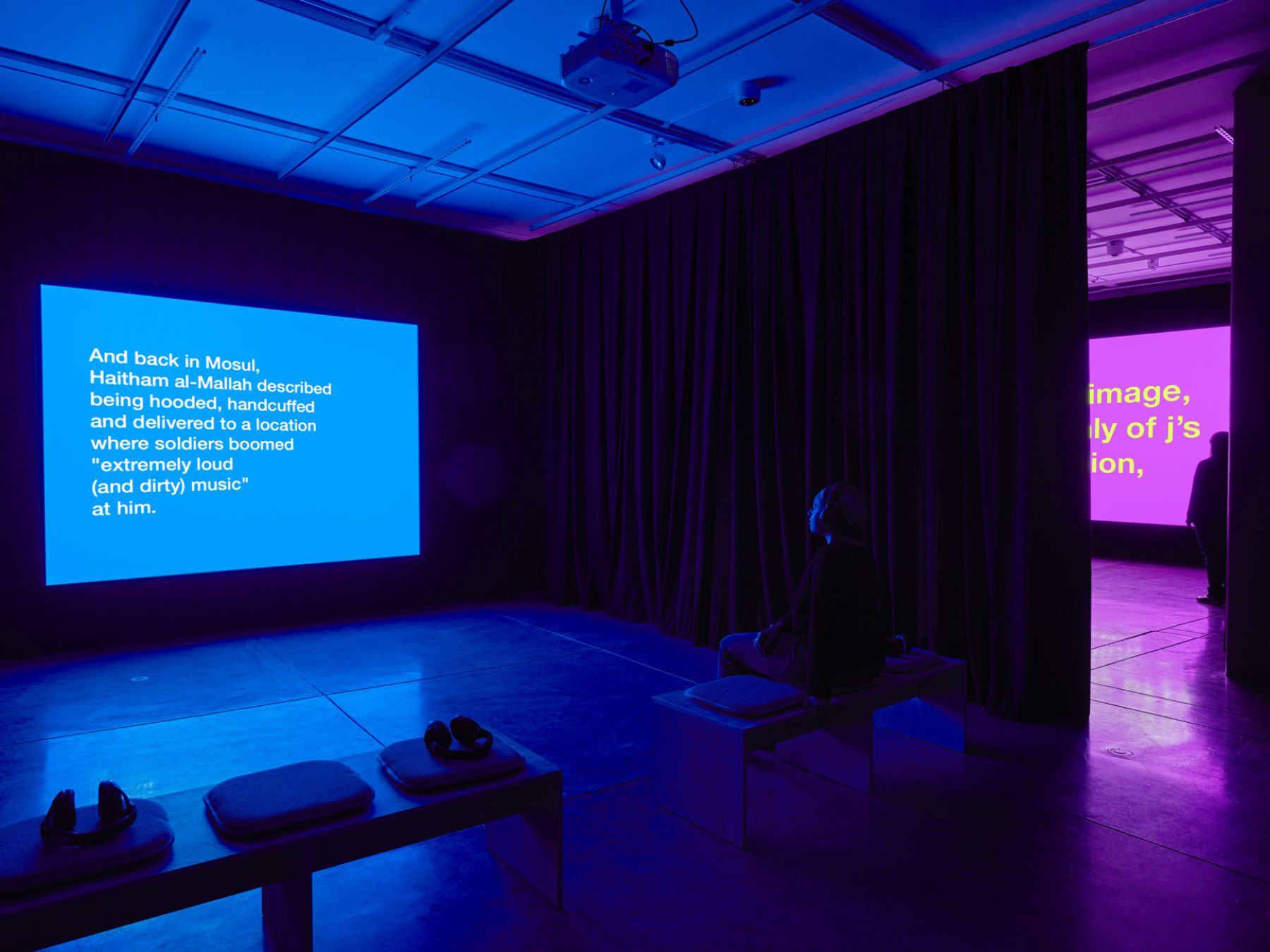
Installation view, Tony Cokes: If UR Reading This It’s 2 Late: Vol 2, Carpenter Center for the Visual Arts, on view January 31–April 12, 2020. Courtesy of the Carpenter Center for the Visual Arts. Photo: Julia Featheringill / Stewart Clements.
2010s
The 2010s marked a period of change for the Carpenter Center for the Visual Arts, as it moved toward a more curated, artist-centered exhibition program. The appointment of James Voorhies as the first John R. and Barbara Robinson Family Director opened a new chapter for the Center, bringing a renewed focus to contemporary art and experimental curatorial practices.
Changes to the exhibition spaces, including the introduction of a display case and the reimagining of the Sert Gallery’s interior box gallery, created new opportunities for presenting exhibitions and engaging visitors.
This evolving identity continued with the appointment of Dan Byers as director in 2017, further developing the Center’s exhibition and public programming. In spring 2019, Harvard’s Department of Visual and Environmental Studies (VES) was renamed the Department of Art, Film, and Visual Studies (AFVS), marking another important transition in the Center’s history.
The following selection of exhibitions offers a glimpse into the artistic and curatorial approaches that shaped the Carpenter Center during the 2010s.
2019
October 17–December 29
Jonathan Berger: An Introduction to Nameless Love
An Introduction to Nameless Love, co-commissioned and co-presented by the Carpenter Center for the Visual Arts and Participant Inc. in New York City, was Jonathan Berger’s largest project to date. The exhibition expands and merges multiple facets of the artist’s practice including experimental forms of research and non-fiction, oral history and biographical narrative, sculpture, installation, curatorial practice, and exhibition design.
Over four years, Berger conducted a series of ongoing dialogues with a series of diverse subjects, or those close to them, to illuminate and document each person’s respective relationships.
Drawing on these conversations and correspondences, Berger created a series of narrative texts, each of which is generated collaboratively between Berger, the subject(s), and a guest editor specific to each subject.
The exhibition presented these stories in the form of uniquely configured and elaborately constructed large-scale, text-based sculptures, comprised of thousands of meticulously cut and formed small tin letters.
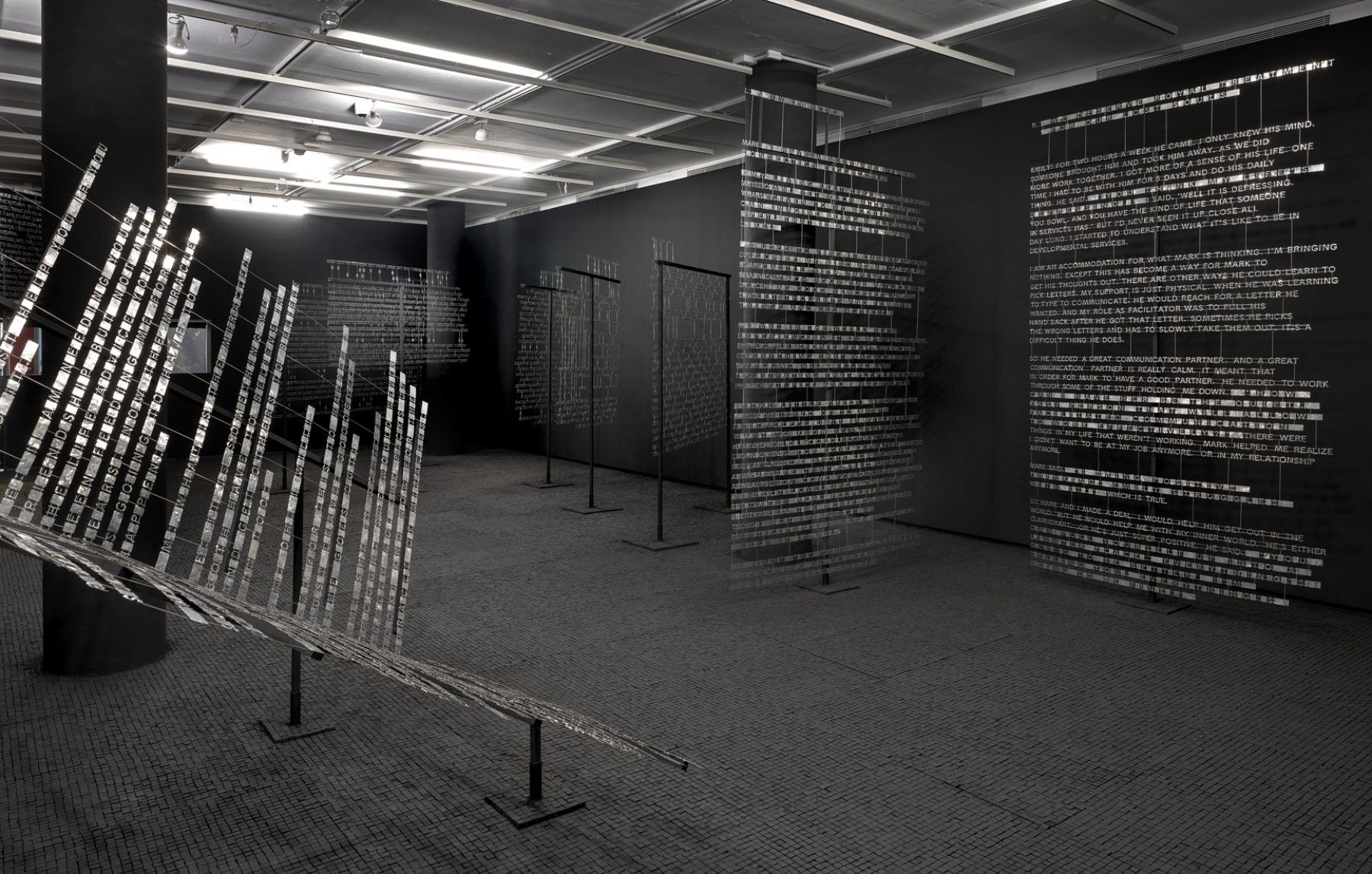
Installation view, Jonathan Berger: An Introduction to Nameless Love, Carpenter Center for the Visual Arts, on view October 17–December 29, 2019. Courtesy of Adams and Ollman, Portland Oregon, VEDA, Florence Italy, and the Artist. Photo: Julia Featheringill / Stewart Clements.
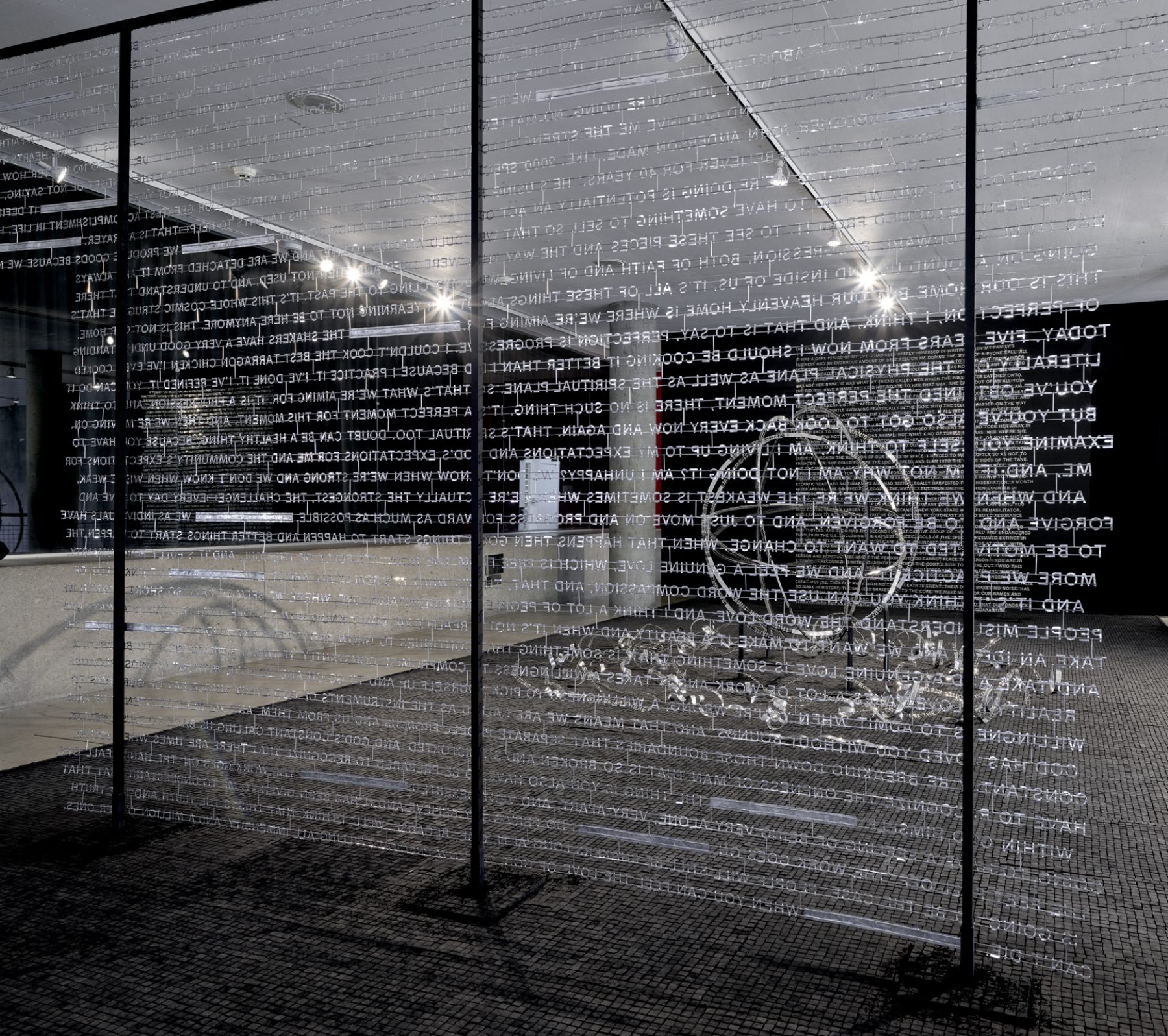
Installation view, Jonathan Berger: An Introduction to Nameless Love, Carpenter Center for the Visual Arts, on view October 17–December 29, 2019. Courtesy of Adams and Ollman, Portland Oregon, VEDA, Florence Italy, and the Artist. Photo: Julia Featheringill / Stewart Clements.
June 22–September 29, 2019
Anna Oppermann: Drawings
Anna Oppermann: Drawings featured a survey of this underrecognized German artist’s early drawings alongside one of her renowned “ensemble” installations, and was the first solo exhibition of her work in the United States in twenty years. Beginning in the mid-1960s through the early ’70s, Oppermann (1940–1993) created an astonishing series of surreal, almost psychedelic drawings that uniquely and quietly explode the private space of the home, and her experience within it. These early drawings contribute to a feminist re-centering of spheres traditionally associated with women, casting everyday objects as symbolic, consequential protagonists: houseplants sprawl to take over the picture plane, windows and mirrors provide views into other worlds, and tables display drawings that themselves open out into new domestic scenes.
The exhibition also included an early transitional “ensemble” that connected Oppermann’s drawing practice to the room-filling, image-based installations for which she would become best known.
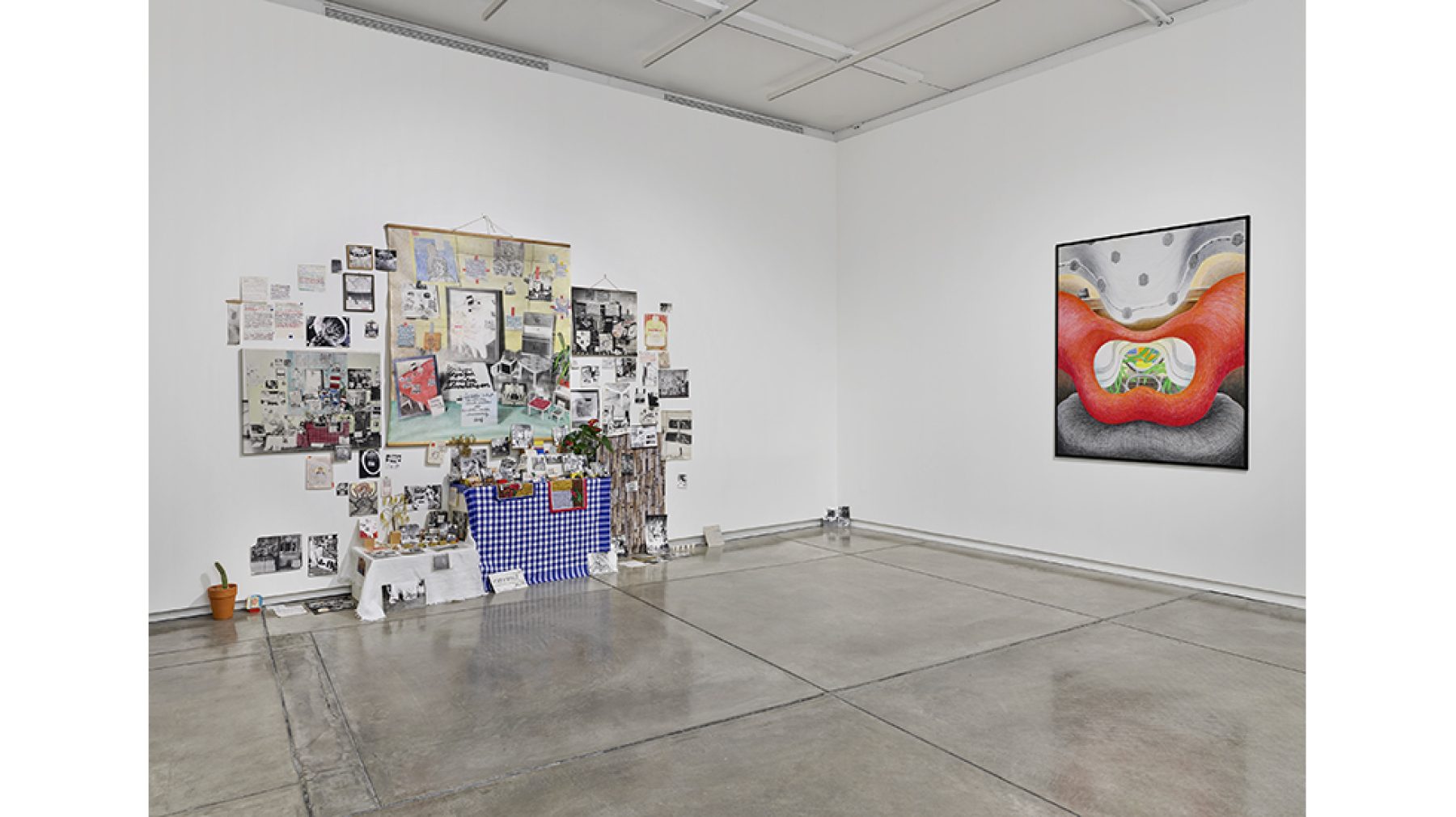
Installation view, Anna Oppermann: Drawings, Carpenter Center for the Visual Arts, on view June 22–September 29, 2019. Courtesy of Anna Oppermann Estate and Gallery Barbara Thumm. Photo: Julia Featheringill/ Stewart Clements.
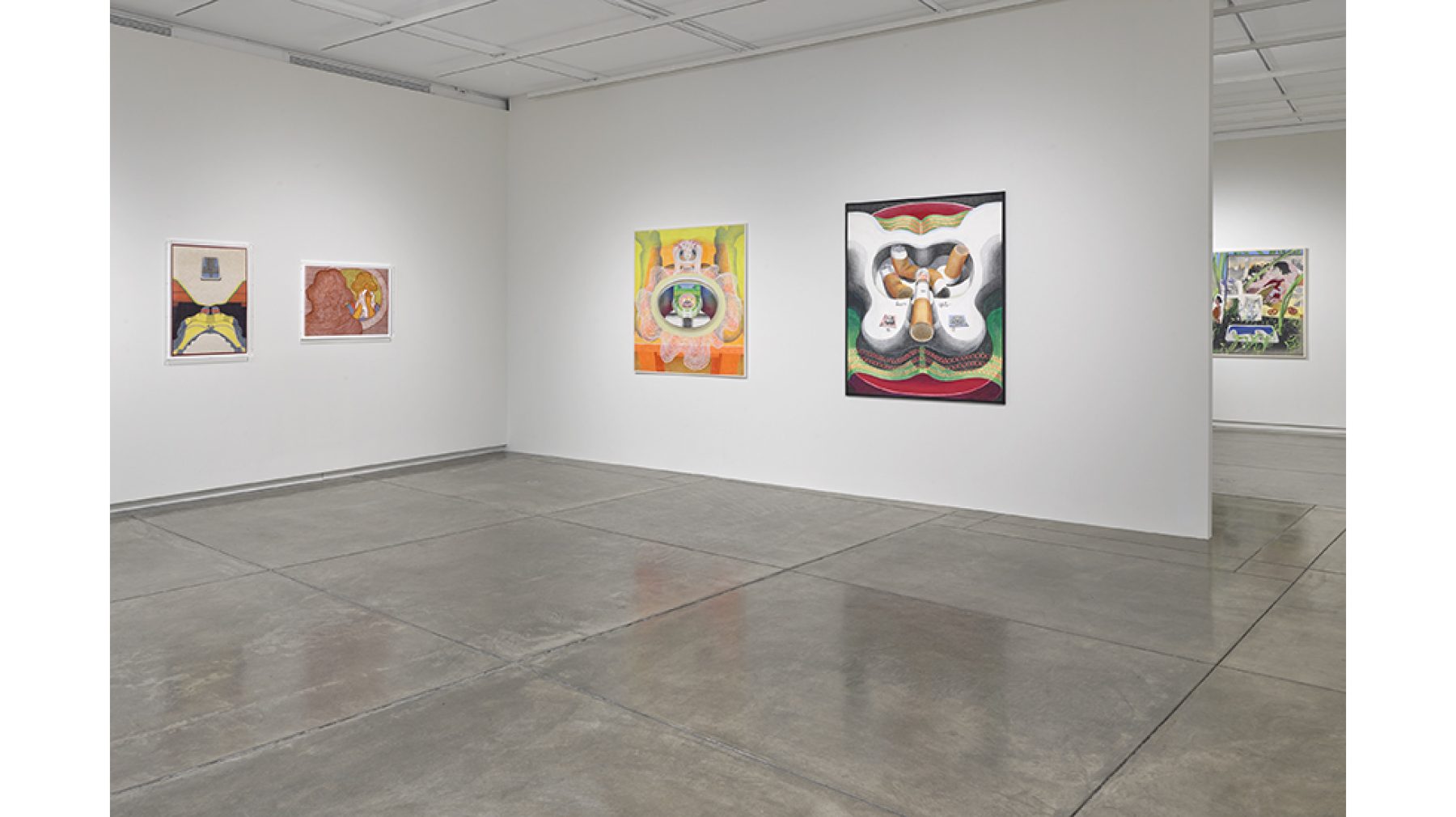
Installation view, Anna Oppermann: Drawings, Carpenter Center for the Visual Arts, on view June 22–September 29, 2019. Courtesy of Anna Oppermann Estate and Gallery Barbara Thumm. Photo: Julia Featheringill/ Stewart Clements.
VES to AFVS
May 3–May 30, 2019
Visual and Environmental Studies 2019 Senior Thesis Exhibition: Either/Or
The exhibition included works by Lova Blåvarg, Owen Borges, Moriah Lee, Sarah Perlmutter, Morgan Spaulding, Austin Weber, and Kay Xia.
*edit text on VES
https://www.harvardmagazine.com/2019/02/harvard-renames-art-film-department
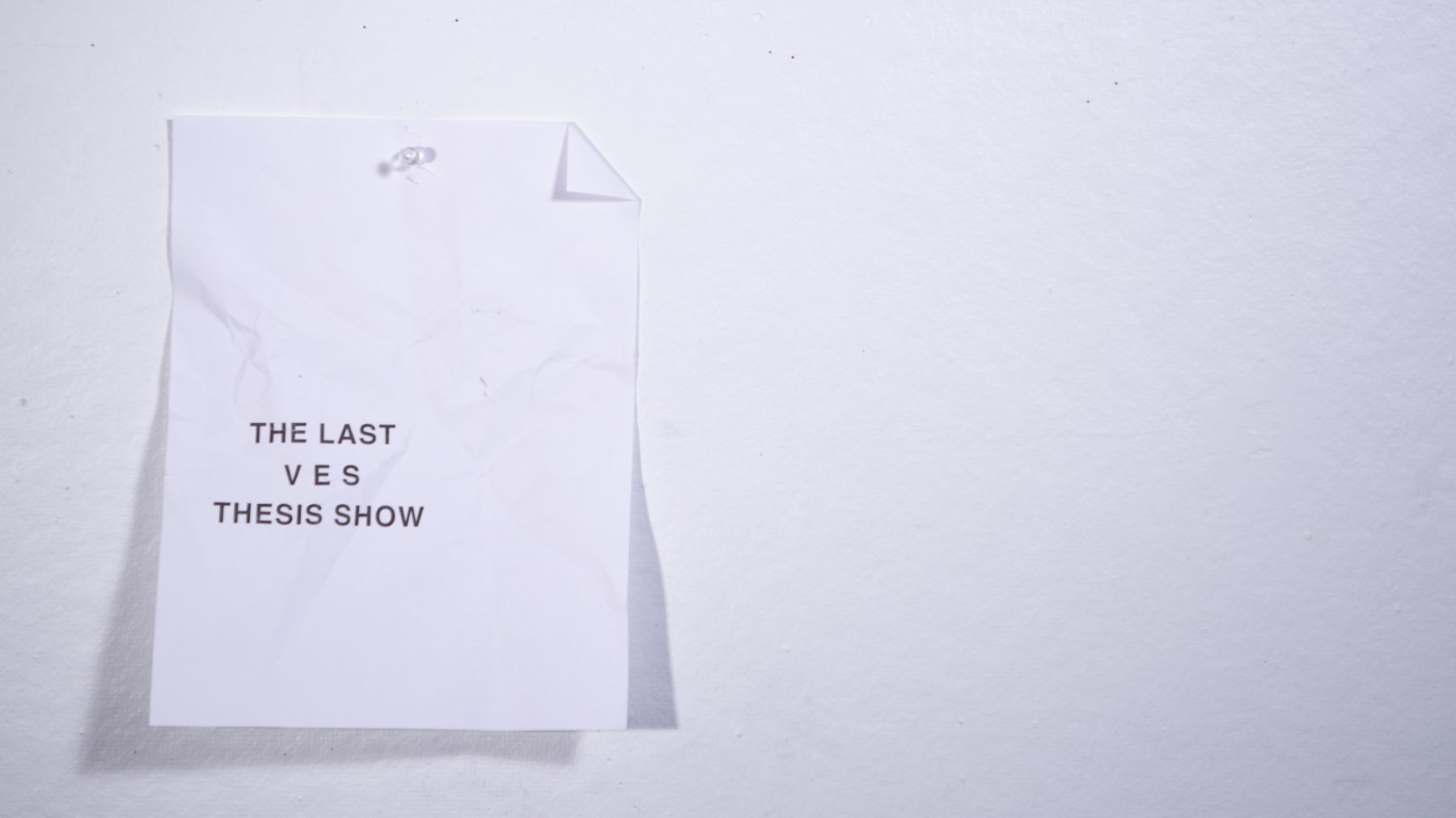
Exhibition. Visual and Environmental Studies 2019 Senior Thesis Exhibition: Either/Or. Next, May 3, 2019.
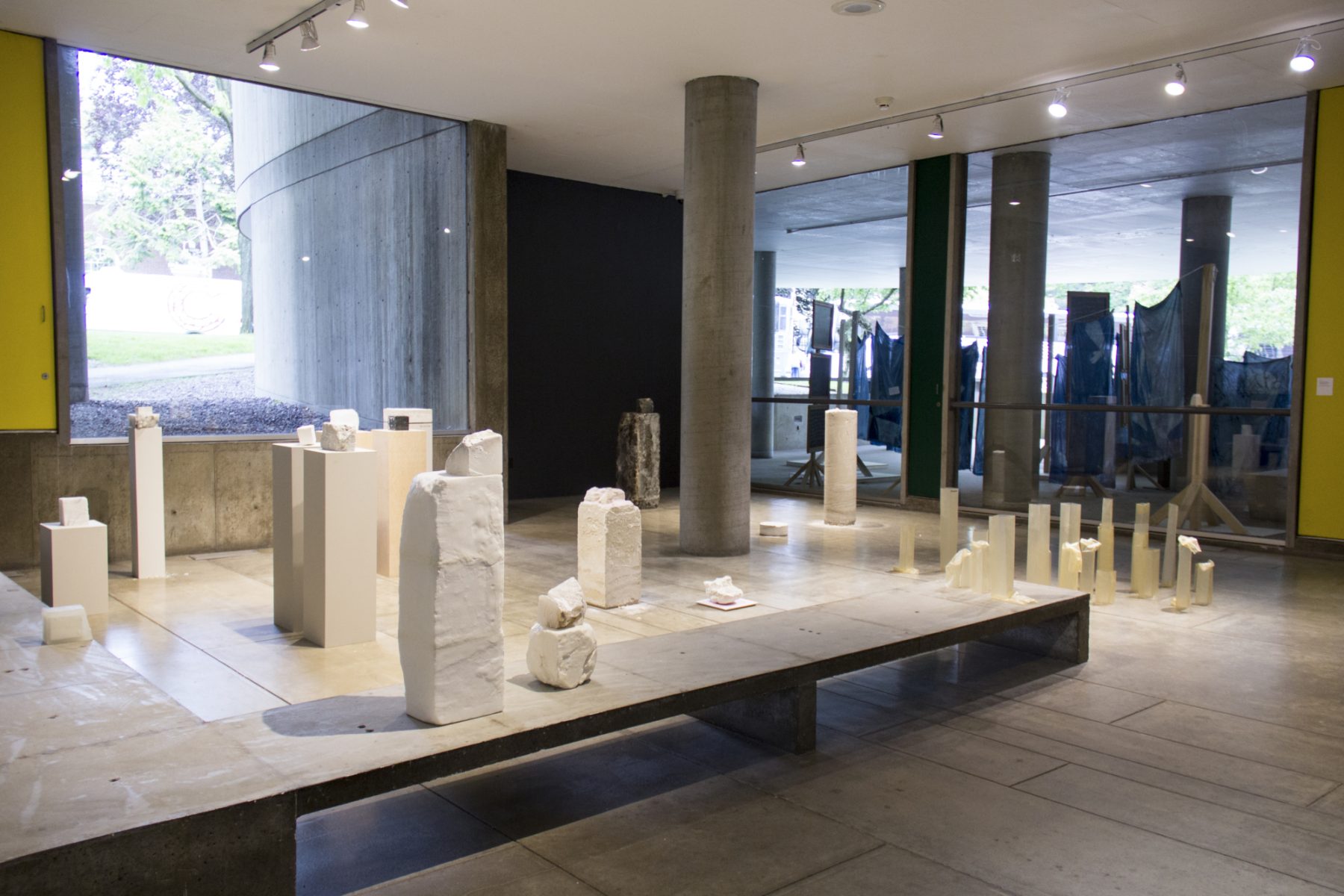
Installation view, Visual and Environmental Studies 2019 Senior Thesis Exhibition, Carpenter Center for the Visual Arts, May 3–31, 2019. Courtesy of Carpenter Center for the Visual Arts.
January 31–March 24, 2019
Liz Magor: BLOWOUT
Featuring a then newly commissioned body of work, Liz Magor: BLOWOUT was the Canadian artist’s first East Coast institutional solo exhibition. Co-organized by the Carpenter Center and the Renaissance Society, the exhibition was first on view in Cambridge and then traveled to Chicago (April 27–June 23, 2019). Liz Magor’s (b. 1948) sculpture quietly dramatizes the relationships that develop between objects. Often playing soft against hard, she pairs care with exposure. Adhering to exacting processes of casting, fabrication, and hand-made techniques, Magor raises questions around gender roles, memory, addiction, and the changing value of the objects that come in and out of our lives. Furniture, used textiles (blankets, upholstery, clothing), accessories like gloves and stockings, and plastic and paper packaging all play important roles in her work.
Magor’s then new body of work, commissioned by the Carpenter Center and Renaissance Society, represented a critical juncture in the artist’s practice. During a residency in Berlin, Magor began experimenting with a clear, stiff yet flexible Mylar material which is cut, folded, and tabbed to create transparent commercial packaging for stuffed animals and other toys. Magor has pushed the qualities and capacities of this material, and introduced other charged sculptural “agents,” to explore conditions of weakness and strength, agency, and the slow deteriorations that take place, almost unnoticed, over long periods of time.
A publication—at the time the artist’s first US catalog in 15 years—recorded this work alongside commissioned texts by the exhibition’s curators and other writers.
Artist Talk: Liz Magor
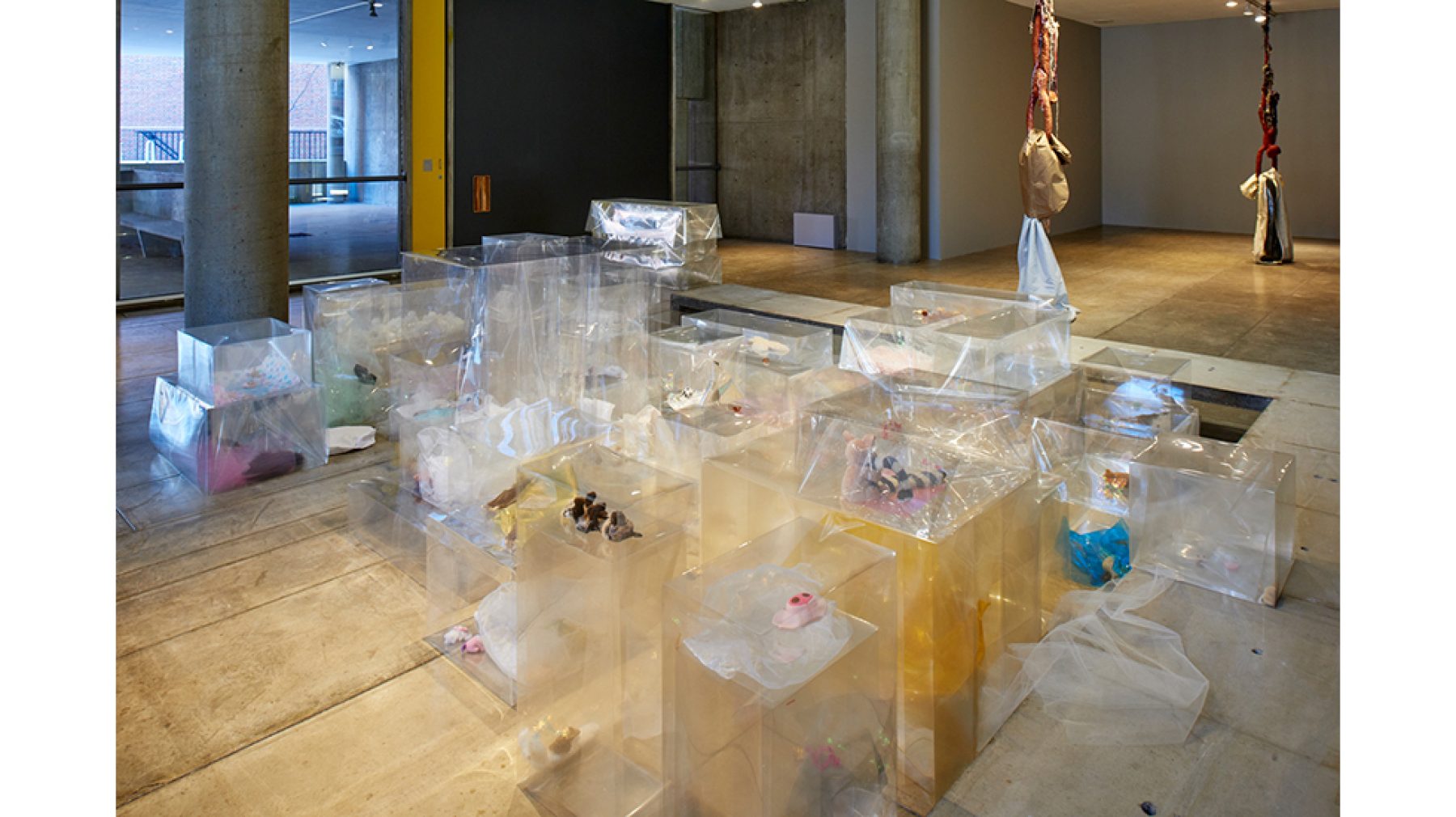
Installation view, Liz Magor: BLOWOUT, Carpenter Center for the Visual Arts, January 31–March 24, 2019. Courtesy Carpenter Center for the Visual Arts, Harvard University and the artist.
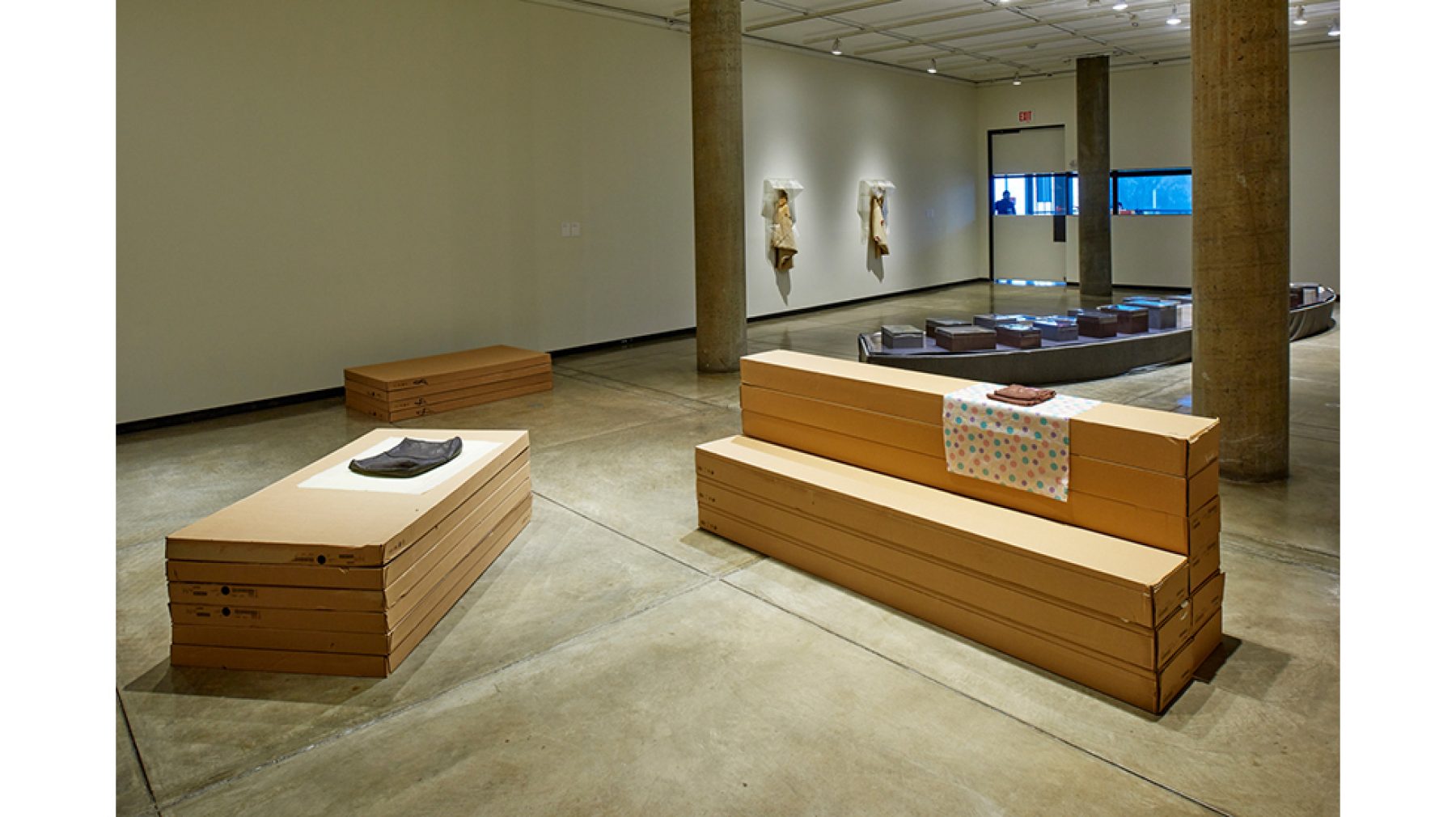
Installation view, Liz Magor: BLOWOUT, Carpenter Center for the Visual Arts, January 31–March 24, 2019. Courtesy Carpenter Center for the Visual Arts, Harvard University and the artist.
2018
October 18–December 31
Introducing Tony Conrad: A Retrospective
Throughout his six-decade career, Tony Conrad (American, 1940–2016) forged his own path through numerous artistic movements, from Fluxus to the Pictures Generation and beyond. Although he was best known for his pioneering contributions to both minimal music and structural film in the 1960s, his work helped define a vast range of culture, including rock music and public television. He once declared in an interview, “You don’t know who I am, but somehow, indirectly, you’ve been affected by things I did.” Introducing Tony Conrad: A Retrospective, the first large-scale museum survey devoted to artworks Conrad presented in museum and gallery settings, was part of an ongoing reappraisal of his creative achievement. Indeed, because of the extraordinary scope of Conrad’s contributions to art and culture, this retrospective may yet be seen as only an “introduction.” Inspired by the spoken, written, and performed introductions Conrad regularly used to help frame screenings and presentations of his works, it shows Conrad to be an unparalleled innovator in the mediums of painting, sculpture, film, video, performance, and installation, tenaciously working to challenge the boundaries between artistic categories.
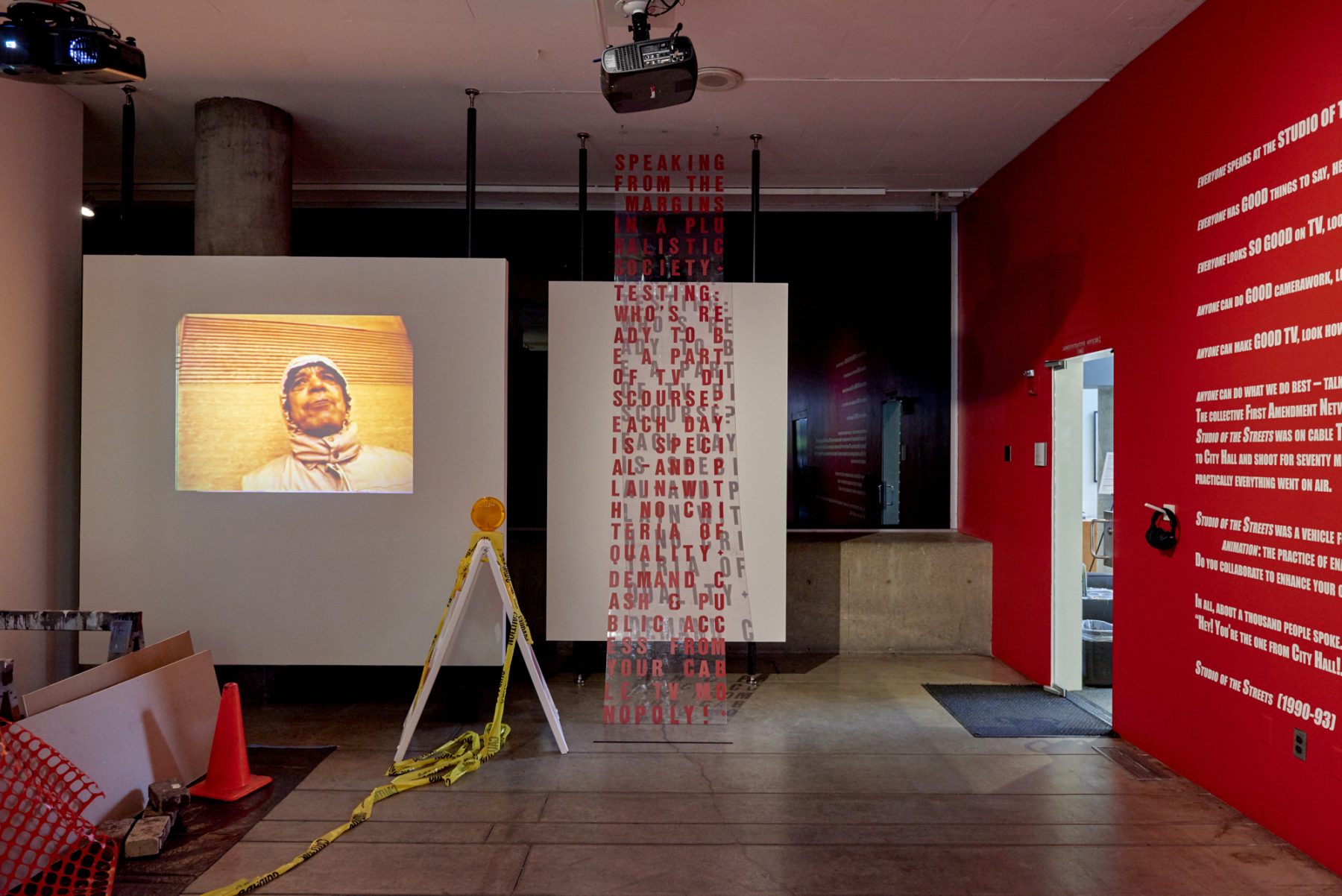
Installation view, Introducing Tony Conrad: A Retrospective, Carpenter Center for the Visual Arts, Harvard University, October 18-December 30, 2018. Pictured: Tony Conrad, Studio of the Streets, 1991–93/2012. Courtesy of Carpenter Center for the Visual Arts, Harvard University.
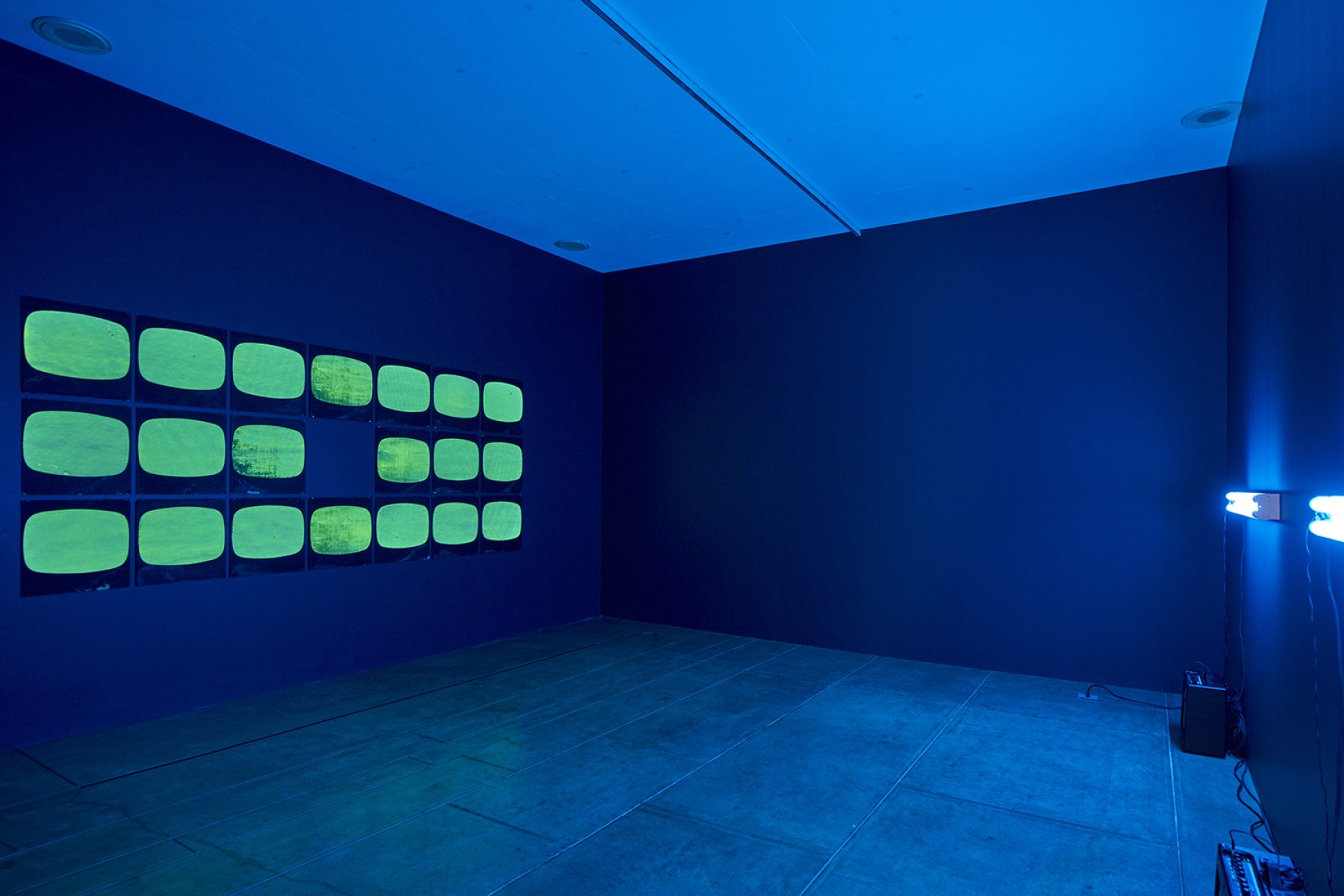
Exhibition view, Introducing Tony Conrad: A Retrospective, Carpenter Center for the Visual Arts, Harvard University, October 18-December 30, 2018. Courtesy of Carpenter Center for the Visual Arts, Harvard University.
September 13–December 31, 2018
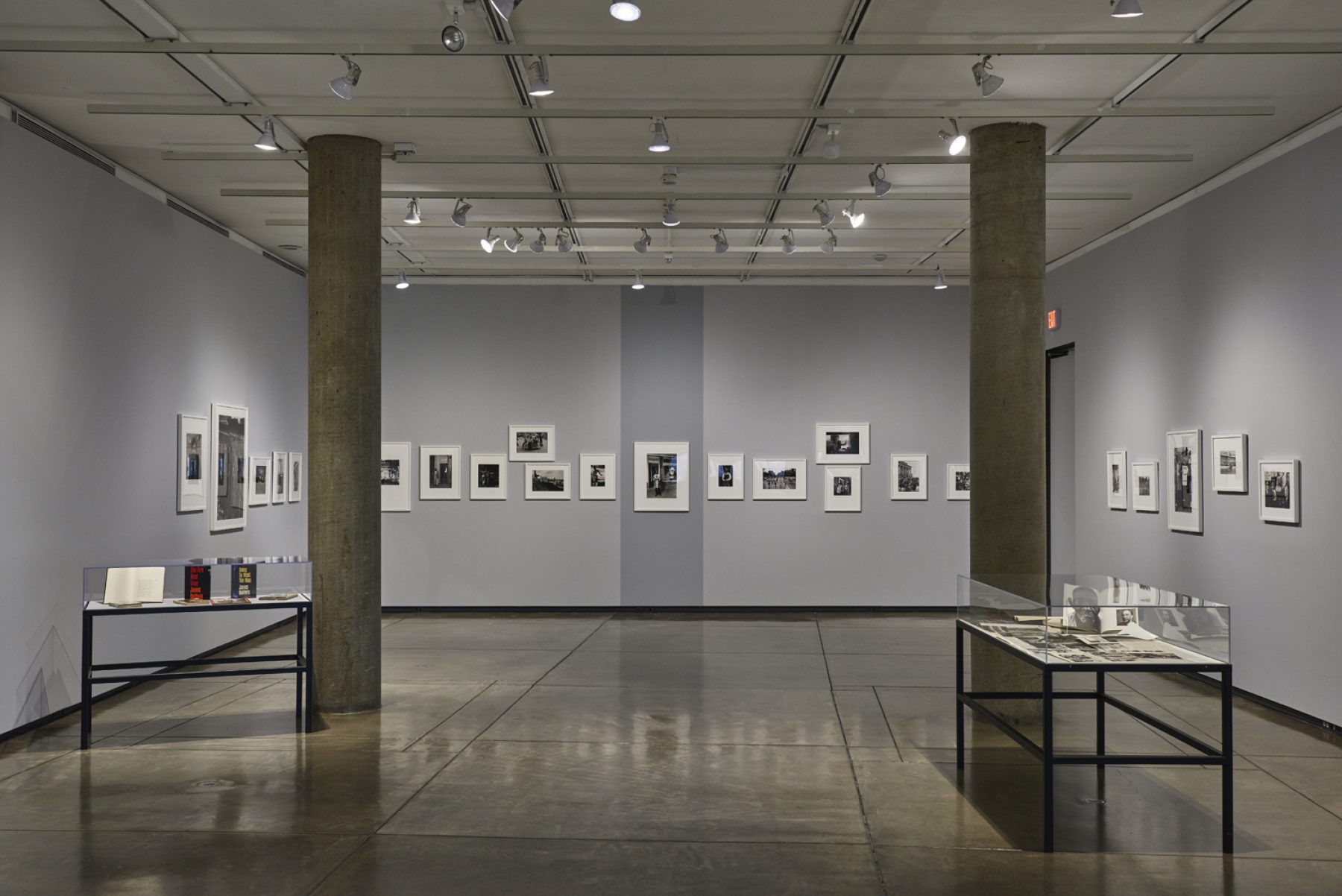
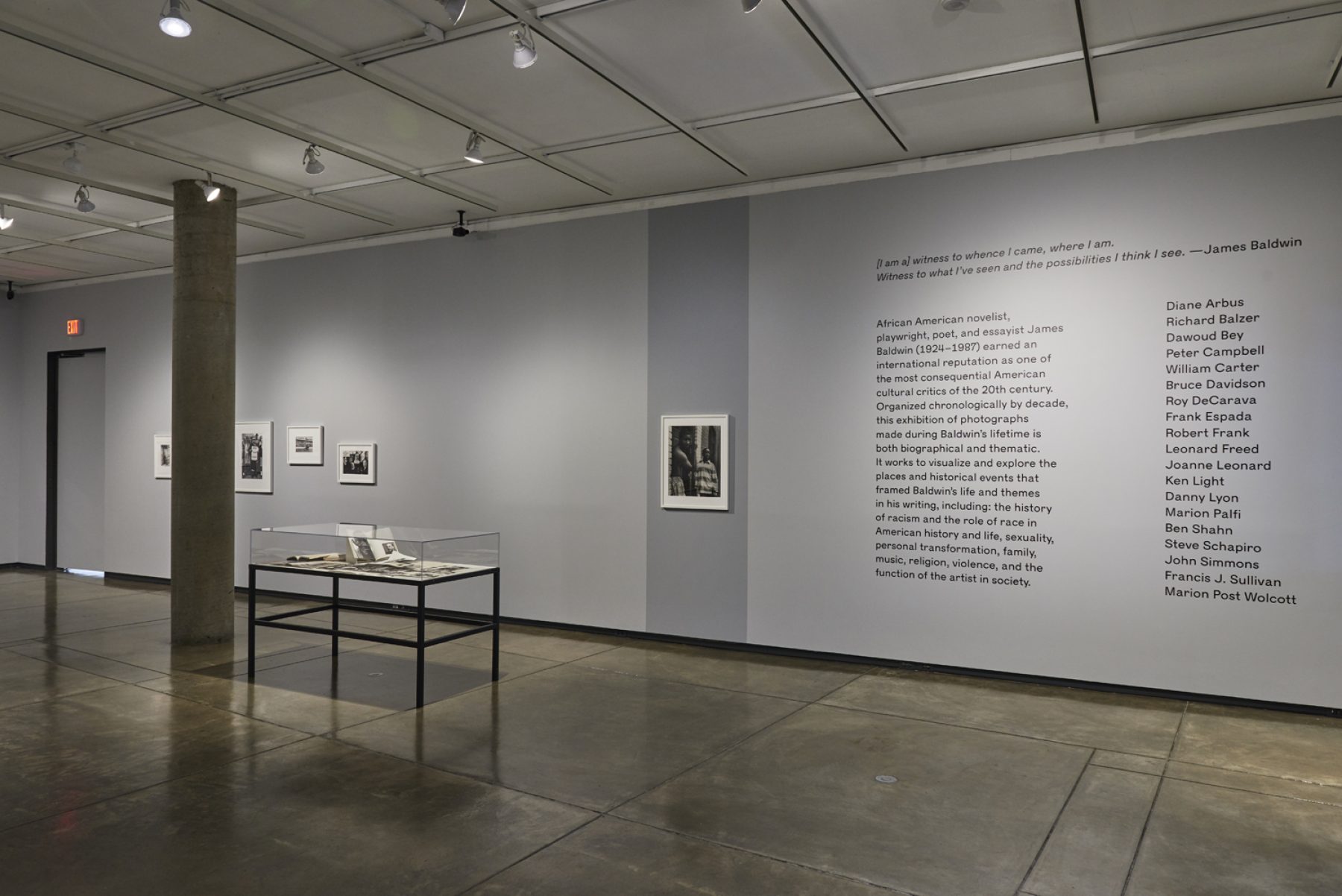
Time is Now: Photography and Social Change in James Baldwin’s America
By the time of his death, essay collections such as The Fire Next Time (1963) and novels like Tell Me How Long the Train’s Been Gone (1968) earned the prolific African American novelist, playwright, poet, and essayist James Baldwin (1924–1987) an international reputation as one of the most consequential American cultural critics.This exhibition of photographs made during Baldwin’s lifetime is both biographical and thematic. It works to visualize and explore the places, the personal, and historical events that framed Baldwin’s life and themes in his writing, including: the history of racism and the role of race in American history and life, sexuality, personal transformation, family, music, religion, violence, and the function of the artist in society and art, and social change. Time is Now: Photography and Social Change in James Baldwin’s America charted the nation’s transformative cultural moment alongside the life of one of its most influential figures, interweaving the two narratives through the lens of the American documentary tradition.
Photographers included: Diane Arbus, Richard Balzer, Dawoud Bey, Peter Campbell, William Carter, Bruce Davidson, Roy DeCarava, Frank Espada, Robert Frank, Leonard Freed, Joanne Leonard, Ken Light, Danny Lyon, Marion Palfi, Ben Shahn, Steve Schapiro, John Simmons, Francis J. Sullivan, and Marion Post Wolcott.
*Needs image captions
August 30–September 23, 2018
2018–19 Visual and Environmental Studies Visiting Faculty
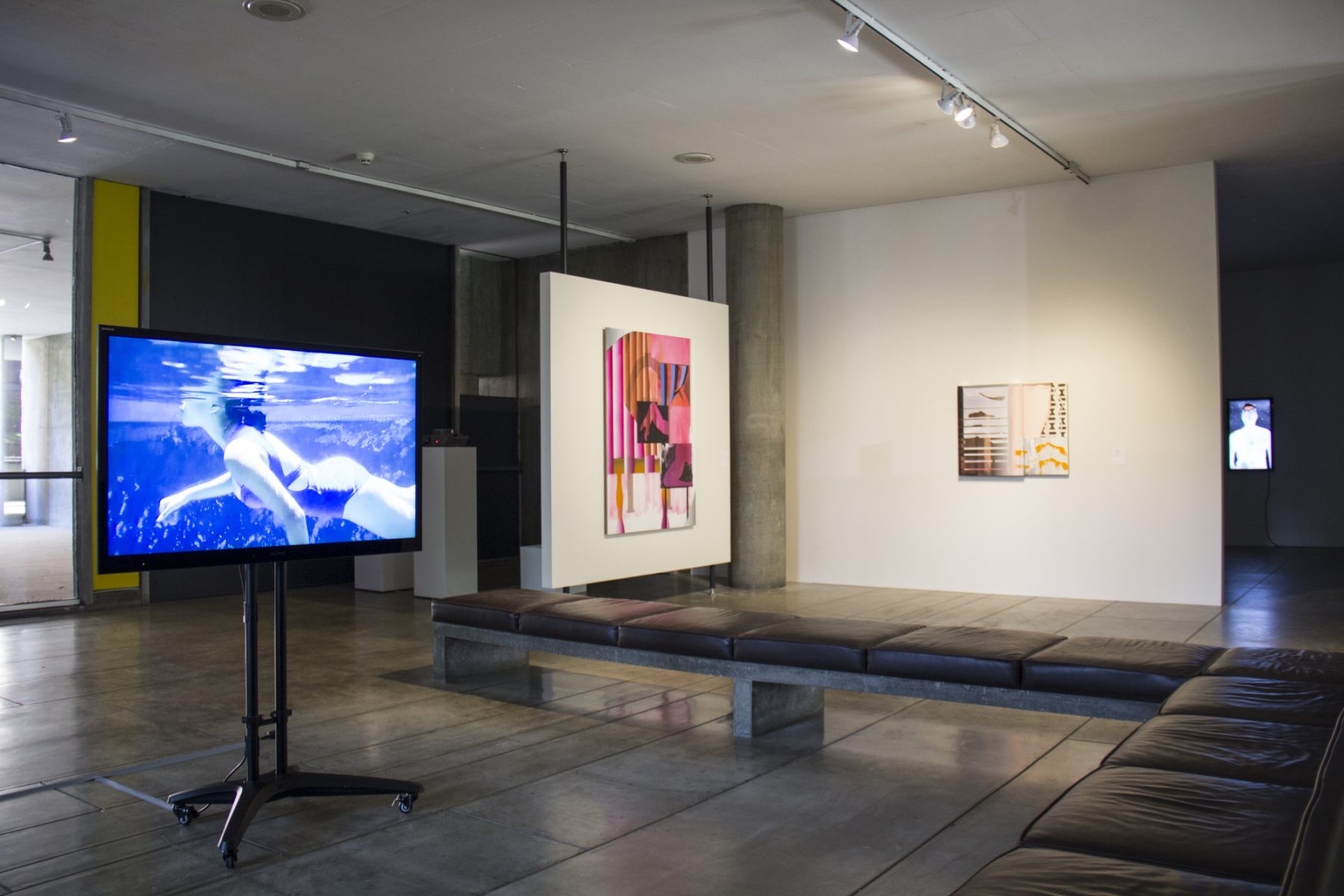
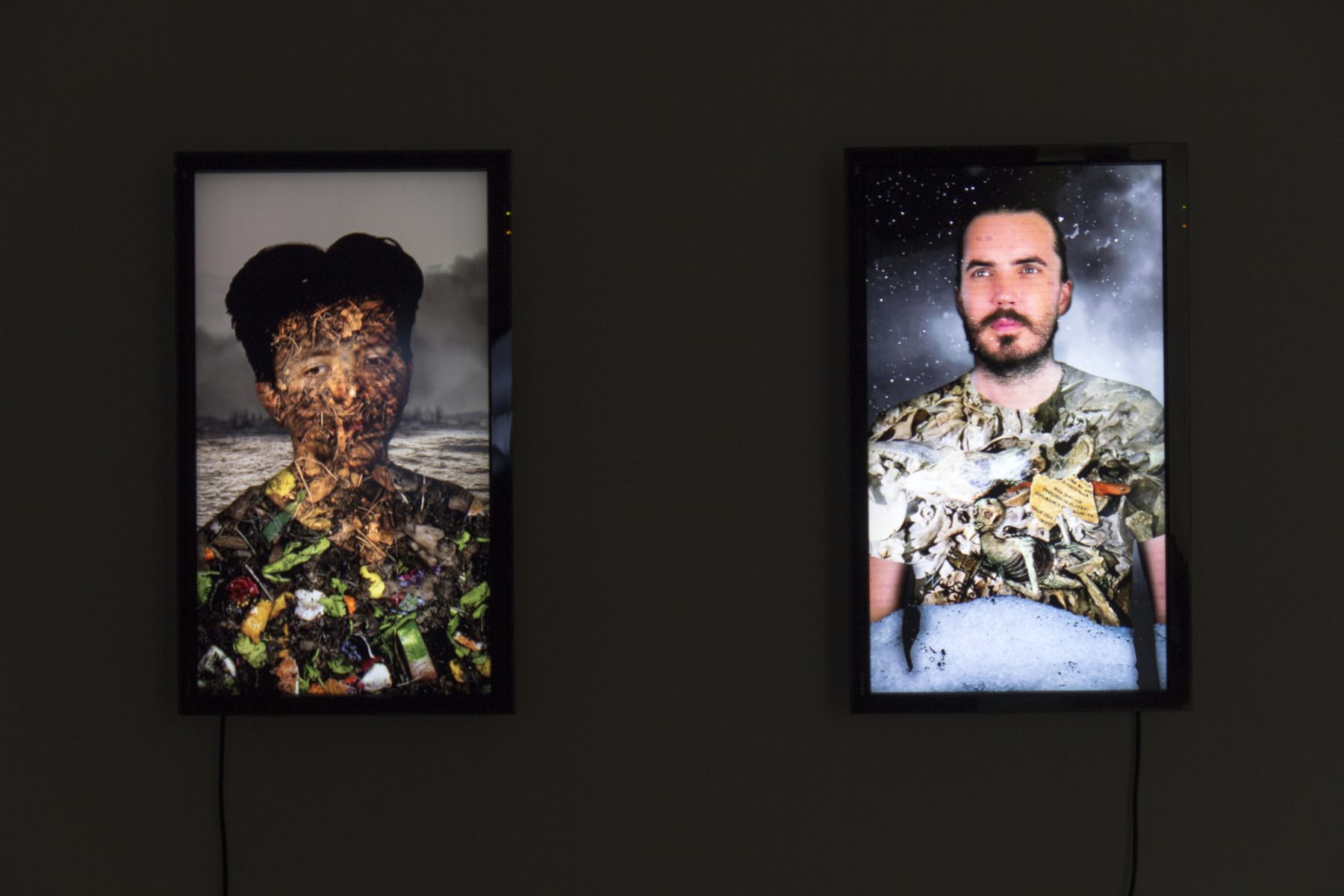
The 2018–19 Visual and Environmental Studies Visiting Faculty exhibition presented work by seven visiting faculty members in Visual and Environmental Studies. Each year for almost fifty years, the department had invited visual artists and filmmakers who are leaders in their fields to work closely with its students, invigorating and enriching the academic program and broadening departmental conversations with their outside perspectives and experiences. That year the department welcomed Sonia Almeida, Ei Arakawa, Lisa Crafts, Andy Graydon, Carissa Rodriguez and Suné Woods, each engaged with varied approaches to painting, photography, and the moving image.
April 27–May 24, 2018
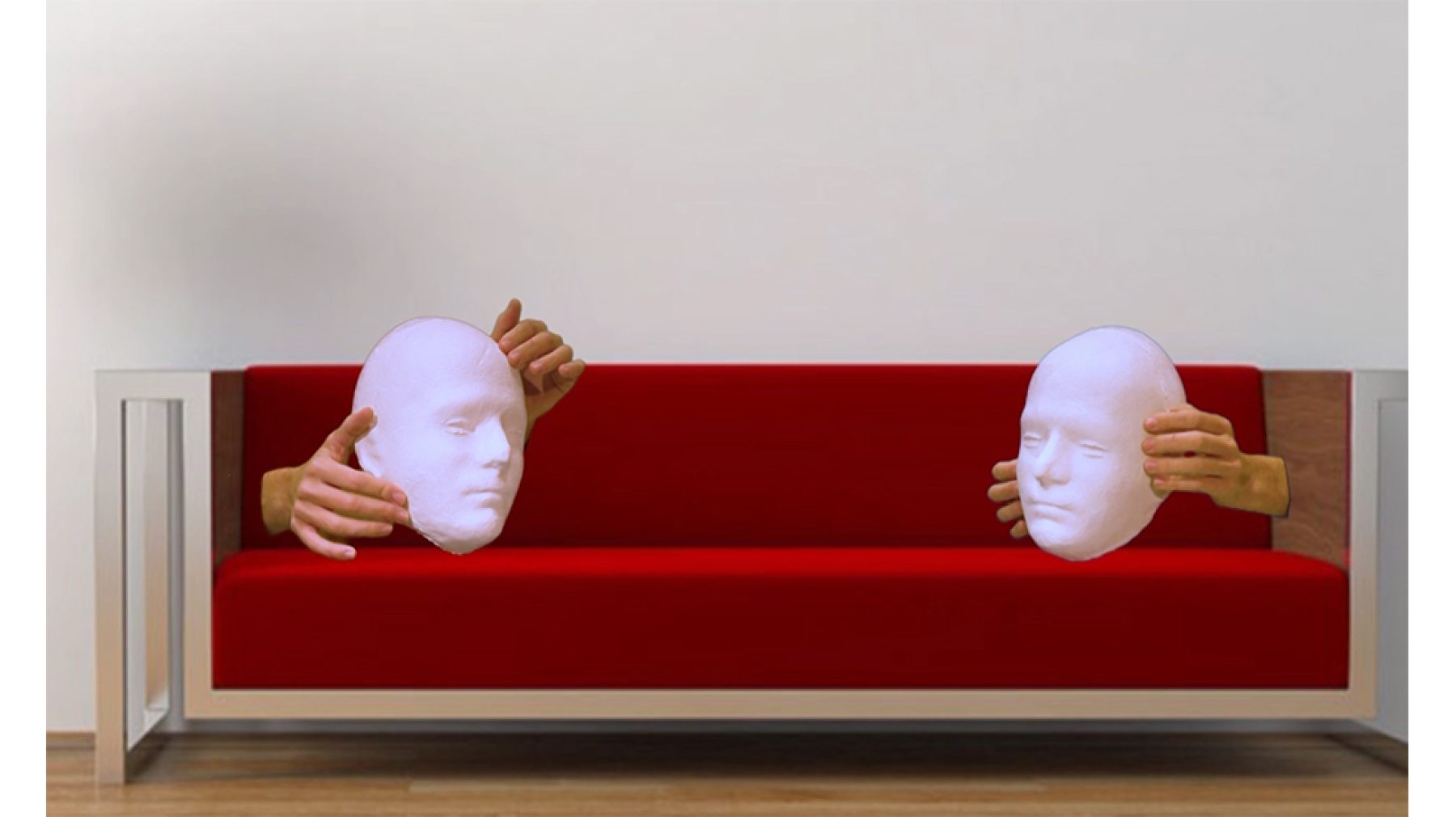
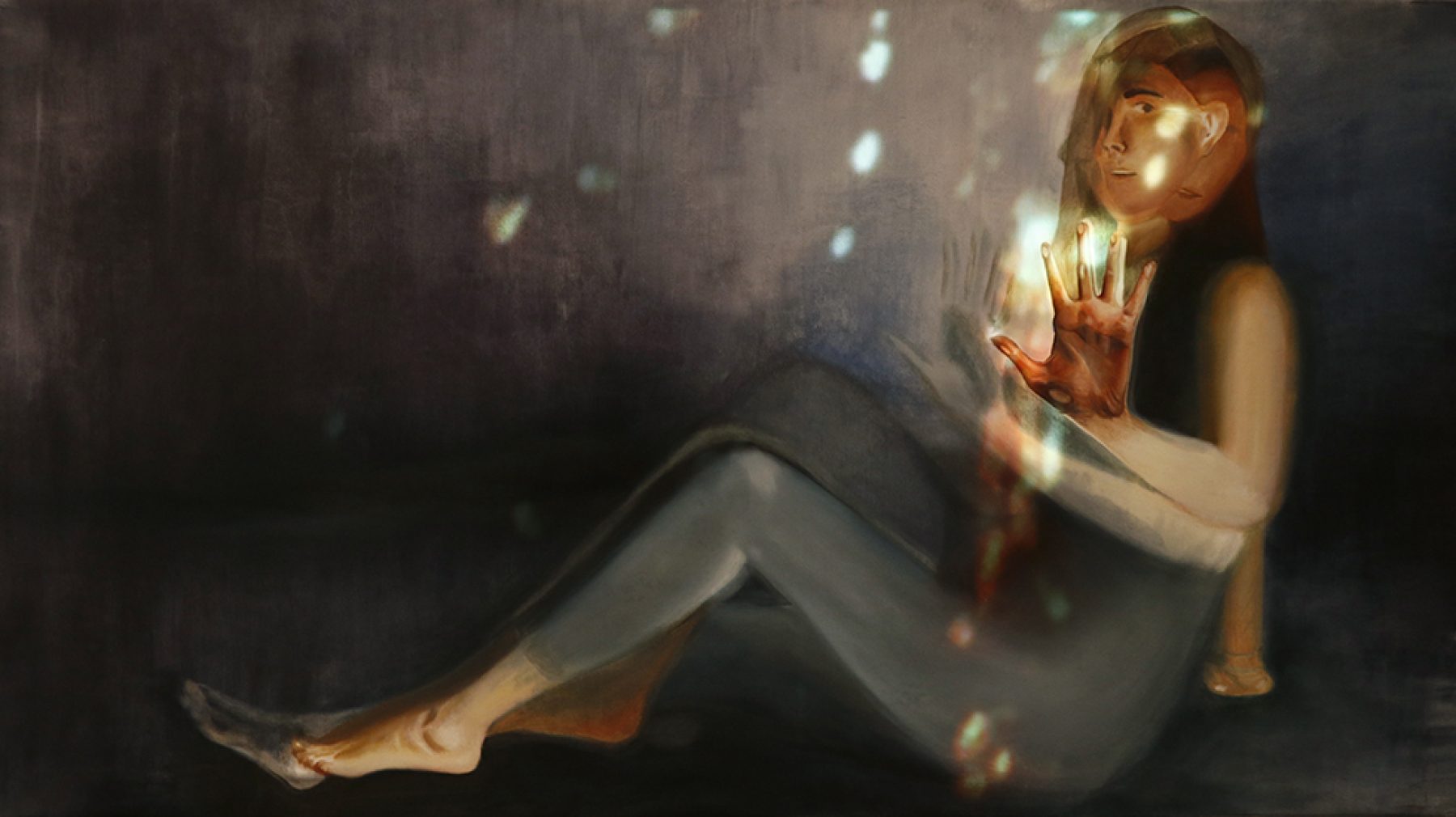
Visual and Environmental Studies 2018 Senior Thesis: Interface
The exhibition featured works by Ariana Chaivaranon, Bruno Moguel Gallegos, Essa L., Susan Yao Li, Brigheil Lalor, Michelle Long, Tanner McColl, Lily Scherlis, and Kevin Zhu.
April 6–April 7, 2018
Ralph Lemon
Residency
Ralph Lemon, 2018 Josep Lluis Sert Practitioner in the Arts, led workshops with students on April 6 and 7. Lemon also presented a talk at the Carpenter Center.
Lemon led a workshop exploring the physical, aesthetic and performative relationship of the body to a student's cultural cosmology; creative gestures, marks possessing a cultural whole
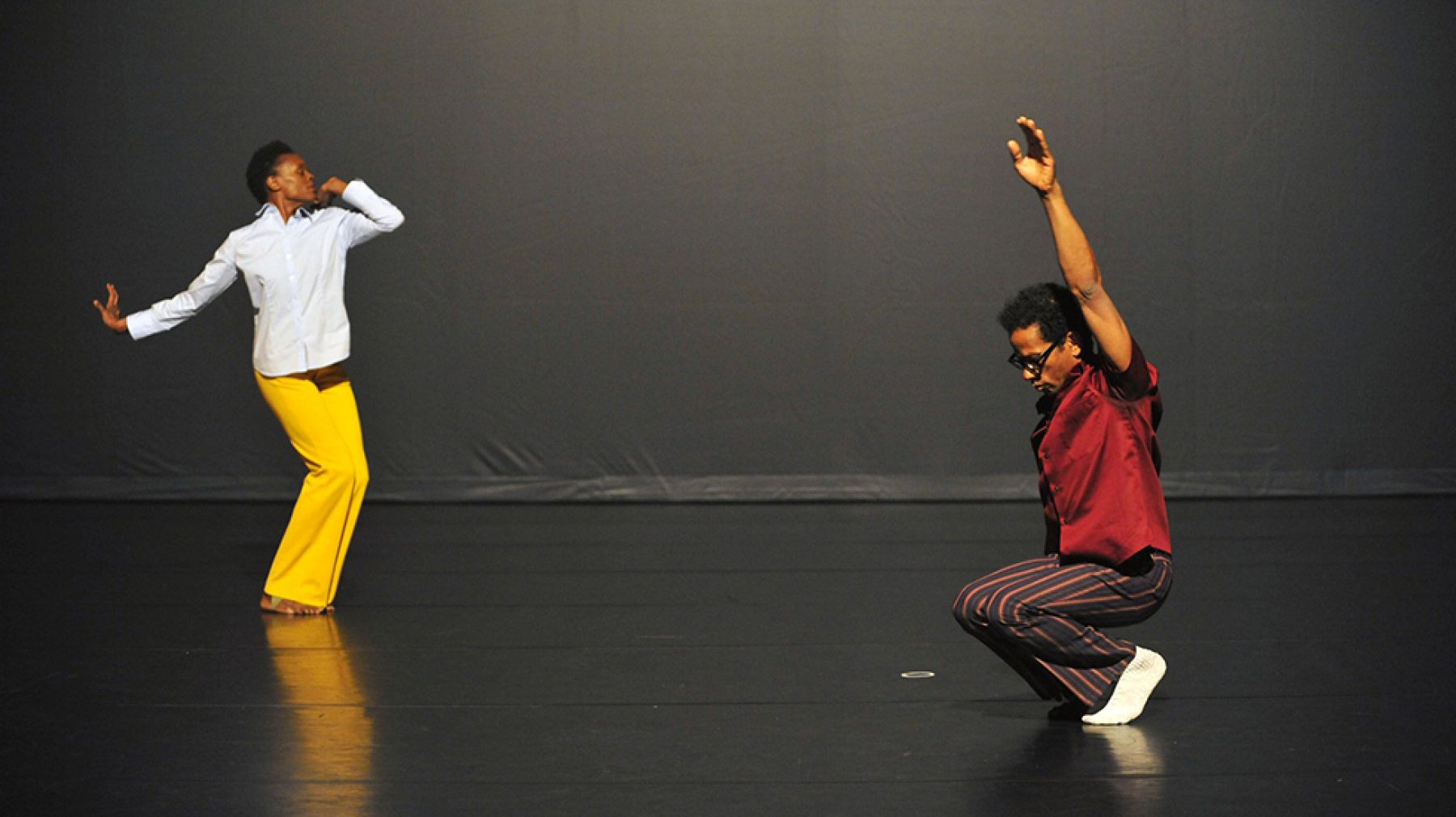
Geography of the Two: Okwui Okpokwasili and Ralph Lemon perform in "How Can You Stay In The House All Day And Not Go Anywhere?" at the BAM Harvey Theater on October 12, 2010, part of the Brooklyn Academy of Music Next Wave Festival. The dancers: Djedje Djedje Gervais, Darrell Jones, Ralph Lemon, Gesel Mason, Okwui Okpokwasili, Omagbitse Omagbemi, David Thomson Credit: Stephanie Berger
February 1–April 15, 2018
Renée Green: Within Living Memory
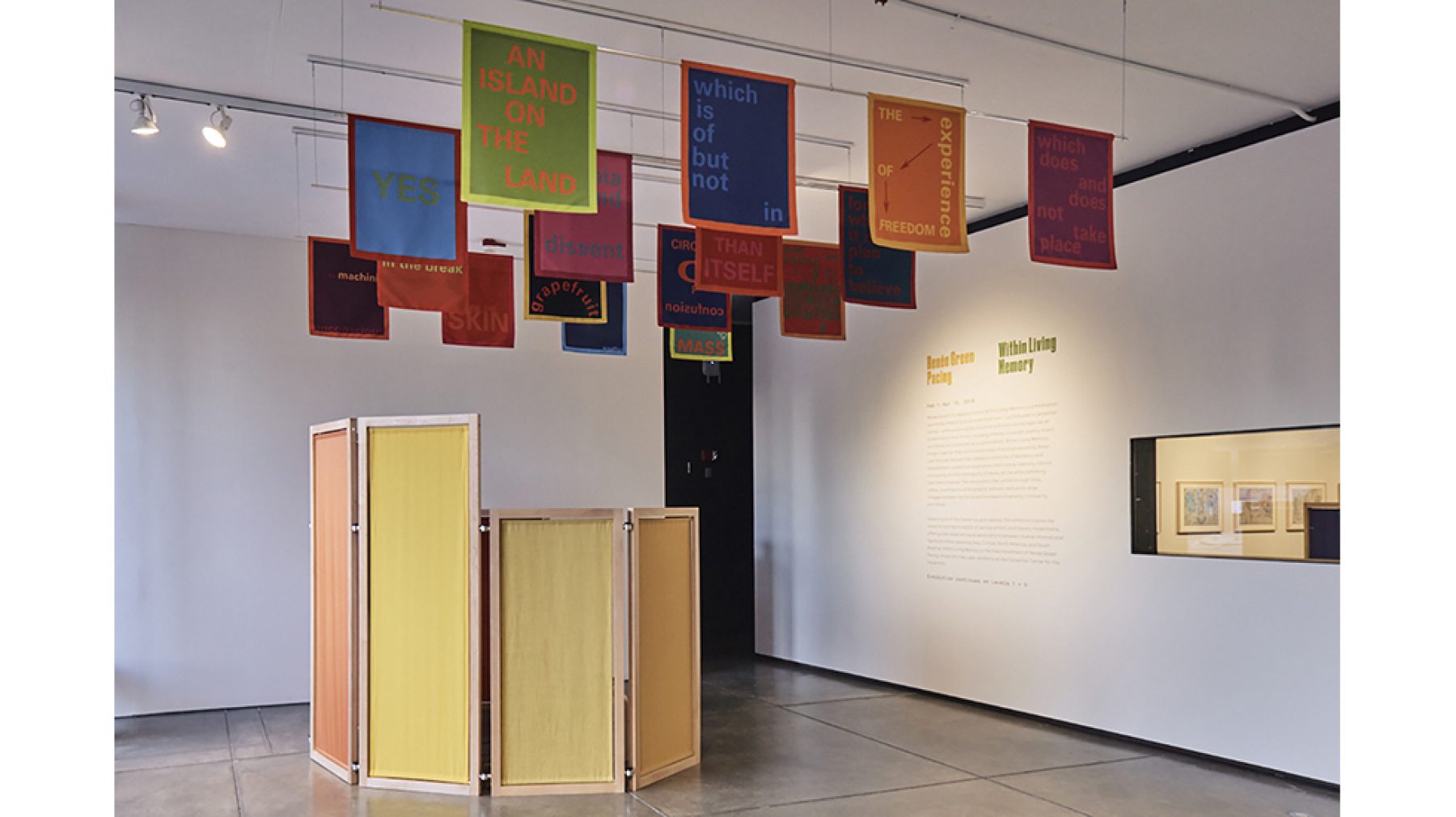
Renée Green’s (b. 1959) exhibition Within Living Memory is a meditation spurred by inhabiting an architectural icon—Le Corbusier’s Carpenter Center—while exploring the historical and institutional legacies of modernism’s other forms, including cinema, visual art, poetry, music, and literature. Within Living Memory brings together interconnected bodies of work produced by Green over the past decade that address conditions of residency and displacement, subjective experience, institutional memory, notions of progress, and the inevitability of decay. The encounters that unfold through films, videos, sound works, photographs, banners, and prints draw linkages between the forms and concepts of seriality, modularity, and refrain.
Many bodies of work on display were exhibited for the first time in the Eastern United States, including the debut of of a new essay film, commissioned by the Carpenter Center, inspired by materials found in Harvard libraries and archives.
Within Living Memory was the final installment of Renée Green: Pacing, the artist’s two-year residency at the Carpenter Center for the Visual Arts.
2017
October 19, 2017–January 7, 2018
Matt Keegan: Replicate
Matt Keegan’s exhibition at the Carpenter Center continued his long-standing exploration of language, materials, and identity formation. Replicate, Keegan’s first institutional solo presentation in the US, included his recent video, Generation (2016), alongside sculpture, and two new site specific commissions—a hanging textile and a cardboard-lattice work made in response to the Sert Gallery space.
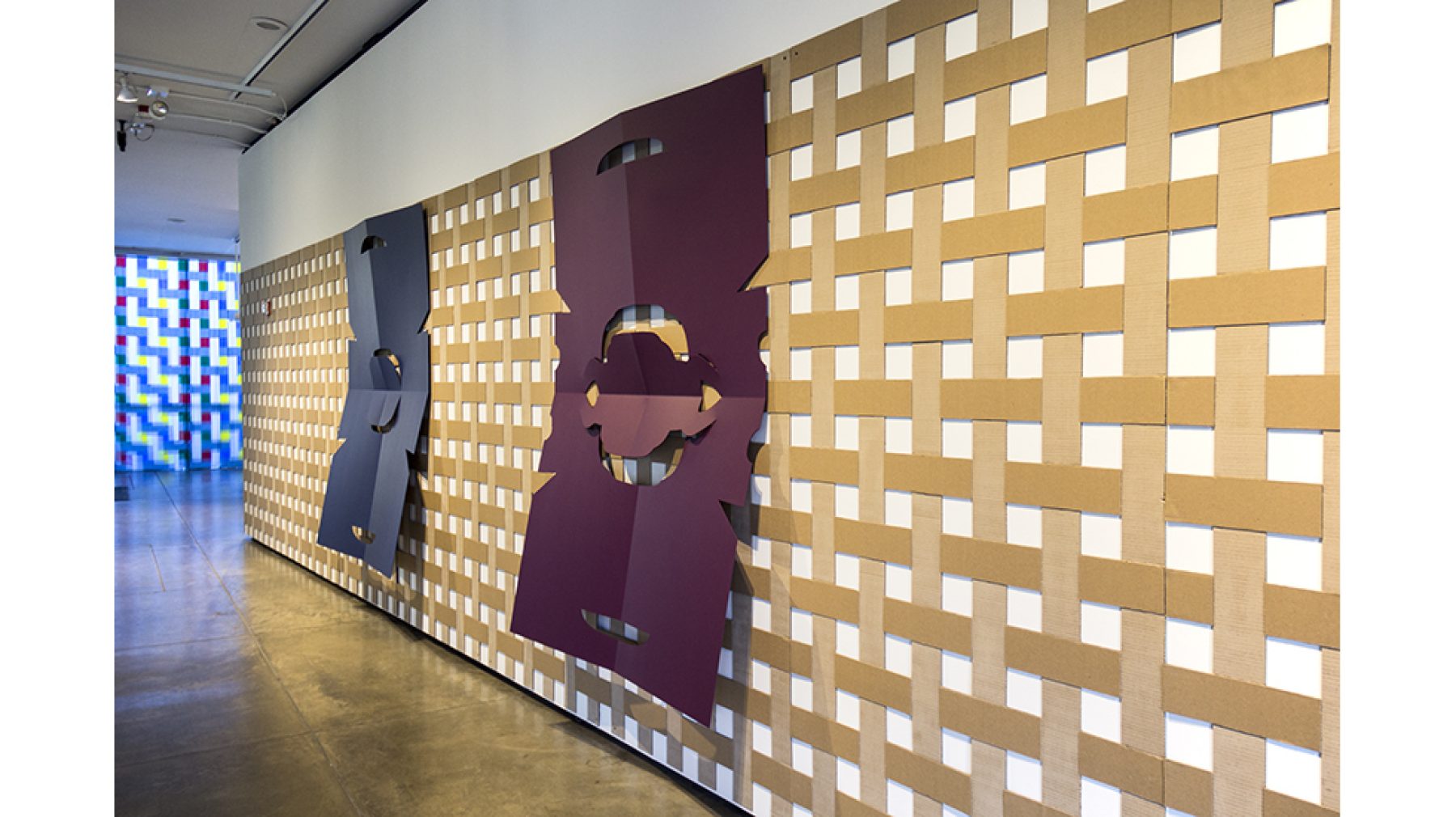
Installation view, Matt Keegan: Replicate, Carpenter Center for the Visual Arts, Harvard University, 2017.
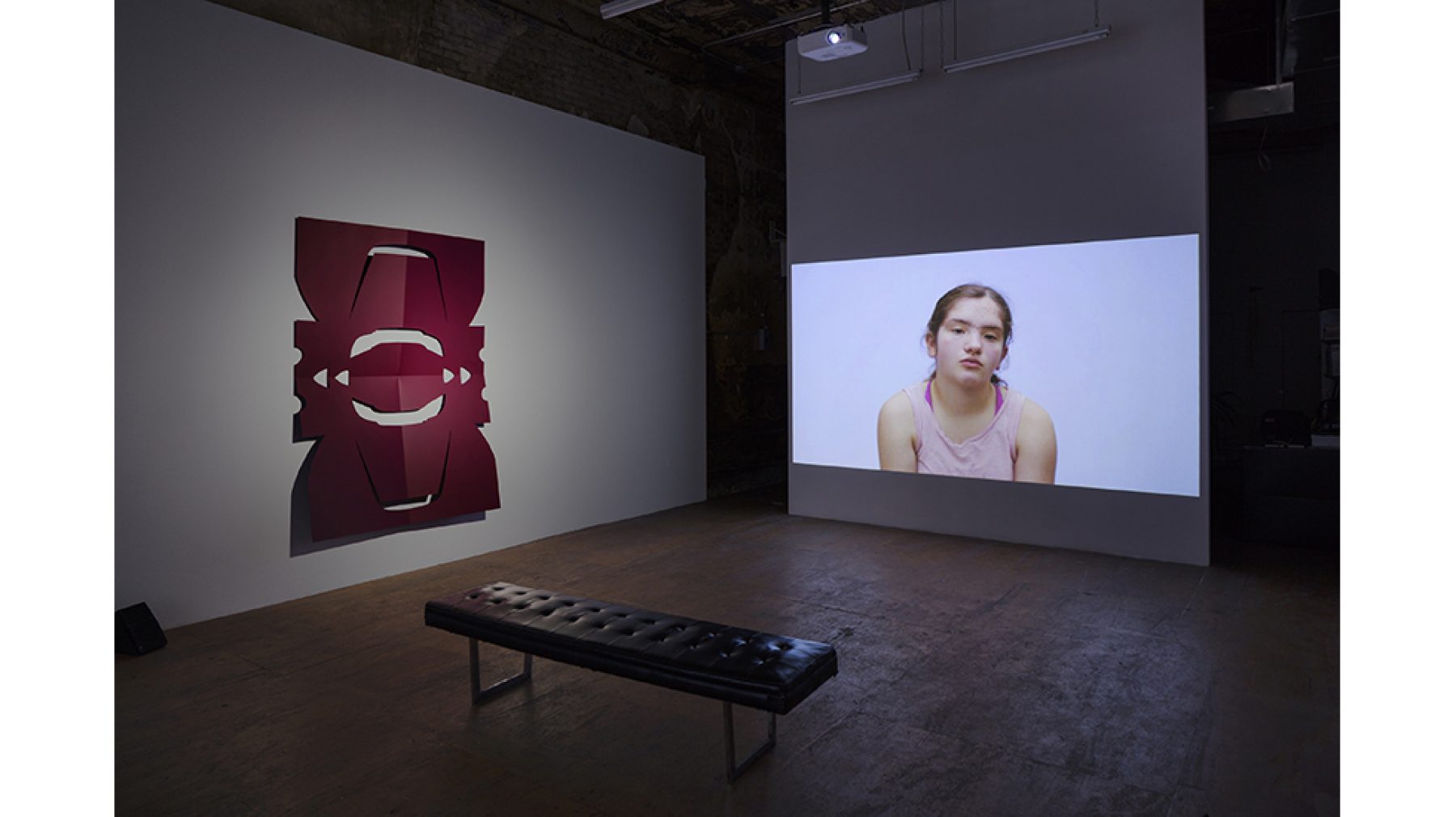
Matt Keegan, Installation view at Participant Inc., New York. Left: Cutout (Claret Violet), 2016. Powder-coated steel, 58 x 80 in. Right: Channel 1 of Generation, 2016. Two-channel video (color, sound); 44:30 min. Courtesy of the Artist, Participant Inc., New York and Altman Siegel, San Francisco.
October 19, 2017–January 7, 2018
We Just Fit, You and I
We Just Fit, You and I was a group exhibition that probed the boundaries between bodies and architecture. Featuring Michelle Lopez, Sondra Perry, Pamela Rosenkranz, and Michael E. Smith, each artist looked to contemporary technology, unexpected material behavior, and architecture as primary means by which to re-articulate the human form.
The artists presented here used the Carpenter Center’s building as site and subject to question this boundary between bodies and space, the human and nonhuman, and ultimately, figure and ground. The works underscore the corporeal metaphors embedded in this building’s design—from the lobe-shape “lungs” of the second and third floor studios, to Le Corbusier’s figure-based “Modulor” proportional system—to redefine what can constitute bodily presence today.
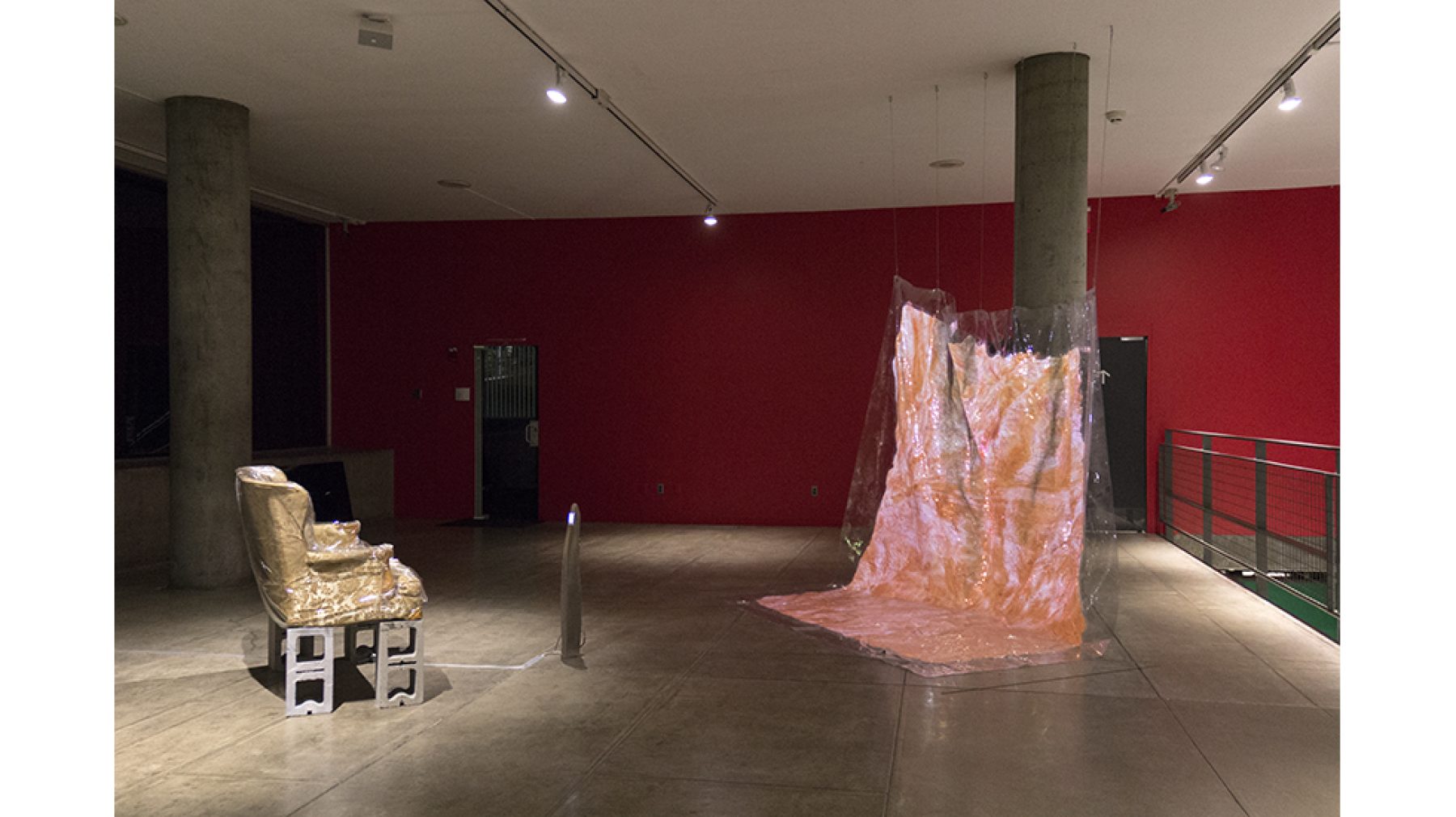
Installation view, Sondra Perry, We Just Fit, You and I, Carpenter Center for the Visual Arts, Harvard University, 2017.
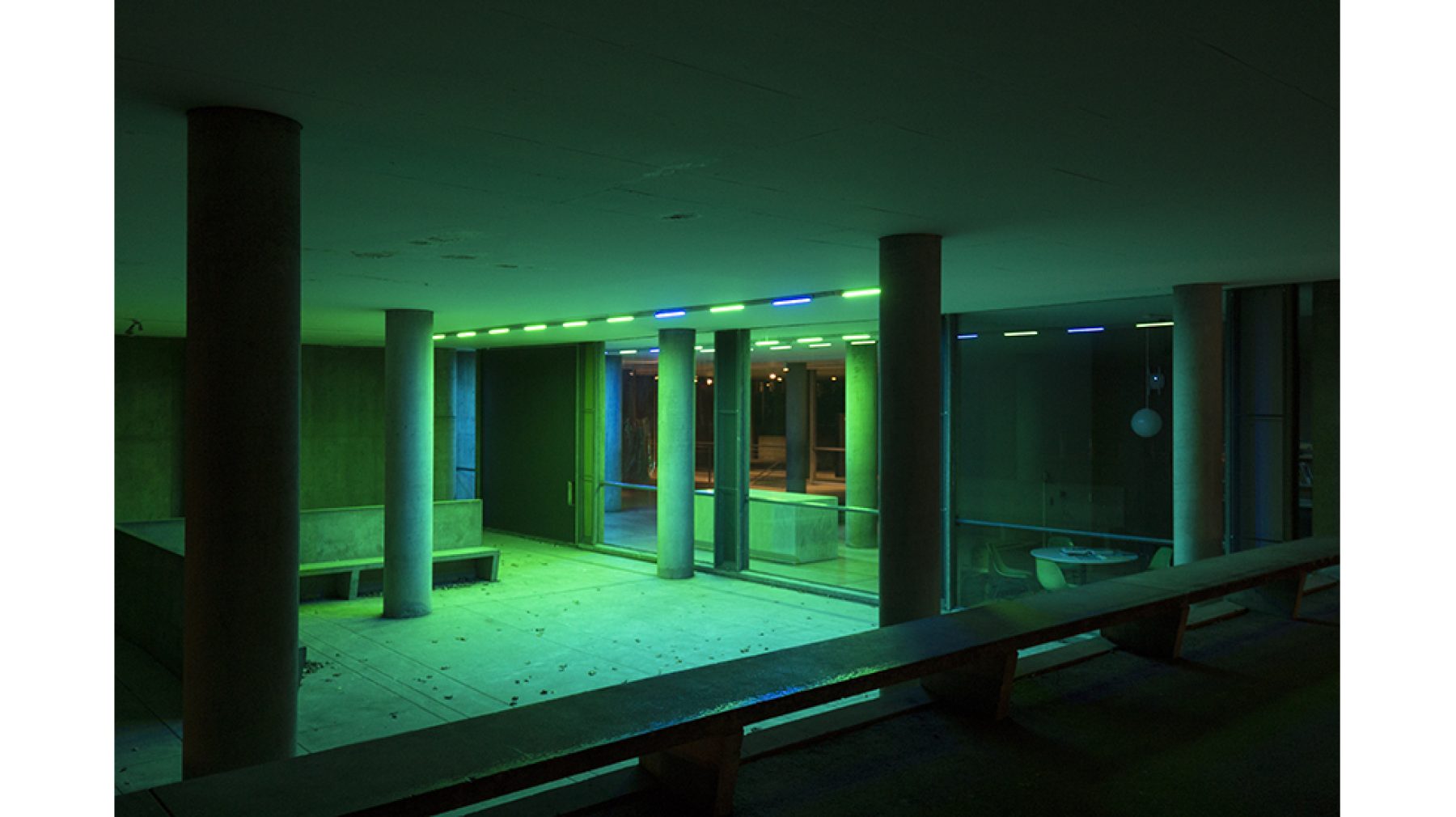
Pamela Rosenkranz, Anemine from Amazon, 2016. Acrylic paint and Anemine on aluminum composite, wood. 39 x 39 x 98 3/8 in. and Anemine (A Line is a Line A Green/Blue), 2017. 10 LED lighting strips mounted onto aluminum. Dimensions variable. Courtesy of the artist and Miguel Abru Gallery, New York.
August 24–September 24
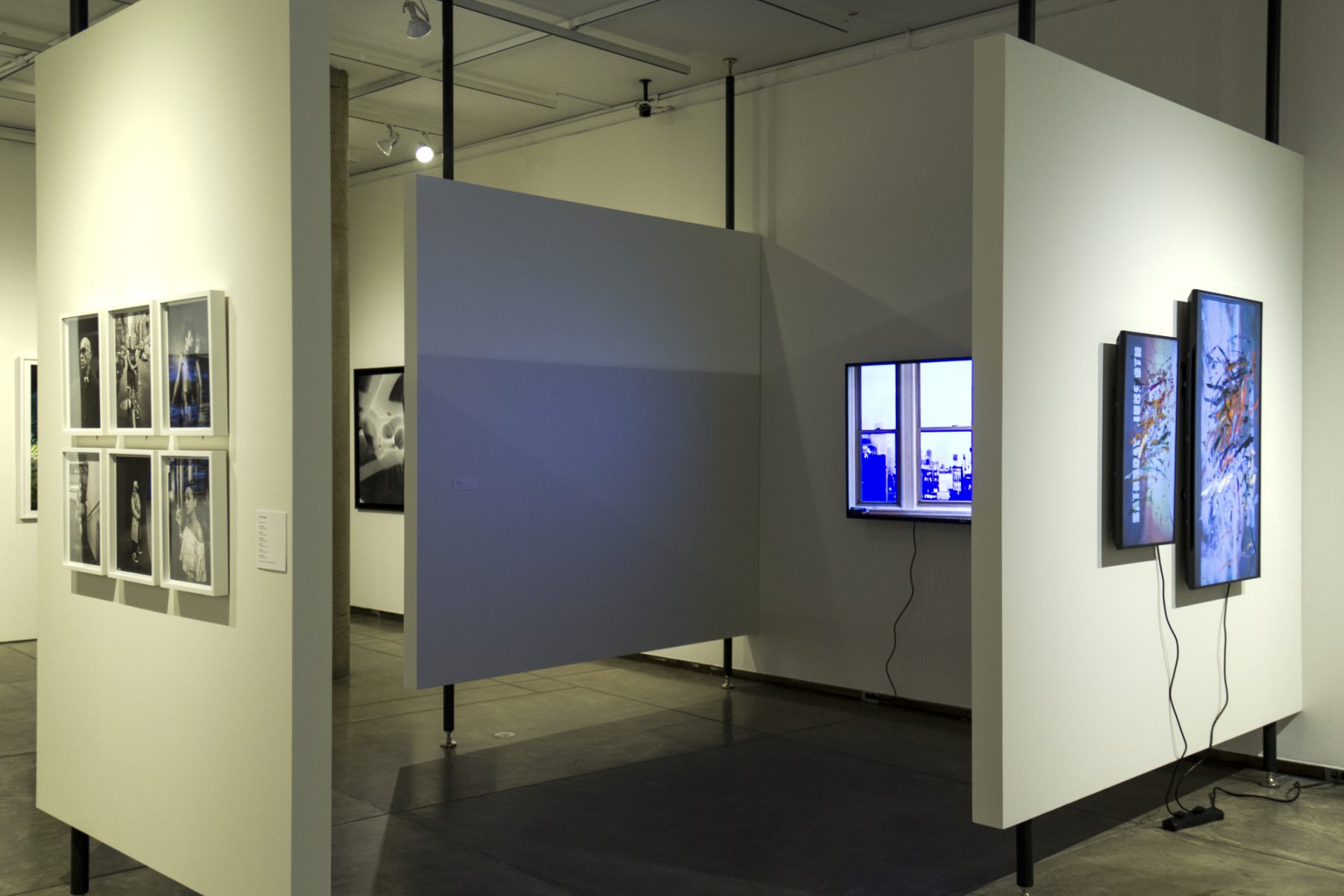
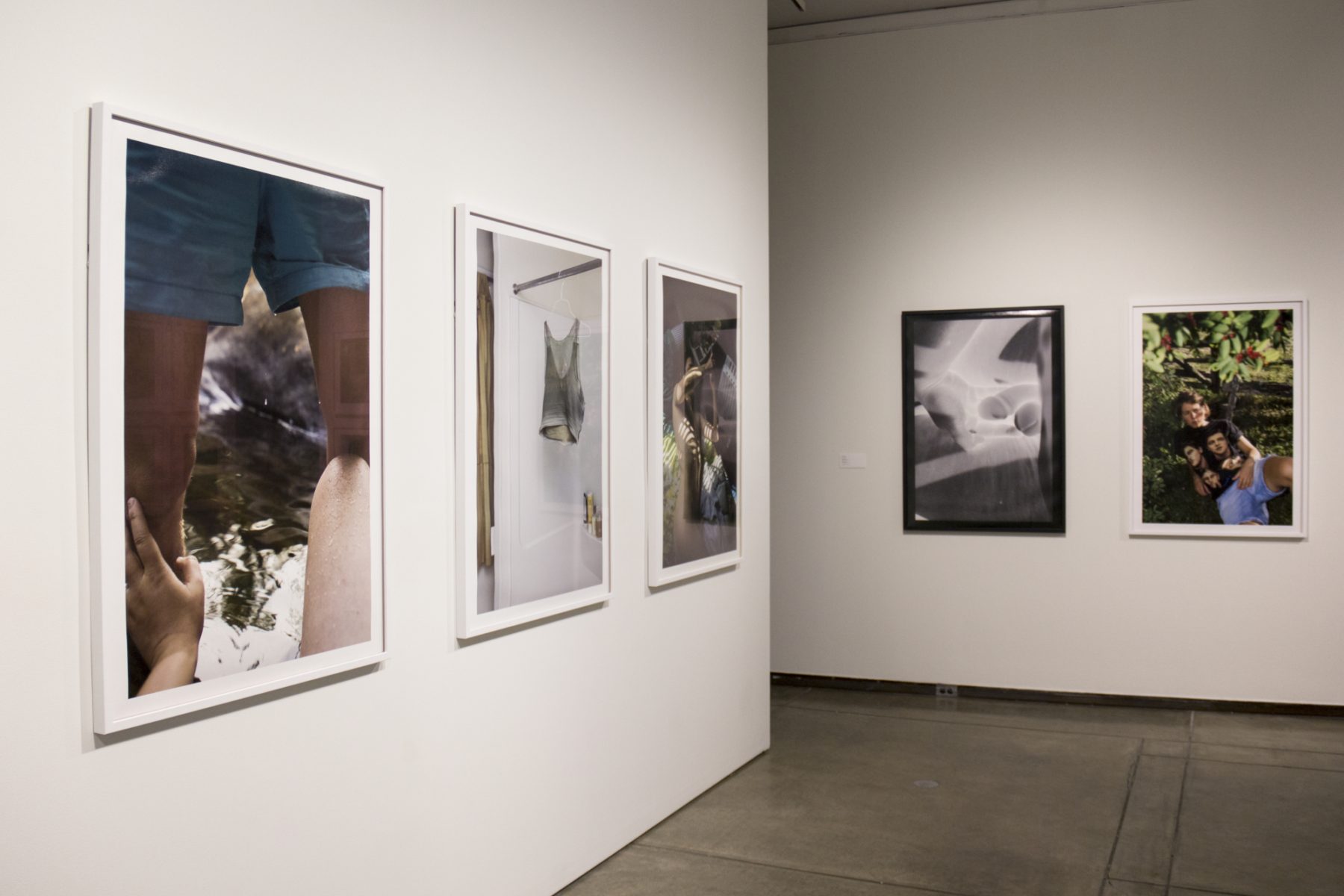
2017–18 Visual and Environmental Studies Visiting Faculty
The 2017–18 Visual and Environmental Studies Visiting Faculty exhibition presented work by four new visiting faculty members in Visual and Environmental Studies. Each year for almost fifty years, the department invited visual artists and filmmakers who are leaders in their fields to work closely with its students, invigorating and enriching the academic program and broadening departmental conversations with their outside perspectives and experiences. That year the department welcomed Judith Belzer, Ken Okiishi, Elle Pérez, and Richard Renaldi, each engaged with varied approaches to painting, photography, and the moving image.
June 15–August 6, 2017
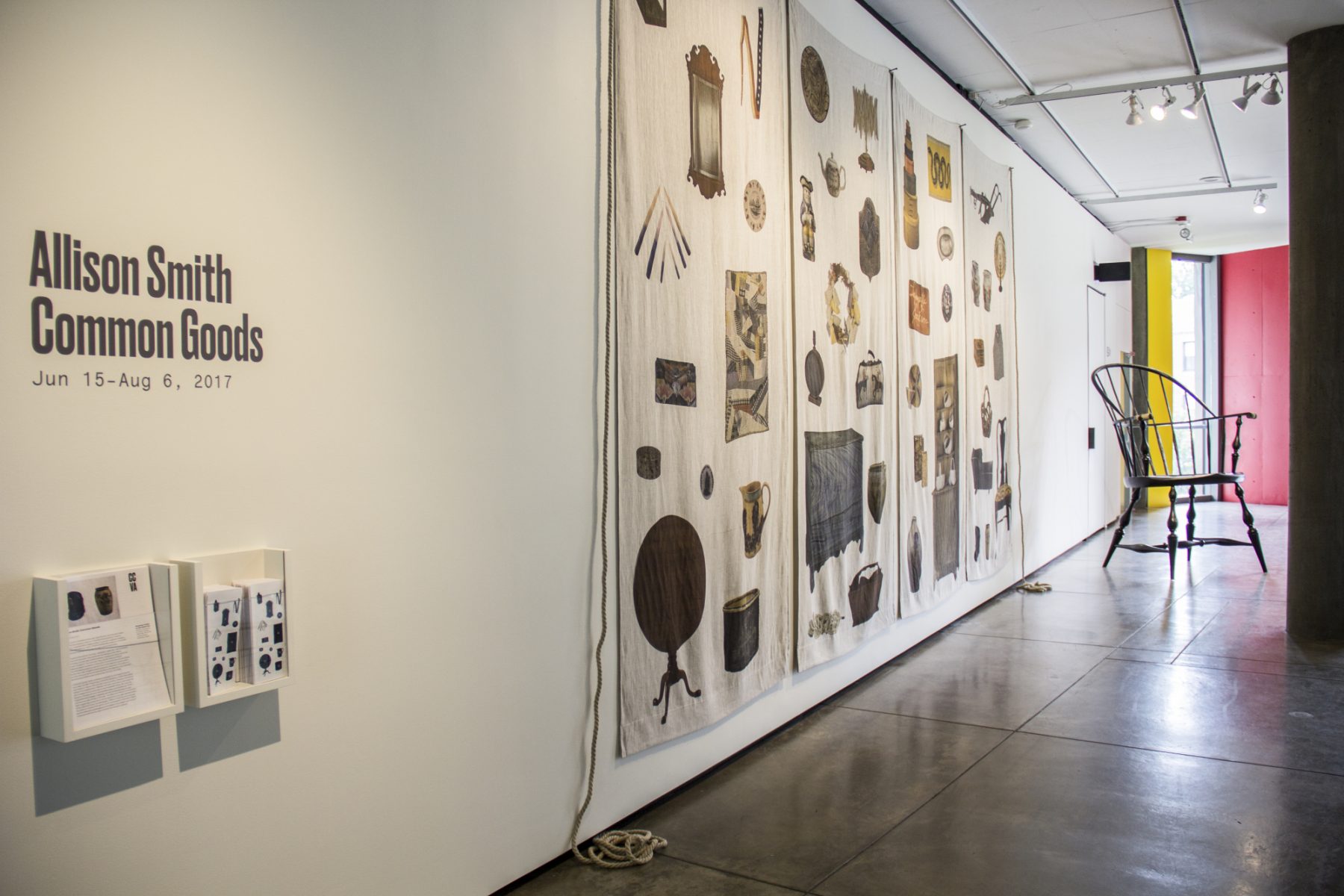
Allison Smith: Common Goods
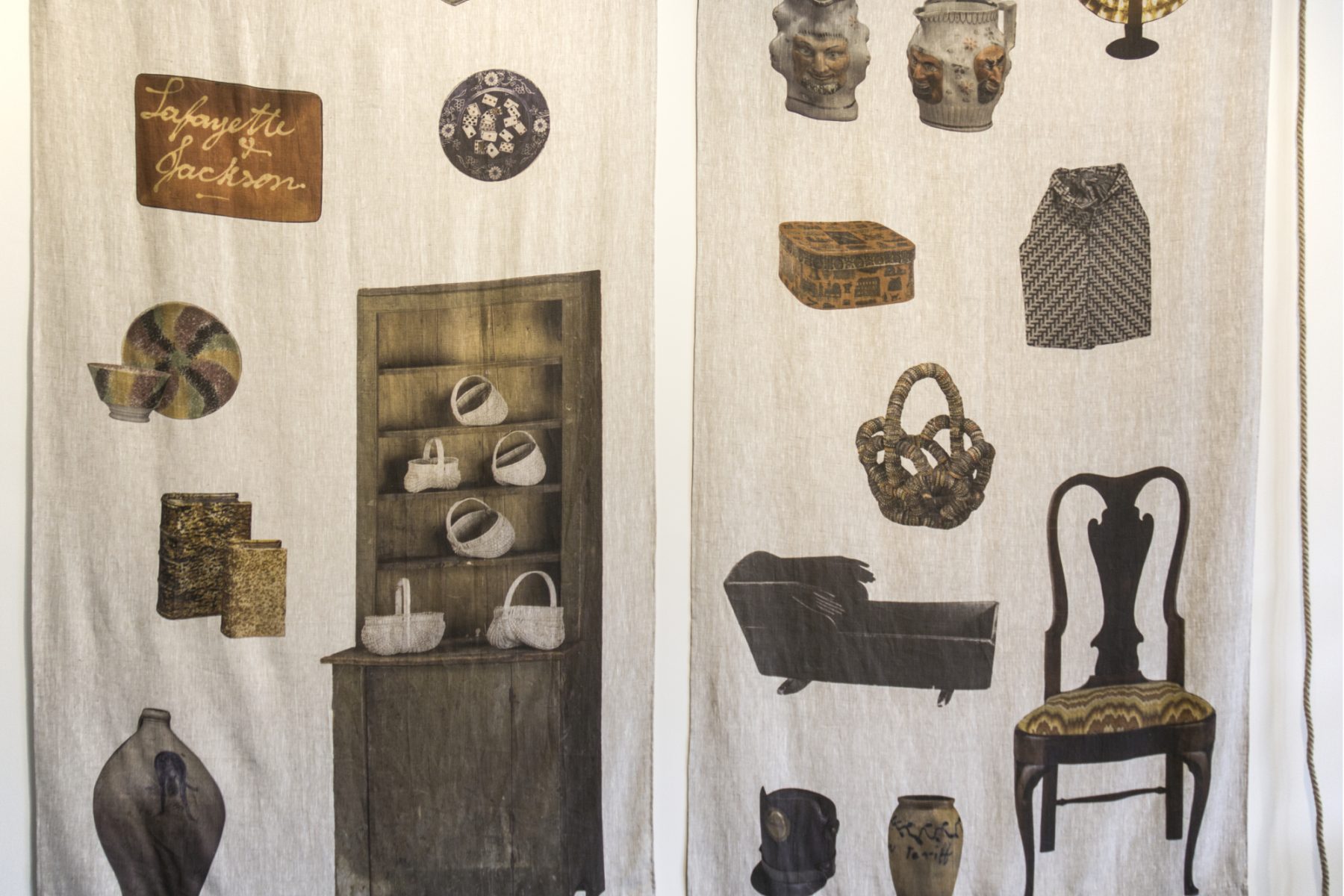
Allison Smith presented Common Goods at the Carpenter Center and related programs on the nearby Cambridge Common park. Smith’s installation of an over-sized Windsor armchair and image-printed backdrop reflects on the discursive potential of historic objects. Presented with a theatrical flair of scale and staging in a shallow and window-lined space on Level 3, Common Goods asked viewers to reconsider these early American forms anew through a performative lens.
In Common Goods, Smith continued investigations she began during her 2014 Josep Lluis Sert Practitioner in the Arts residency, in which she visited local makers of historic 18th and 19th-century crafts. Drawing a connection between the development of Modern Art and Living History, particularly as part of research she conducted on the Rockefeller family, who built the Museum of Modern Art and Colonial Williamsburg simultaneously, Smith traces alternate lineages of abstract art and social practices through common everyday things of the past.
June 8–September 24, 2017
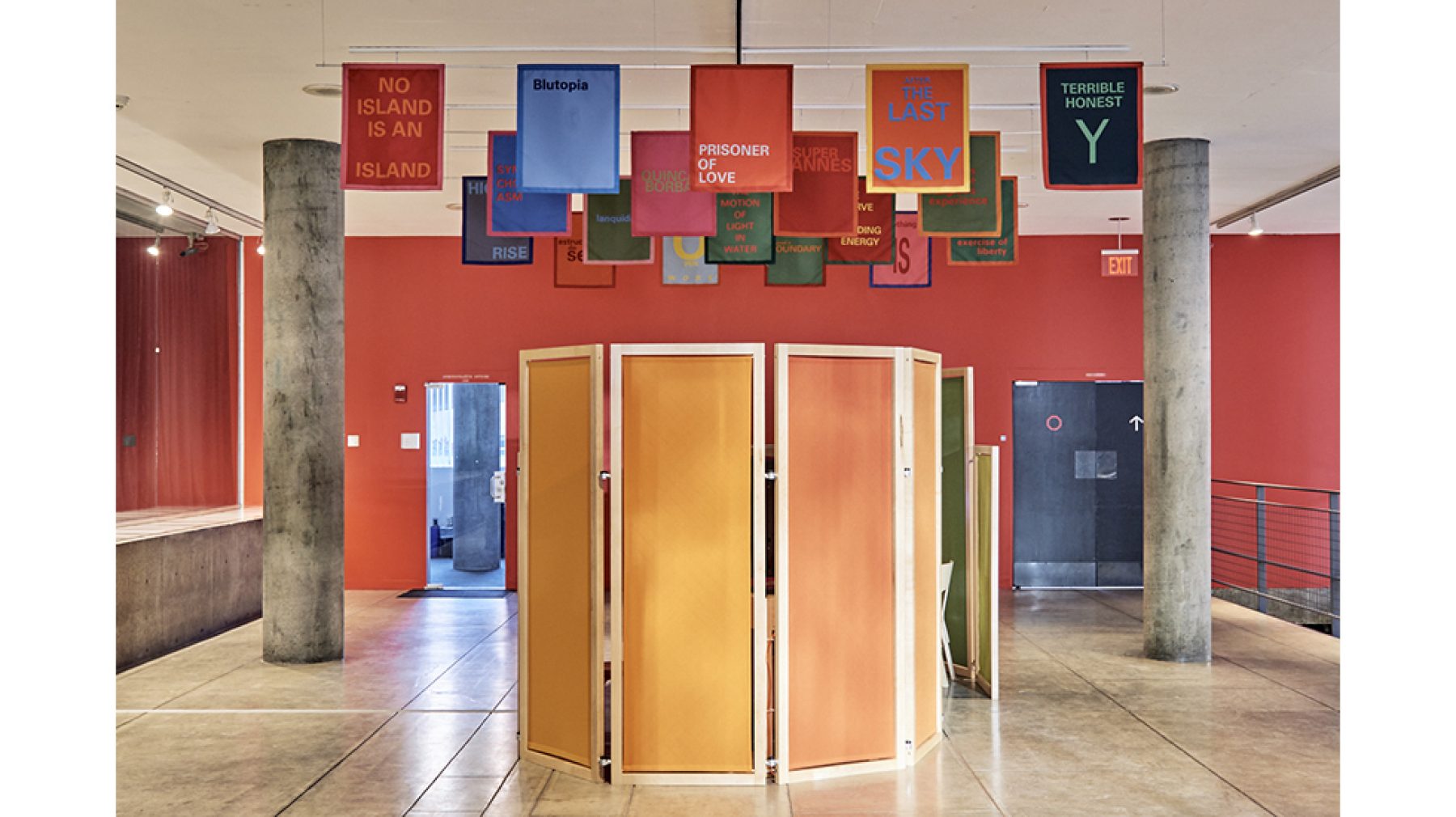
Renée Green: Media Bichos / Wavelinks
Renée Green’s Pacing residency continued with a summer installation of Media Bichos/Wavelinks in CCVA’s Level 1 Gallery space. Pacing by Renée Green was part the CCVA initiative Institution (Building), a biennial invitation to artists to consider the institutional behaviors and practices of the Carpenter Center and Harvard University.
Designed as viewing stations for the MoMA’s media collection, Media Bichos were conceived as an intermediary modular system that can exist in expandable and contractible forms, functioning as an intermediating structure and space altering device. Each Media Bicho structure was constituted by panels of wooden frames, cladded with varied textiles; the panels were especially hinged to allow innumerable possibilities of shape, arrangement and color configurations.
In its first Pacing iteration, Media Bichos/Wavelinks was deployed in Le Corbusier’s Carpenter Center lobby to showcase Green’s Wavelinks (2002), a series of seven videos which explore and examine the many relations people have to sound and electronic music, combining thematic narratives with a subjective circuitous story.
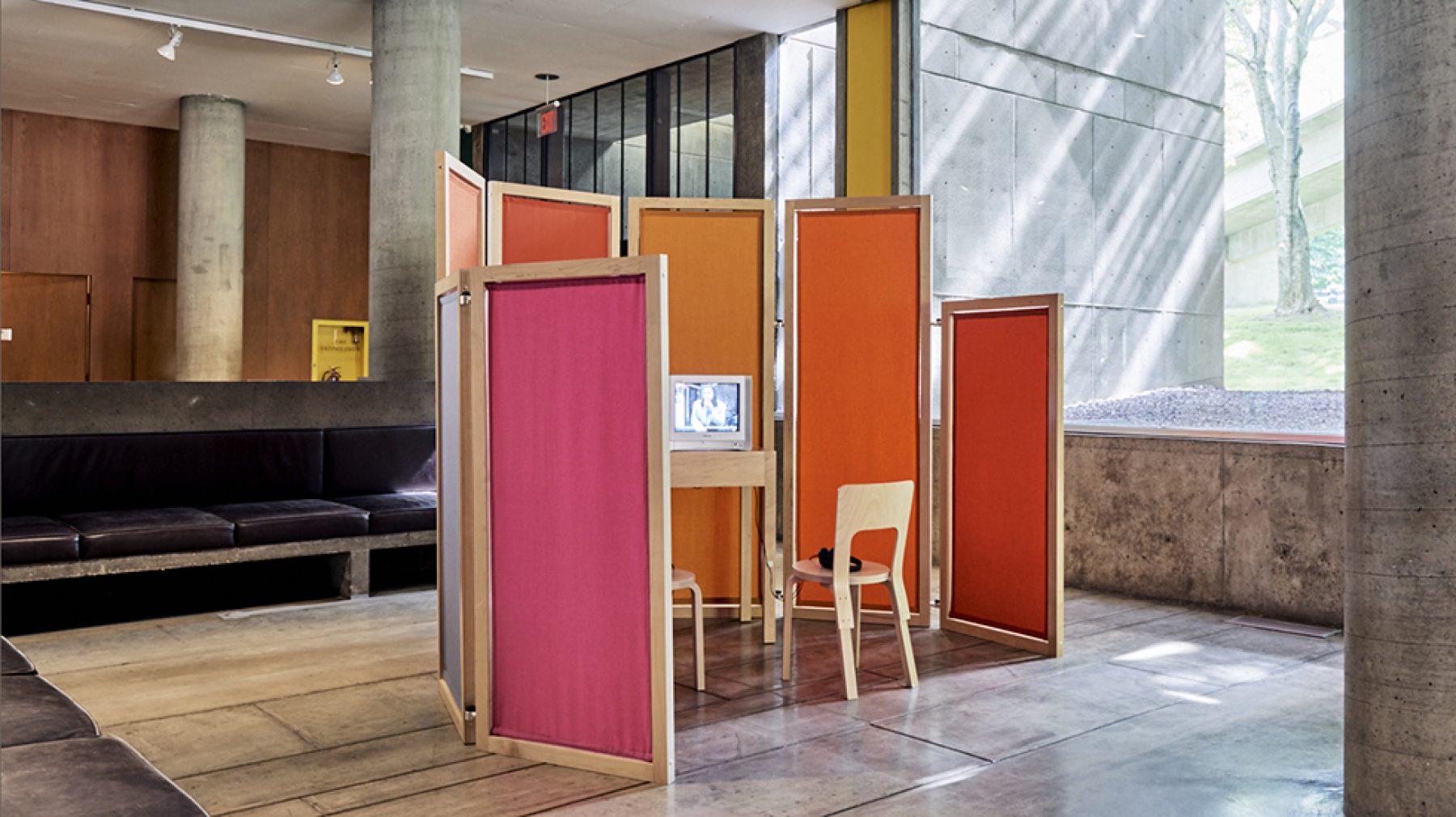
Installation view. Renée Green: Media Bichos/Wavelinks, Carpenter Center for the Visual Arts, Harvard University, Level 1. Media Bichos. 2012-13. Wood frames, textiles, tables, and seating. Dimensions variable. The Museum of Modern Art, New York. Study Collection.
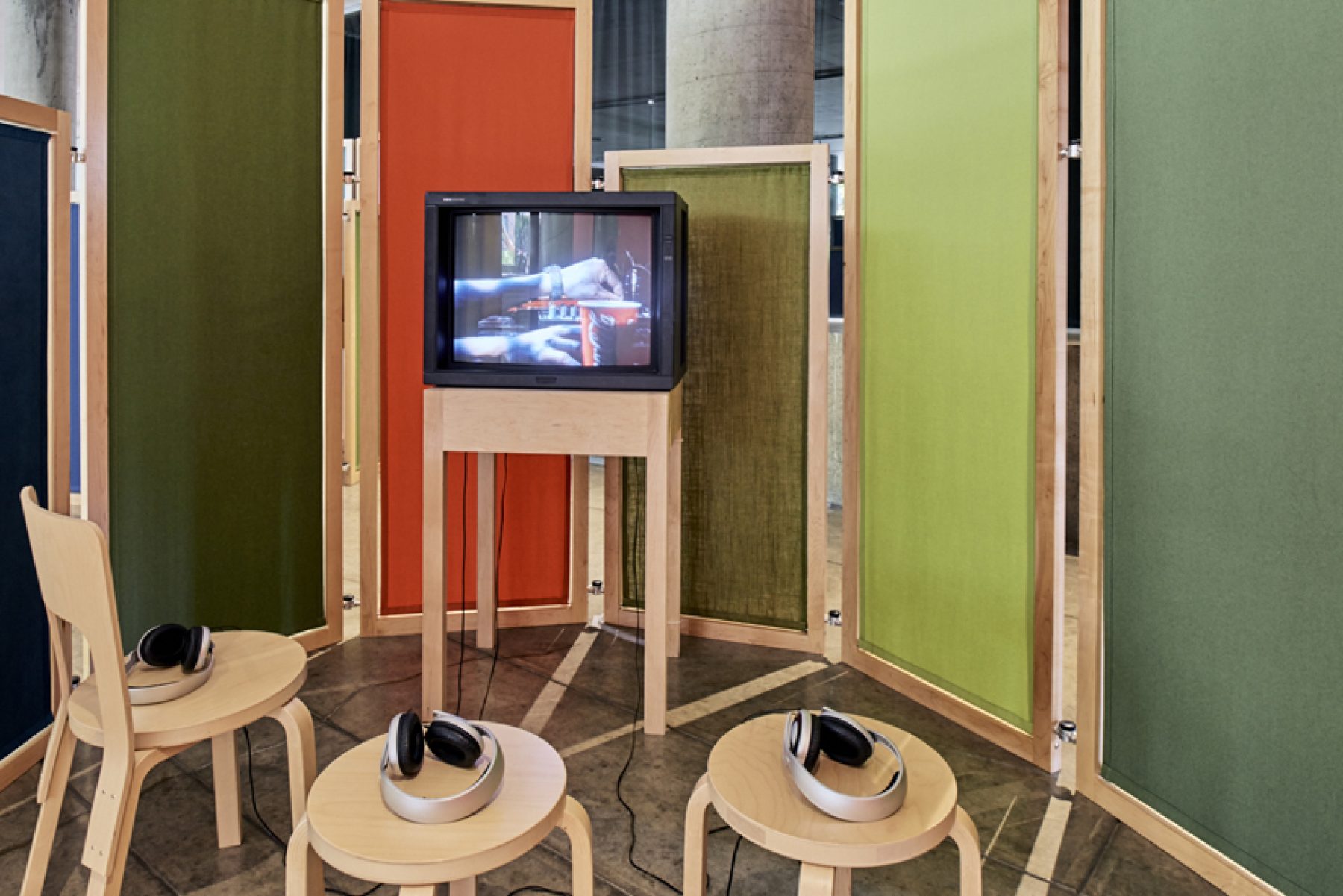
Installation view. Renée Green: Media Bichos/Wavelinks, Carpenter Center for the Visual Arts, Harvard University, Level 1. Media Bichos. 2012-13. Wood frames, textiles, tables, and seating. Dimensions variable. The Museum of Modern Art, New York. Study Collection.
May 18–December 17, 2017
Trisha Baga: CCC (Ceramics Club Cambridge)
Why make ceramic protest signs? Because we will be protesting these things for a long time to come….This proposition informs the CCVA summer Display Case exhibition CCC (Ceramics Club Cambridge) featuring an installation of objects and signage created by open ceramic sessions with 2017 Josep Lluis Sert Practitioner Trisha Baga. Then open to students and the general public at the Ceramics Program, Office for the Arts at Harvard, the workshop began with a prompt to make what one wished to see in the world. Baga continued to ask participants to use clay to think through the current political climate and potential futures. The CCVA Display Case, arranged by the artist, was an amalgamation of this material, alongside Baga’s own work in clay and video, and presented as a free-associative visual field by which the hierarchies of text and image are redefined.
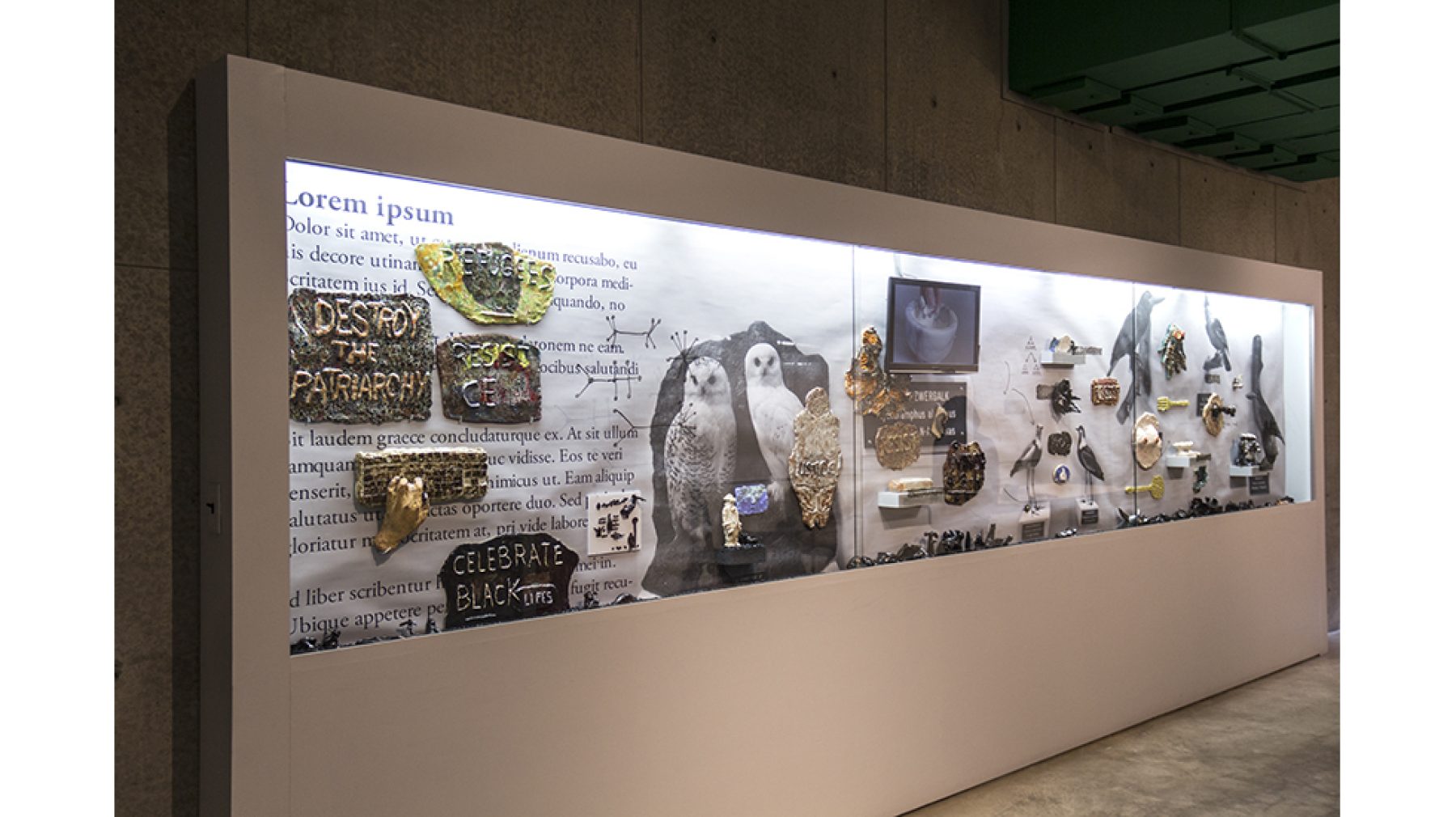
Carpenter Center for the Visual Arts, installation view, Trisha Baga: CCC (Ceramics Club Cambridge), Level 0 Display Case, on view May 18–Sep 17, 2017.
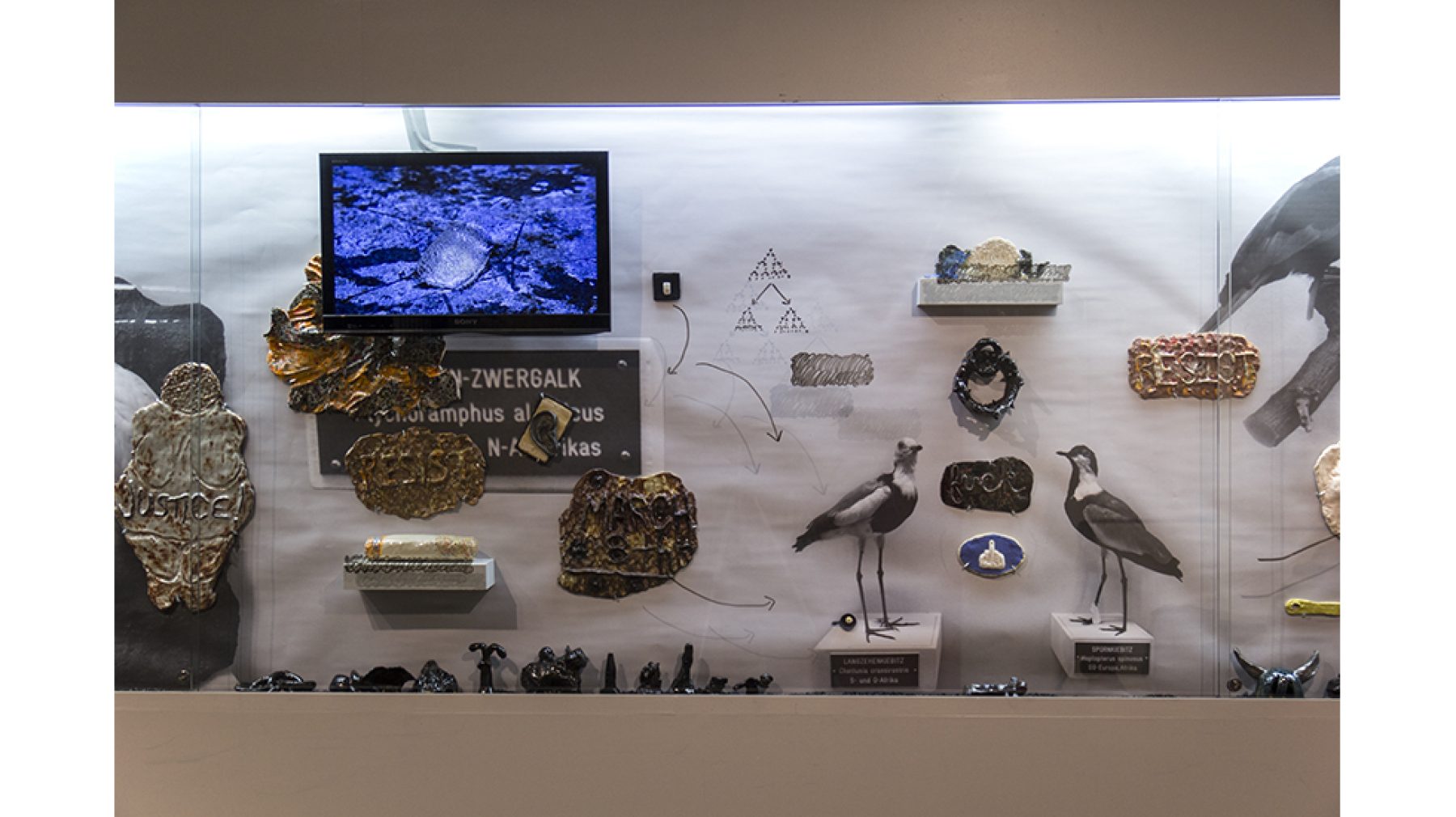
Carpenter Center for the Visual Arts, installation view, Trisha Baga: CCC (Ceramics Club Cambridge), Level 0 Display Case, on view May 18–Sep 17, 2017.
April 28–May 25, 2017
VES 2017 Senior Thesis: elsewhere—here
For Visual and Environmental Studies students, the Senior Thesis was the capstone experience in the department. Students conceived their theses in conjunction with the department and worked closely with faculty members as principal advisers. Throughout the yearlong process, students developed and refined their ideas into a thesis work, concluding with its presentation in an annual exhibition, elsewhere—here is the title of the 2017 Senior Thesis exhibition. Selected collectively by the students for their group exhibition, the title referred to the tensions at play between the material spaces of the gallery and studio and that of the psychological space of the creative process. Presence is questioned as the sites of art making become manifold from concept to production to presentation.
The exhibition featured works by Serena Eggers, Devon Guinn, Eriko Kay, Gigi Kisela, Hail Nelson, Alison Reed, Samuel Wolk
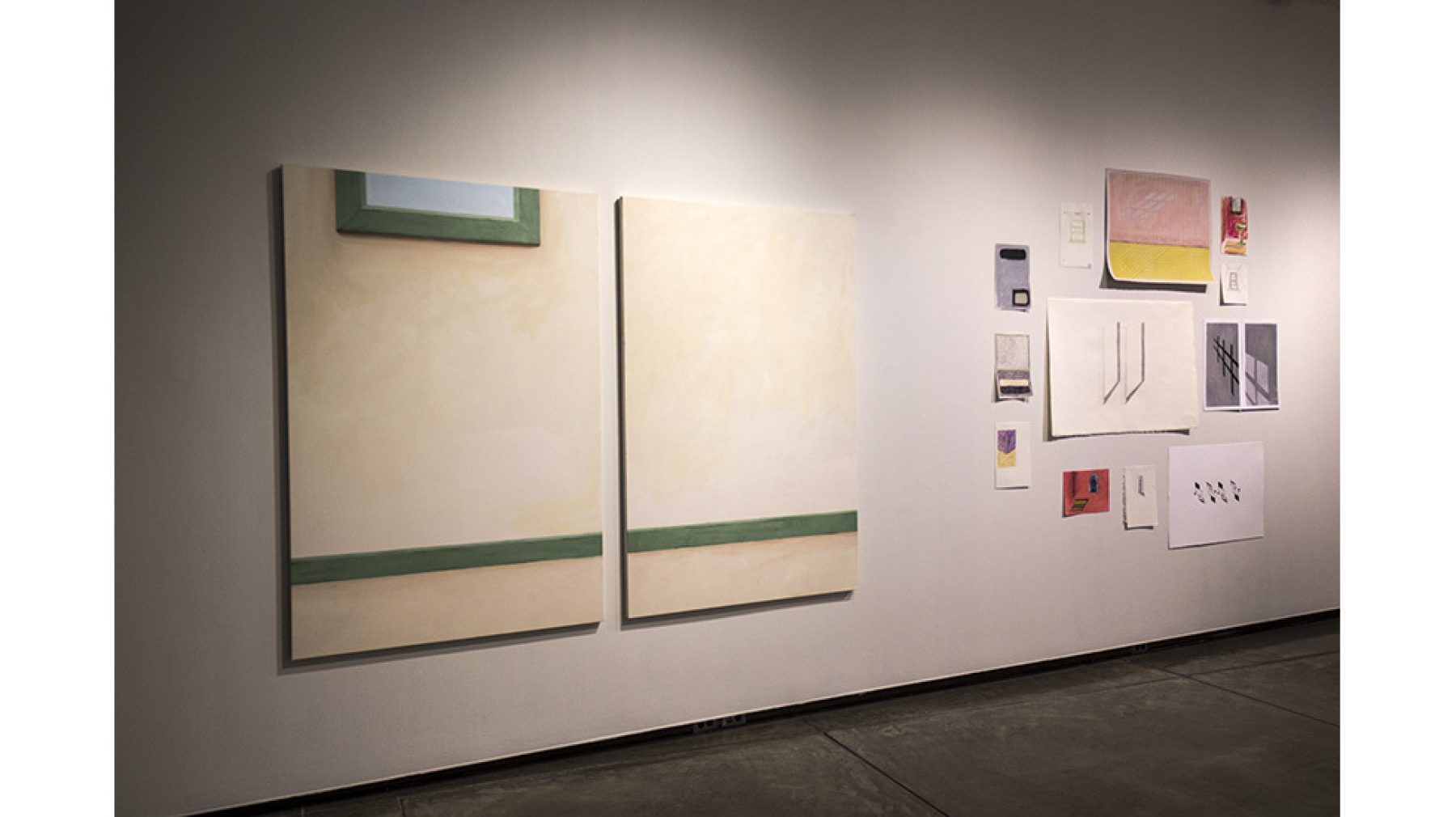
Installation view, Hali Nelson. Visual and Environmental Studies 2017 Senior Thesis Exhibition, Carpenter Center for the Visual Arts, Apr 28–May 25, 2017. Level 3, Sert Gallery.
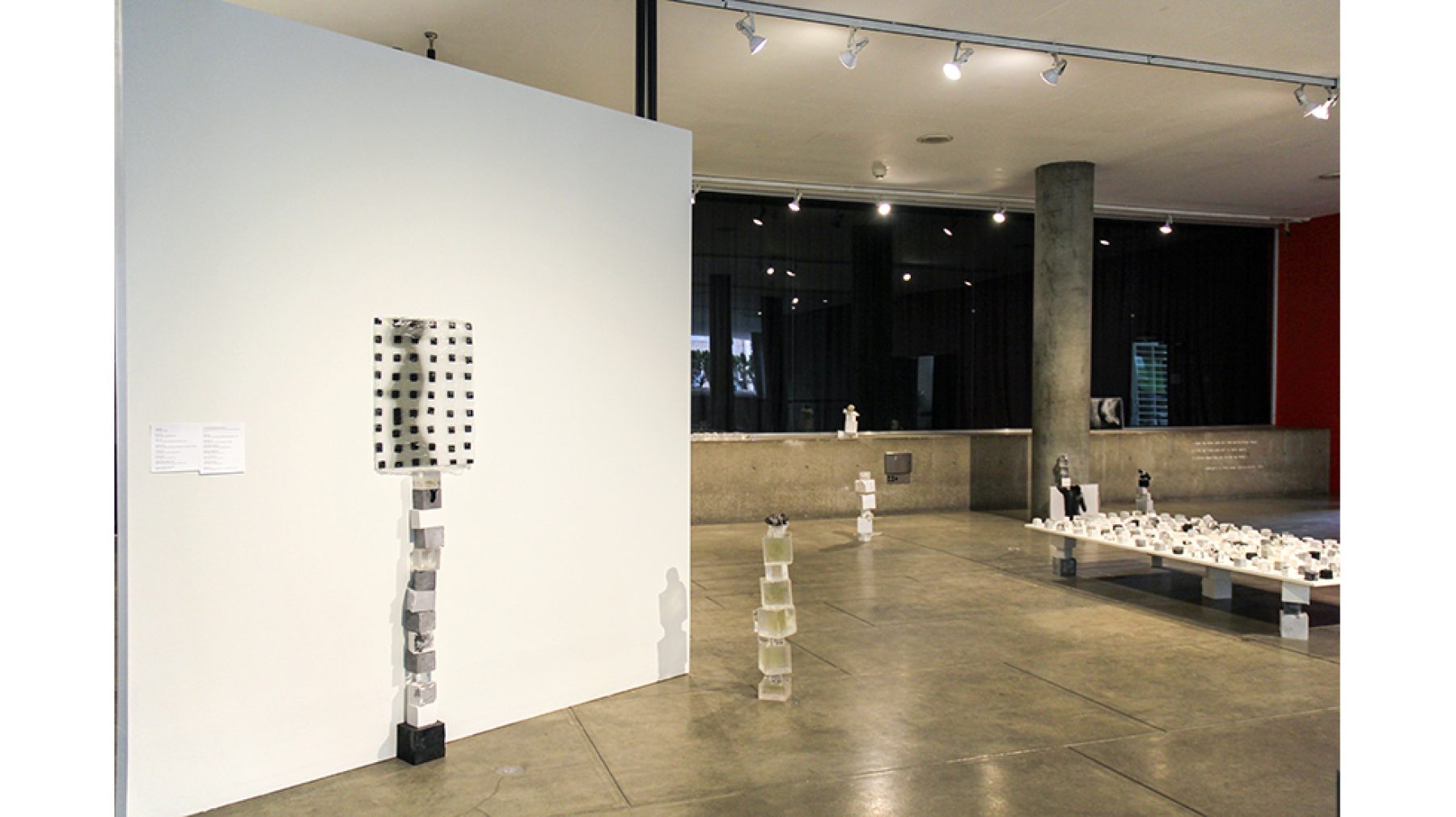
February 23–September 24, 2017
Renée Green: Code: Survey
Renée Green’s residency, Pacing, continued in CRC/bookshop with an installation of Code: Survey (2006); in this version, the focus was on the online dimension of Green’s public art commission for the California Department of Transportation. Code: Survey was developed for the Morphosis-designed Caltrans District VII Headquarters in downtown Los Angeles as an architectural and digital installation. Whereas the building houses a grid of 168 glass panels of images related to transportation, each panel engraved with an alphanumeric code, the website is its searchable counterpart of photographs, codes and an index of keywords. Images, texts, film footage and audio from interviews with Caltrans employees as well as native Californians intermingle in Green’s website as a dynamic archive that undermines and complicates our expectation of searching any form of place.
Renée Green, Code: Survey. A021. Courtesy of the artist and FreeAgent Media.
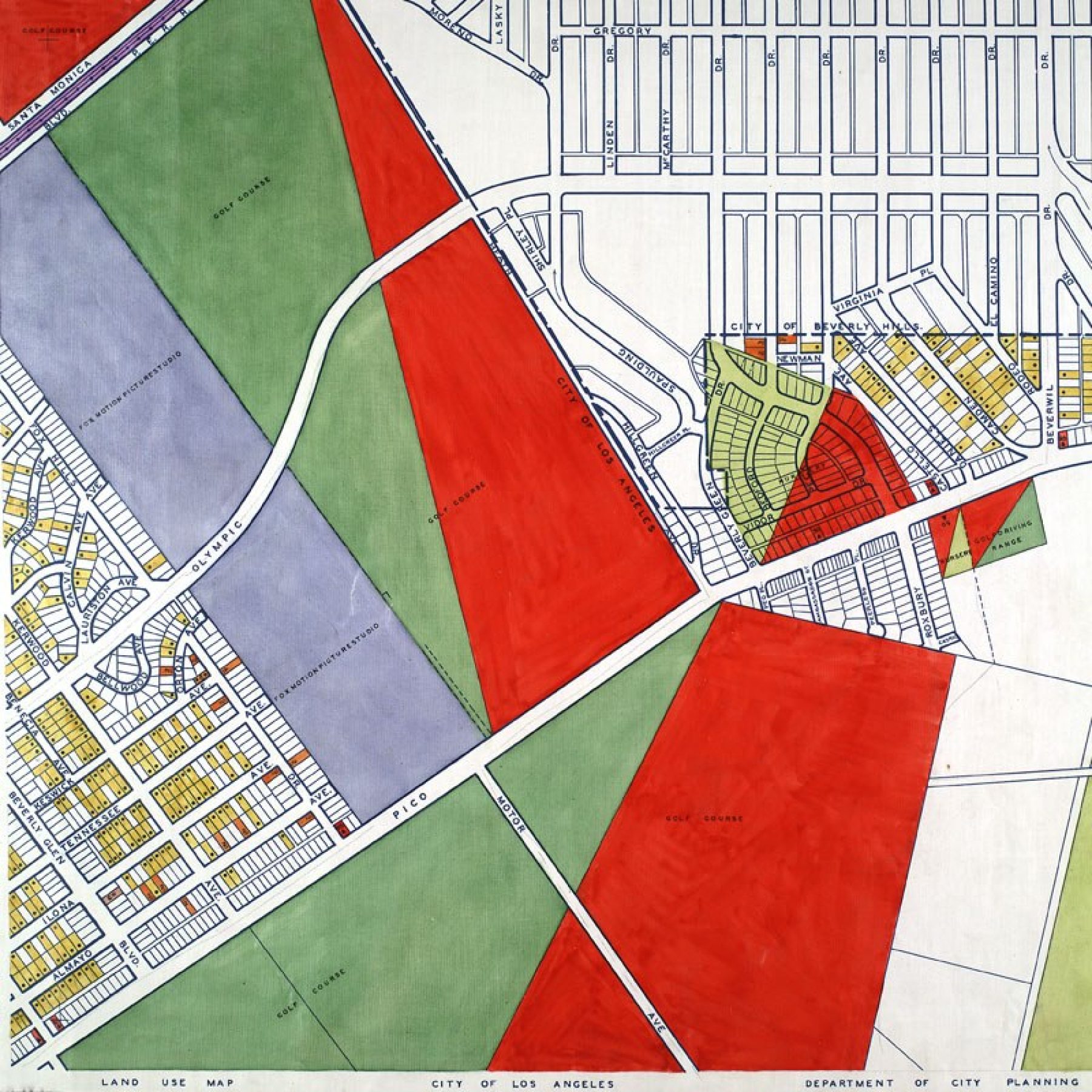
Renée Green. Code: Survey. A042. Courtesy of the artist and Free Agent Media.
February 13–February 17, 2017
Trisha Baga
Residency
Trisha Baga, 2017 Josep Lluis Sert Practitioner in the Arts, ran Ceramics Club, a two-part workshop at the Ceramics Program—Office for the Arts at Harvard that culminated in a public, open studio and screening on Feb 17, 2017.
Ceramics Club took its name from a loose artists’ organization in New York that uses ceramics as a way to socially interact, make material, collaborate, and see what happens from there. The group modeled itself on propositions gleaned from amateur “clubs” that organized in the interest of dismantling and opposing professionalism, as well as withdrawing distinctions regarding quality, institutions, representations, etc.
At Harvard, Baga ran a short-term Ceramics Club, or cc, at the Ceramics Programs' Allston studio for students.
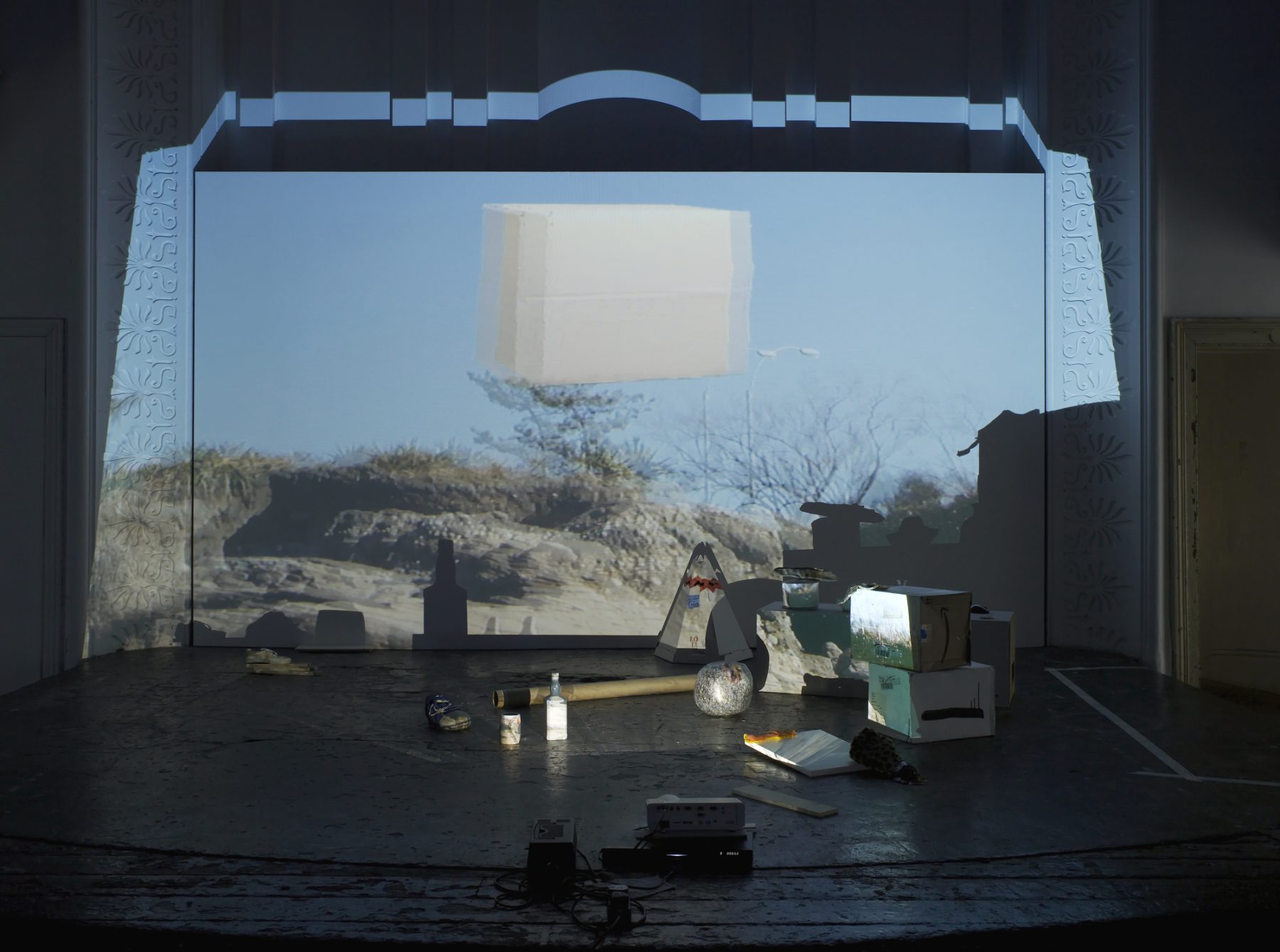
Installation view, Trisha Baga, 2014 Zabludowicz Collection, London. Courtesy of the artist.
February 9–April 16, 2017
Futurefarmers: Errata—Brief Interruptions
Over two years, the Futurefarmers collective envisioned Carpenter Center for the Visual Arts and its surrounding environment as sites for considering material "interruptions.” A series of disruptions in seemingly authoritative objects—fingerprints in red sidewalk bricks, errata slips in philosophy books, and a literal bug that stopped the machinery of an historic computer—were the elements generating the artists’ new multimedia projects Erratum Two, Erratum Three and De-Bugging. What can result from pausing with these interruptions in form and meaning, bringing to them curiosity and wonder? This exhibition presented new works prompted by this question, along with earlier Futurefarmers projects that also demonstrated the collective's interest in "errors" as prompts for exploratory facture: Erratum: Brief Interruptions in the Waste Stream (2010) and Forging a Nail (2014).
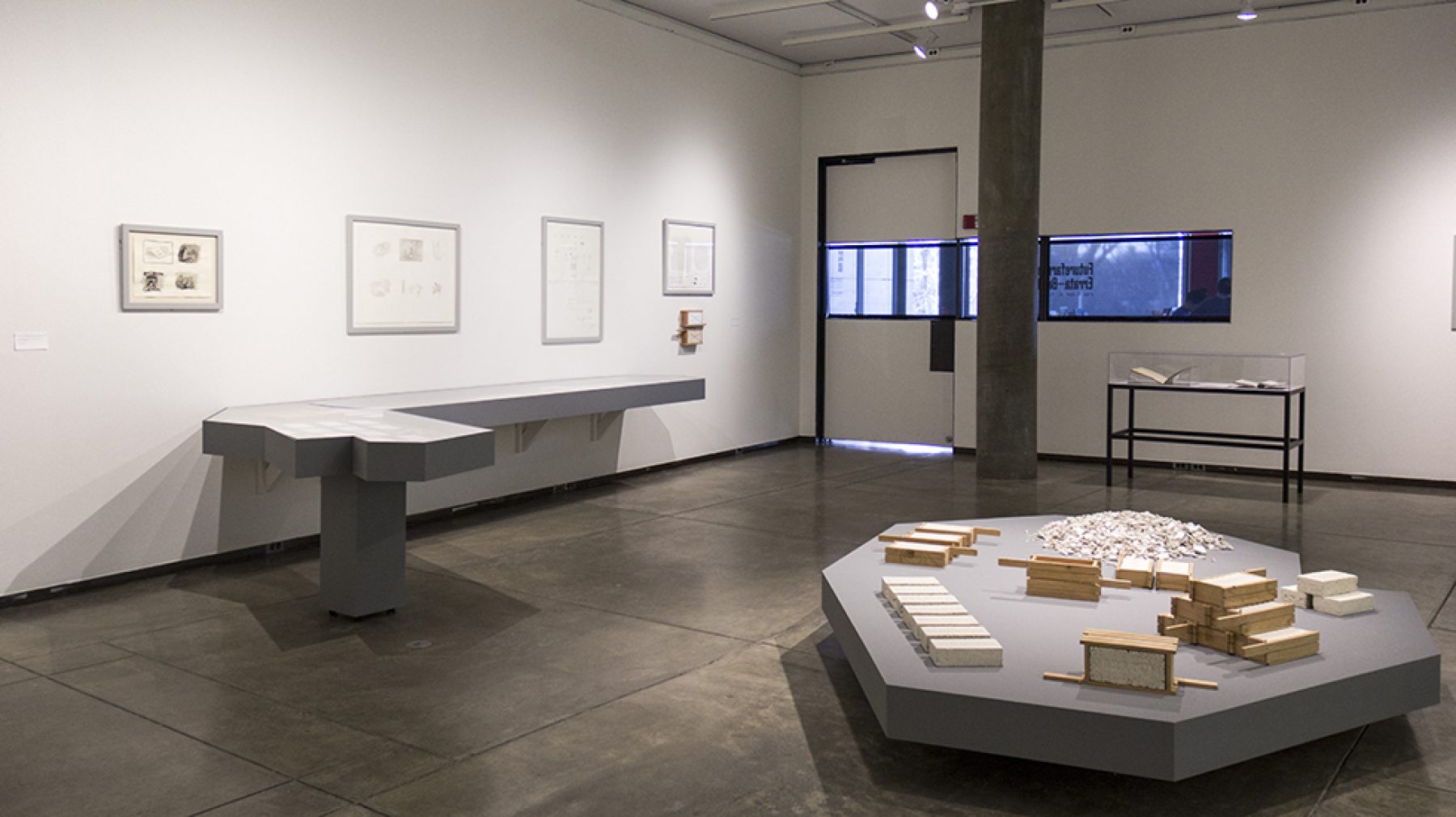
Futurefarmers: Errata—Brief Interruptions. Carpenter Center for the Visual Arts, Sert Gallery, Feb 9-Apr 16, 2017
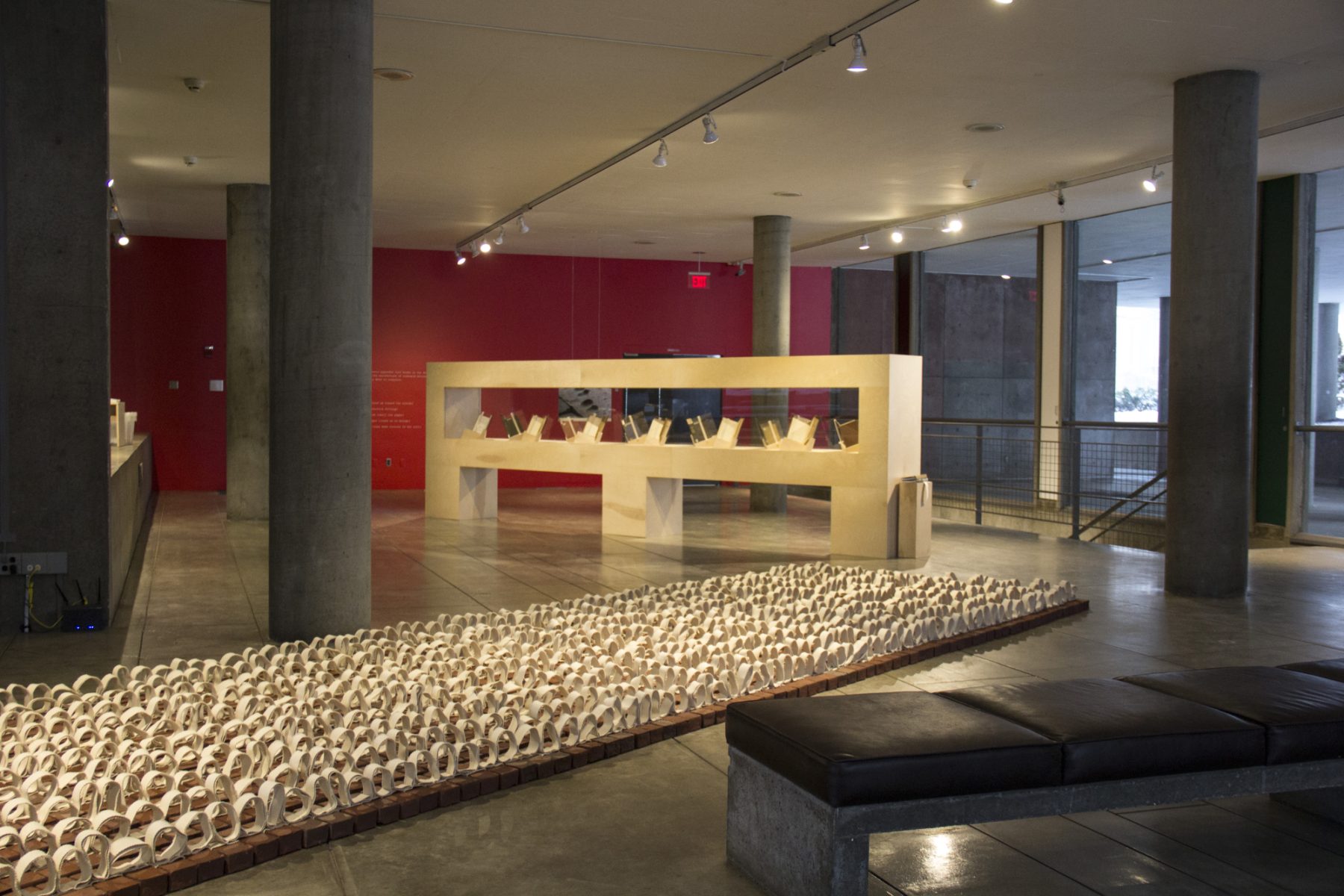
January 26–April 16, 2017
Renée Green: FAM Case (2001–2016)
As the 2016–18 Institution (Building) artist, Renée Green presented Pacing, a two-year engagement with the Carpenter Center.
FAM Case, as part of Pacing, took shape in the case located on Level 0 of the Carpenter Center which displayed a selection of Free Agent Media (FAM) printed matter: books, newspapers, print outs, public lecture notices, screening programs, exhibition announcements, and other ephemera. Green has used the moniker Free Agent Media (aka, FAM) as the authoring tool for her projects since 1994 as a means to register art’s complex relationship to the culture industry and complicate the tendency to read art emanating from “the museum,” “the academy” or “the market” as the only designated institutions for the production and reception of art. Instead, Free Agent Media (FAM), contextualized the broader media ecology in which Green’s works, writings and ideas circulate.
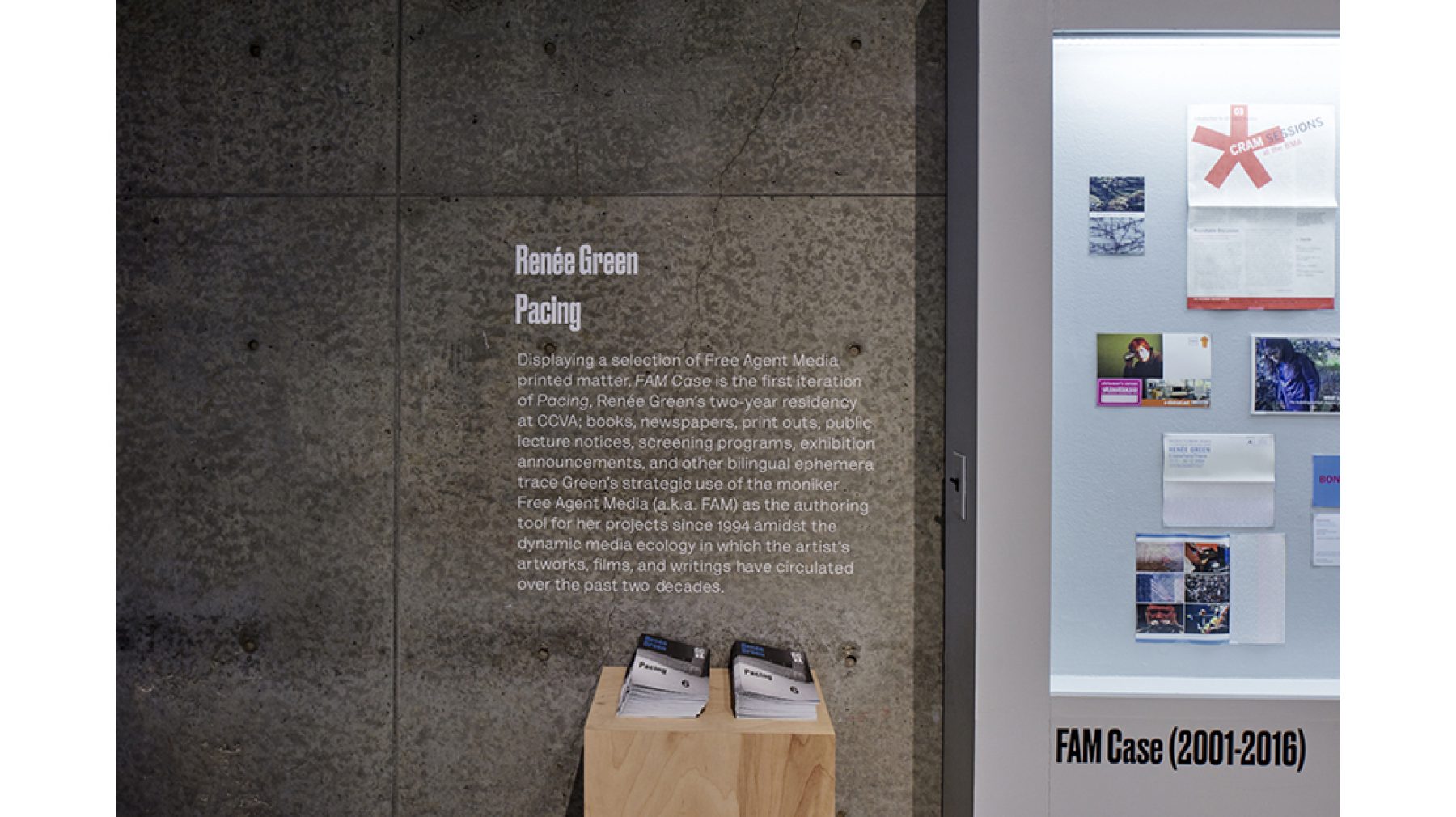
Installation view, Renée Green: FAM Case (2001-2016), Carpenter Center for the Visual Arts, Harvard University. On view Oct 27, 2016–Jan 15, 2017.
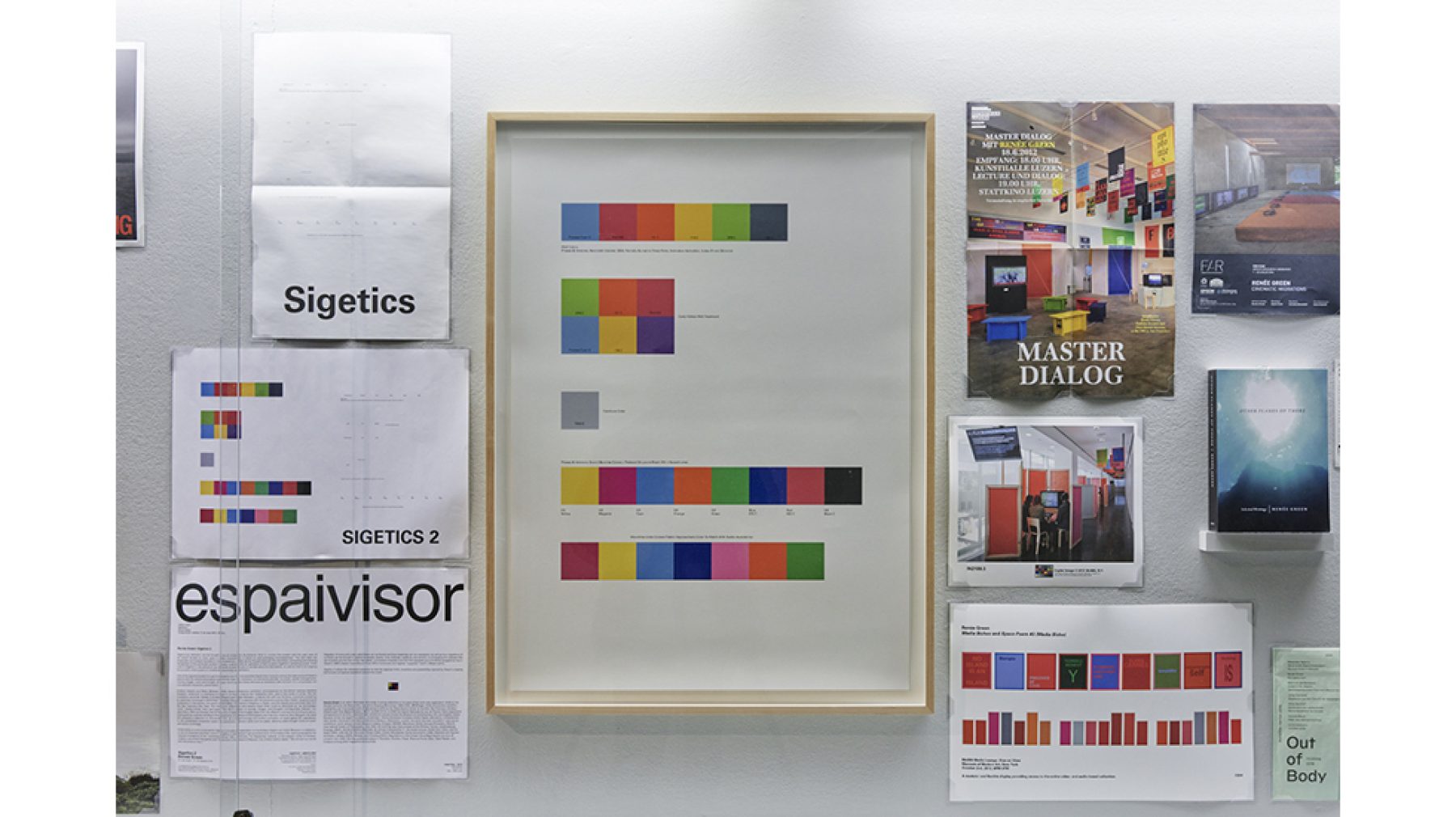
Installation view, Renée Green: FAM Case (2001-2016), Carpenter Center for the Visual Arts, Harvard University. On view Oct 27, 2016–Jan 15, 2017.
2016
October 27, 2016–January 15, 2017
Renée Green: FAM Case (1994–2000)
As the 2016–18 Institution (Building) artist, Renée Green presented Pacing, a two-year engagement with the Carpenter Center.
Pacing’s first iteration, FAM Case (1994-2000), took shape in the case located on Level 0 of the Carpenter Center which displayed a selection of Free Agent Media (FAM) printed matter: books, newspapers, print outs, public lecture notices, screening programs, exhibition announcements, and other ephemera. Green has used the moniker Free Agent Media (aka, FAM) as the authoring tool for her projects since 1994 as a means to register art’s complex relationship to the culture industry and complicate the tendency to read art emanating from “the museum,” “the academy” or “the market” as the only designated institutions for the production and reception of art. Instead, Free Agent Media (FAM), contextualizes the broader media ecology in which Green’s works, writings and ideas circulate.
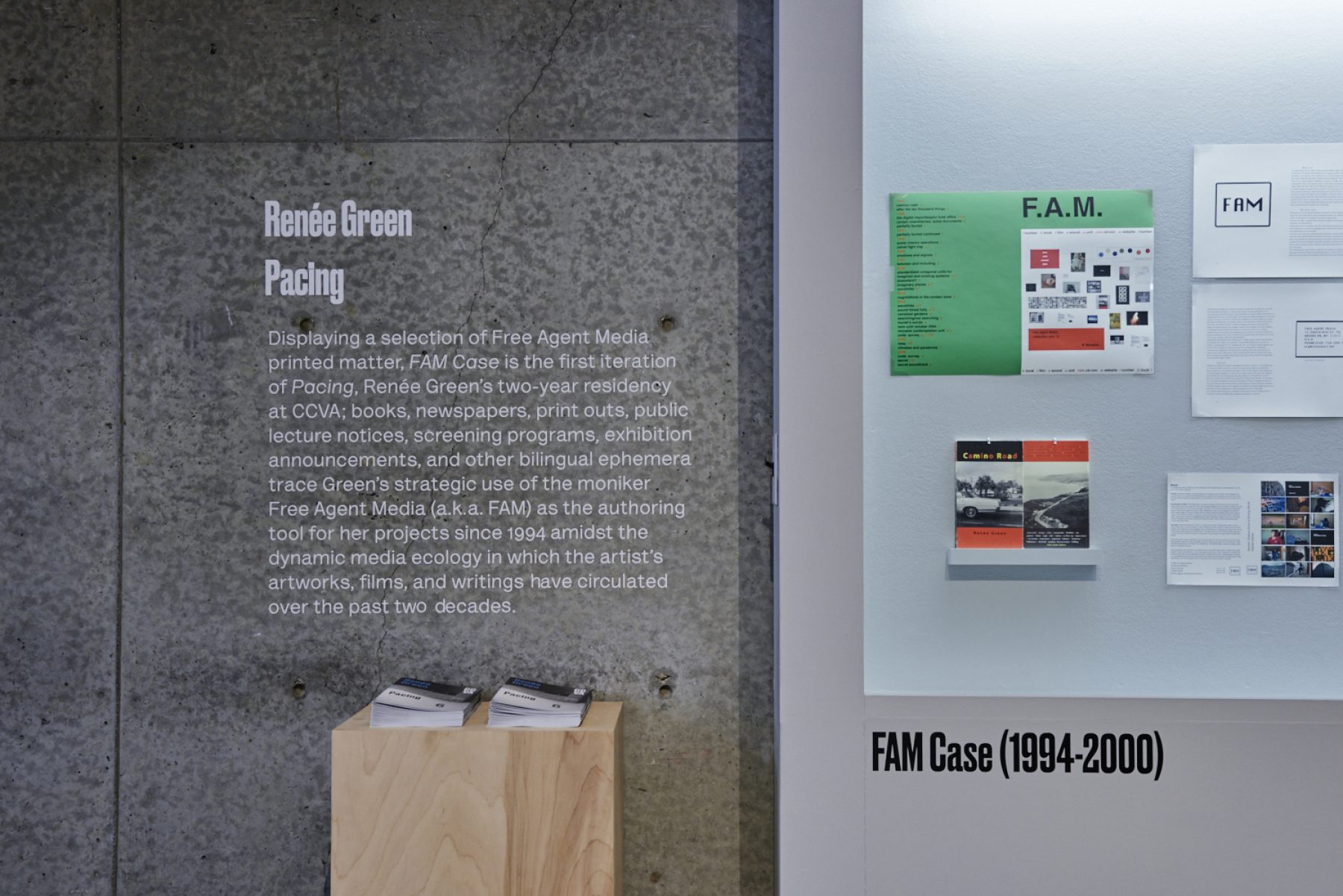
Renée Green, FAM Case (1994-2000). Installation view, Carpenter Center for the Visual Arts, Oct 27, 2016-Jan 15, 2017. Image: Tony Luong
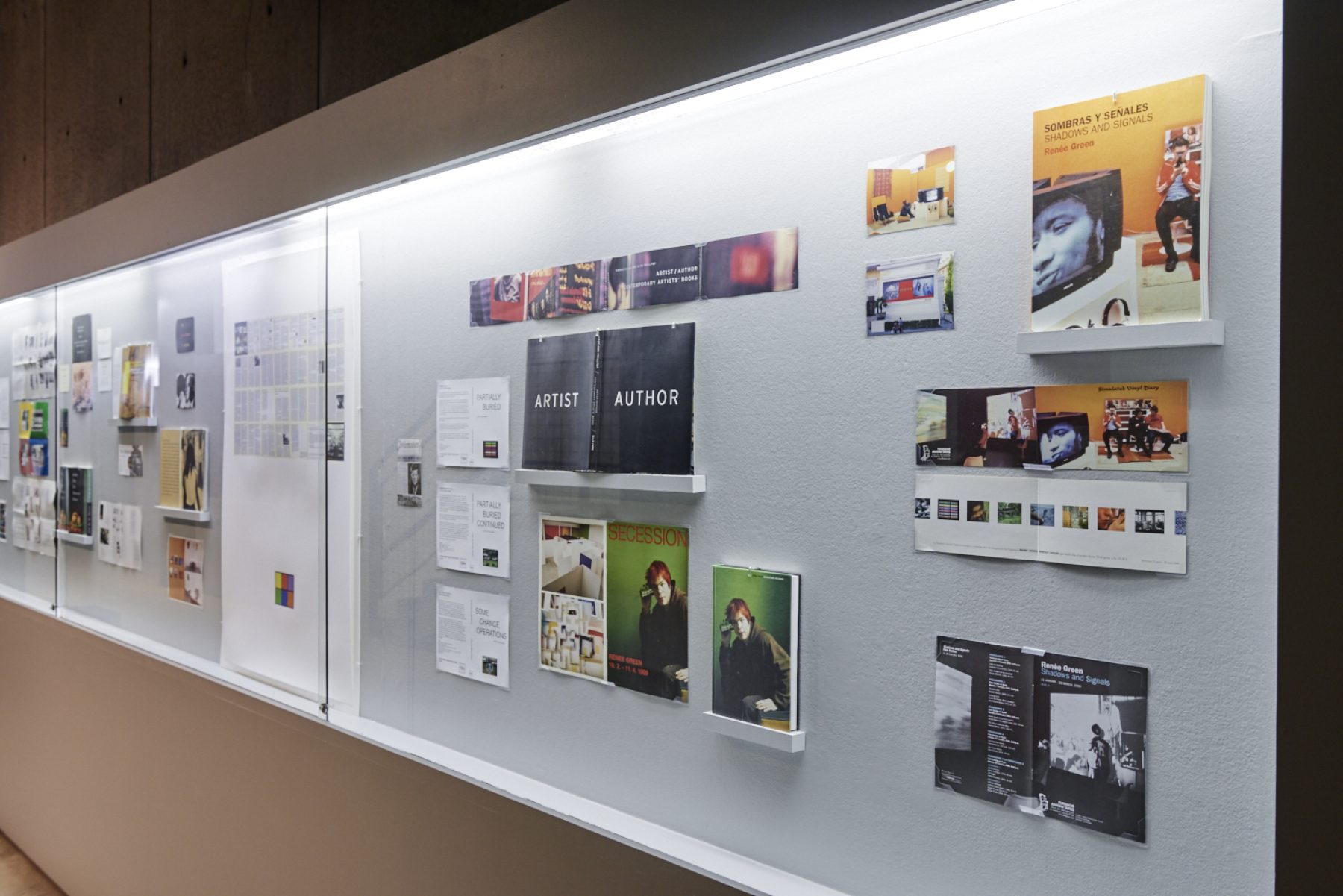
Renée Green, FAM Case (1994-2000). Installation view, Carpenter Center for the Visual Arts, Oct 27, 2016-Jan 15, 2017. Image: Tony Luong
October 27, 2016–January 9, 2017
Embodied Absence: Chilean Art of the 1970s Now
Responding to the coup d’état and its aftermath in the 1970s, Chilean artists residing in Santiago and abroad created works that spoke to their experience of political, social, and geographic marginalization. They developed highly coded languages to evade censorship, exhibited work in public space in lieu of institutional support, and formed independently run galleries and artist collectives to protect their individual identities. The results were frequently ephemeral works that utilized the human body and impermanent materials as primary mediums, thus disappearing following initial presentations and interventions.
Embodied Absence: Chilean Art of the 1970s Now brought works of art and documentation from this historic period into dialogue with new performances and collaborations with contemporary Chilean artists of a younger generation. The exhibition forefronts the challenges of historicizing elusive artworks by presenting works that take photographic and video documentation and human memory as points of departure, reactivating, rearticulating and witnessing the interventions and works through the lens of the contemporary moment.
Works by UNAC (Unión por la Cultura), CADA (Colectivo de acciones de arte), Elías Adasme, Carmen Beuchat, Francisco Copello, Luz Donoso, Juan Downey, Carlos Leppe, Catalina Parra, Lotty Rosenfeld, Cecilia Vicuña and Raúl Zurita, with Cristóbal Lehyt, Felipe Mujica and Johanna Unzueta.
Two not One II (2016) is a dance performance by Beuchat staged in collaboration with visual artists Felipe Mujica and Johanna Unzueta (both b. Santiago, 1975). The work is a contemporary variation on Beuchat’s experimental choreography, Two not One (1975), and is the first “reconstruction” of one of Beuchat’s early works.
The live work is performed by two Chilean dancers, Carolina Escobillana and Paula Sacur, and staged amidst the installation La tierra pone en equilibrio los extremos (2016), which consists of a new series of fabric curtains by Mujica, designed and fabricated in collaboration with Unzueta, and recreations of two mobile structures that were part of the original dance piece in 1975, designed by Michael Moneagle. The various components of the work—dancers, sculptures, and fabric panels—function as temporary and fragile architecture that symbolically connects the dancers’ organic movements with the more rectilinear, Le Corbusier–designed gallery.
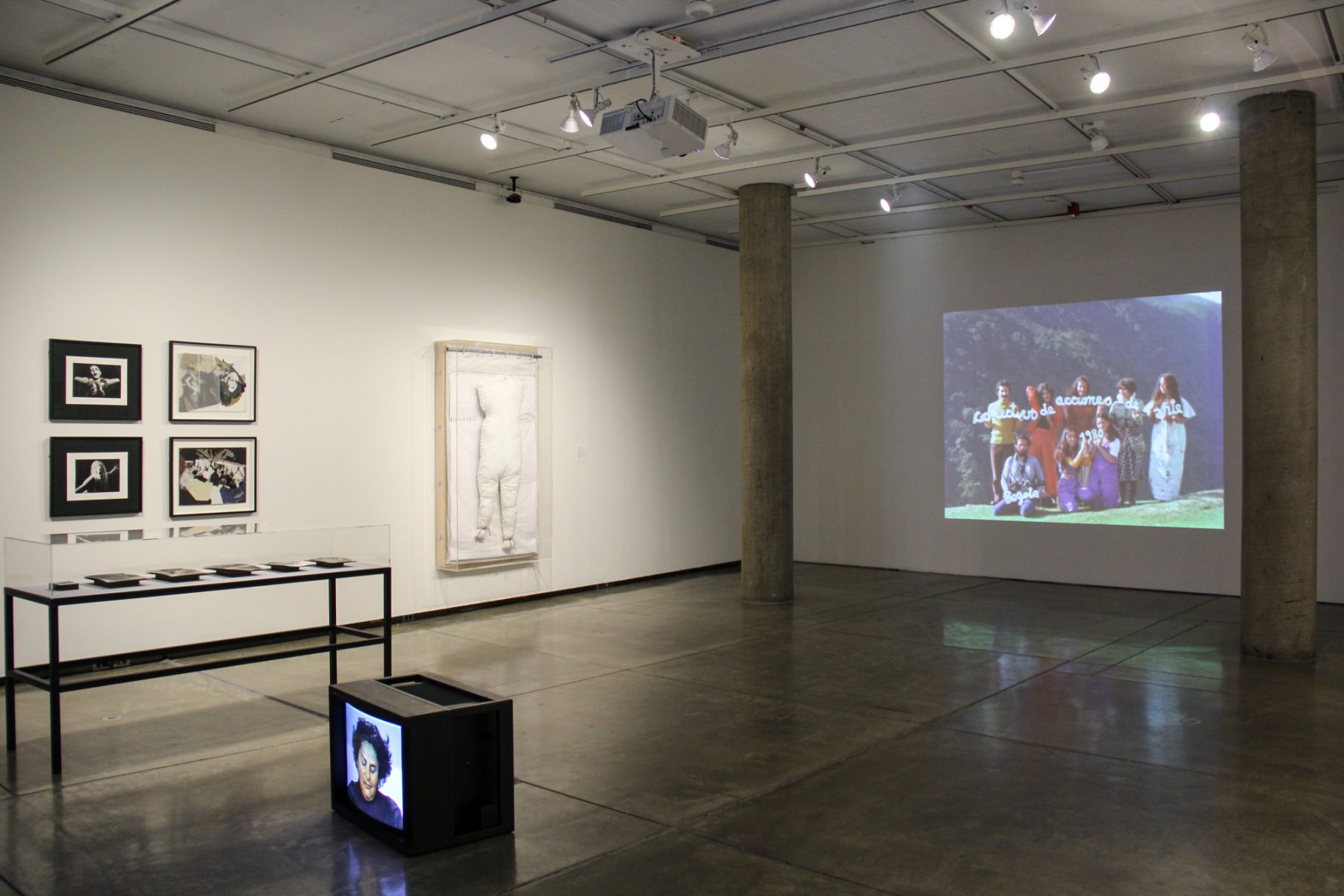
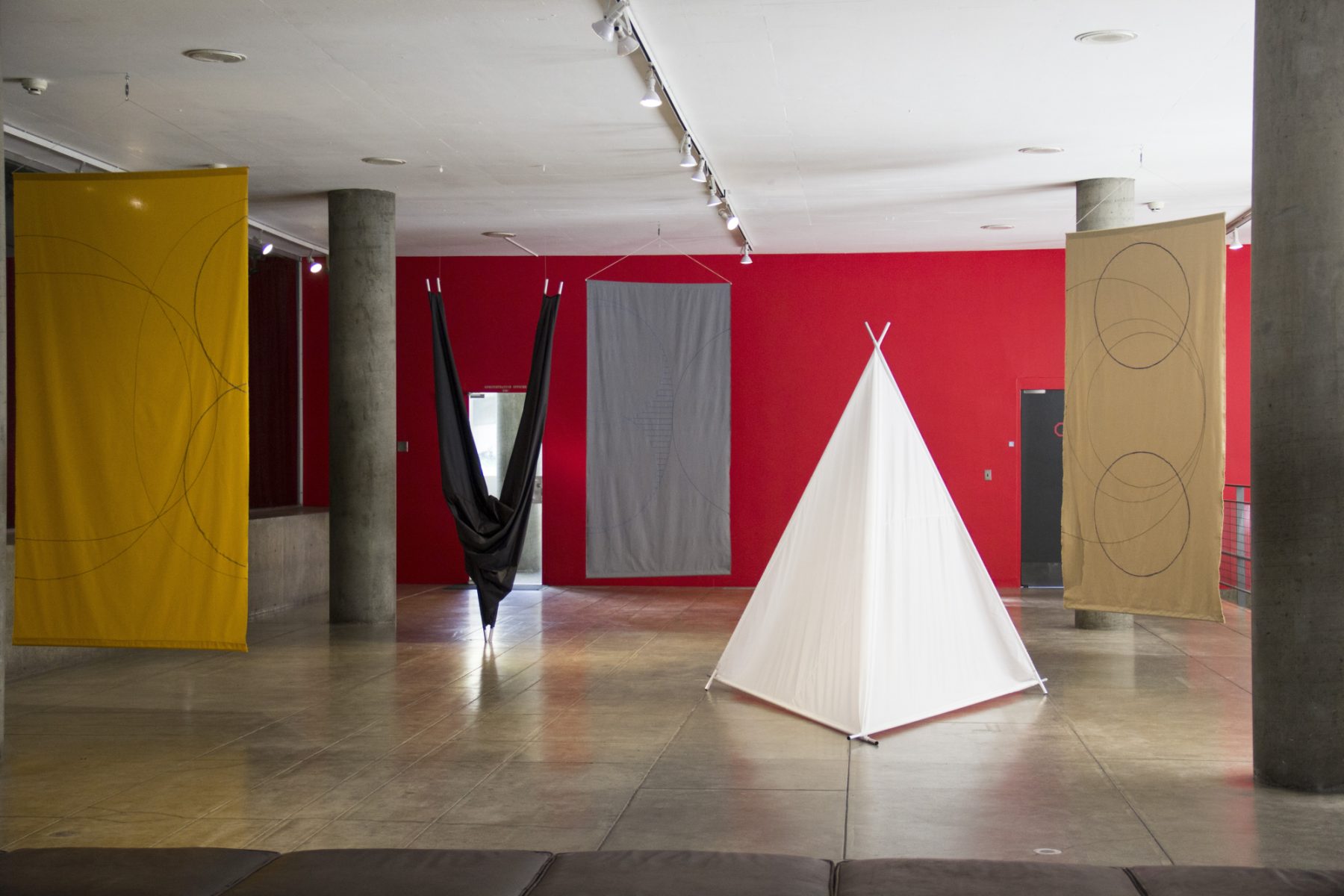
October 1, 2016–April 15, 2018
Renée Green: Pacing
As the 2016–18 Institution (Building) artist, Renée Green conceived the project entitled Pacing. Over the course of two years, Green engaged with and returned to an ongoing series of questions and forms of relation.
Perceptions of time, space, place, what can and cannot be traced through our bodies and actions, have been aspects of Green's work through time; these have included her engagement with humans' spatial relations and imaginings, poetry, language, cinema, sound, color, forms, senses, movement, matter, material conditions, dreams, and memory: what remains and is affected by humans, made things and places, as well as what can be found as forms on earth, despite or in relation to what can be ascribed to human actions.
In Pacing, Green considered relations sparked by conjunction with this particular location, as she encountered it, allowing during the invited period of engagement a variety of trajectories to emerge from myriad points of material, imaginings, and speculation.
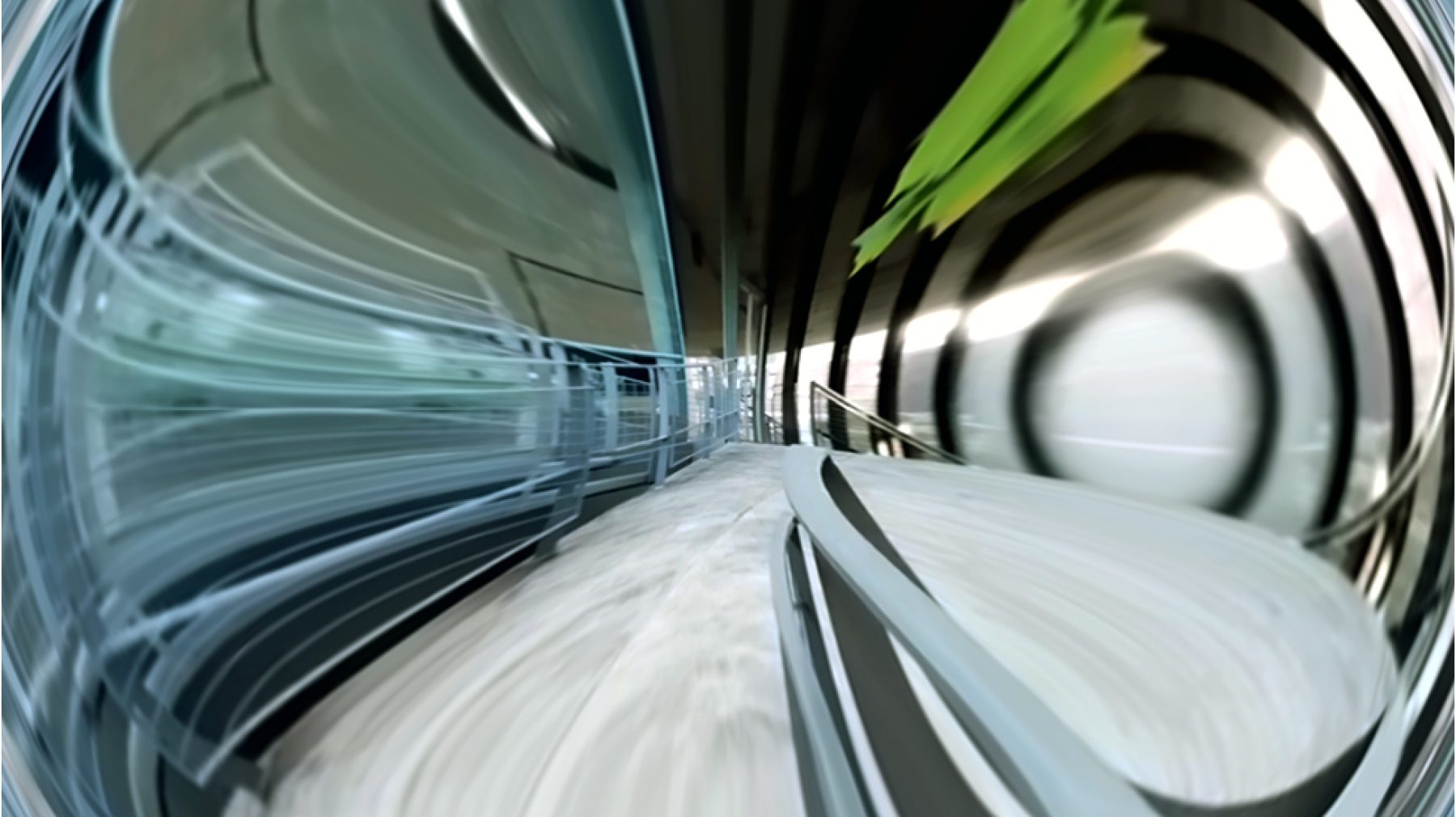
Renée Green, Americas:Veritas, 2018. Film still, digital film. Courtesy of the artist and Free Agent Media
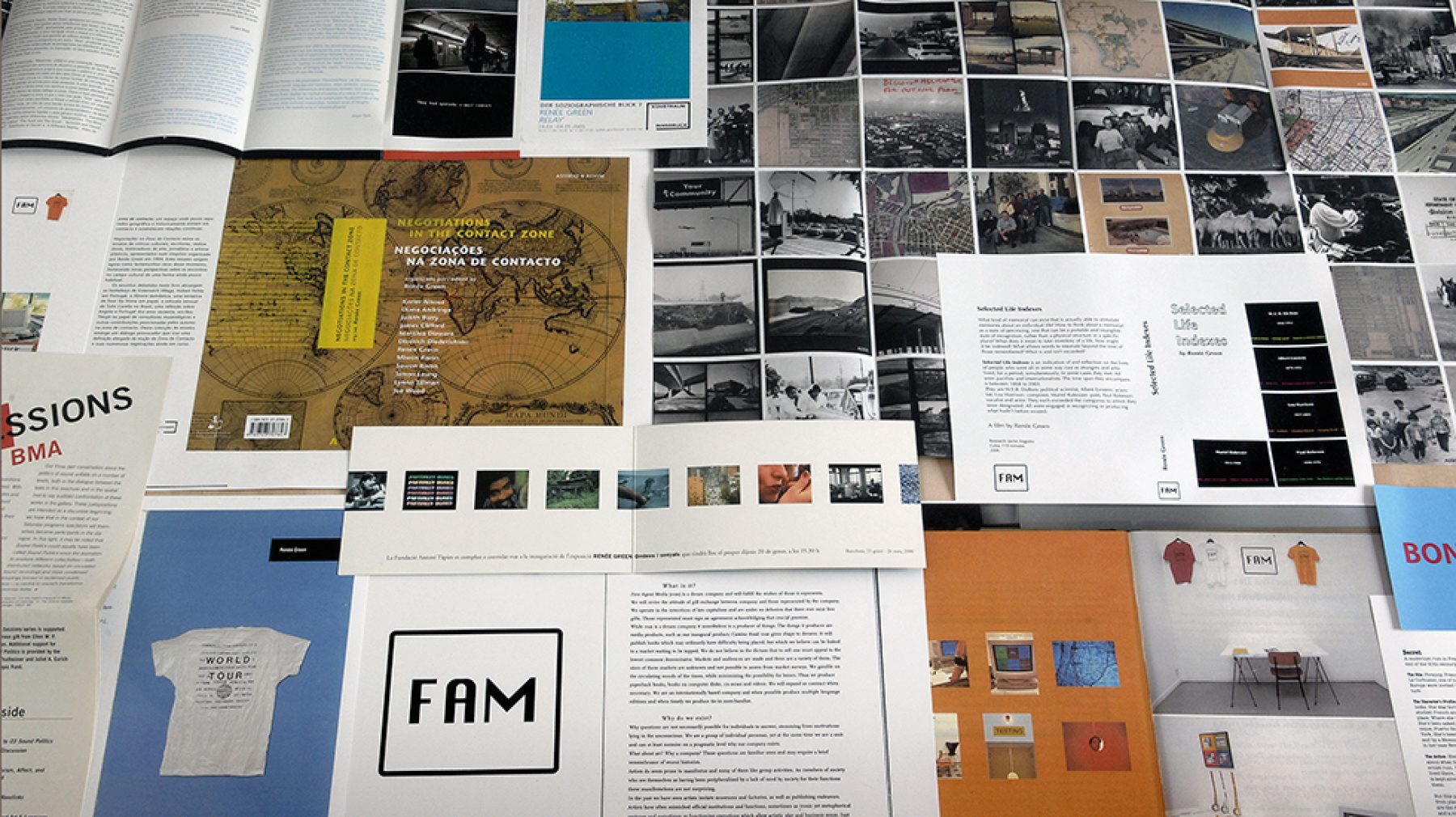
Renée Green, FAM Vitrine, 2007. Vitrine with Free Agent Media ephemera. Installation detail.
August 25–October 1, 2016
Visiting Faculty 2016-17
The Visiting Faculty 2016–17 exhibition presented work by six visiting faculty in Visual and Environmental Studies. Each year for almost fifty years, the department invited visual artists and filmmakers who are leaders in their fields to work closely with students, invigorating and enriching the academic program and curriculum with their outside perspectives and professional experiences. That year the department welcomed Lucas Blalock, Jennifer Bornstein, Paul Bush, Dru Donovan, Guy Maddin and Kianja Strobert with a sampling presentation of their work.
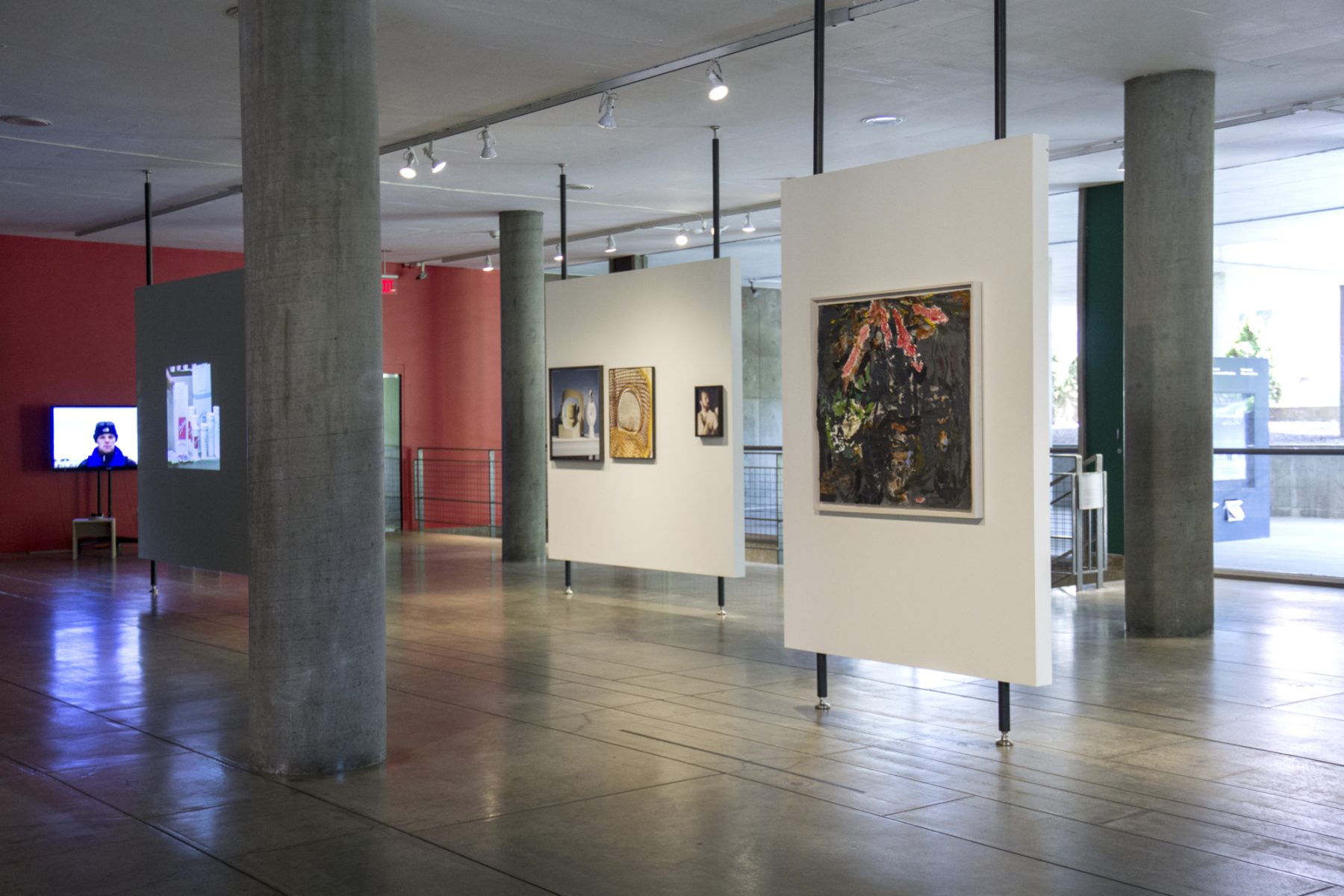
Installation view, Visiting Faculty 2016-17, Aug 25-Oct 1, 2016. Kianja Strobert, Lucas Blalock, Jennifer Bornstein, and Paul Bush. Carpenter Center for the Visual Arts, Level 1.
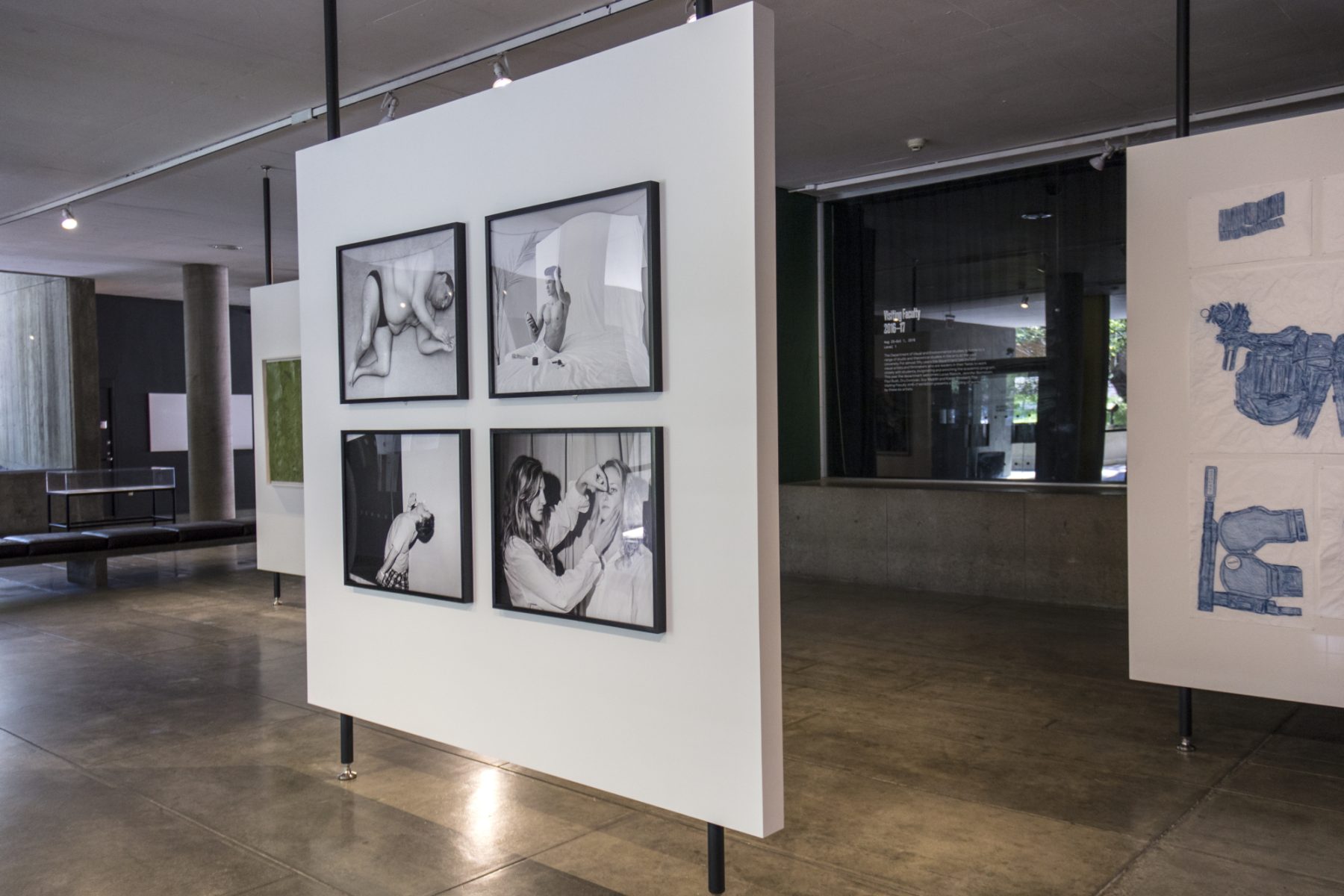
Installation view, Visiting Faculty 2016-17, Aug 25-Oct 1, 2016. Dru Donovan and Jennifer Bornstein. Carpenter Center for the Visual Arts, Level 1.
August 4–September 24, 2016
Jean-Marie Straub and Danièle Huillet: Three Works
Jean-Marie Straub and Danièle Huillet: Three Works at the Carpenter Center comprised of a video, film stills, an annotated script, and other materials related to three distinct films by Straub and Huillet. Each installation revealed the varying and complementary methods used to confront the challenges of presenting the moving image in gallery contexts, while providing an introduction to the renowned French filmmaking duo’s cinema.
The exhibition on Level 3 featured a presentation of Every Revolution is a Throw of the Dice, Straub and Huillet’s 1977 staging of Mallarmé’s poem A Throw of the Dice Will Never Abolish Chance (1897). The second installation wass a presentation of three large-scale silver-halide color prints mounted on aluminum, images from the film Cézanne: Conversation with Joachim Gasquet (1990).
A facsimile of the seventeen-page script for the film A Visit to the Louvre (2004) was exhibited on Level 0. The typed pages, heavily annotated and edited by Huillet using yellow, green, blue, and red markers shows the filmmakers’ creative working process, majestically transforming typed pages into a series of abstract drawings. The exhibition Three Works presents visual referents to filmic works while each installation possesses an autonomy as active metonyms within the context of a gallery setting.
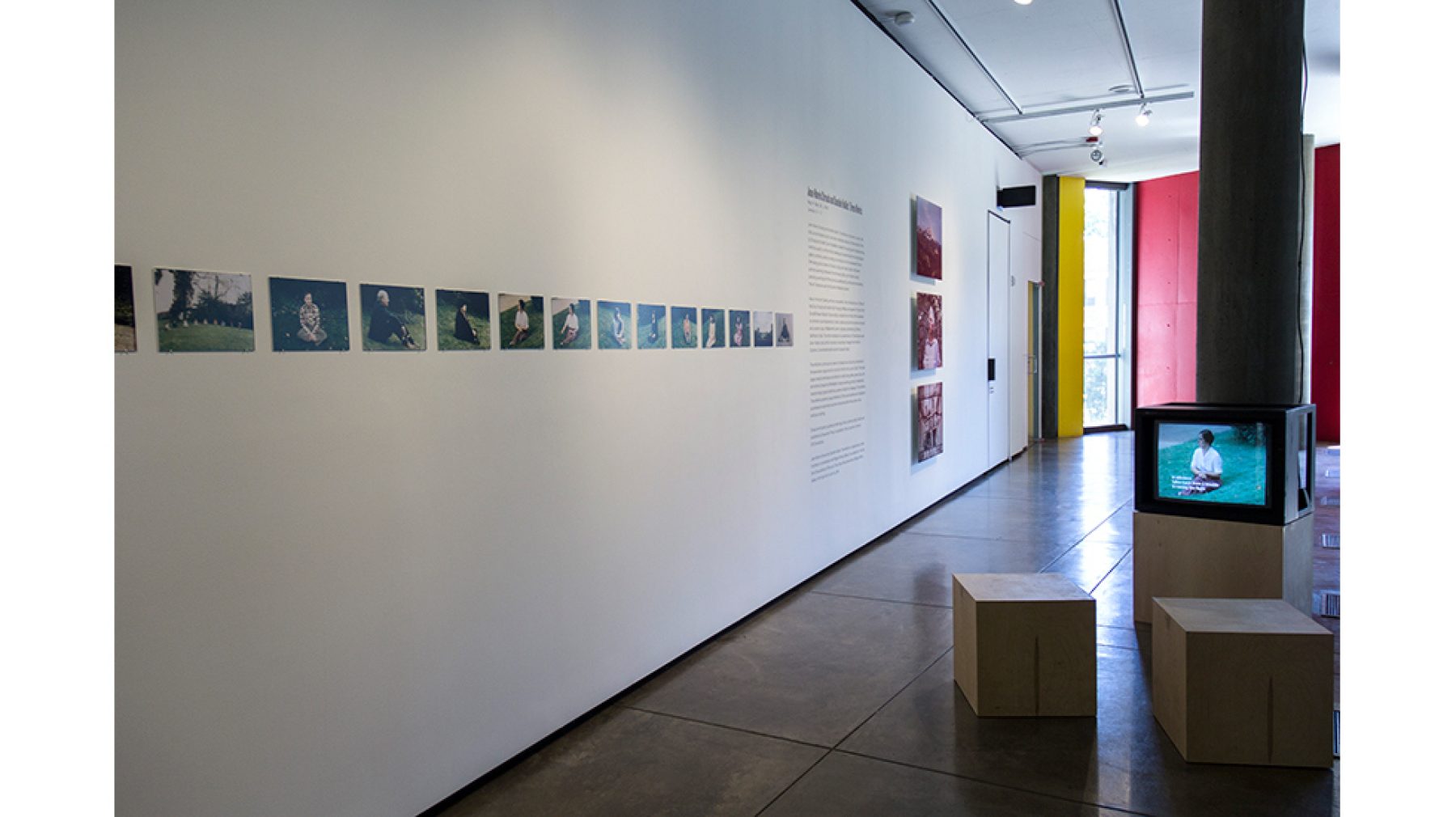
Installation view, Jean-Marie Straub and Danièle Huillet: Three Works, Carpenter Center for the Visual Arts, CRC/bookshop, Aug 4—Sep 24, 2016.
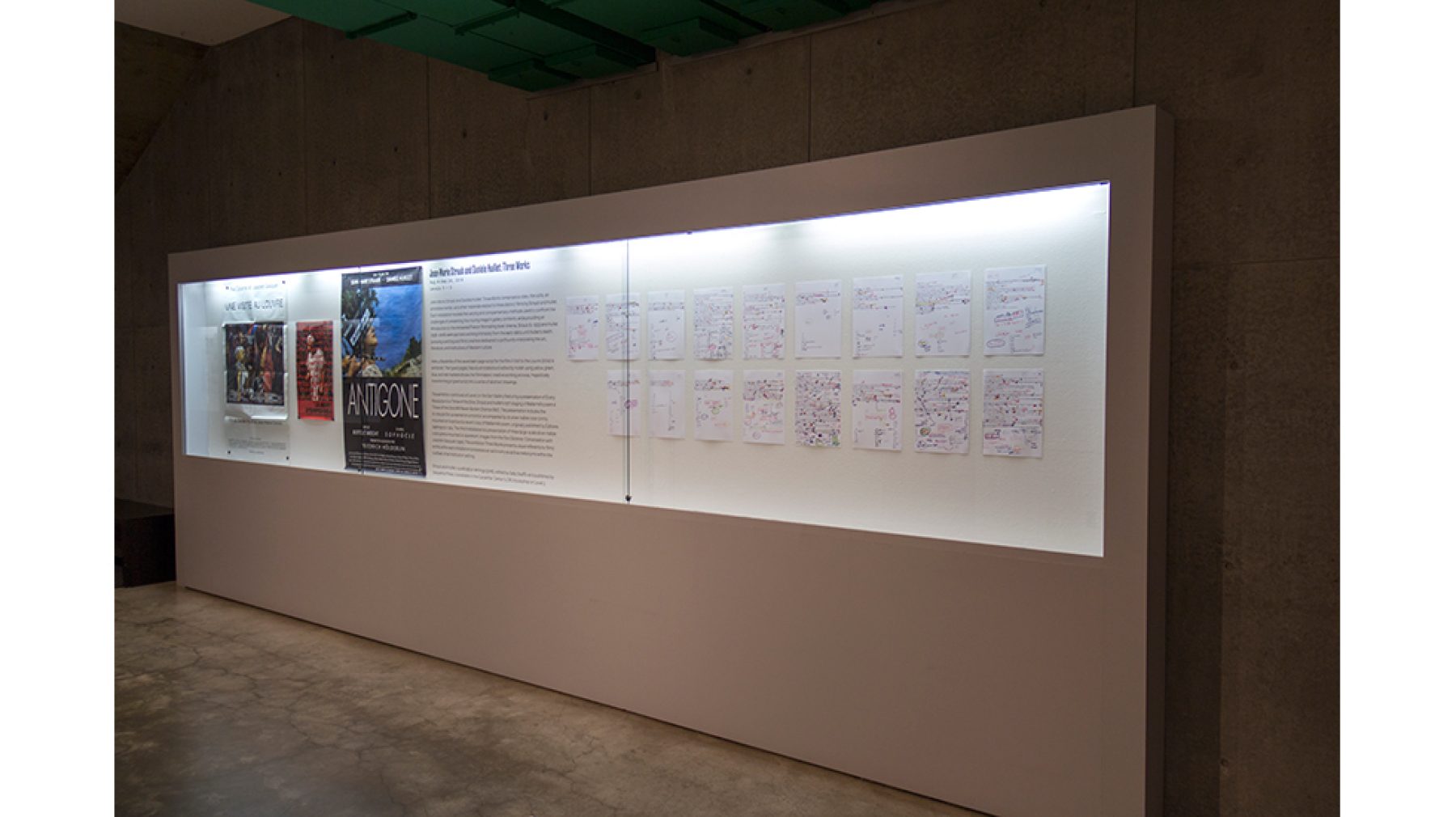
Installation view, Jean-Marie Straub and Danièle Huillet: Three Works, Carpenter Center for the Visual Arts, Display Case, Aug 4—Sep 24, 2016.
July 16–September 24, 2016
Fifty Photographs
Episode 10: Fifty Photographs
Fifty Photographs constituted the final episode of Martin Beck’s Program at the Carpenter Center. Over the course of his two-year residency Beck focused on various points of public interface that define the Carpenter Center as an institution. These points included physical spaces, curriculum, student relations, media relations, and time-based instances of connecting with the public, such as talks and screenings. All of these components were considered in distinct episodes. This final episode focused on the role of the exhibition form and the collection as a teaching resource as well as a mode of general public address.
Beck’s Fifty Photographs consists of the gathering and reassembly of a selection of photographs originally presented in a 1966 exhibition titled Fifty Photographs at Harvard, 1844–1966, composed of 61 photographs. Drawn from the then Carpenter Center’s developing photography collection, the photographs were originally amassed as a teaching tool, cared for by Davis Pratt, who served as Curator of Still Photography at the Carpenter Center from 1966 to 1971. The collection was later dispersed and partially transferred to the Fogg Art Museum and other Harvard collections.
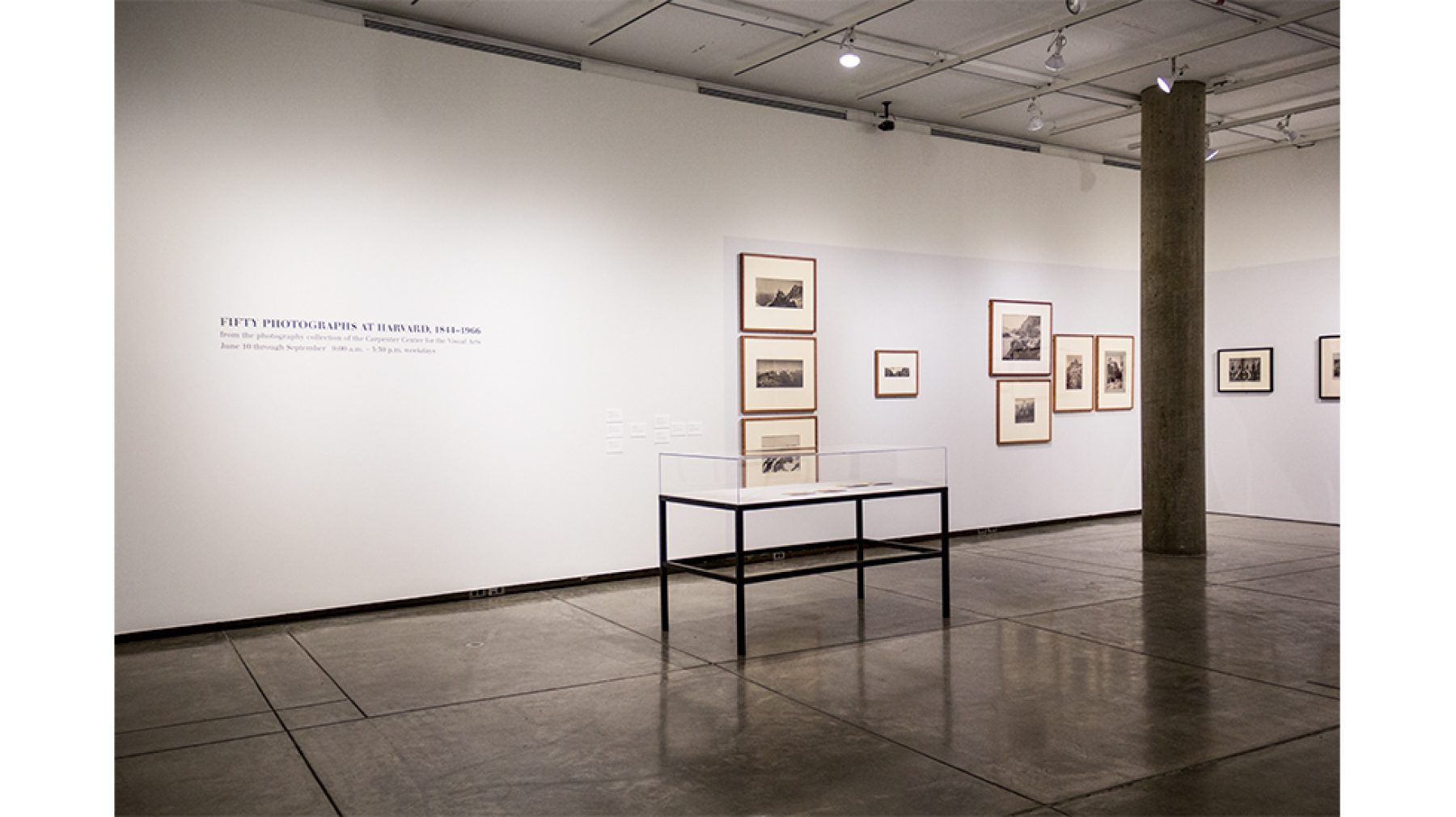
Installation view. Martin Beck: Fifity Photographs, Carpenter Center for the Visual Arts, Sert Gallery, Jul 7—Sep 24, 2016.
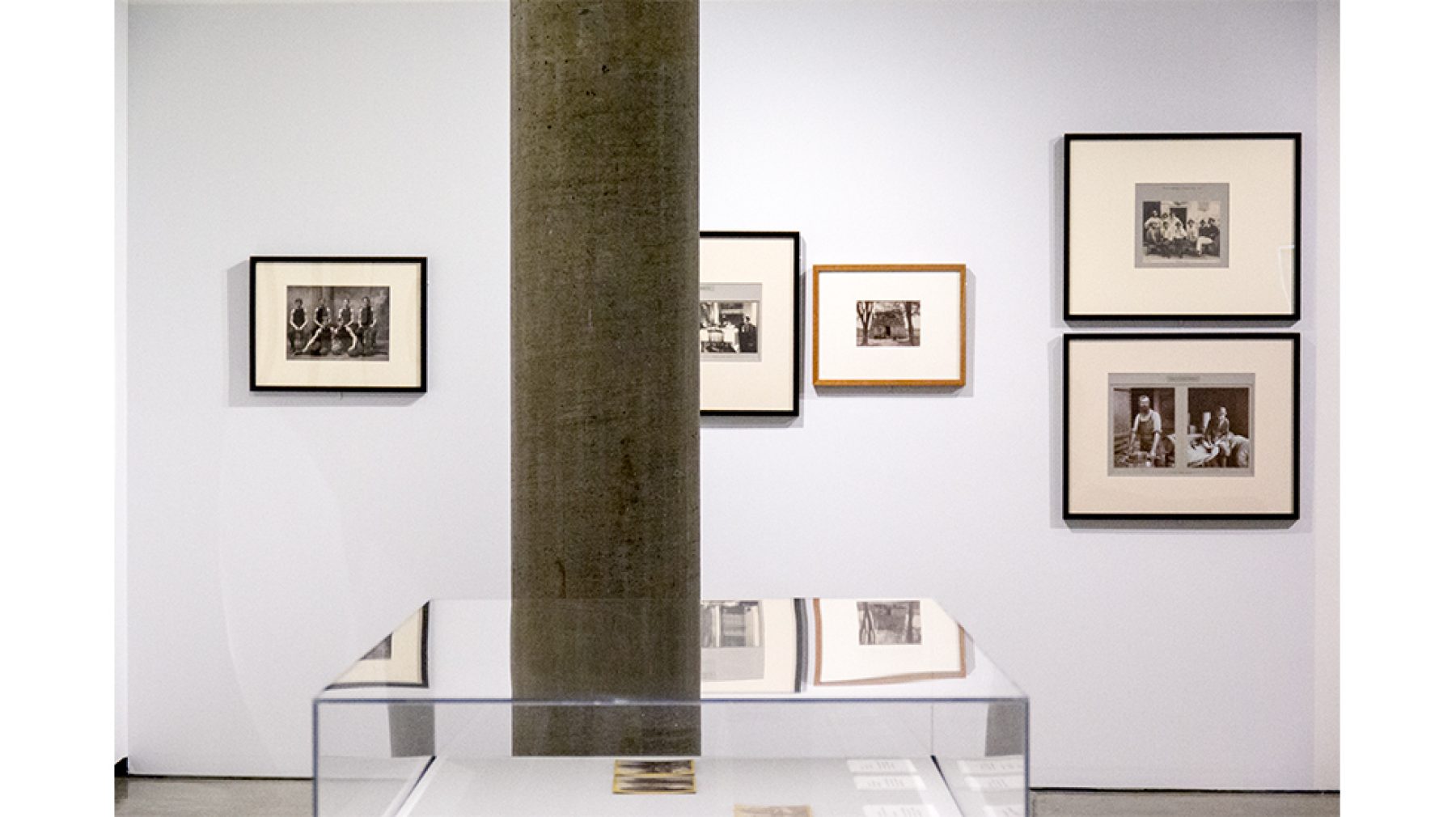
Installation view. Martin Beck: Fifity Photographs, Carpenter Center for the Visual Arts, Sert Gallery, Jul 7—Sep 24, 2016.
June 30–September 24, 2016
Ryland Wharton: Make an Alloy, Make an Inventory
Make an Alloy, Make an Inventory imagined then CRC/ bookshop as a continuously rewritten page. Five discreet display areas in the bookshop housed an evolving selection of images, objects, and books that find their origin in the inaugural 1968 issue of Stewart Brand’s Whole Earth Catalog. The Whole Earth Catalog was an American journal and product sales catalog published primarily between 1968 and 1972 with the intent to create an extensive and systemic network of references and pointers to intellectual and scientific “tools” that would, in turn, provide readers access to becoming totally self-reliant individual.
The items—or “figures”—in Wharton’s Make an Alloy, Make an Inventory are both found and made. Presented together within the physical space of the CRC/bookshop, the image-language combinations compare to the figure-text pairings typically found on a book page. Wharton’s strategic system of adjacencies (or “script” as he calls it) encouraged visitors to summon unique and individual narratives. Comparable to turning a page, each day throughout the exhibition a single figure will be replaced with a new one while one book—or figure—will be available for purchase. Thus, the narrative shifts with every visit to the bookshop. Over the course of the exhibition, over thirty permutations of items occupied the space.
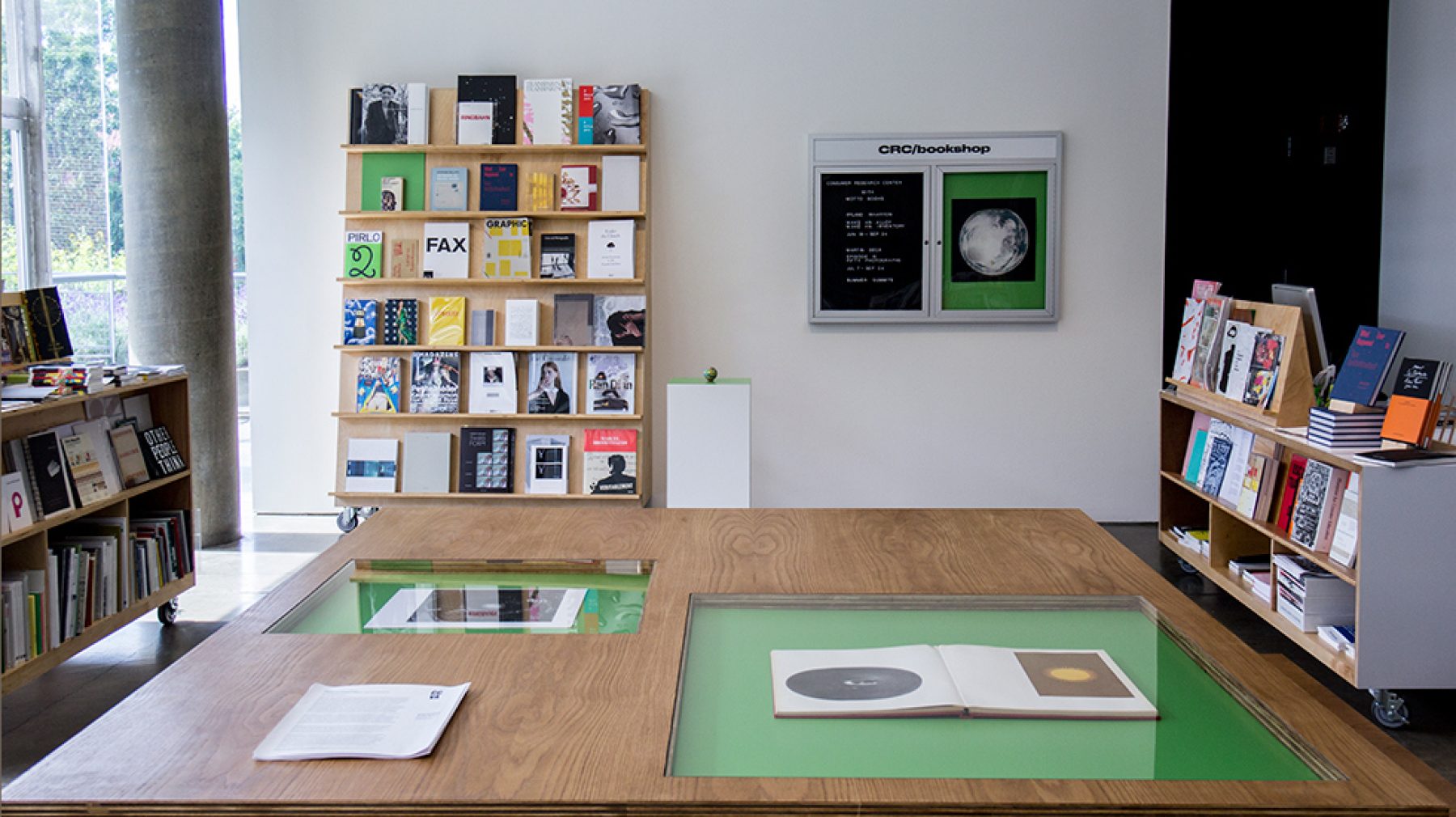
Installation view. Ryland Wharton: Make an Alloy, Make an Inventory, Carpenter Center for the Visual Arts, CRC/bookshop, Jun 30–Sep 24, 2016
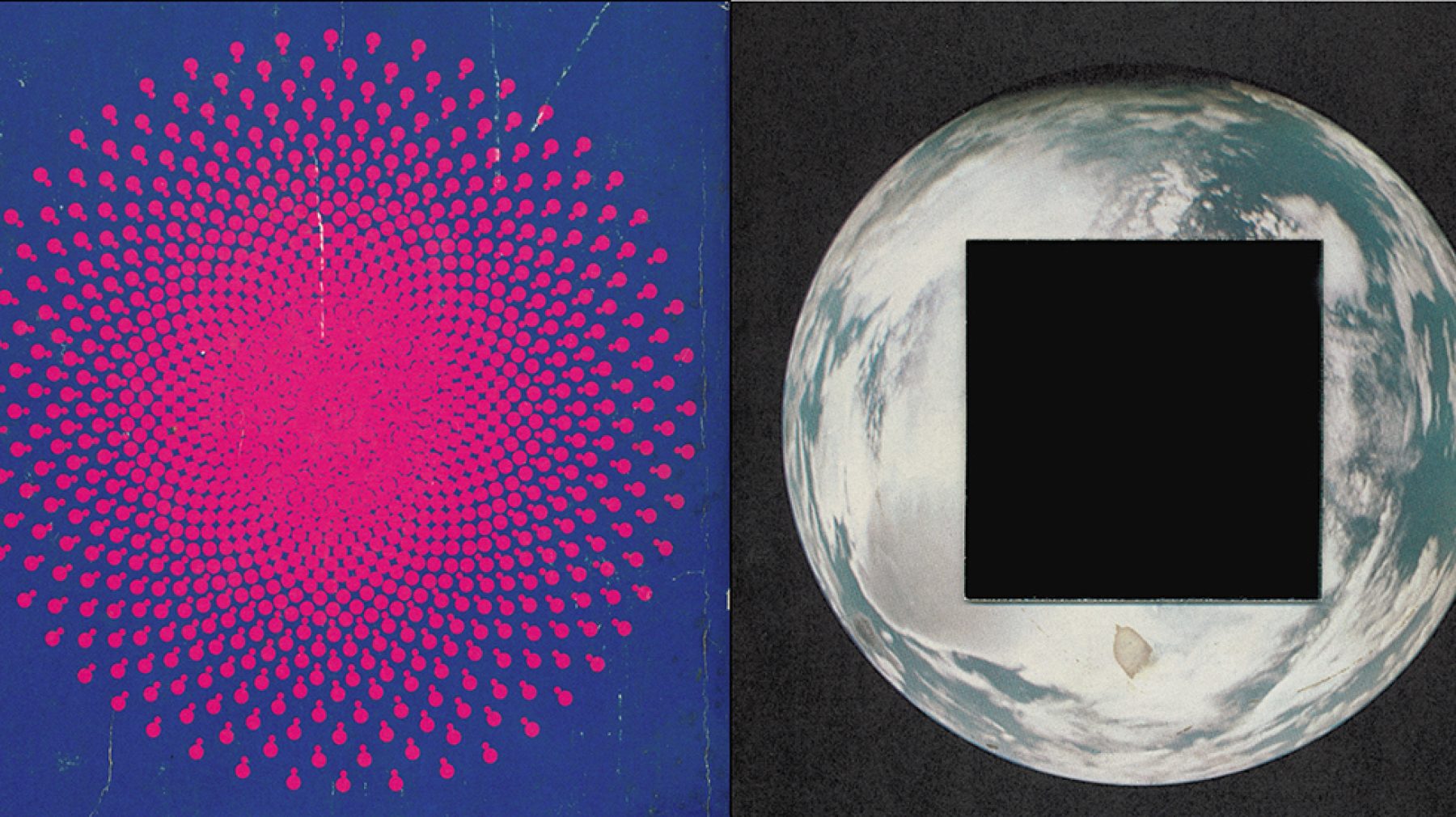
Ryland Wharton, Figure C2. ** (Make an Alloy, Make an Inventory). Inkjet prints, 10 x 10 in. each.
May 10–May 15, 2016
Blueprint for Counter Education
The book Blueprint for Counter Education by Maurice Stein and Larry Miller appeared in 1970 as a boxed set with three large graphic posters and a bibliography and checklist that map patterns and relationships between radical thought and artistic practices⎯from the modernist avant-gardes to postmodernism⎯with the philosopher Herbert Marcuse and media theorist Marshall McLuhan serving as intellectual points of anchorage. The book could be assembled into a portable, do-it-yourself learning environment with the posters and an accompanying “shooting script” functioning as a basis for a critically informed, activist and learner-driven model of education. Blueprint for Counter Education became one of the most defining works of radical pedagogy of the Vietnam War era and eventually integrated into the Critical Studies curriculum at California Institute of the Arts.
On the occasion of the release of an expanded edition of Blueprint for Counter Education designed by Project Projects and published by Inventory Press, the Consumer Research Center/bookshop at the Carpenter Center hosted a week long exhibition, roundtable discussion and book presentation. Organized by Jeffrey Schnapp, the event brought together original authors Maurice Stein and Larry Miller Blueprint for Counter Education in conversation with Schnapp and Project Projects principal Adam Michaels.
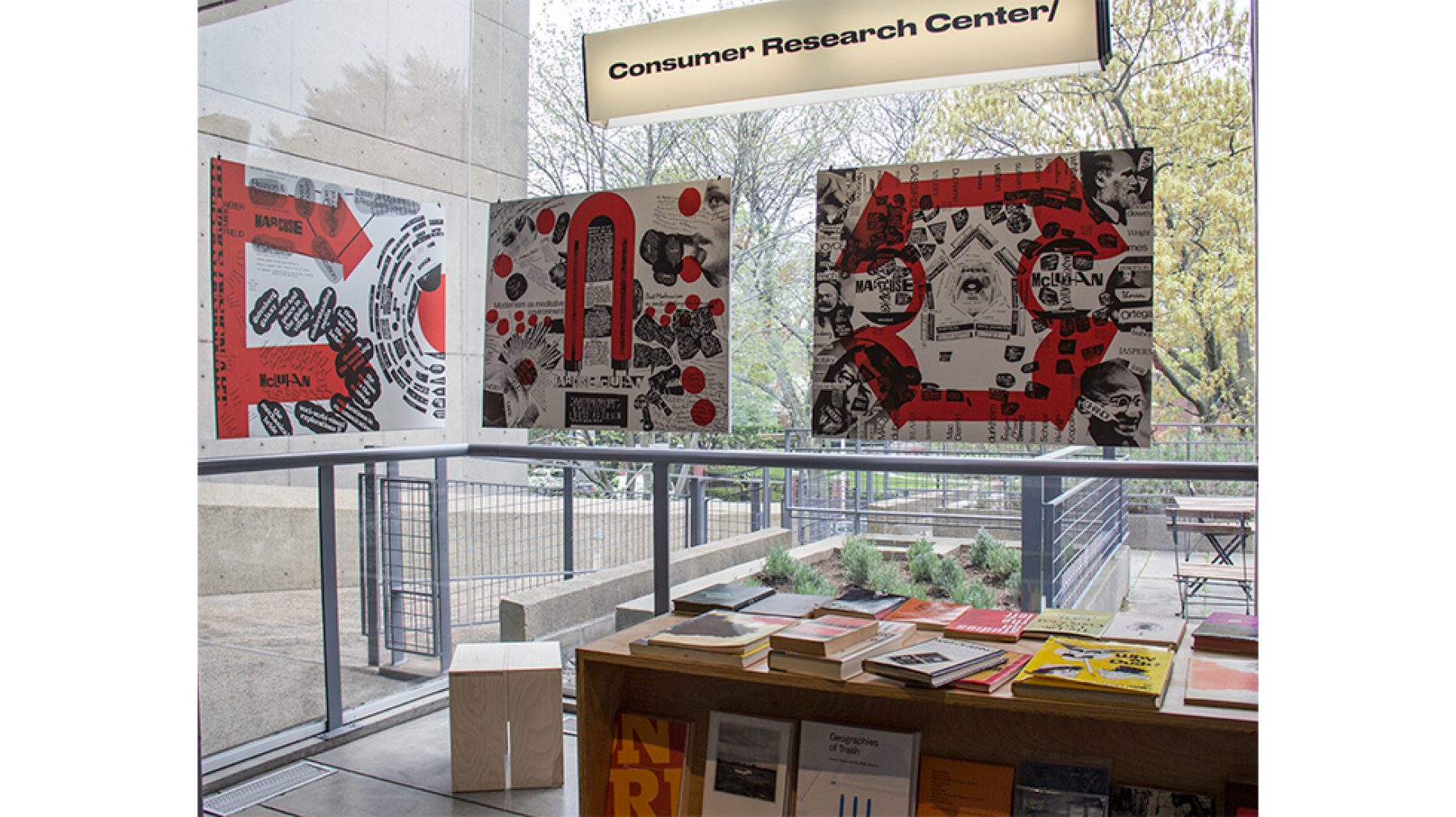
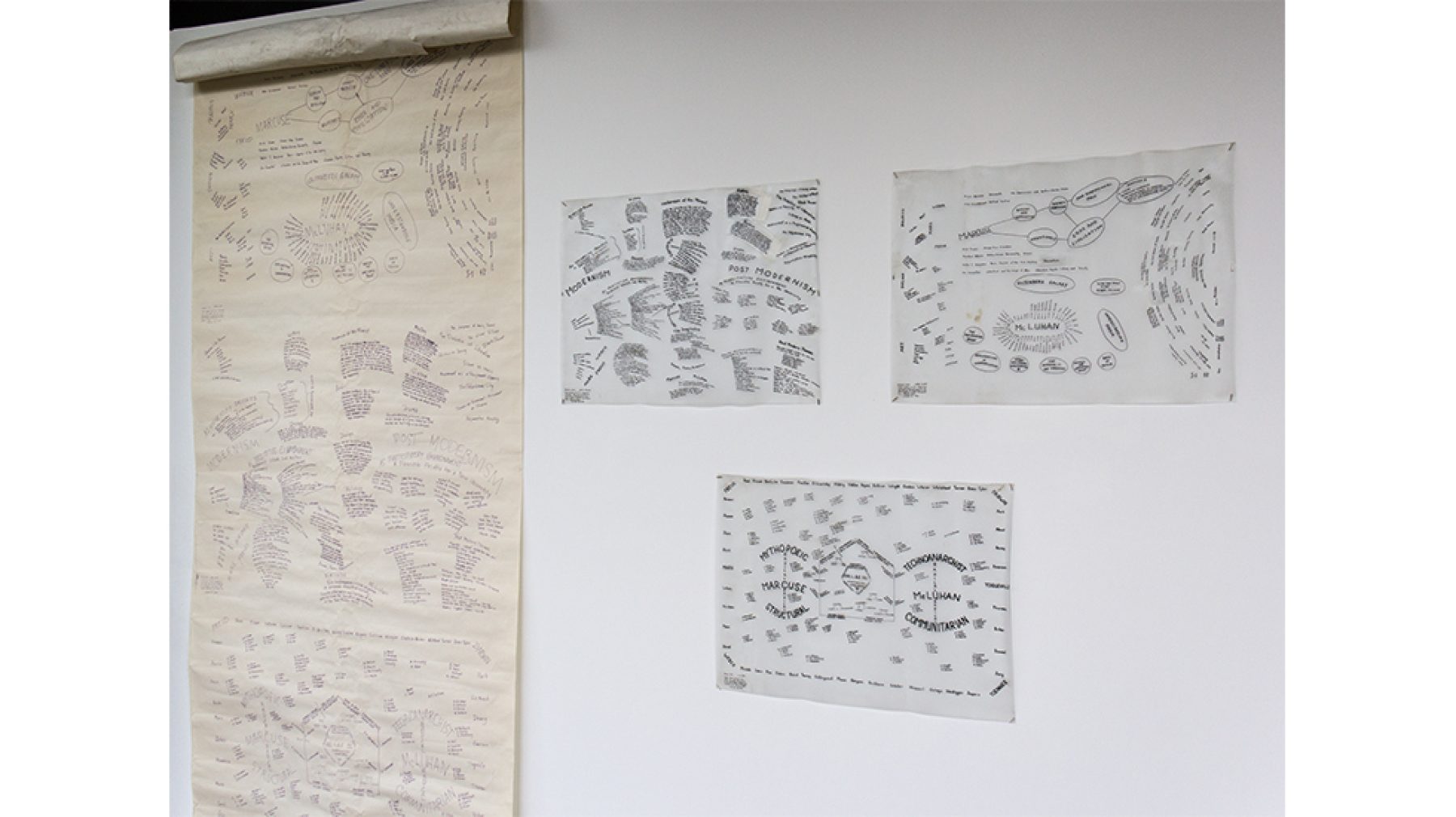
Installation view, Blueprint for Counter Education, Carpenter Center for the Visual Arts, CRC/bookshop, May 10-15, 2016
April 29–May 26, 2016
VES 2016 Senior Thesis: Fabricated, Normally
Fabricated, Normally is the title students crafted for their group exhibition. Collectively students questioned and challenged what is considered “real” today, as so much of our culture is increasingly fabricated. The uncertainty of authenticity is commonplace, from digitally-constructed versions of landscapes on television and film, to the news media determining singular worldviews, to the unrequited promise of “all natural.” This uncertainty remains ever-pervasive.
The exhibition featured works by Alistair Debling, C.H. Choi, Daniel Citron, Lydia Burns, and Renee Zhan.
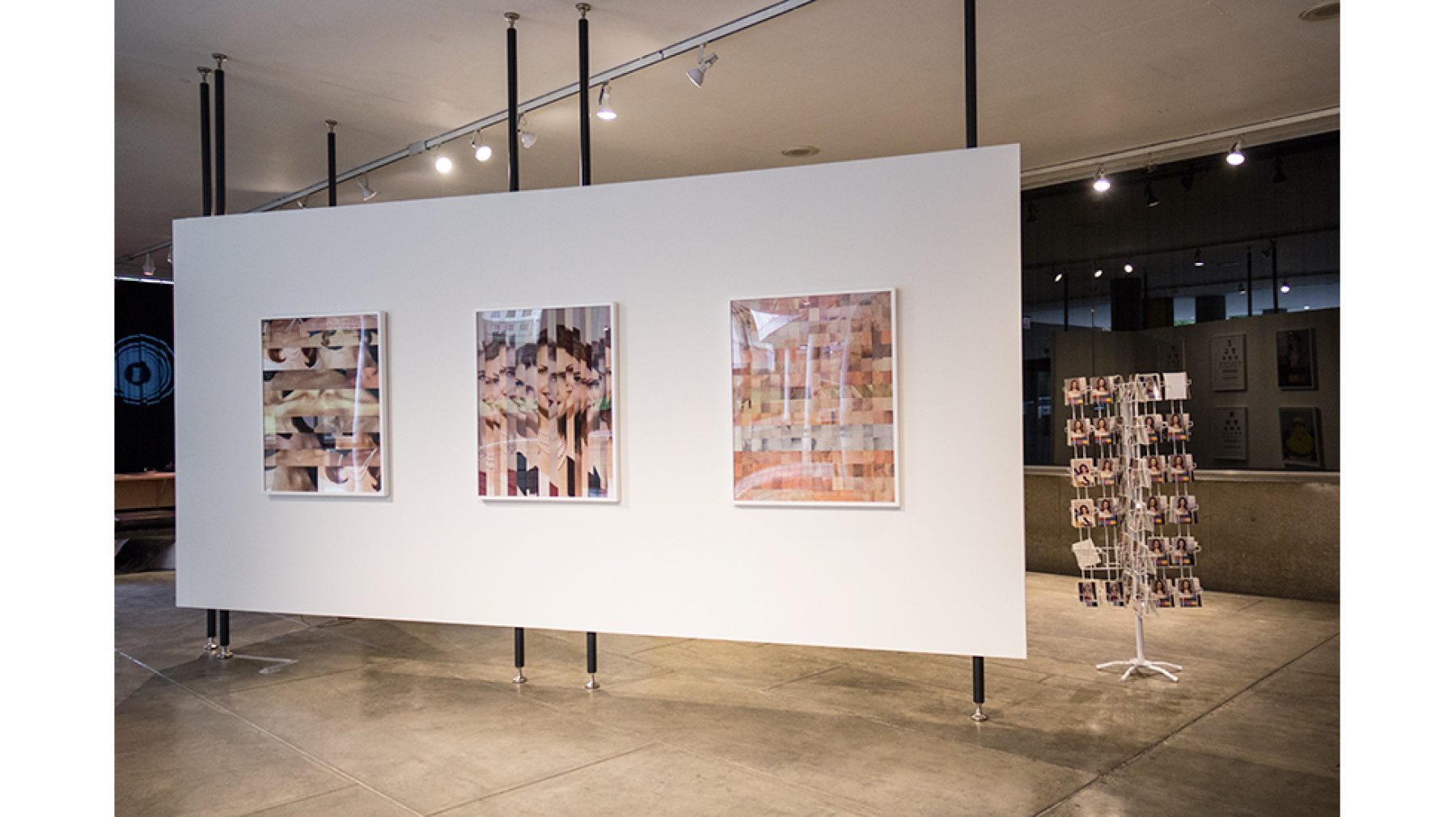
Installation view, Lydia Burns. Carpenter Center for the Visual Arts, Level 1, Apr 29-May 26, 2016.
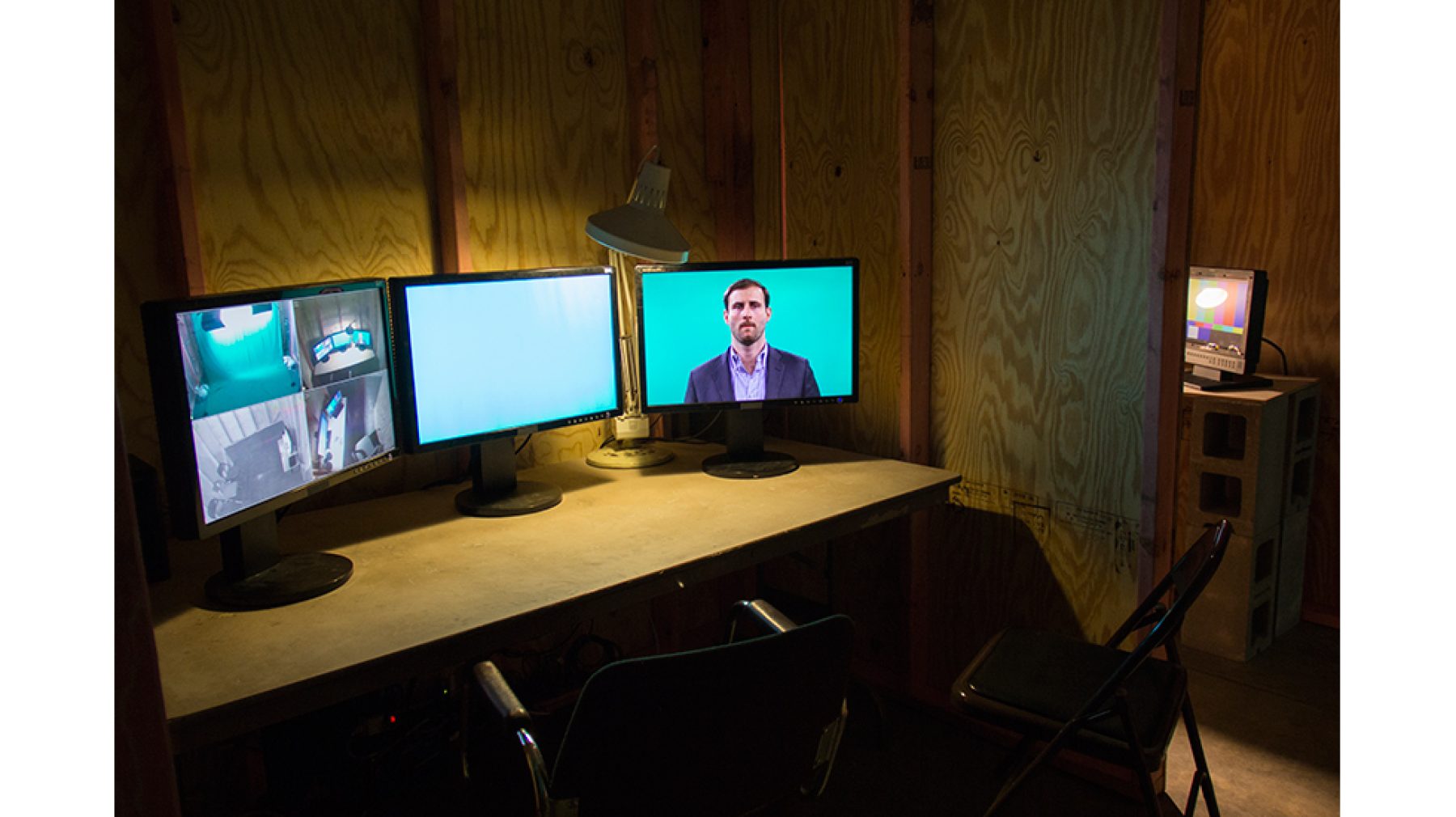
Installation view, Alistair Debling, War Room (detail). Sert Gallery, Carpenter Center for the Visual Arts.
March 2–April 21, 2016
Phil Collins: the meaning of style
the meaning of style featured a group of anti-fascist Malay skinheads who appear to transcend reality and representation, circulating between the imaginative and literal spaces of cinema. Filmed in Penang, Malaysia, the skinheads are part of a subculture that formed in the 1990s. They have all the visual cues: shaved heads, sporting work shirts, bomber jackets, suspenders, jeans, leather boots, tailor-made pants and sweaters. But they lack the aggression that has come to define skinheads. In a series of quickly changing scenes set in an Indian Tamil cinema, a Chinese Buddhist temple, and a colonial-era mansion, for example, the youth serenely flip through vintage English magazines, listening to walkmans, and play cards. Interspersed among these contemplative moments, a confrontation transpires in the streets, a kind of enacted roughhousing. It’s a performance of the cinematic skinhead shaped by the media they absorb.
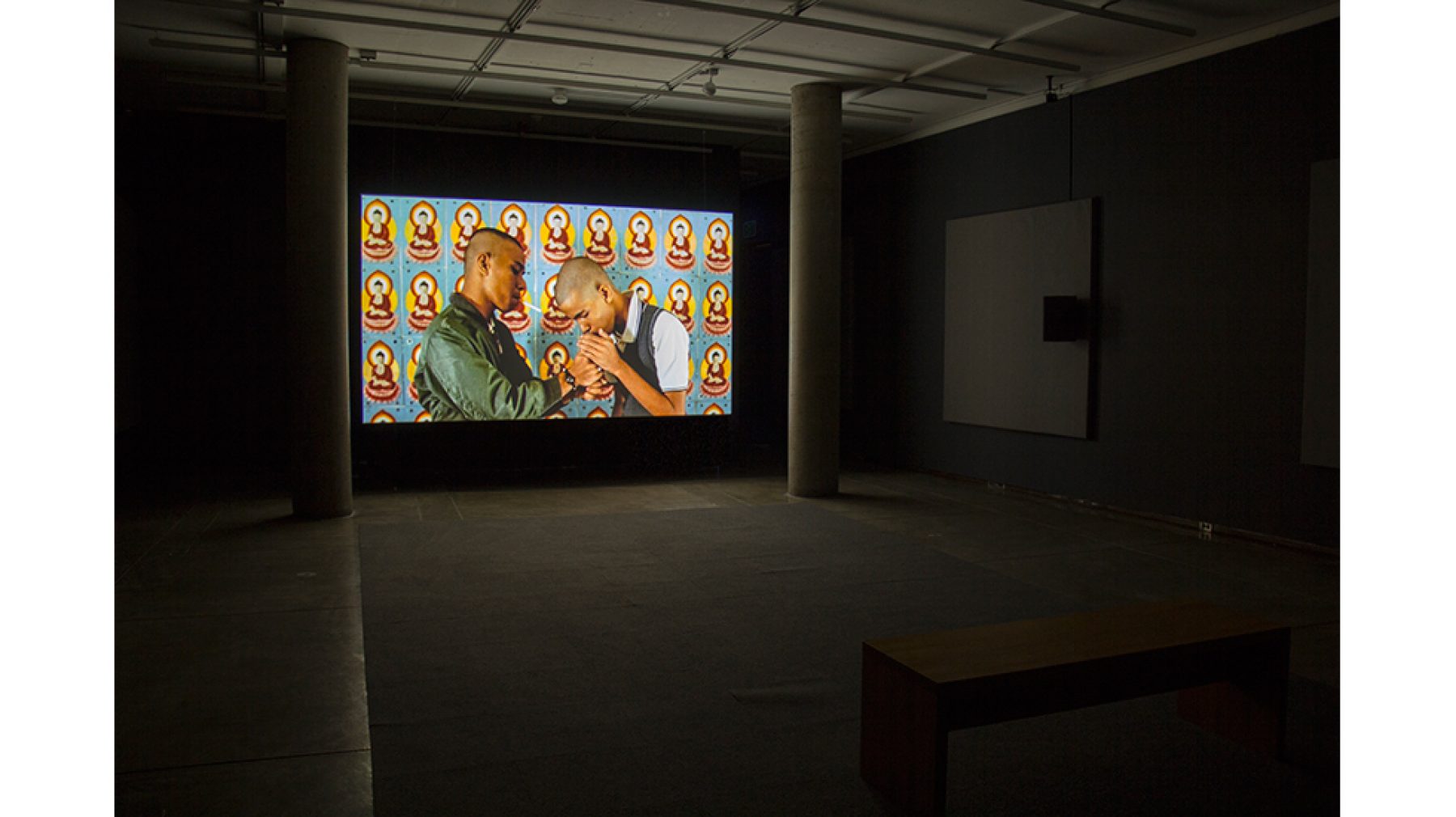
Installation view, Phil Collins, the meaning of style, 2011 (still) 16mm film transferred to HD digital video; color, sound; 4 min. 50 sec. Carpenter Center for the Visual Arts, Sert Gallery, 2016.
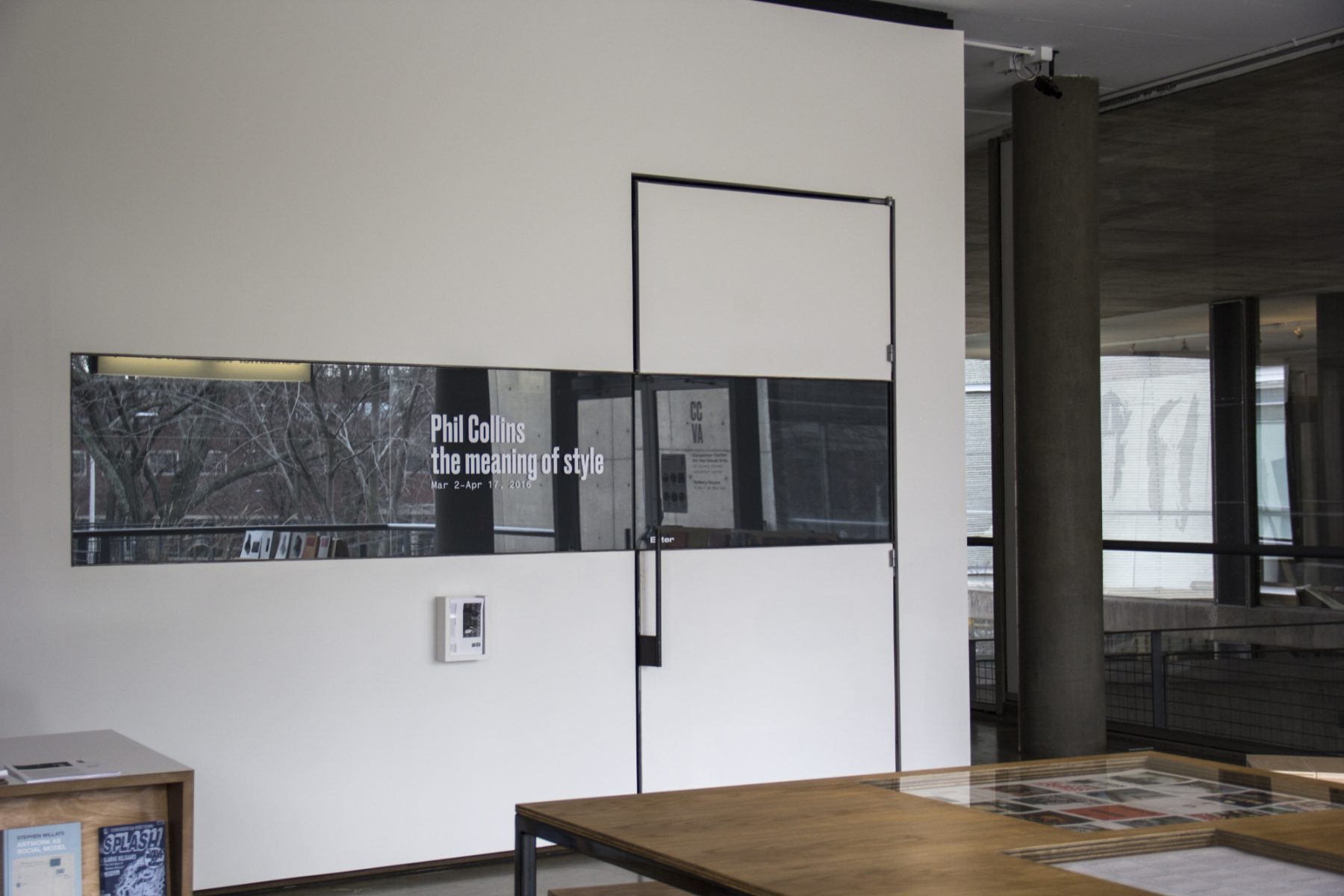
Installation view, Phil Collins, the meaning of style, 2011. Carpenter Center for the Visual Arts, Sert Gallery, 2016.
March 2–April 21, 2016
Phil Collins: A Learning Site
Phil Collins has consistently pushed the boundaries of art and documentary filmmaking from filming teenagers in Bogotá, Jakarta, and Istanbul singing an entire album of songs by The Smiths; to working with young anti-fascist skinheads in Malaysia; to employing a cast of actors, porn workers, and musicians to host an alternative shopping channel broadcast live on German television; to making a cinematic love letter to the city of Glasgow. He thoughtfully conceives frameworks or situations that weave our shared realities and everyday life together with fiction and uncertainty. Viewers are reminded of the persuasive force of popular culture on seemingly disparate peoples and places, while questioning global dispersion of Western images, fashion, music, media, and advertising.
Phil Collins: A Learning Site featured a series of public seminars, screenings, and a video installation, and concluded with a weeklong residency and public talk by the artist. Organized in conjunction with a course in Visual and Environmental Studies at Harvard taught by James Voorhies, then John R. and Barbara Robinson Director of the Carpenter Center, Phil Collins: A Learning Site merged the public sphere of the exhibition model with the intimacy, intellectual rigor, social engagement, and critical reflection of an academic seminar. The aim is to focus on and think through as a community the impact of this singular artist within the context of recent art history and contemporary culture.
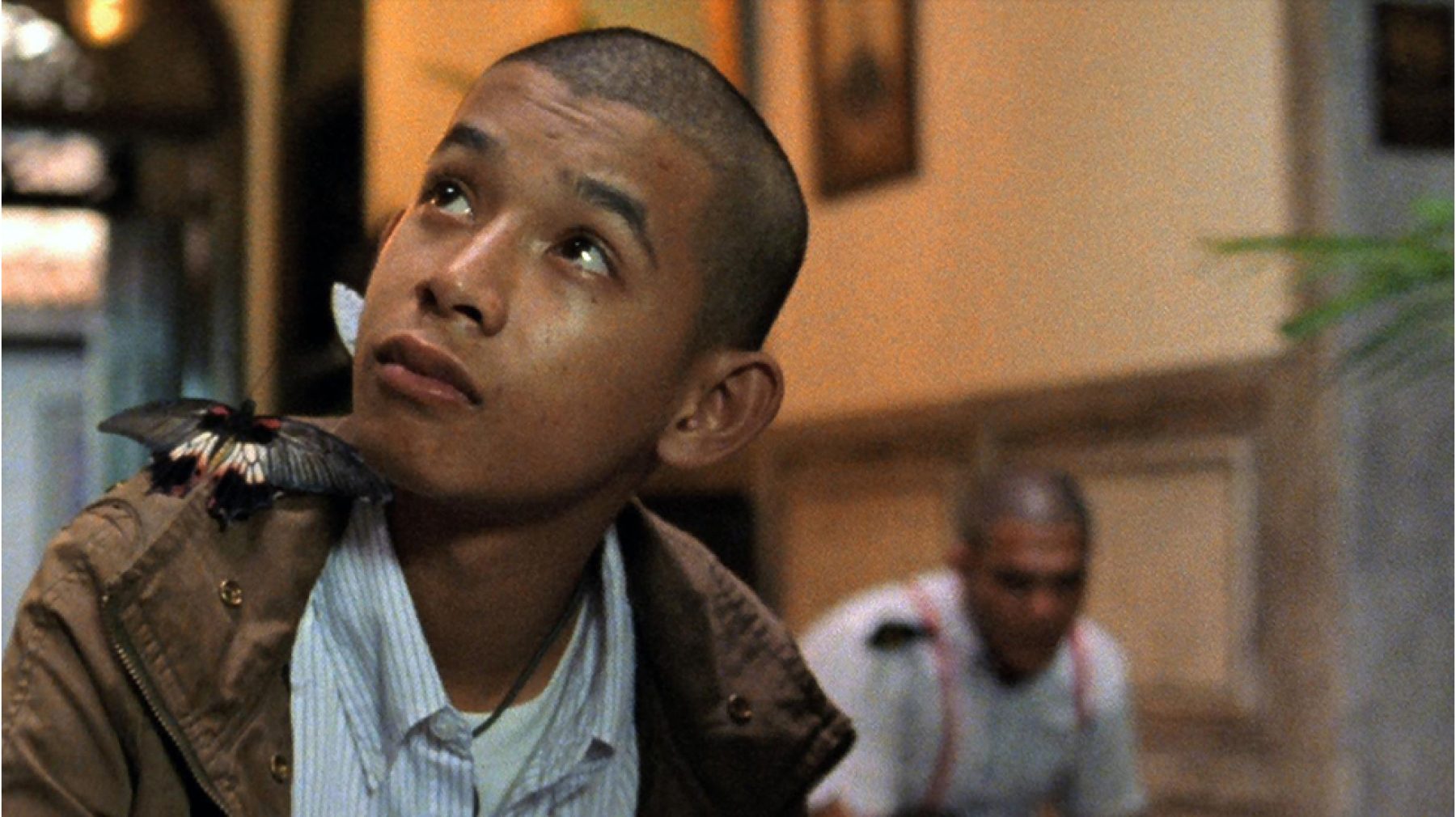
Phil Collins, the meaning of style (2011). Still. 4 min. 50 sec. Courtesy Tanya Bonakdar Gallery, New York.
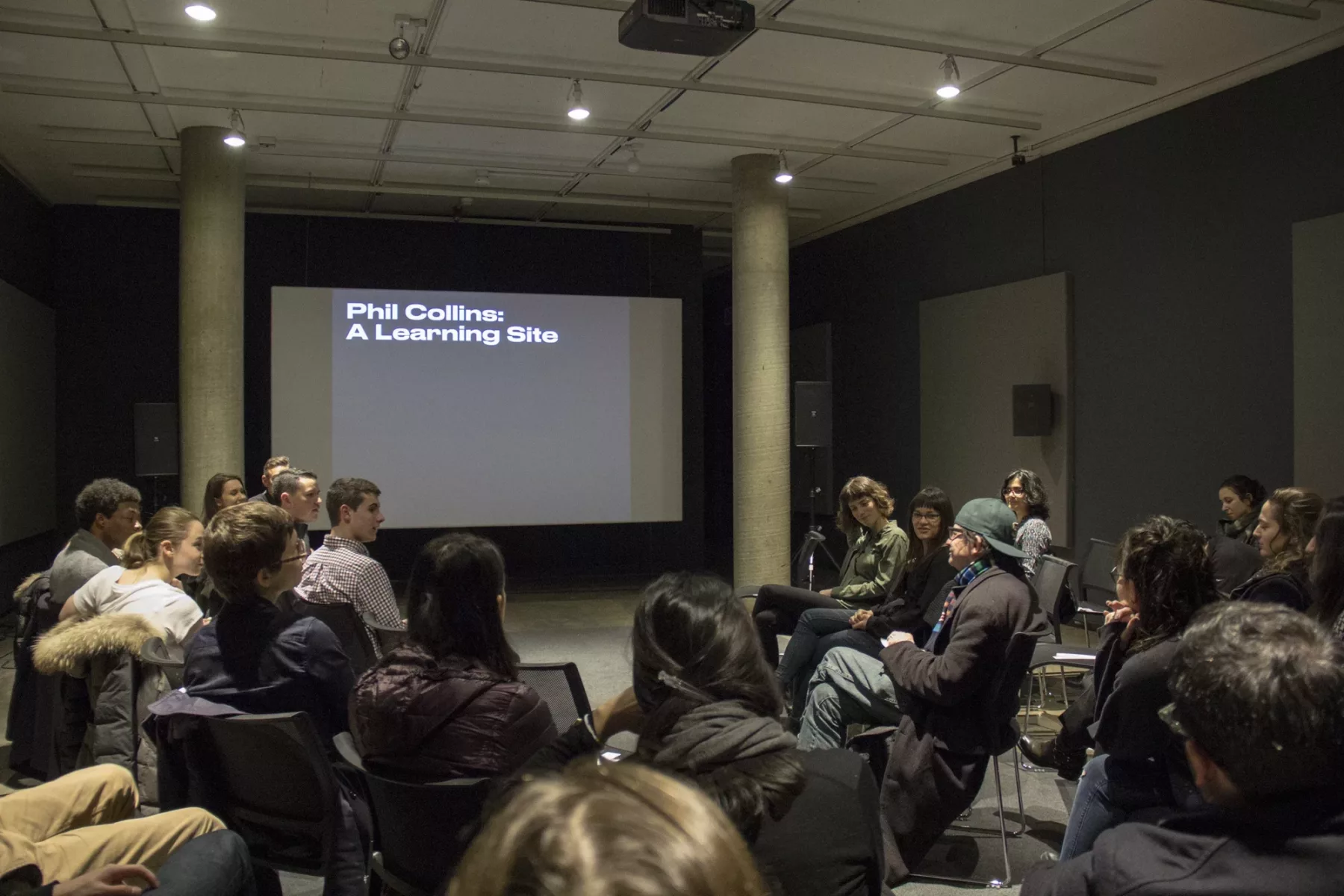
Open Seminar: Phil Collins in Context (Part 1). Carpenter Center for the Visual Arts, Sert Gallery, Mar 24, 2016
February 3–February 21, 2016
Silvia Benedito + C. Alexander Häusler: Pneuma(tic) Bodies
Pneuma(tic) Bodies was an installation of sculptures and drawings that explore the relationship shared by the human body, objects, and architectural space through the enveloping medium of air. Three large, balloon–like forms made of thin plastic material occupied considerable visual and physical areas on Level 1 of the Carpenter Center. The objects continuously inflated via small cooling ventilators typically used to regulate temperature in personal computers. Their soft, translucent–membrane surfaces tremored slightly as air blowed inside, while the forms moved subtly across the floor in response to shifting air currents caused by visitors coming and going, doors opening and closing. The motion and scale of these lifelike globular forms interrupt the rigid architectural schema designed by Le Corbusier with his concept of the “Modulor,” an ideal system of proportions relating the human body and the architectural environment.
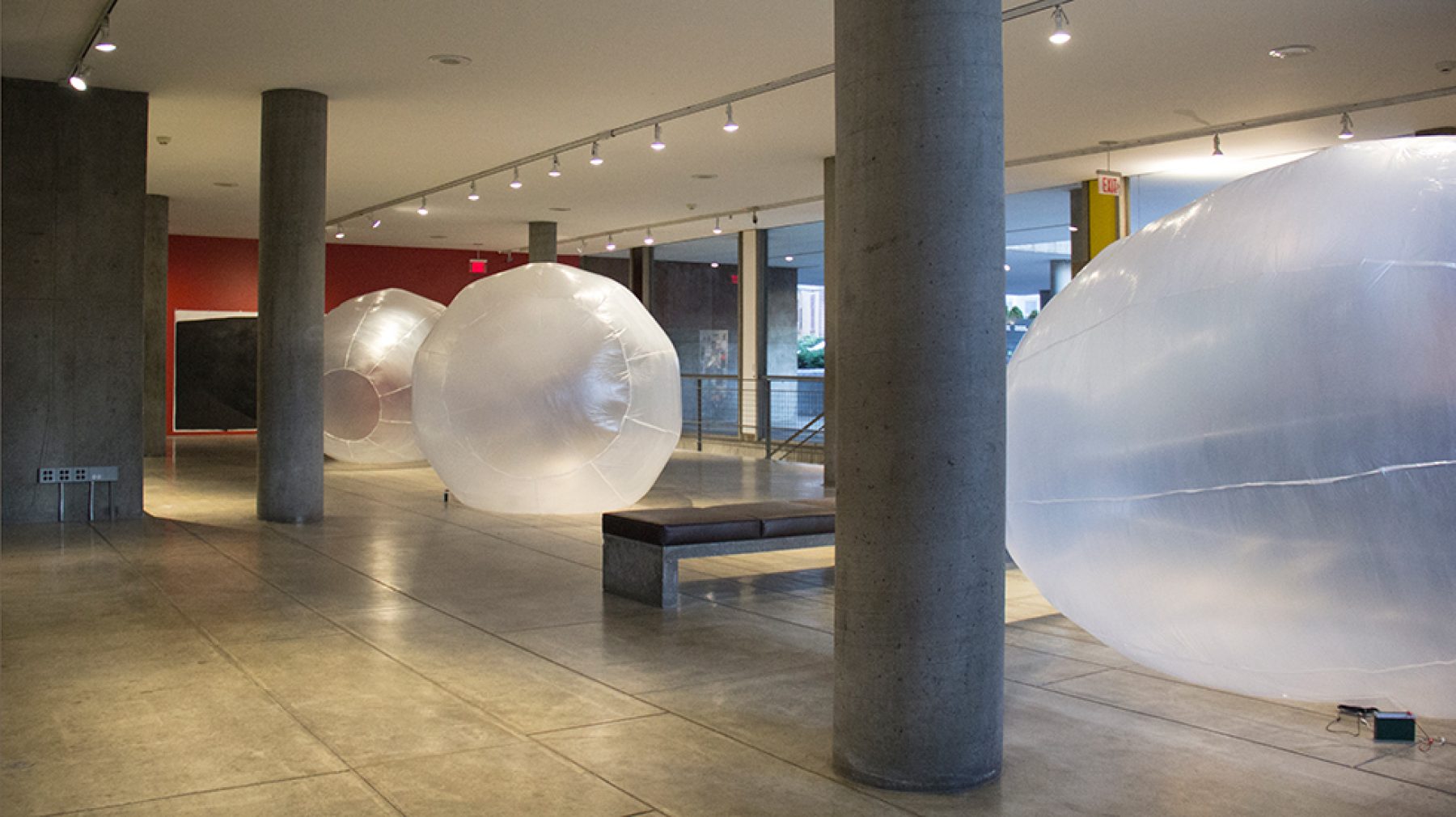
Installation 03/09 Performance by Hans Tutschku, composer and Director of the Harvard Studio for Electroacoustic Composition
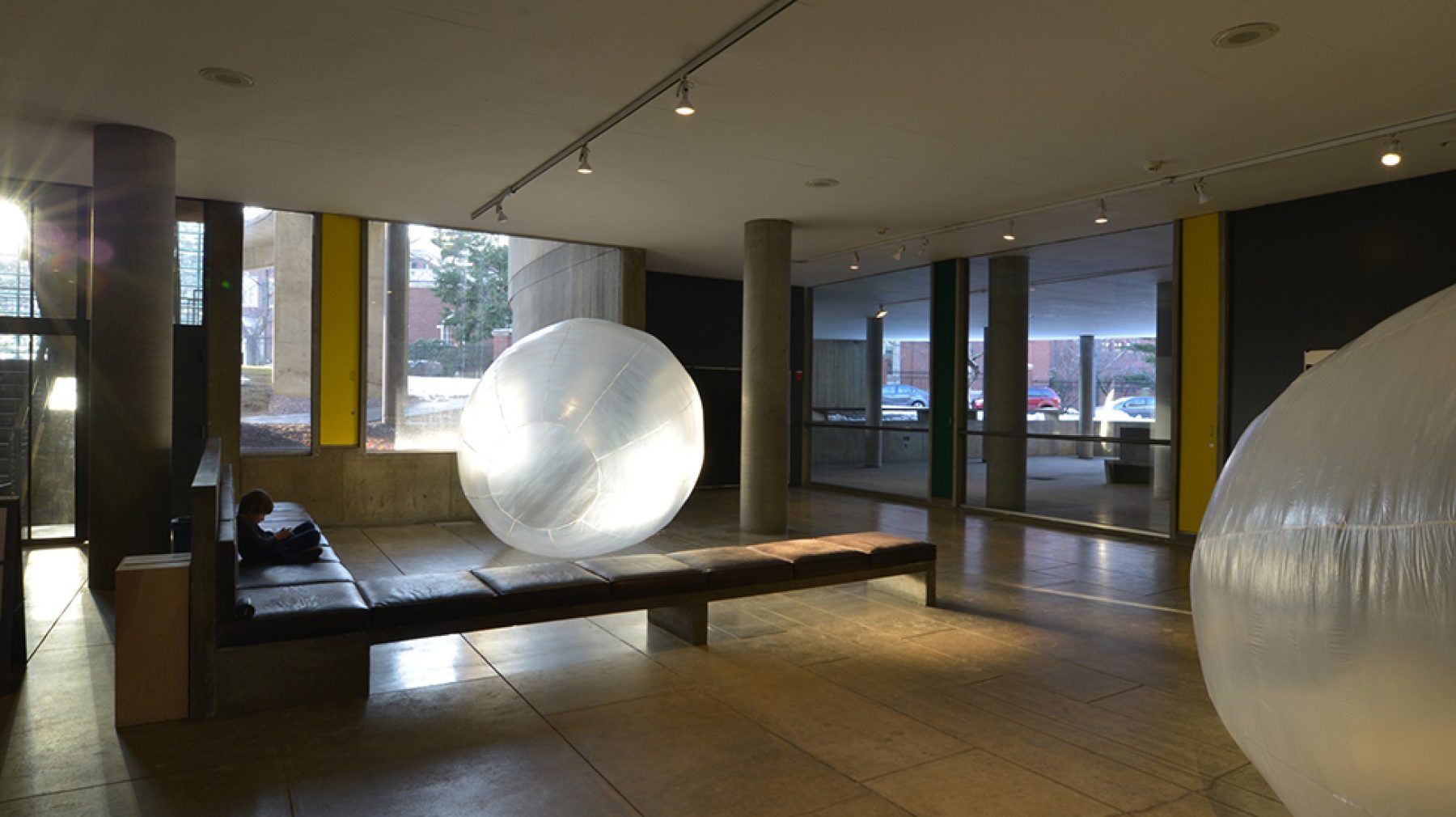
Installation view, Silvia Benedito + C. Alexandar Häusler: Pneuma(tic) Bodies, Carpenter Center for the Visual Arts, Harvard University. Level 1, Feb 3–21, 2016.
January 21–January 31, 2016
Martin Beck: A Social Question
Episode 8: A Social Question
In the fall of 1973 curators Barbara Norfleet and William S. Johnson organized the exhibition The Social Question: A Photographic Record 1895–1910 at the Carpenter Center for the Visual Arts. The selection of photographs was drawn from the Social Ethics Collection originally assembled by pioneering scholar on social reform Francis Greenwood Peabody, founder of the Social Ethics Department at Harvard University in 1906. The photographs dated from late-nineteenth and early twentieth centuries and were part of a collection of six thousand images Peabody had assembled as part of his activist engagement with social issues such as immigration and changing labor conditions. Peabody believed photography was a means to strengthen support for social reform, communicating the need for improved conditions in tenements, factories, public schools and hospitals. The exhibition The Social Question at the Carpenter Center was a teaching site for students and visitors.
Episode 8 of Martin Beck’s Program engages Norfleet and Johnson’s exhibition on the level of display: Beck’s A Social Question looks at the original exhibition’s presentational devices through the lens of its photographic documentation. In contrast to other installation photography of the Carpenter Center’s exhibitions of the time, images of The Social Question reveal a particular focus on the exhibition’s audience while also documenting the inclusion of numerous flower bouquets throughout the exhibition.
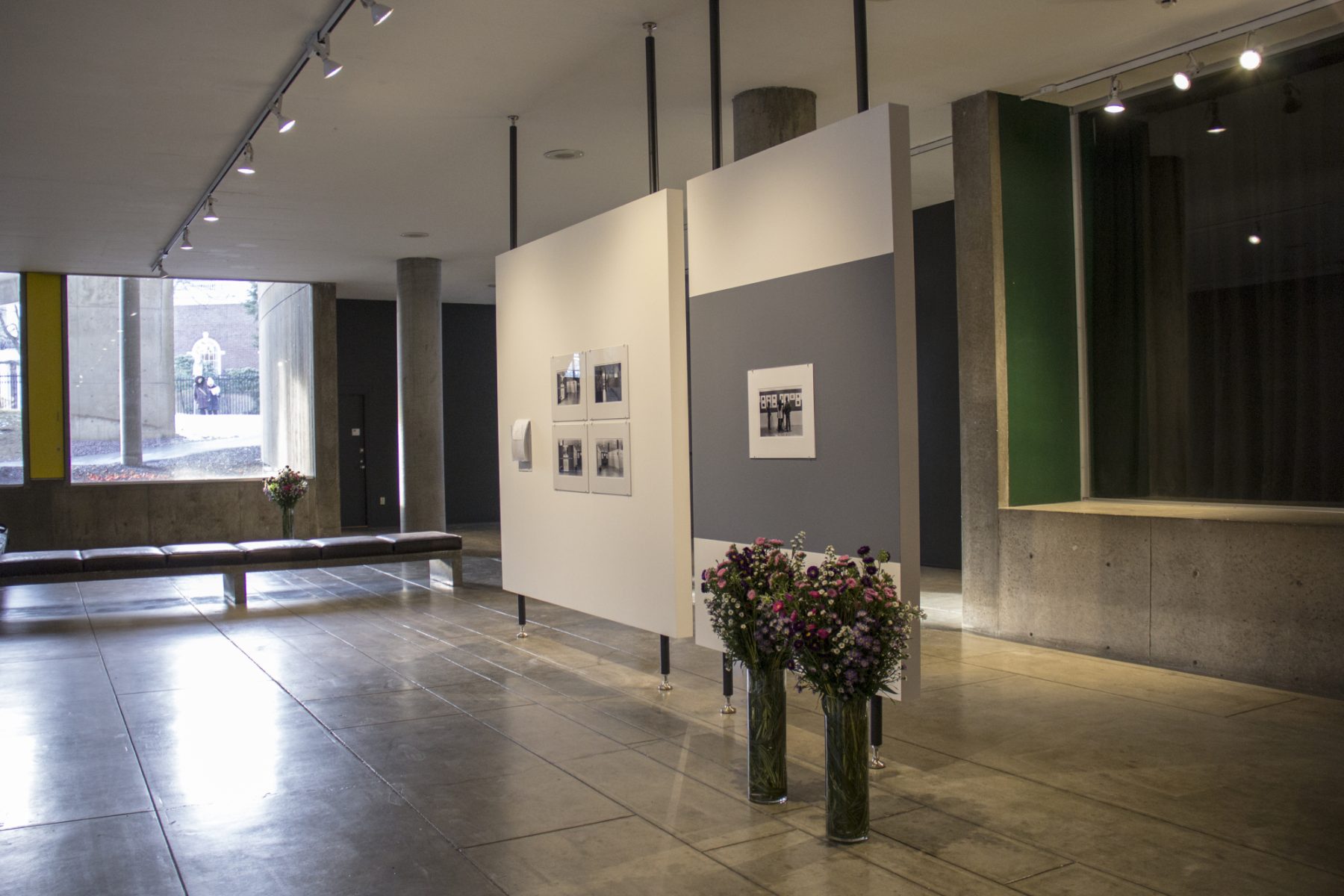
Martin Beck: Program, Episode 8: A Social Question (Level 1, January 21–31, 2016)
Martin Beck: Program, Episode 8: A Social Question (Level 1, January 21–31, 2016)
January 6–April 10, 2016
Margaret Lee: de, da, do...da
In de, da, do…da, commissioned for Display Case, Margaret Lee explored connections between gender and gesture and their legacy within the history of Abstract and Expressionist art. The installation confronted questions around mark-making and gendered indexical traces embodied in human movements.
The gestures are appropriated and manipulated from the “black pourings” of Jackson Pollock, a figure perennially celebrated for his innovative and, as critics have argued, masculine transference of embodiment onto canvas. Here, however, Lee mechanizes the painted gesture, transforming fluid paint into three-dimensional metal forms by scanning, laser cutting, and powder coating them, thus re-rendering the vaunted modernist action of Pollock into an unforgiving material associated more commonly with the appearance of contemporary luxury goods and retail display.
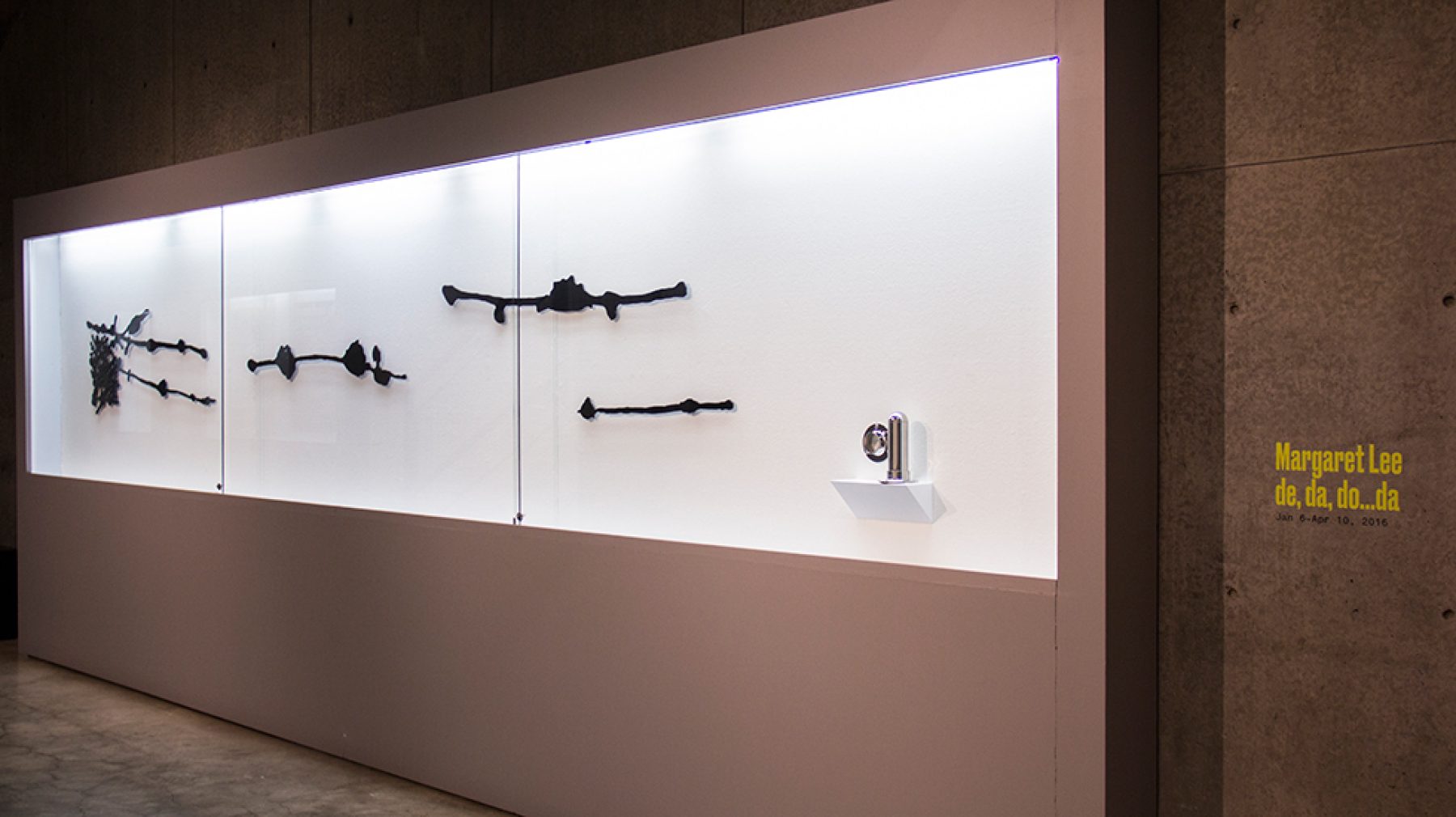
Installation view, Margaret Lee: de, da, do...da, Display Case, Carpenter Center for the Visual Arts, Harvard University. Jan 6–Apr 10, 2016.
Installation view, Margaret Lee: de, da, do...da, Display Case, Carpenter Center for the Visual Arts, Harvard University. Jan 6–Apr 10, 2016.
October 29, 2015–January 10, 2016
Lorraine O’Grady: Where Margins Become Centers
The exhibition Lorraine O’Grady: Where Margins Become Centers featured art from five bodies of work including photography, film, collage, performance documentation and writing. The works collected for this exhibition reveal the artist’s ongoing interest in the systemic powers affecting social behavior. O’Grady was born in Boston to upper-middle-class West Indian parents and educated at Wellesley. Her inherited biculturalism–a young black woman coming of age in rarefied New England–and participation in interracial relationships are grounds for a unique perspective from both within and on the periphery of diverse social spheres. These binary oppositions provide the basis for astute observations on human civilization, often deployed in the form of the diptych and notable in the series Miscegenated Family Album and The First and the Last of the Modernists on view at the Carpenter Center. Juxtaposing and collaging seemingly disparate dichotomies, the artist used the extreme margins to explore the central undergirding supporting social oppositions, challenging what is falsely agreed upon in a march toward dismantling accepted constructs.
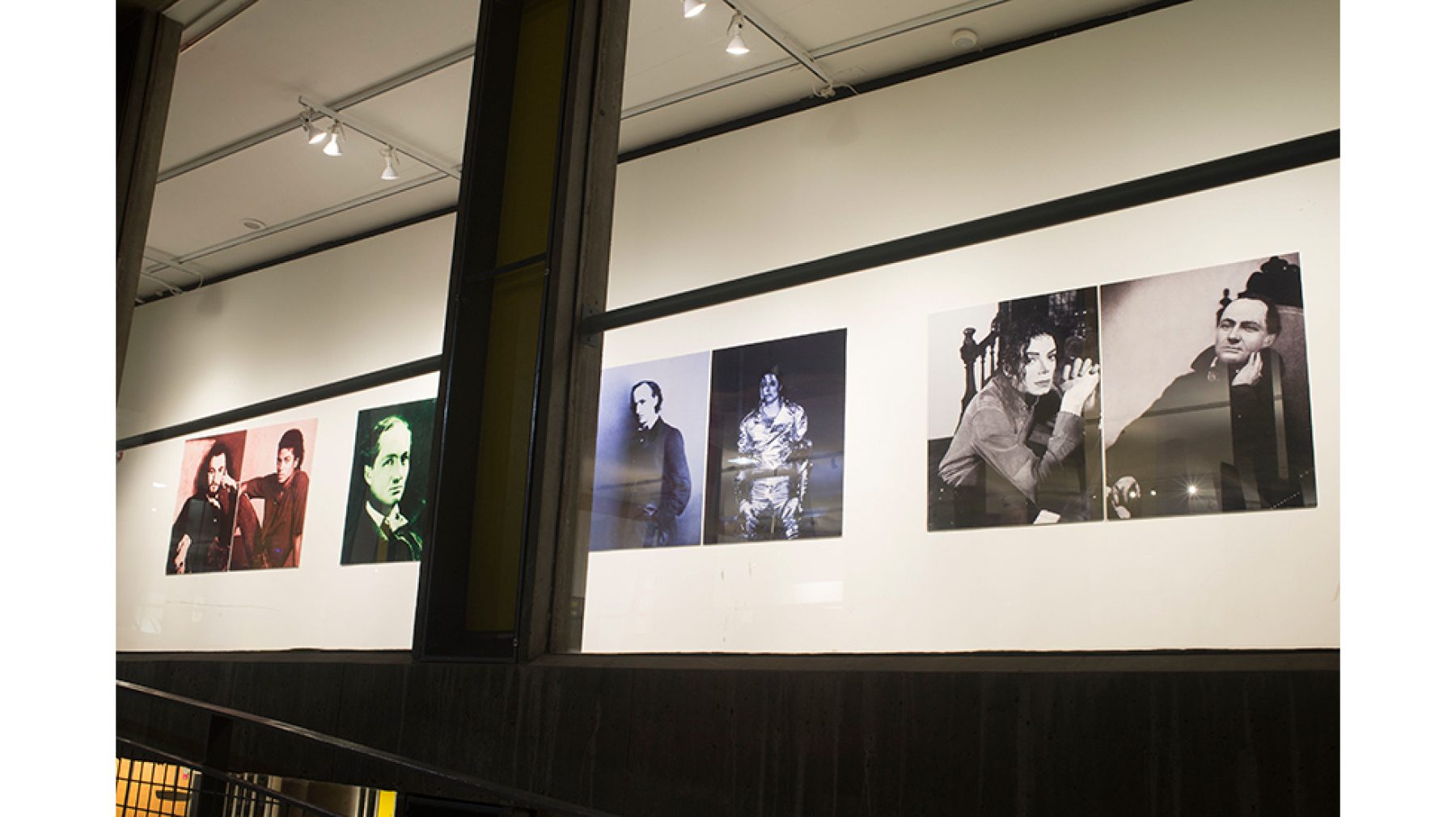
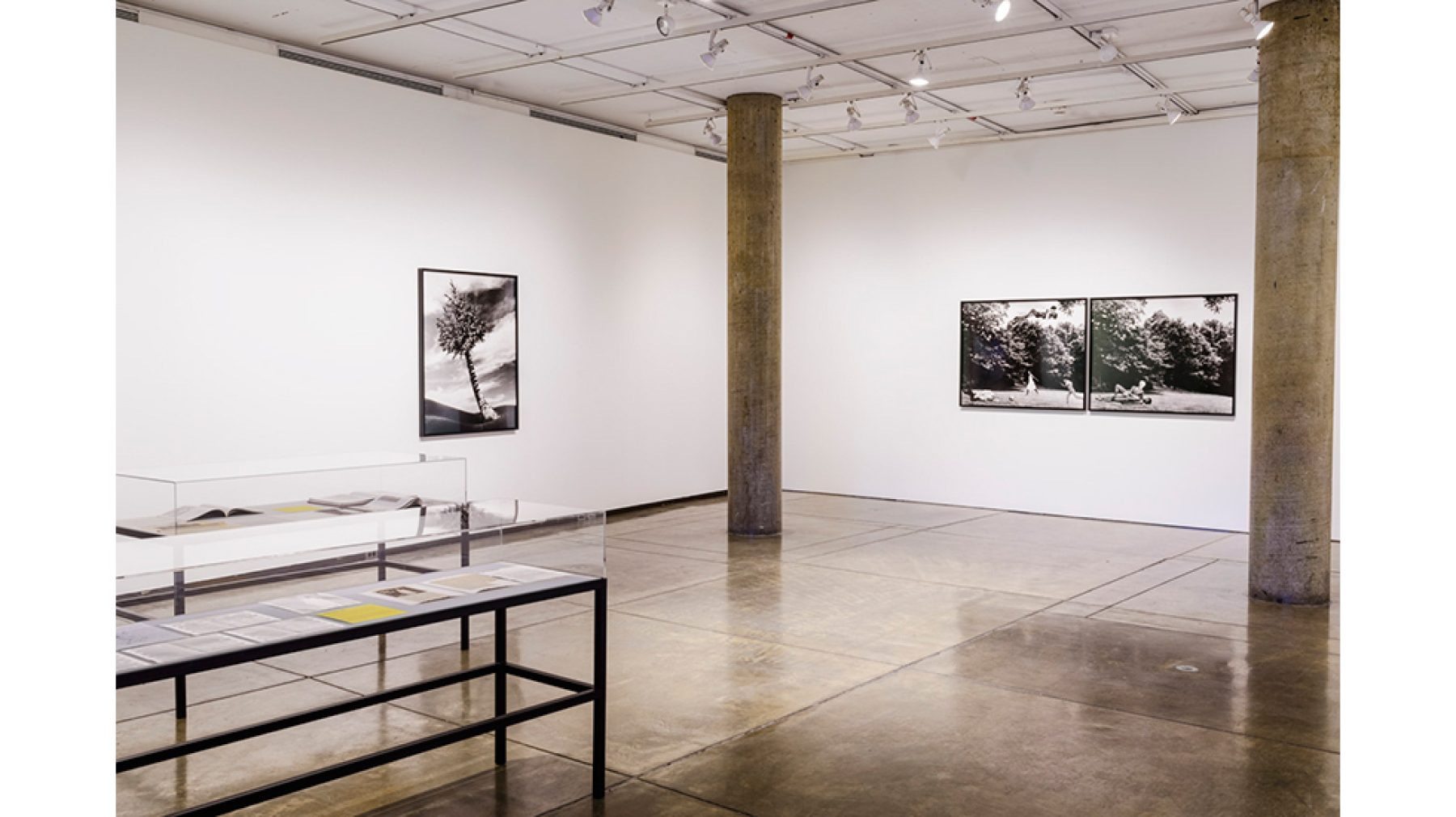
Installation view, Lorraine O'Grady: Where Margins Become Centers, detail of Miscegenated Family Album (Sisters I) and (Cross Generational); Carpenter Center for the Visual Arts, Harvard University, Level 3 Sert Gallery. Oct 29, 2015–Jan 10, 2016
October 29, 2015–January 10, 2016
Shahryar Nashat: Skins and Stand-ins
Shahryar Nashat uses photography, sculpture, performance, and video to disrupt and reframe acts of looking in order to bring the uninvited or disregarded into the forefront. He works with figurative and abstract sculpture to push against frequently circulated–and often idealized–canonical representations in visual and intellectual culture. His impulse is to direct our gaze toward the appearance of objects and movement of human bodies that art history, modern dance, sports, Minimalism, fashion, and advertising have ignored or pushed aside. Nashat thus draws attention to and prioritizes the vulnerable and the fragile–the seemingly imperfect. And as part of this process of reframing the way we see things, he emphasizes the permeability of human skin and its susceptibility to scratches, punctures, and tears. In doing so, he fixates on both the concept and construction of the prosthesis. This extension and support for the body is laden with great potential for release from a deeply engrained understanding, and thus expectations, of how a body should look, move and perform, something other than notions of perfection–something that is independent and autonomous from canonical orders.
Installed on Level 1 of Le Corbusier’s 1963 Carpenter Center and intervening in the Busch-Reisinger Museum's room 1510 on the first floor of the Harvard Art Museums, the exhibition Shahryar Nashat: Skins and Stand-ins featured a combination of video, sculpture, architectural interventions, and commissions that create a cohesive environment where the sensibilities and physicality of spectators become formally implicated in the artist’s inquiries.
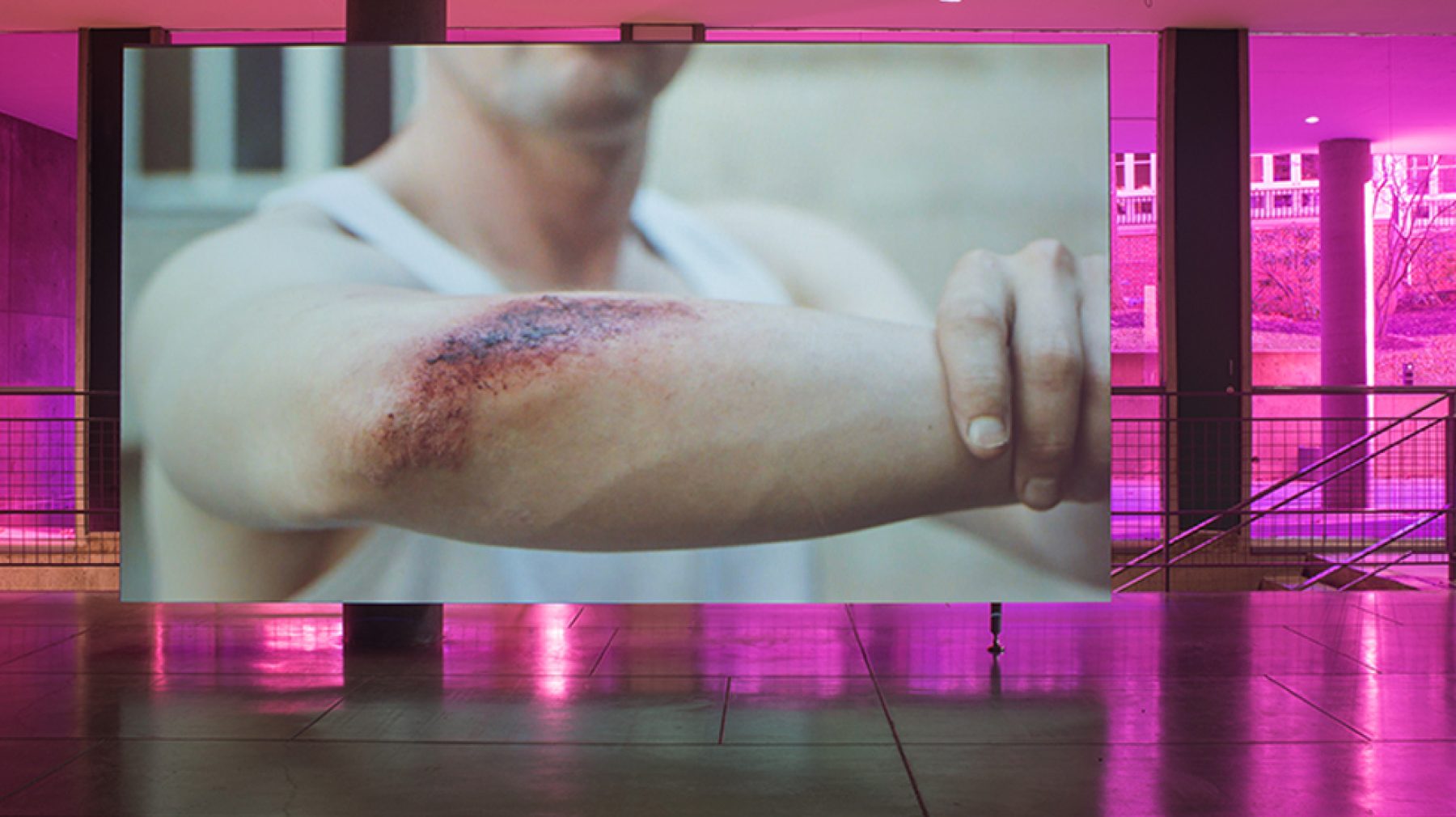
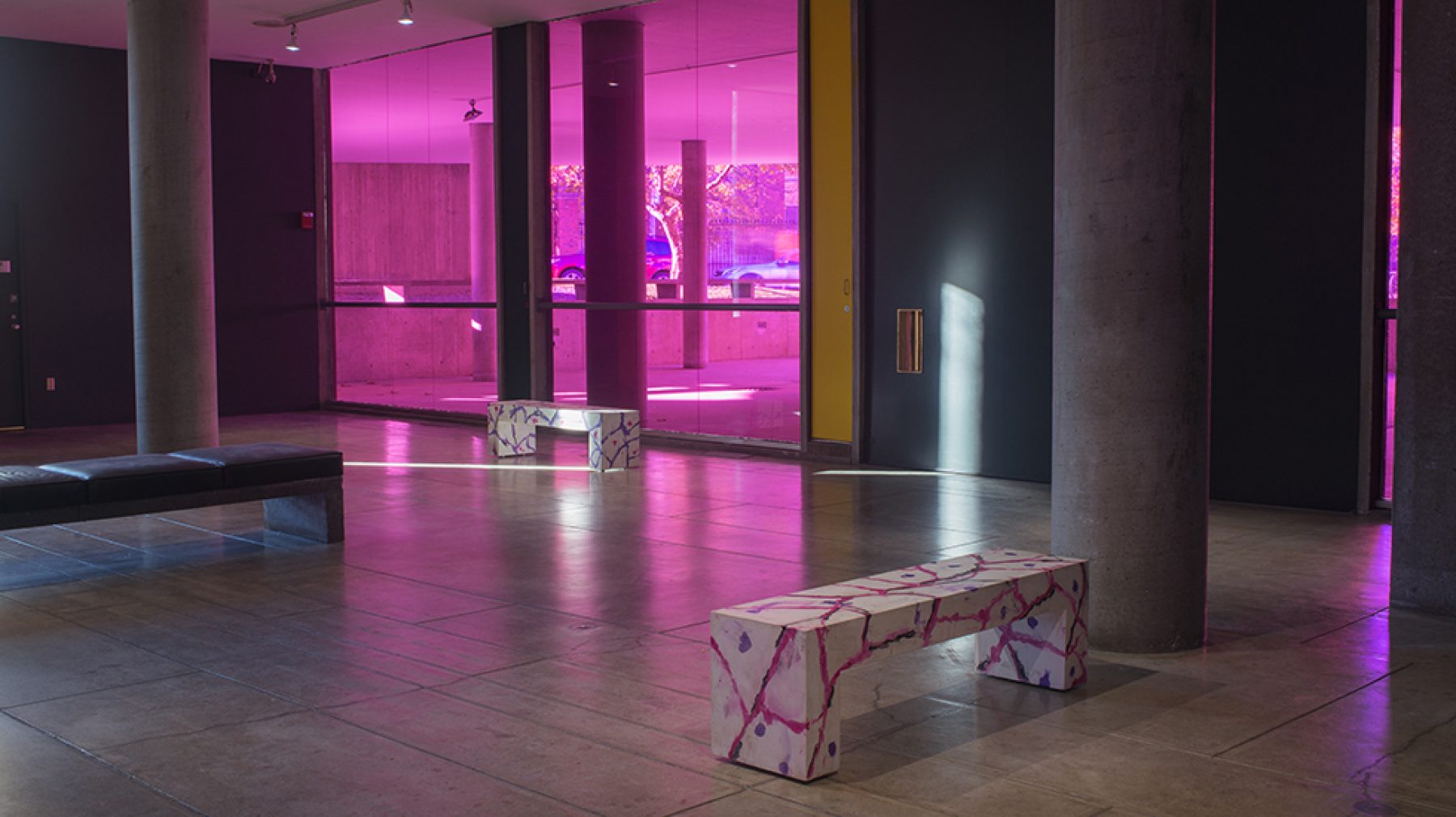
Installation view, Shahryar Nashat: Skins and Stand—ins, detail, Muscle 2015 and Beach, 2015. Carpenter Center for the Visual Arts, Harvard University, Oct 29, 2015-Jan 10, 2016.
2015
2015 - 2017
Consumer Research Center
Curated by James Voorhies, the CRC was a public arena and research platform that inhabited the form of a bookshop instigating questions about the place of consumer forms for building community in the contemporary arts.
Consumer Research Center/ engaged in consumer activities as models for social connectivity in twenty-first-century arts organizations. CRC/ was responsive to the hybridization of contemporary life and culture, where a “bookshop/screening” or a “coffee bar/artist talk” offers the expanded possibility for viable economic sustainability as well as uniting communities in a singular physical arena. CRC/ probed the consumption of both immaterial and material culture as part of the overall experience of arts and entertainment, where traditional differences between visitors and consumers are increasingly blurred in cultural spaces today. CRC/ critically reflected upon these contemporary conditions while leveraging the potential of combining consumer exchange and cultural experience.
CRC/bookshop was the first installment of Consumer Research Center/. The CRC/bookshop provided students and visitors with access to more than 500 titles by artists, critics, filmmakers, and cultural institutions from around the world. As a ground for cultural production, it also hosted numerous activities that transformed the consumer outlet of a bookshop into a bookshop/exhibition, bookshop/screening, and bookshop/talk.
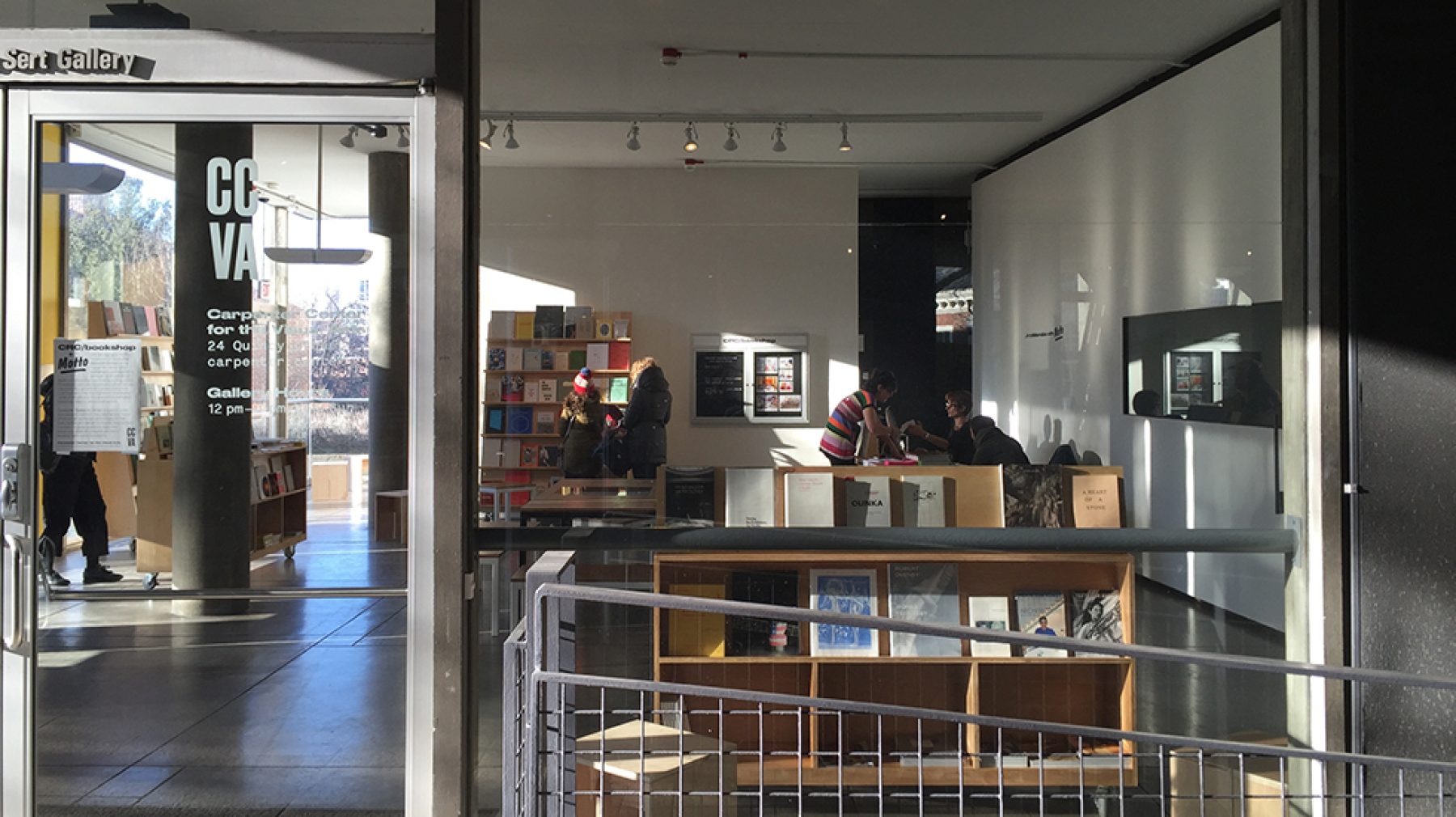
Consumer Research Center/bookshop in collaboration with Motto Books.
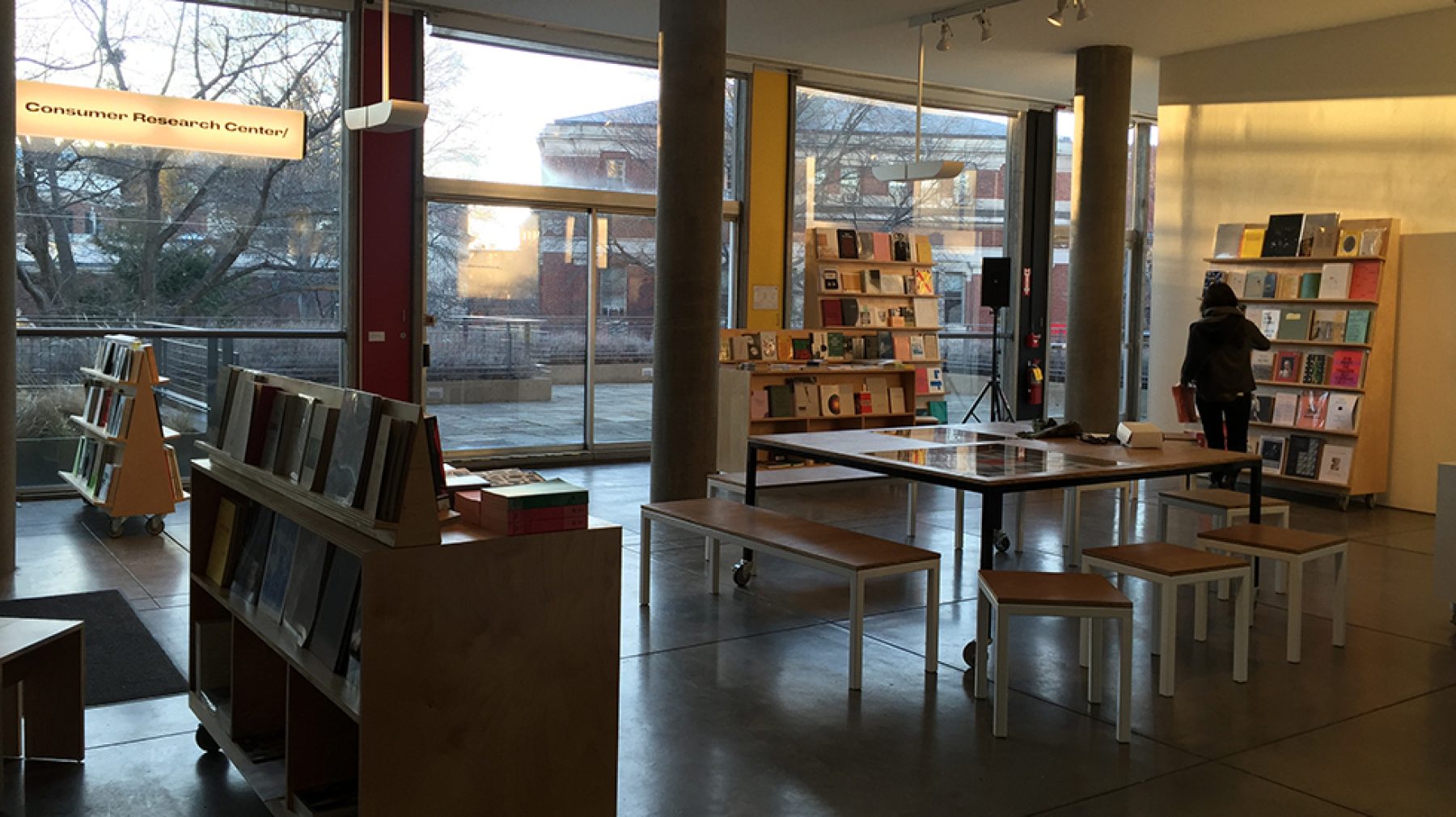
Consumer Research Center/bookshop in collaboration with Motto Books.
October 8–October 23, 2015
Damon Krukowski: NOT TO BE PLAYED
This multifaceted exhibition featured archival materials, performance, and a publication that together revived an obscure audio recording made by Ezra Pound at Harvard University in 1939. Recorded on the eve of World War II, Pound believed his poem “Sestina: Altaforte”—or “Bloody Sestina,” as it came to be known—could incite violence. He was convinced it possessed a persuasive power over the future: several years after making the recording, Pound wrote a letter stating it was “not to be played.
The recording of Pound’s impassioned recitation was originally cut to lacquer disc, subsequently transferred to magnetic tape in the 1950s, and duplicated on cassette in the ’70s. Yet it remained largely unavailable until digitization by the Woodberry Poetry Room in 2006.
Exploring these ideas, the exhibition included a seven-inch vinyl “publication” that, in our digitally saturated moment, returned Pound’s recording to its original analog format. Damon Krukowski: NOT TO BE PLAYED was the inaugural edition of The Woodberry Sessions, an ongoing series of collaborations between the Carpenter Center and the Woodberry Poetry Room that drew upon the rich history of archival material at Harvard, inserting it into the public realm through the creative vision, insight, and observations of contemporary artists.
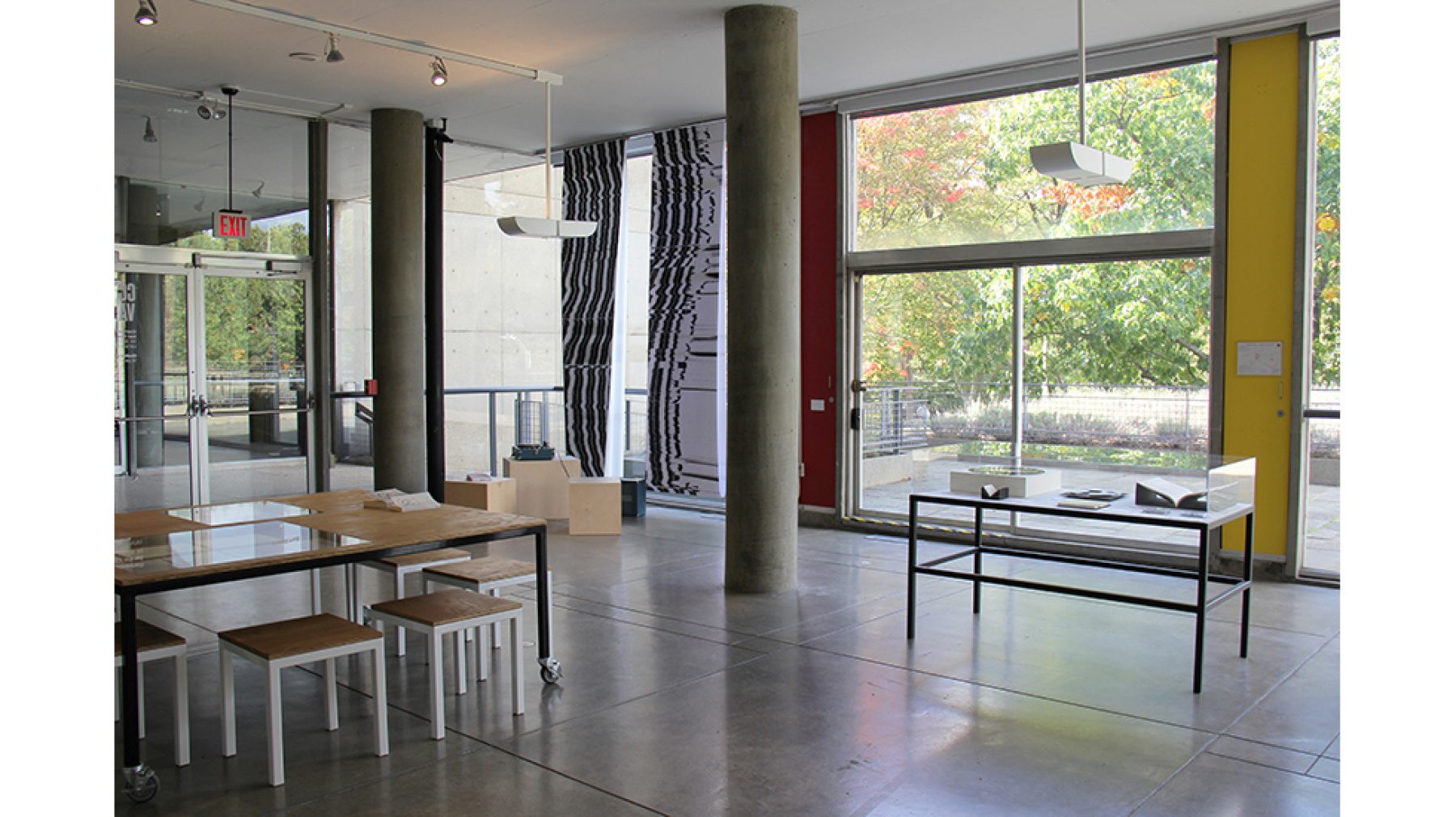
Installation view, Damon Krukowski: NOT TO BE PLAYED, Carpenter Center for the Visual Arts, Harvard University, Oct 8–25, 2015, Level 3, Sert Gallery.
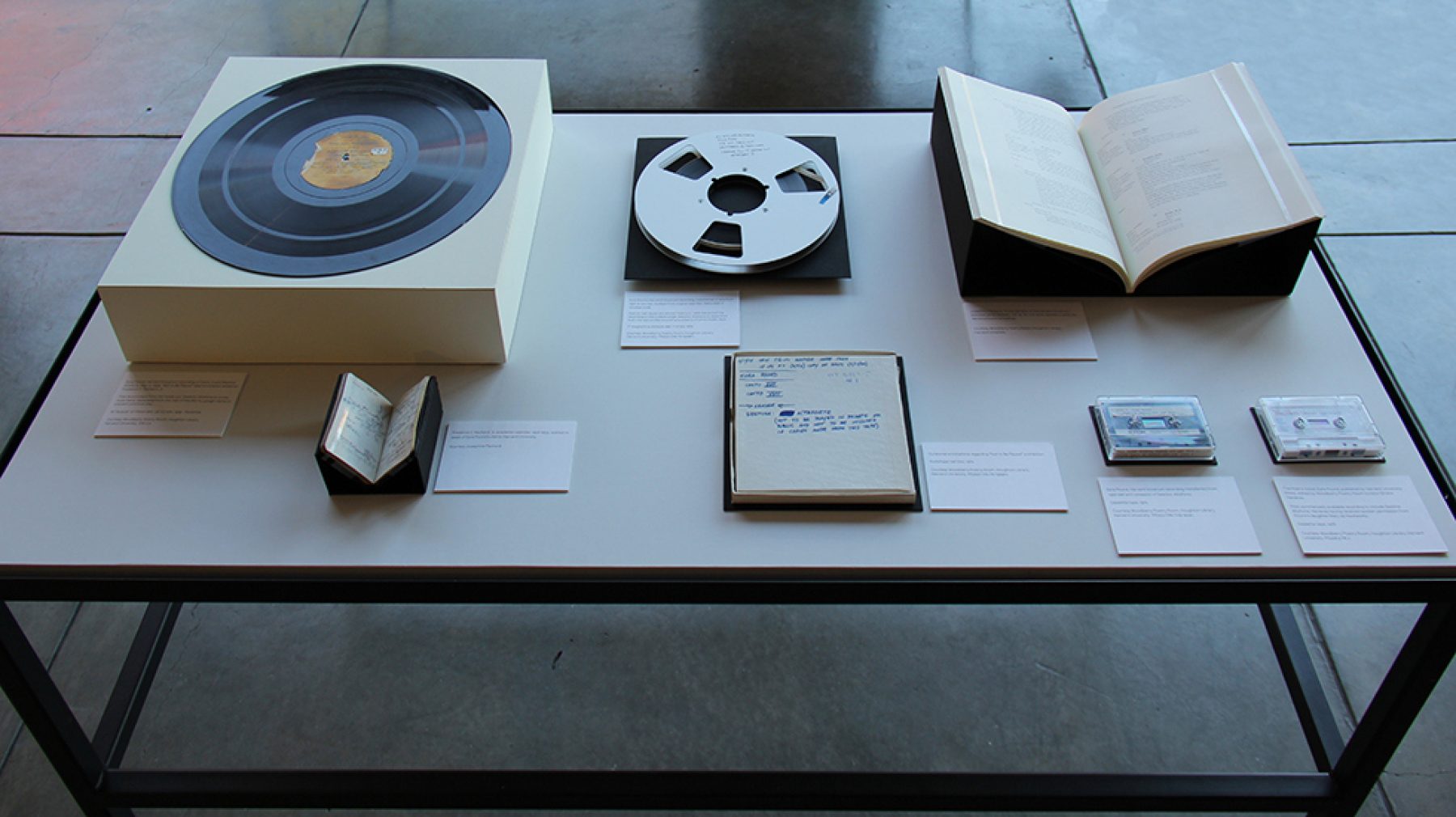
Installation view, Damon Krukowski: NOT TO BE PLAYED, Carpenter Center for the Visual Arts, Harvard University, Oct 8–25, 2015, Level 3, Sert Gallery.
October 3–October 25, 2015
Kerry Tribe: Critical Mass
Kerry Tribe’s time based works explore memory and representation through film, video, performance and installation. For Critical Mass (2010–), she restaged Hollis Frampton’s 1971 groundbreaking experimental film of the same name. In Frampton’s classic structural work, he captures a young couple arguing on film then meticulously edits the single take into a series of repetitive, staccato snippets, unhinging the continuity of the dialogue. In Tribe’s project, actors Nick Huff and Emelie O’Hara perform Frampton’s film from memory, shot for shot, retaining all the original repetitions and stutters of the original work.
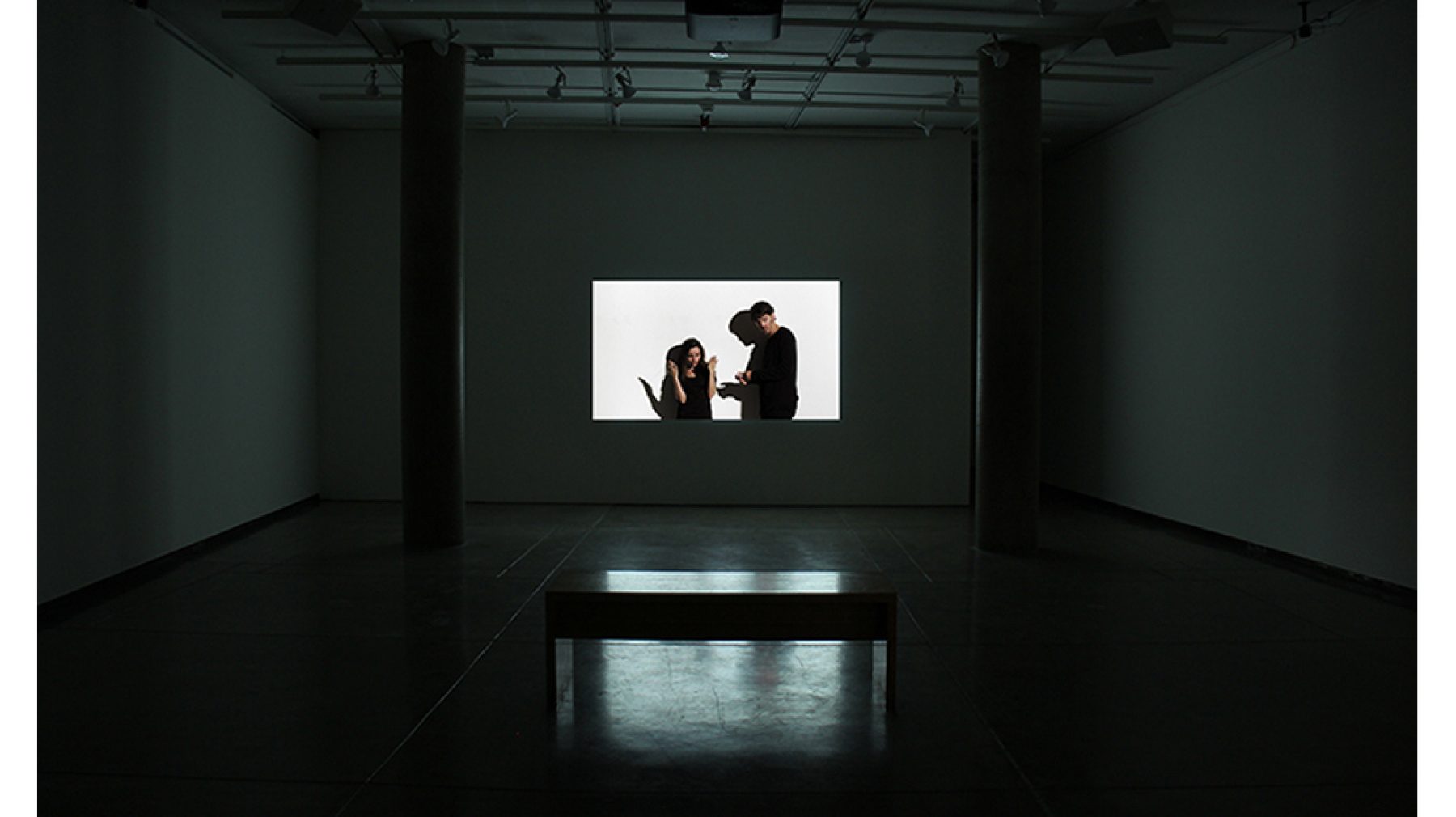
Installation view. Kerry Tribe, Critical Mass (2012) featuring Nick Huff and Emelie O'Hara. Carpenter Center for the Visual Arts, Harvard University, Level 3, Sert Gallery, Oct 3–25, 2015.
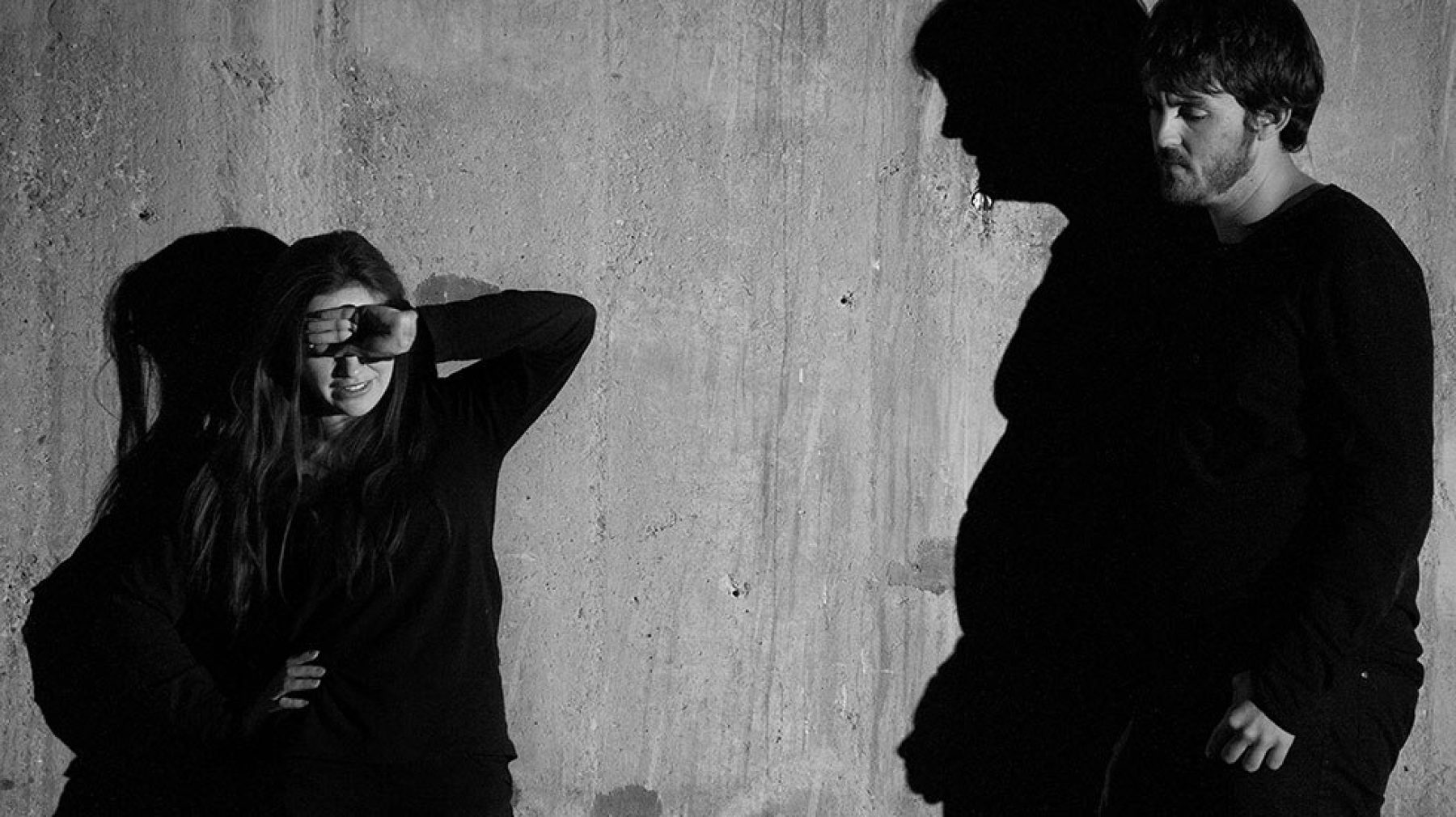
Kerry Tribe, Critical Mass (performance still), with Emelie O’Hara and Nicholas Huff, The Tanks, Tate Modern, Oct 2012
October 1–October 25, 2015
Josiah McElheny: Two Walking Mirrors for the Carpenter Center
Two Walking Mirrors for the Carpenter Center featured two five-foot-high sculptures made of cedar and glass mirror sited individually on separate pedestals. Each sculpture was made of two parallel rectilinear panels with full-length mirrors in which viewers catch their reflections. Both sculptures periodically became part of performances when performers—in fact, Harvard University dance students—inhabit the sculptures on a published schedule, transforming the objects into a kind of fashion accessory. Interrupting the inanimate stature of sculpture, the performers put on the objects using nylon shoulder straps. Once harnessed, they lift the objects off the ground and begin to walk, stepping into the surrounding realm of exhibition and moving amongst viewers at whatever pace they choose, interacting verbally (or not) with visitors. The performers, however, are unable to see directly in front of them because the vertical panels block their sightline. Therefore, they need to look down at the floor to follow a line drawn by McElheny. This line drawing is inherently articulated by the specific architectural qualities of Le Corbusier’s architecture at the Carpenter Center and the location of the pedestals in the gallery.
Performances + exhibition by Josiah McElheny. Oct 1-25, 2015.
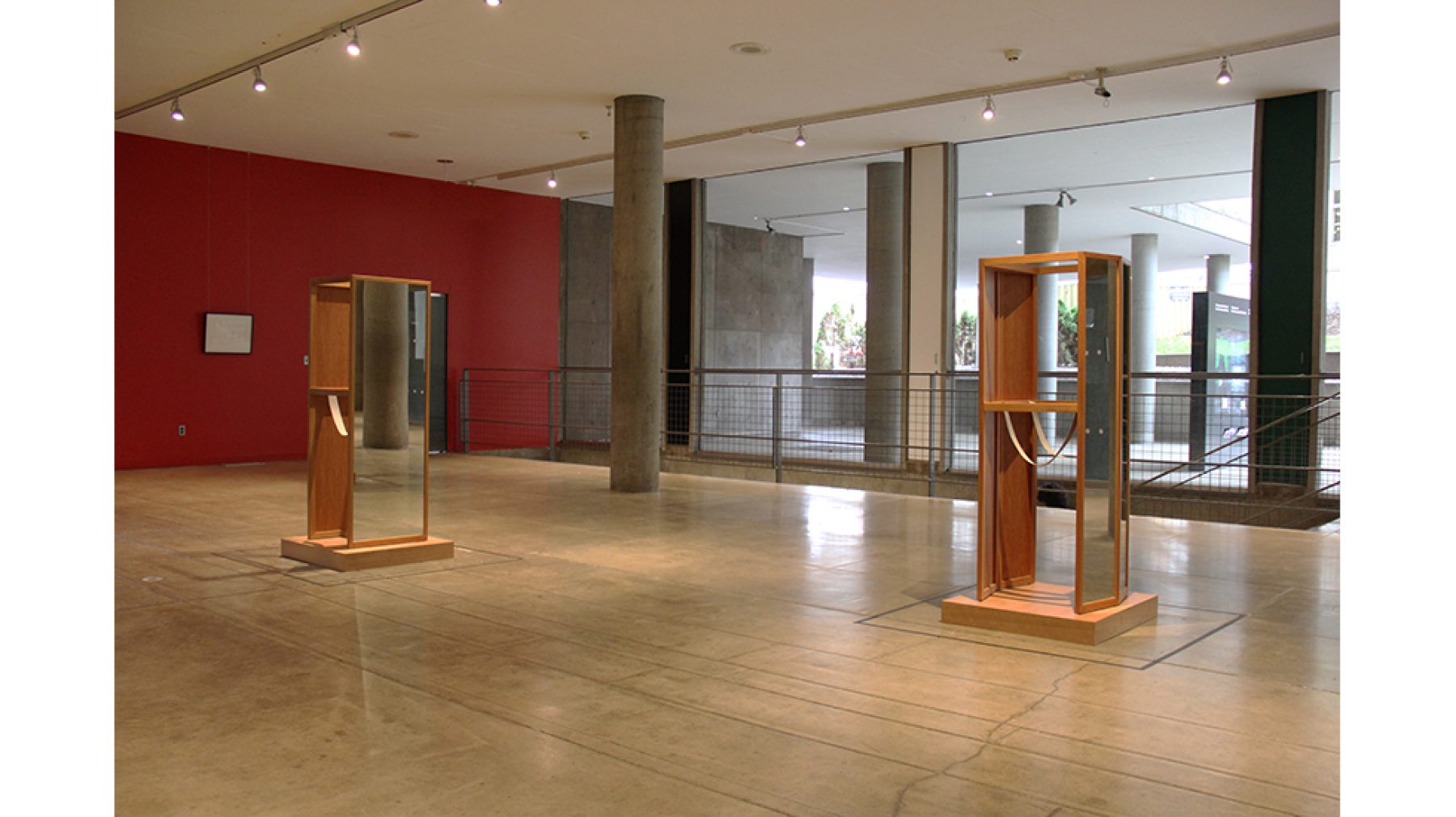
Installation view, Josiah McElheny: Two Walking Mirrors for the Carpenter Center, Carpenter Center for the Visual Arts, Walking Mirror 1, 2012 and Walking Mirror 2, 2012. Courtesy Andrea Rosen Gallery, NY
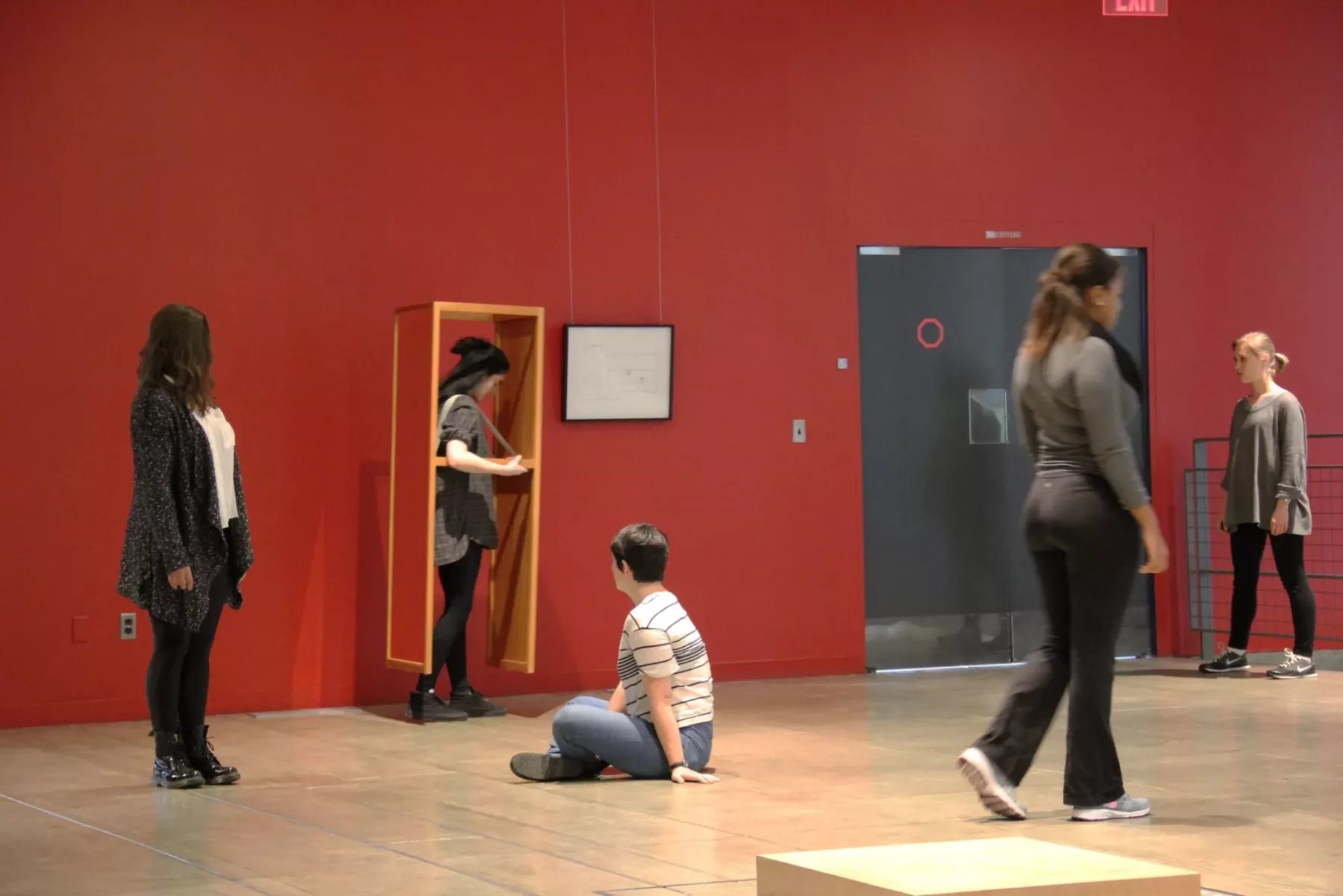
September 1–November 23, 2015
Karel Martens: Monoprints
When Karel Martens began studying art in Holland in the late 1950s, "graphic design" did not even exist as its own course of study. Today, he is widely recognized as one of the most important practitioners of that very discipline, with an esteemed client list that includes major publishers, architects, and institutions. Concurrent with his commissioned work, Martens has developed an impressive body of monoprints, which have been widely published, but only recently exhibited. Created on a small bookbinder's press, the prints are a site for visual experimentation and formal research for Martens, who works on them nearly every day. They are made by imprinting found forms into recycled materials, such as castaway collection cards from museums, blank documents, discarded identity records, and raw packing paper. The motif on a single print my take several years to develop, subject to constant reexamination and overprinting by Martens. Sometimes, these images find their way into commissioned projects.
Hosted in the Level 0 Display Case, the selection of works at the Carpenter Center ranges from the late 1980s to present, and is displayed in an informal manner that reflects the open-ended and speculative method of its production.
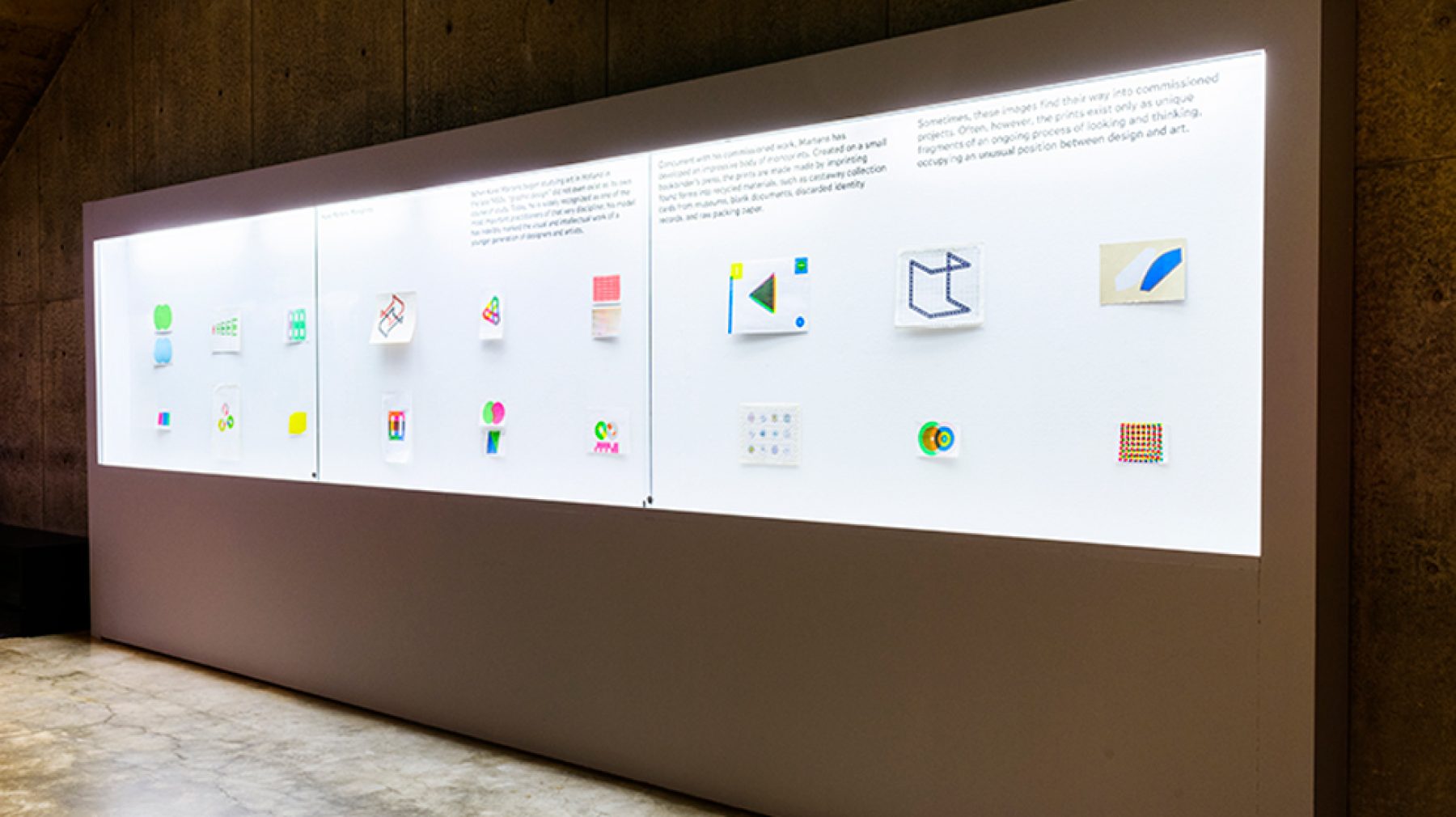
Installation view, Karel Martens: Monoprints, Sep 1–Nov 23, 2015. Carpenter Center for the Visual Arts, Display Case, Level 0
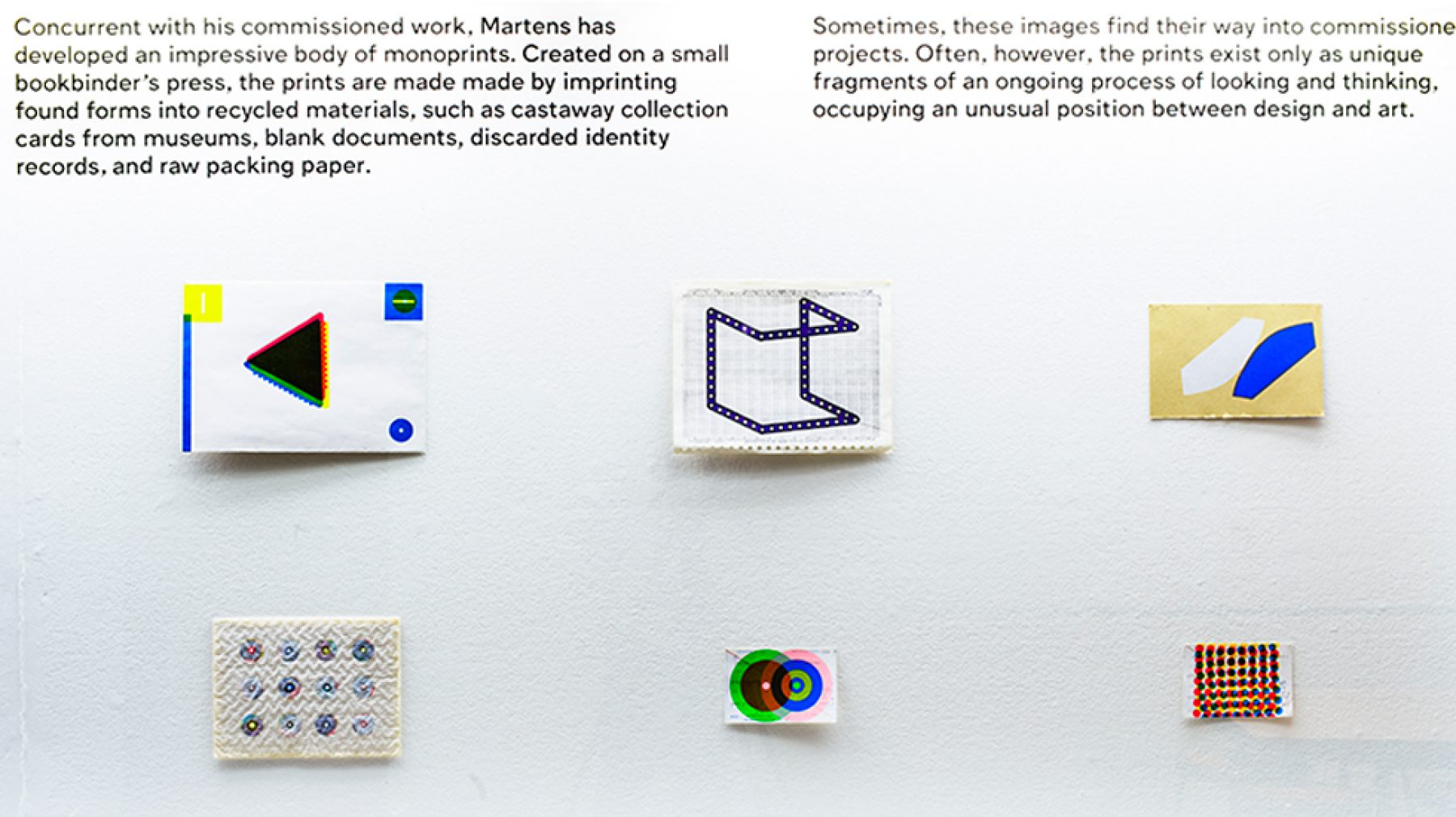
Installation view, Karel Martens: Monoprints, Sep 1–Nov 23, 2015. Carpenter Center for the Visual Arts, Display Case, Level 0
September 1–September 27, 2015
Visiting Faculty 2015–16
The VES Visiting Faculty 2015–16 exhibition presented work by four visiting faculty in Visual and Environmental Studies. For almost fifty years, the department had invited visual artists and filmmakers who are leaders in their fields to work closely with students, invigorating and enriching the academic program and curriculum with their outside perspectives and professional experiences. That year the department welcomed Jennifer Bornstein, Liz Glynn, Betsy Schneider and Nora Schultz with a sampling presentation of their work.
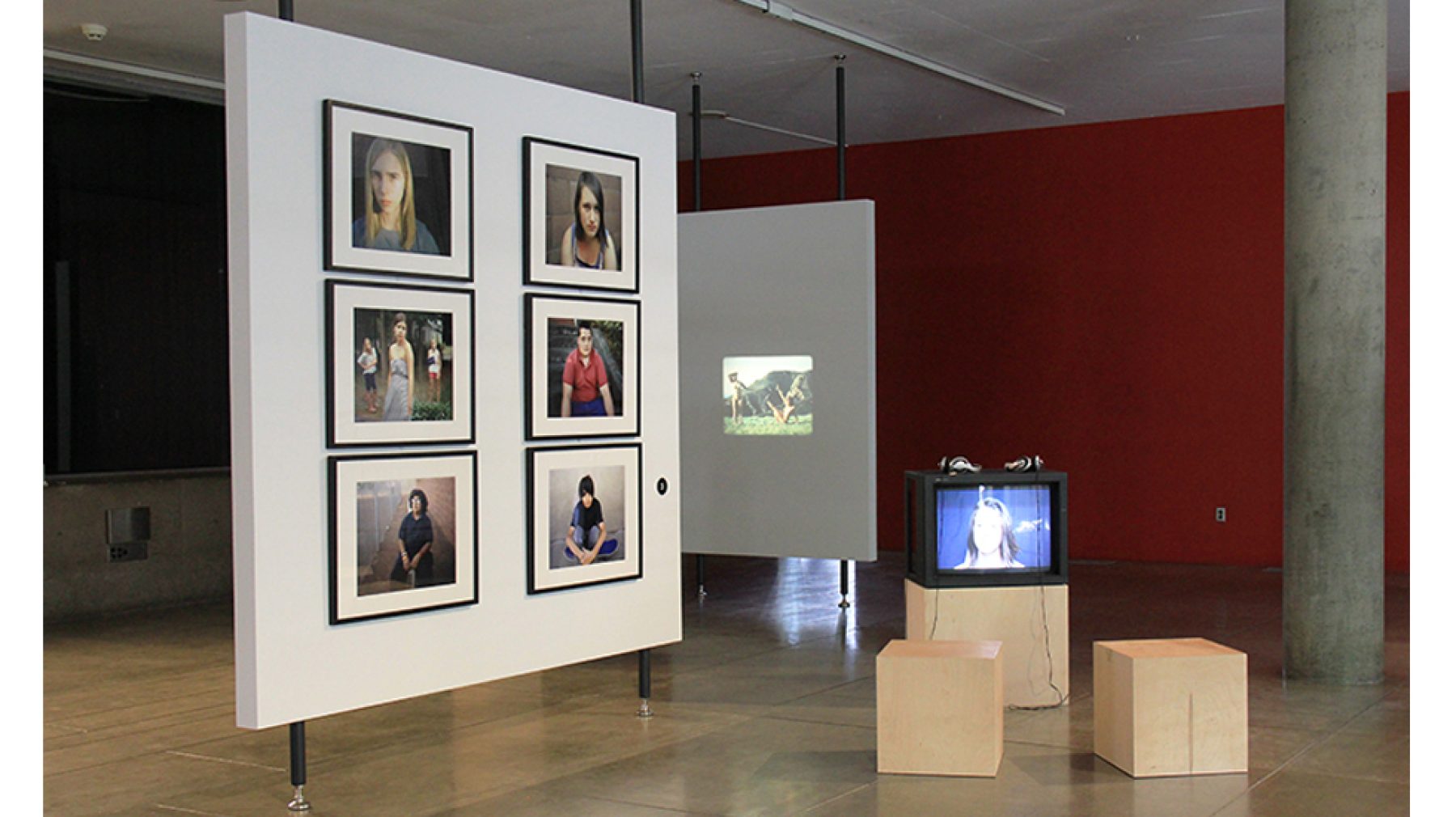
Installation view, Visiting Faculty 2015-16, Betsy Schneider from the series Triskaidekaphobia and Jennifer Bornstein Frauenkörperbewegungsbilder. Carpenter Center for the Visual Arts, Harvard University, Level 1, Sep 1-27, 2015
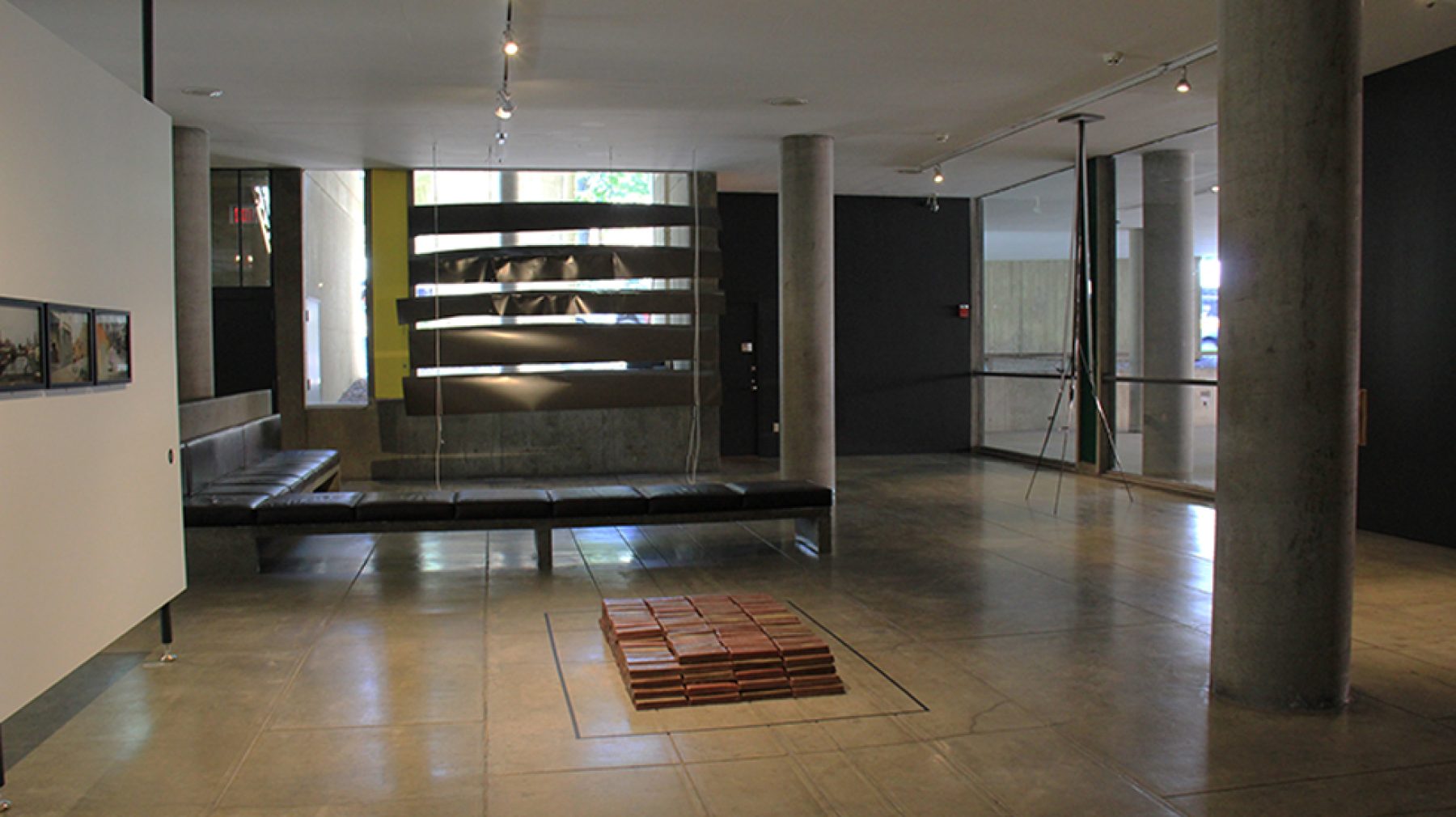
Installation view, Visiting Faculty 2015-16, Carpenter Center for the Visual Arts, Harvard University, Level 1, Sep 1-27, 2015
September 1–September 27, 2015
Mare Liberum: or, The Other Island
A photograph taken in 1950 shows Le Corbusier and his cousin Pierre Jeanneret in a pedal boat in Chandigarh, India (see publication). It is a compelling image of the renowned architect and the designer on a visibly makeshift vessel readying to embark across Sukhna Lake. The history of this photograph and boat are uncertain. The scene, however, is endearingly playful, as if Le Corbusier and Jeanneret had just discovered a newfangled plaything—watercraft.
This image was a departure point for Mare Liberum’s exhibition and research residency at the Carpenter Center entitled or, The Other Island. Based in Brooklyn, Mare Liberum (or “The Free Seas”) is a collective that uses exhibitions, workshops, publications, and river voyages to guide inquiries into the environmental conditions and histories of waterways. For this presentation, they organized workshops for building punts—flat-bottom boats with a square bow used to transport cargo. Boatbuilding is the primary point of entry for their work, with past project designs ranging from ocean-crossing rafts, to boats made of paper, to kayaks produced with bamboo and repurposed museum banners.
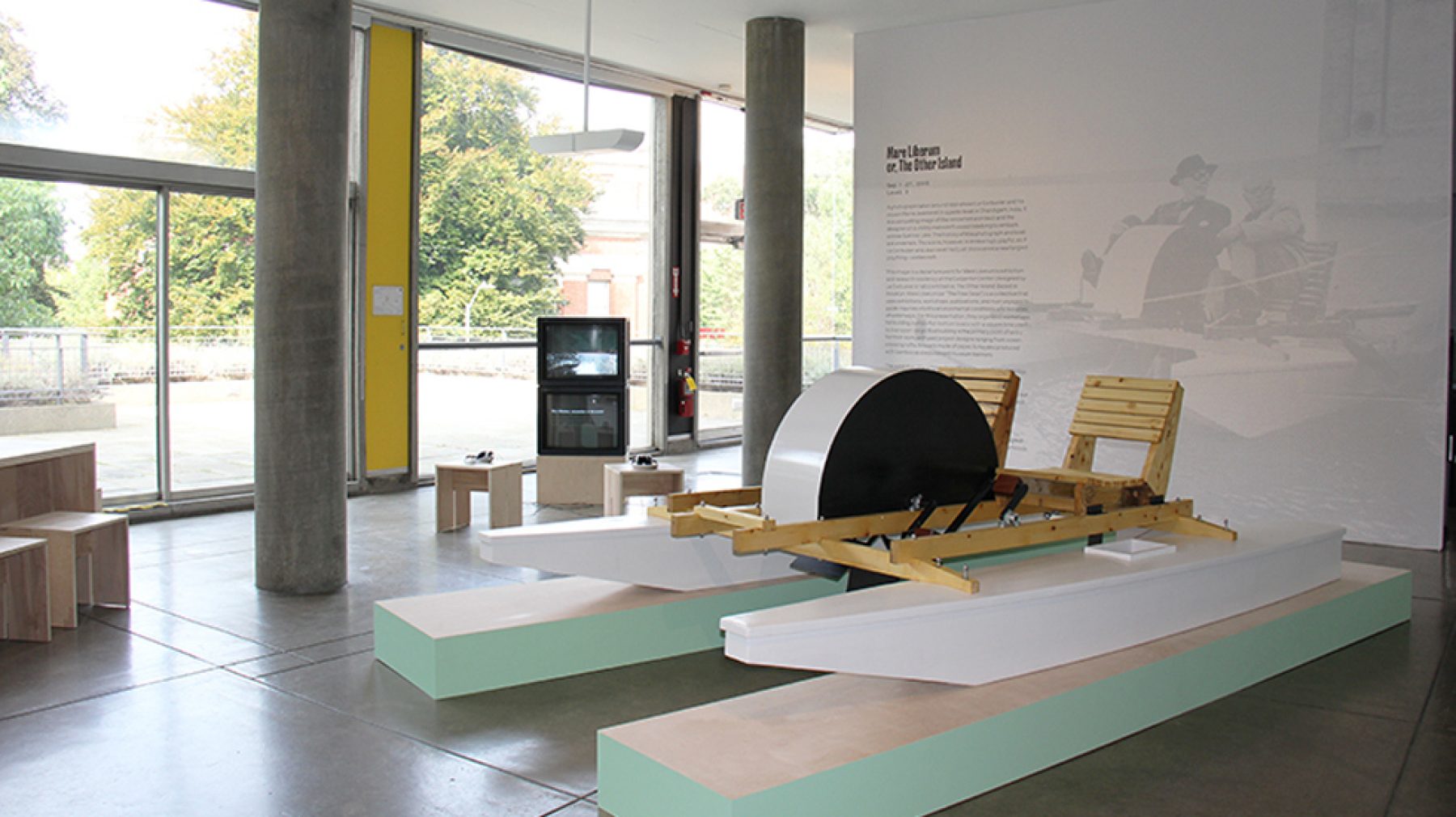
Installation view, Mare Liberum, view of Pedalo (Jeanneret), 2015. Carpenter Center for the Visual Arts, Harvard University. Sep 1-27, 2015.
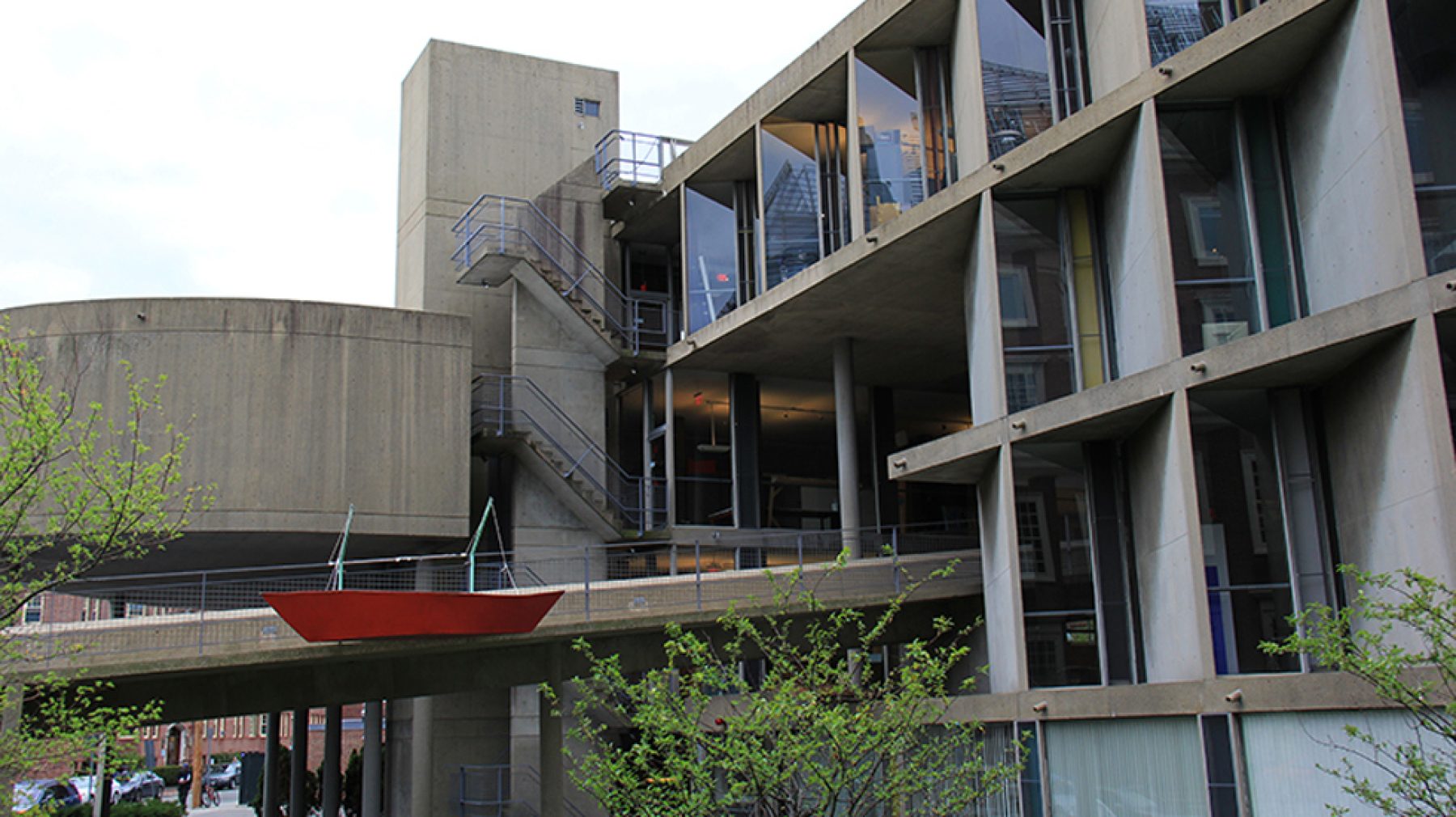
Installation view, Mare Liberum, Dory (Elizabeth Rush), 2012. Carpenter Center for the Visual Arts, Harvard University. Sep 1-27, 2015.
May 1–May 28, 2015
VES 2015 Senior Thesis: the distribution of parts
the distribution of parts is the title students of the 2015 Senior Thesis crafted for their group exhibition. The title is fitting, particularly at a moment when ideas, images, news, and materials are gathered and experienced from infinite sources, including social media, advertising, online content, consumer culture, and lived reality—all interpreted and redistributed through some of the same communication channels. Hybridity, as the title implies, is an integrated factor of contemporary life.
The exhibition featured works by Ashleigh Cote, Christina M. Rodriguez, Ethan Pierce, Julian Avery Leonard, Monica Palos, Qianyun (Helen) Shi, Sam Rashba, Selena Kim, and Tiana Abdulmassih
Selena Kim, VII (Memory, Fantasy, and Somewhere in Between), 2015. Mixed media, dimensions variable
Monica Palos, Fragments, 2015
April 8–April 19, 2015
Robert Gerard Pietrusko: Six Microphones
Six Microphones is a piece composed entirely of audio feedback that explores the mutually-constitutive relationship between sound, space, and the body. Departing from the simplest and most legible diagram of audio feedback—a microphone pointed at a loudspeaker—Six Microphones transforms the gallery from a space in which sound simply propagates, to the medium required to bring sound into being; it becomes the interior of a complex oscillator whose sonic textures are dependent on the gallery's geometry and materiality. Additionally, the location of listeners in the space subtly alters this interior; thus, being present to listen shapes the timbres to be heard.
While not site-specific, Six Microphones was fully site-determined. All tones and modulations produced during its performance emerge from the space itself and are dependent on the interaction of three elements: (1) the composition as it unfolds in time, implemented as a changing combination of microphone amplitudes (2) the particular geometry and materiality of the space in which it is sited, and (3) the physical presence of listeners within this space. Though the structure of the composition remains the same from one performance to the next, the resultant piece is contingent on the complex interaction of these three elements and cannot be anticipated beforehand.
The Interstitial
Robert Gerard Pietrusko: Six Microphones was part of The Interstitial, a then new CCVA program that took advantage of the time and physical space between exhibitions. The Interstitial hosted performances, installations and other time-based events that transpired over the course of an evening or several days.
(image source for permissions https://www.design.upenn.edu/post/pietrusko-brings-his-immersive-intermedia-experiments-venice // https://www.warning-office.org/wo-six-microphones )
Robert Gerard Pietrusko, "Six Microphones," 2015 version. Shown as part of an exhibit at the Carpenter Center for Visual Arts, Le Corbusier's only built work in North America. (Jeff P. Elstone)
Robert Gerard Pietrusko, "Six Microphones," 2015 version. Shown as part of an exhibit at the Carpenter Center for Visual Arts, Le Corbusier's only built work in North America. (Jeff P. Elstone)
March 4–April 19, 2015
ALBUM
Created entirely from found images, ALBUM was a compilation of the first ten issues of the Scandinavian zine of the same name created by Norwegian artists Eline Mugaas and Elise Storsveen.
Since 2008, Storsveen and Mugaas have been sifting through printed material found in Scandinavian households from the 1960s through the 1980s then combining the visual matter into a fanzine, or limited edition, saddle-stich publication. Photographs and illustrations printed in a range of media from cookbooks, travel journals and etiquette manuals to fashion magazines, sexual manuals, and gardening and science journals are taken from original sources, juxtaposed, and reproduced in the ongoing zine. The publications are free of text. Each issue of ALBUM was dedicated to particular themes such as the lonely man, femininity, architecture, family, outer space, and nature. Here, consumerism, popular culture and domesticity seamlessly converge, reinforcing the fluidity and exchange among everyday life and onslaught of advertising and news media images.
The Display Case exhibition presented a selection of original collages by Storsveen and Mugaas along with pages from ALBUM. James Hoff and Miriam Katzeff of Primary Information in collaboration with Teknisk Industri published ALBUM.
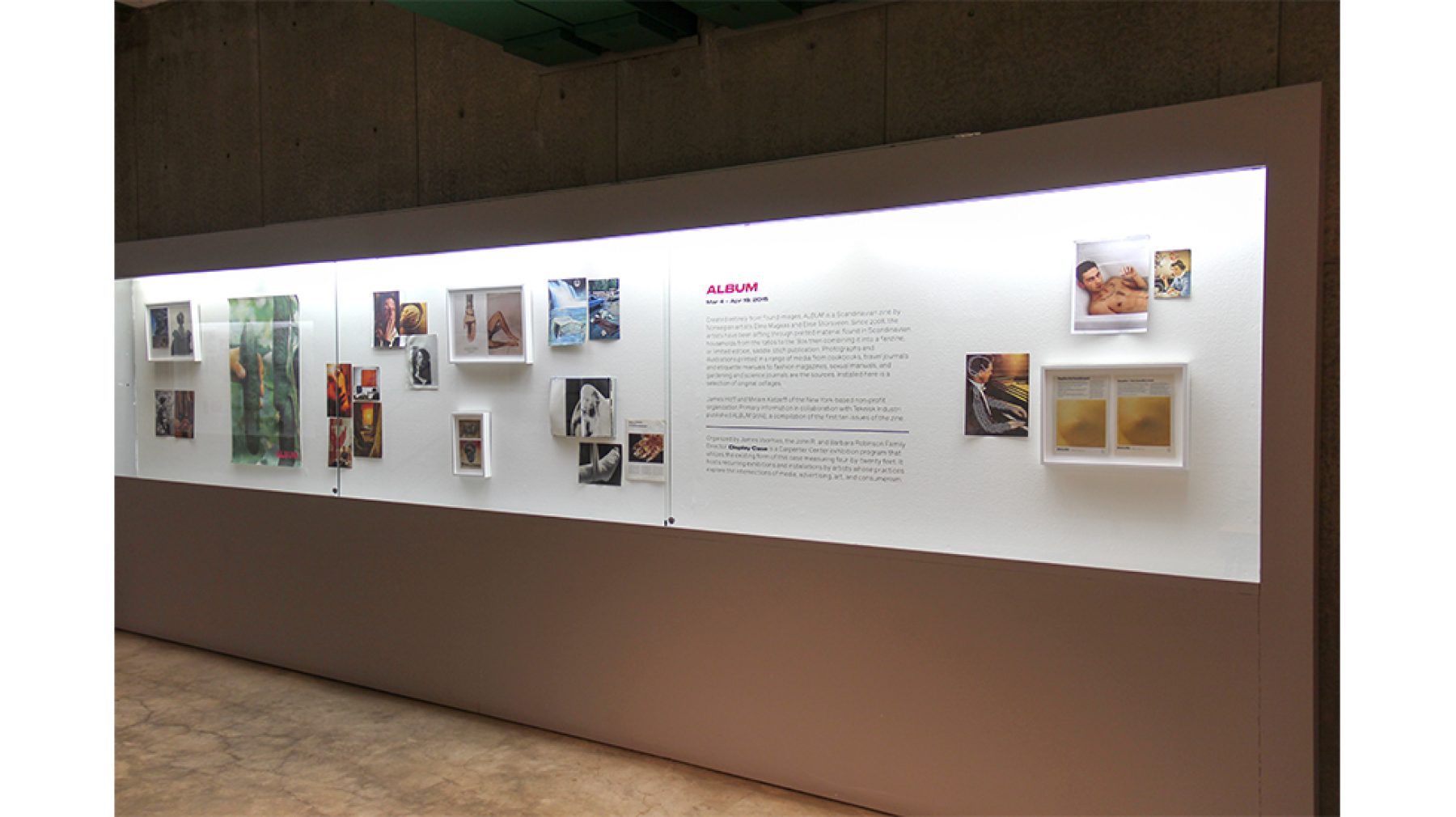
Installation view, ALBUM, Carpenter Center for the Visual Arts, Level 0, Display Case. On view Mar 4–Apr 19, 2015
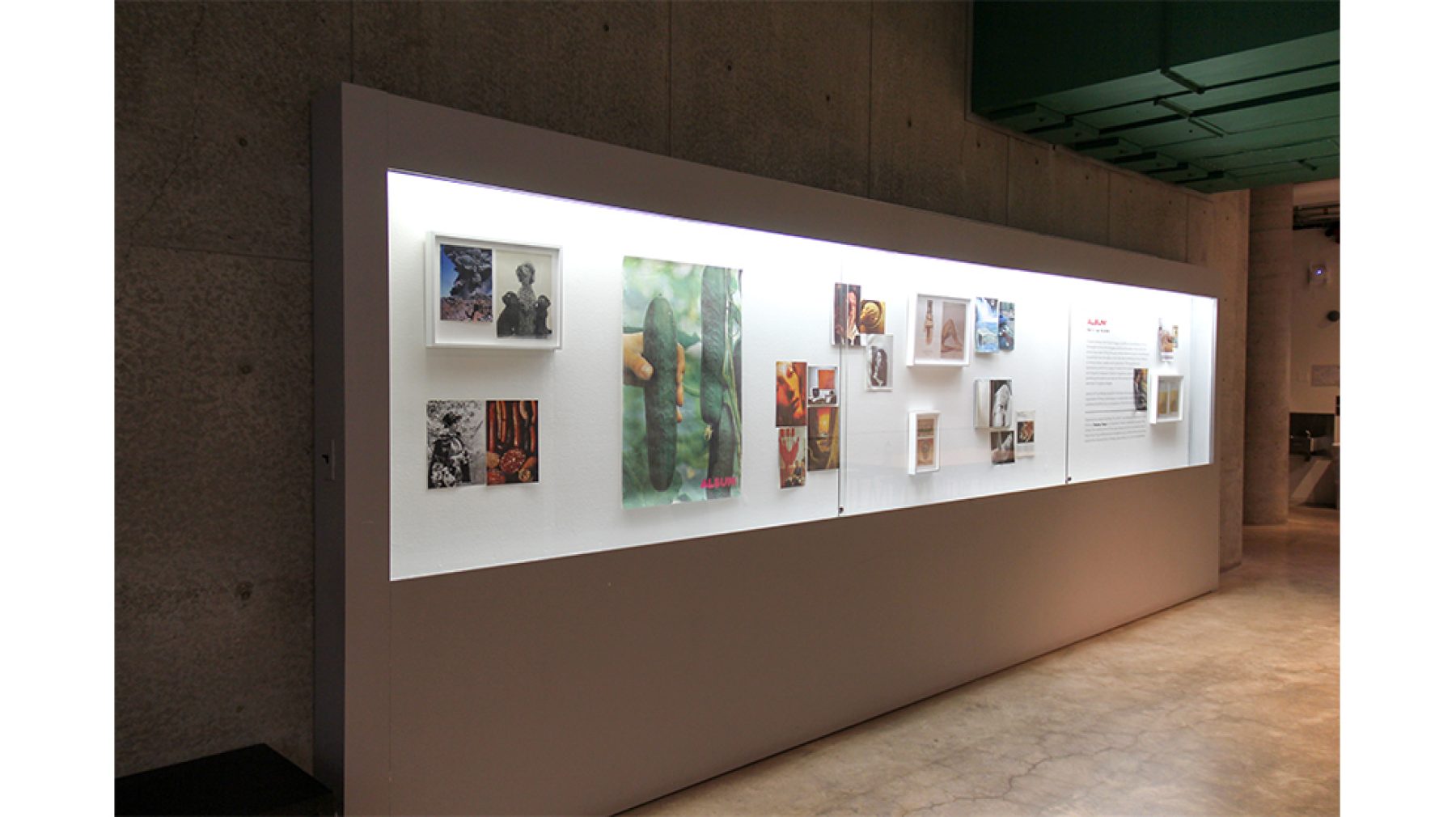
Installation view, ALBUM, Carpenter Center for the Visual Arts, Level 0, Display Case. On view Mar 4–Apr 19, 2015
February 5–April 5, 2015
The Way We Live Now, Modernist Ideologies at Work
The Way We Live Now presented the work of 13 artists examining the interplay between modernist architecture and contemporary art through site-specific installations and existing works. These interfere with or rub against the site of exhibition, Le Corbusier’s majestic 1963 Carpenter Center building, and in some cases stand in direct dialogue with the legacy of high modernists Mies van der Rohe, Le Corbusier, Eileen Gray, Bruno Taut, Anne Tyng, Adolf Loos, and Lilly Reich. Works in the exhibition look at the aspirations of such figures and the modernist ethos in general, alongside the challenging visions and experimentations in architecture, art, and design that radically transformed the way we experience the built environment. The exhibition directs our attention to these modernists while critically engaging with the perceptual, social, and political implications of their ideologies on the future—in fact, on us—and the way we live now.
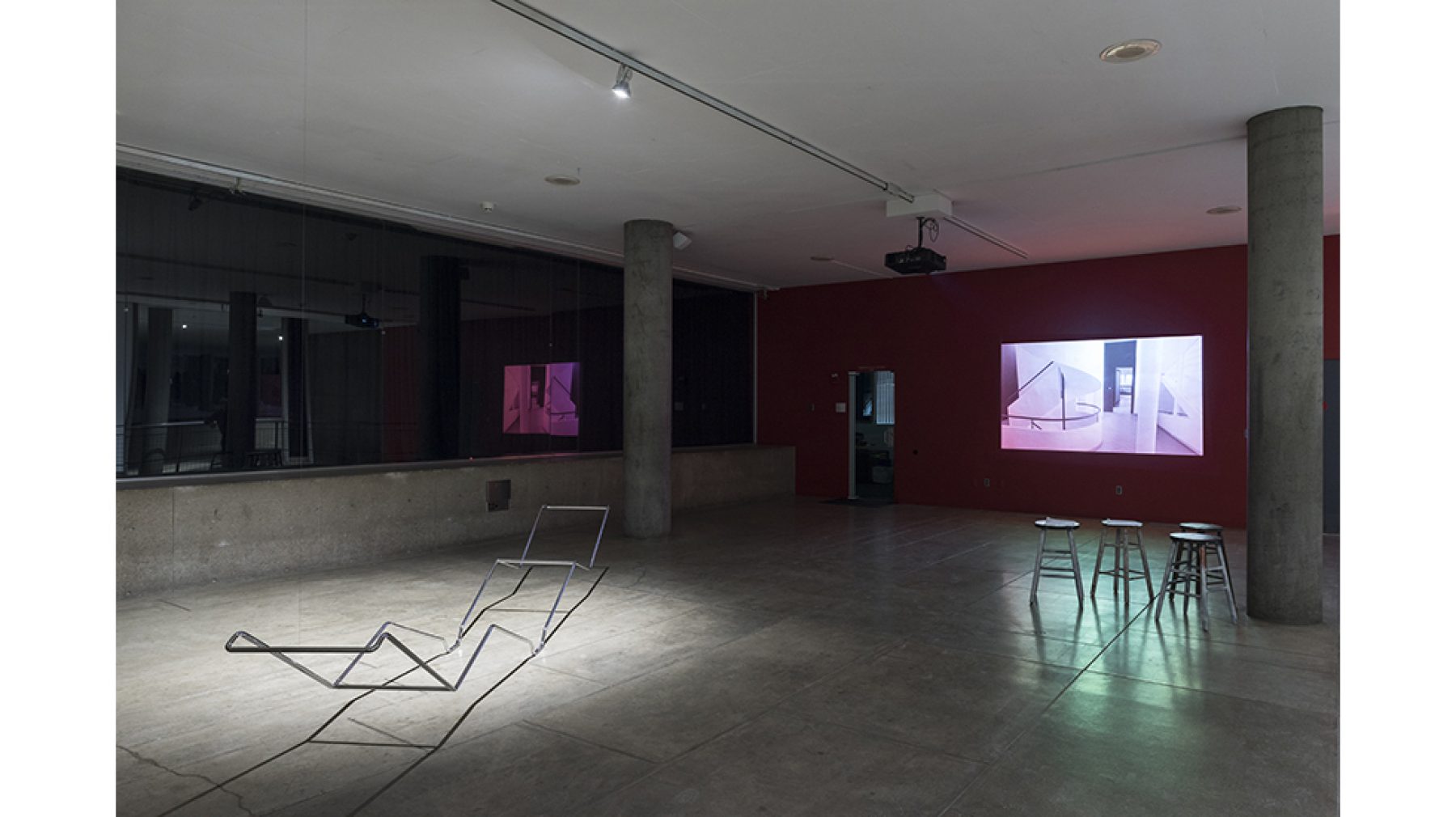
Installation view with works by Ulla von Brandenburg and Fernanda Fragateiro
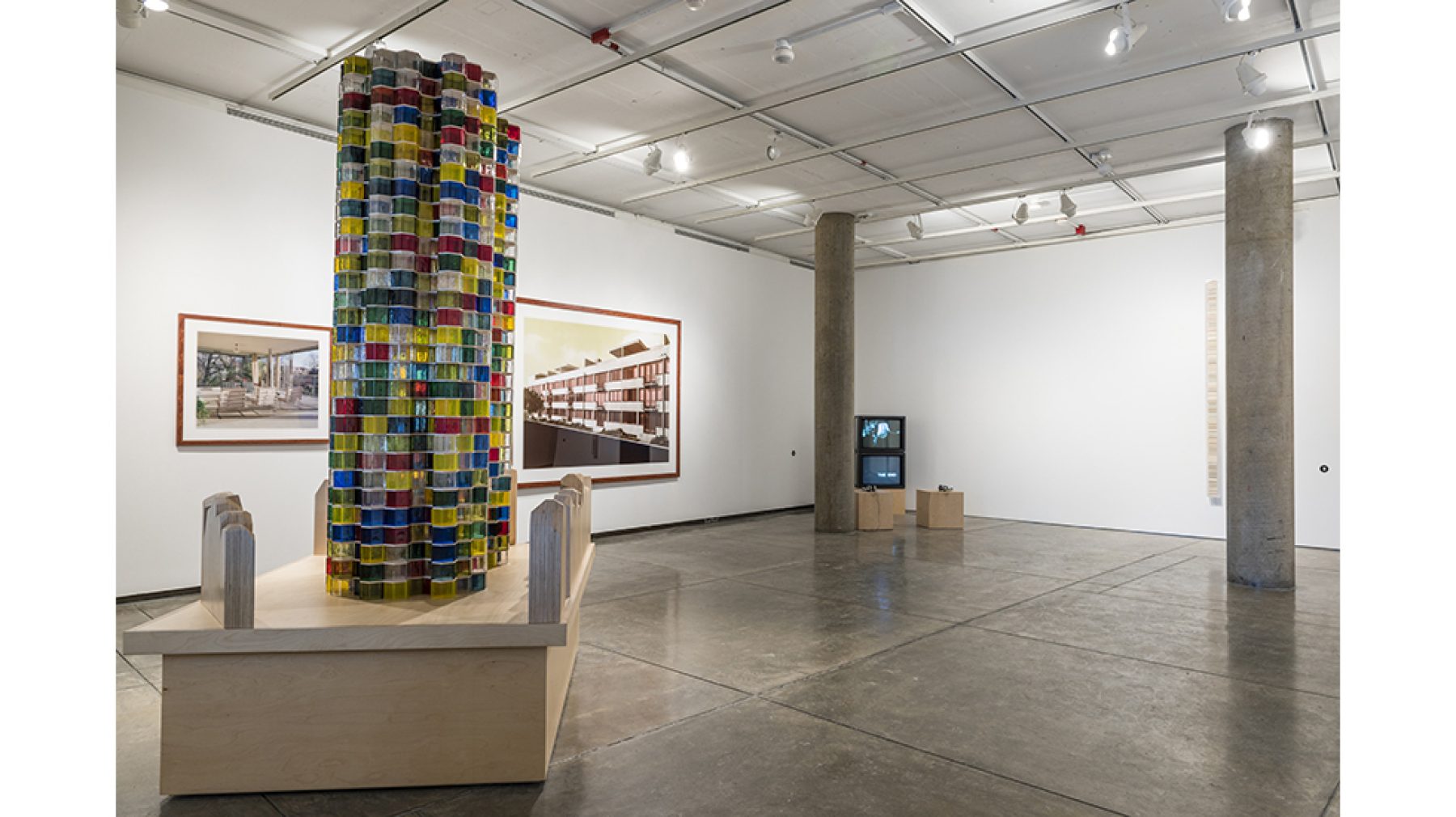
Installation view with works by Josiah McElheny, Thomas Ruff, SUPERSTUDIO and Fernanda Fragateiro
January 26–February 1, 2015
Luther Price: Light Windows
As a filmmaker, Luther Price salvages film footage from discarded prints of old documentaries, Hollywood classics, home movies, how-to reels, and pornography to cut, alter, and reassemble into handmade films. His process often involves physically and chemically manipulating the filmstrip surface by painting, burying, applying ink, or effacing it with scratches and scrapes. The resulting films are completely unique objects, and when combined with light the projections become highly charged visual imagery, transforming 8 mm, 16 mm, and 35 mm found film into unforgettable cinematic experiences.
The exhibition Light Windows consisted of six 35 mm slide projectors, each with a carousel of 80 handmade slides from his ongoing series Light Fractures projected onto vertical panels installed throughout the gallery on Level 1. The multiscreen visual and aural kaleidoscopic installation transforms the site into an expanded cinematic space where spectators are immersed among projectors responsible for both the illuminated images and the whirring soundscape of simultaneously rotating trays.
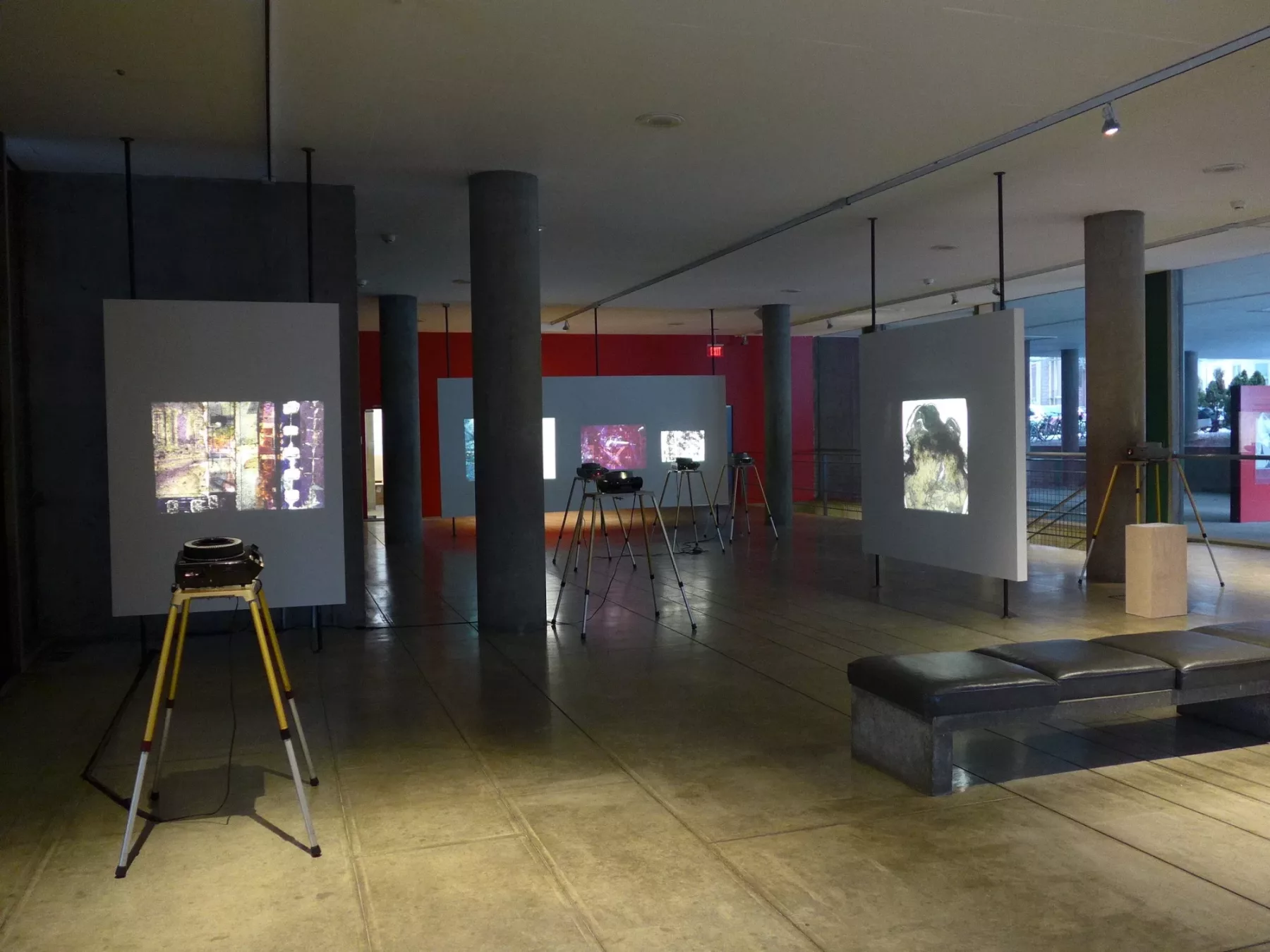
Luther Price, Light Windows, interstitial presentation, January 26–February 1, 2015
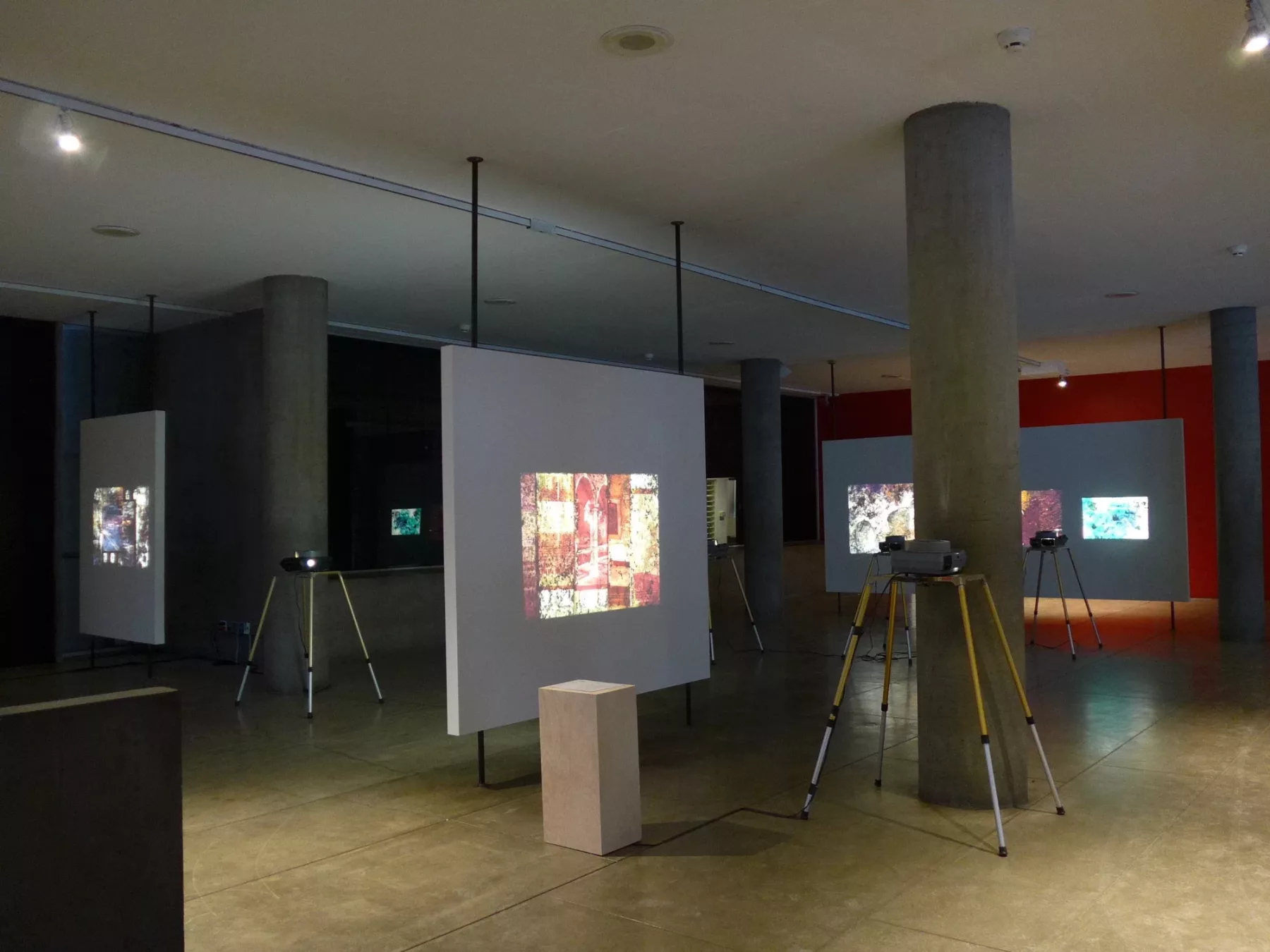
Luther Price, Light Windows, interstitial presentation, January 26–February 1, 2015
January 6–March 1, 2015
Eve Fowler: A Spectacle and Nothing Strange
Hosted in the Level 0 Display Case, A Spectacle and Nothing Strange (2011–) is a series of letterpress posters with fragments of text culled from Gertrude Stein’s Tender Buttons (1914) and How to Write (1931). Fowler’s works were printed by the now-defunct Colby Poster Printing Company, a Los Angeles business that for more than sixty years made commercial posters advertising anything from music, wrestling and sporting events to carnivals, cheap car loans and hair care products. Fowler provided specific instructions to the printers to apply their seemingly endless combinations of colors and typographies to the posters. She then distributed them throughout the Los Angeles area, re-inserting the recognizable visual and graphics forms into the urban landscape of Los Angeles with a language not immediately discernable.
While the colorful gradients and various typefaces of A Spectacle and Nothing Strange resonates with existing forms of advertising, the phrases such as “Very different but much more,” “Rub her coke,” and “Anyone telling anything is telling that thing,” make strange the associations of these advertising graphics. Fowler’s posters disrupt the expectations of everyday informational spaces, queering the experience of both language and public space.
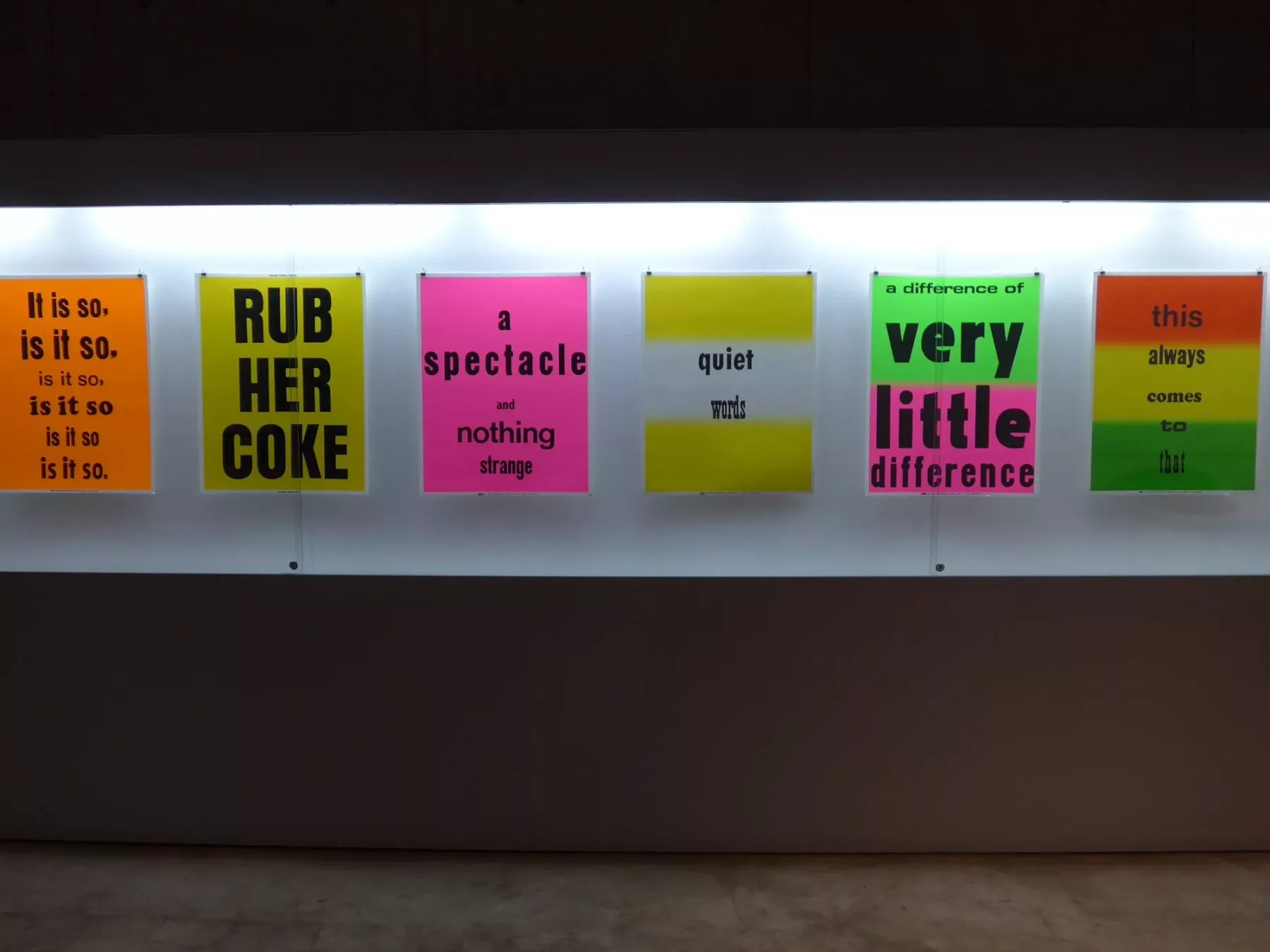
Eve Fowler, a spectacle and nothing strange, 2011–12. Series of screen print posters, 28 x 22 in. Display Case presentation, January 6–March 1, 2015
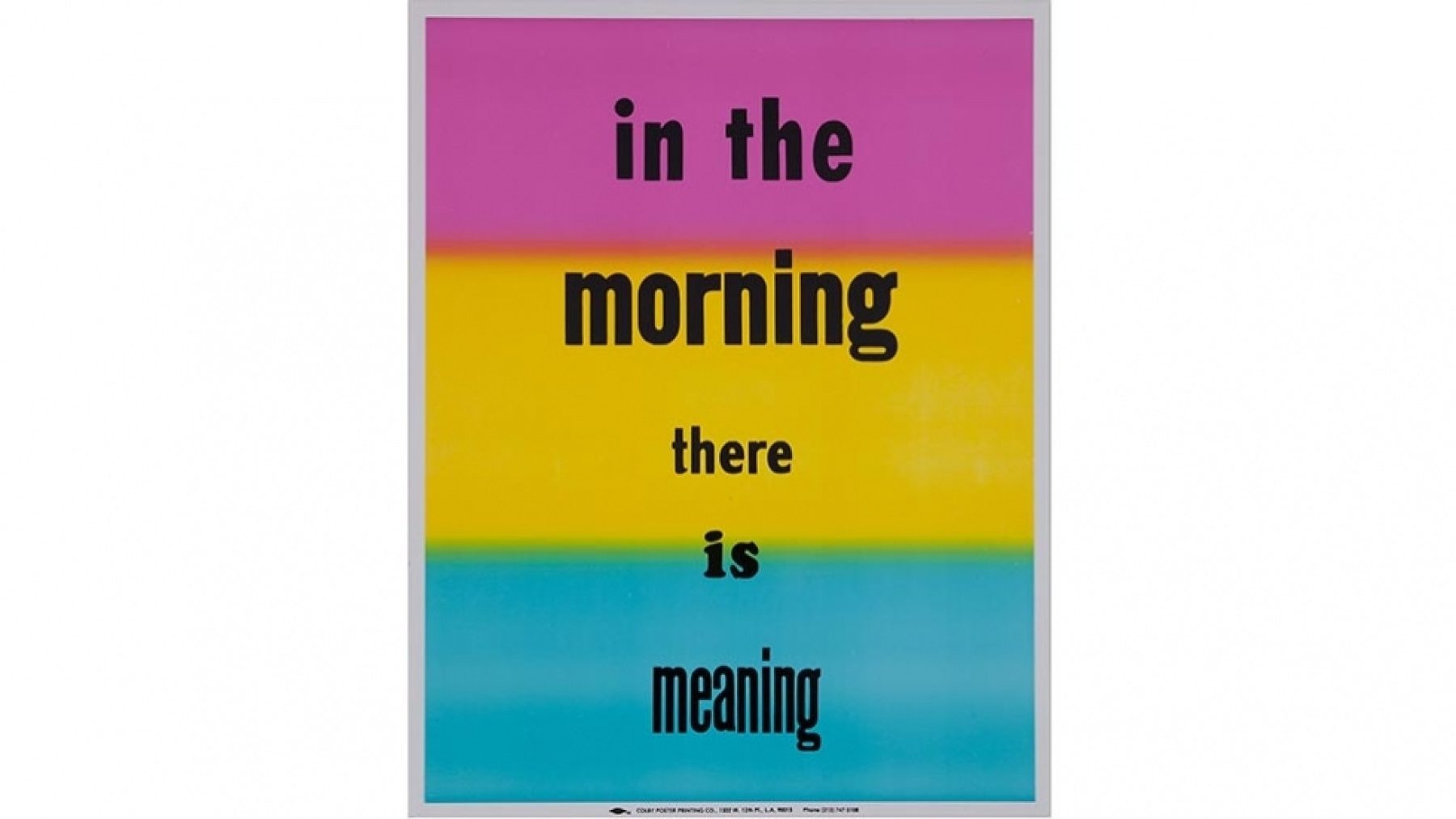
Eve Fowler, A Spectacle and Nothing Strange (2011–). Set of twenty one letterpress posters. 28 × 22 in.
2014 - 2016
October 23, 2014–October 31, 2016
Martin Beck: Program
Program by Martin Beck manifested through a sequence of interventions, installations, events, and publications that draw upon the exhibition histories and academic pursuits of the Carpenter Center for the Visual Arts and Department of Visual and Environmental Studies at Harvard University. This sequence—each node of which Beck considers an episode—lends particular attention to the founding program of the Carpenter Center, which sought to cultivate its position as simultaneously an iconic modernist building, school, and exhibition venue. In the early years of the program, exhibitions, public discussions, and screenings, ambitious in scope and depth, were regarded as integral to the pedagogical concept of a visual arts education. The Carpenter Center, in its entirety, performed an exhibition of education; a performance that occurred in both its educative framework and its public outreach. Beck’s work, Program, to unfold over the next two years, pulls this history into the present, reflecting the institution’s aspirations back onto itself.
Episode 1: Removed and Applied consisted of the removal of existing sheet-metal cladding from the exterior walls of an art gallery designed in 2000 by Peter Rose + Partners and inserted into the existing Le Corbusier gallery on Level 3. Beck orchestrated removal of the cladding and instructed that gypsum board is adhered to the exposed surface, primed, sanded and painted with White Dove 275 paint.
Martin Beck: Program, Episode 1: Removed and Applied, October 2014, installation in process
Martin Beck: Program, Episode 1: Removed and Applied, October 2014, installation in process
2000s
During the 2000s, the Carpenter Center for the Visual Arts continued to develop its exhibition programming, presenting a range of contemporary art exhibitions alongside faculty and student work. In 2000, an interior box gallery was introduced within the Sert Gallery, creating a new exhibition space that would shape future installations and curatorial approaches.
Throughout the decade, the Carpenter Center explored a variety of artistic practices and exhibition formats, reflecting new directions in contemporary art.
The following selection of exhibitions offers a glimpse into the Center’s programming and curatorial history during the 2000s.
2009
October 15–December 23
ACT UP New York: Activism, Art, and the AIDS Crisis, 1987-1993
The Carpenter Center for the Visual Arts and the Harvard Art Museums presented ACT UP New York: Activism, Art, and the AIDS Crisis, 1987–1993, an exhibition of over 70 politically-charged posters, stickers, and other visual media that emerged during a pivotal moment of AIDS activism in New York City. The exhibition chronicled New York’s AIDS Coalition to Unleash Power (ACT UP) through an examination of compelling graphics created by various artist collectives that populated the group. The exhibition also featured the premiere of the ACT UP Oral History Project, a suite of over 100 video interviews with surviving members of ACT UP New York that offer a retrospective portal on a decisive moment in the history of the gay rights movement, 20th-century visual art, our nation’s discussion of universal healthcare, and the continuing HIV/AIDS epidemic. The exhibition opened just over 20 years after the formation of ACT UP and also marked the 40 year anniversary of the Stonewall riots, the defining event that marked the start of the gay rights movement in the United States. The exhibition ACT UP New York: Activism, Art, and the AIDS Crisis, 1987–1993 provided an opportunity to reinvigorate a debate around the realities of HIV/AIDS today, and about the links between visual art, political activism, health, and human rights.
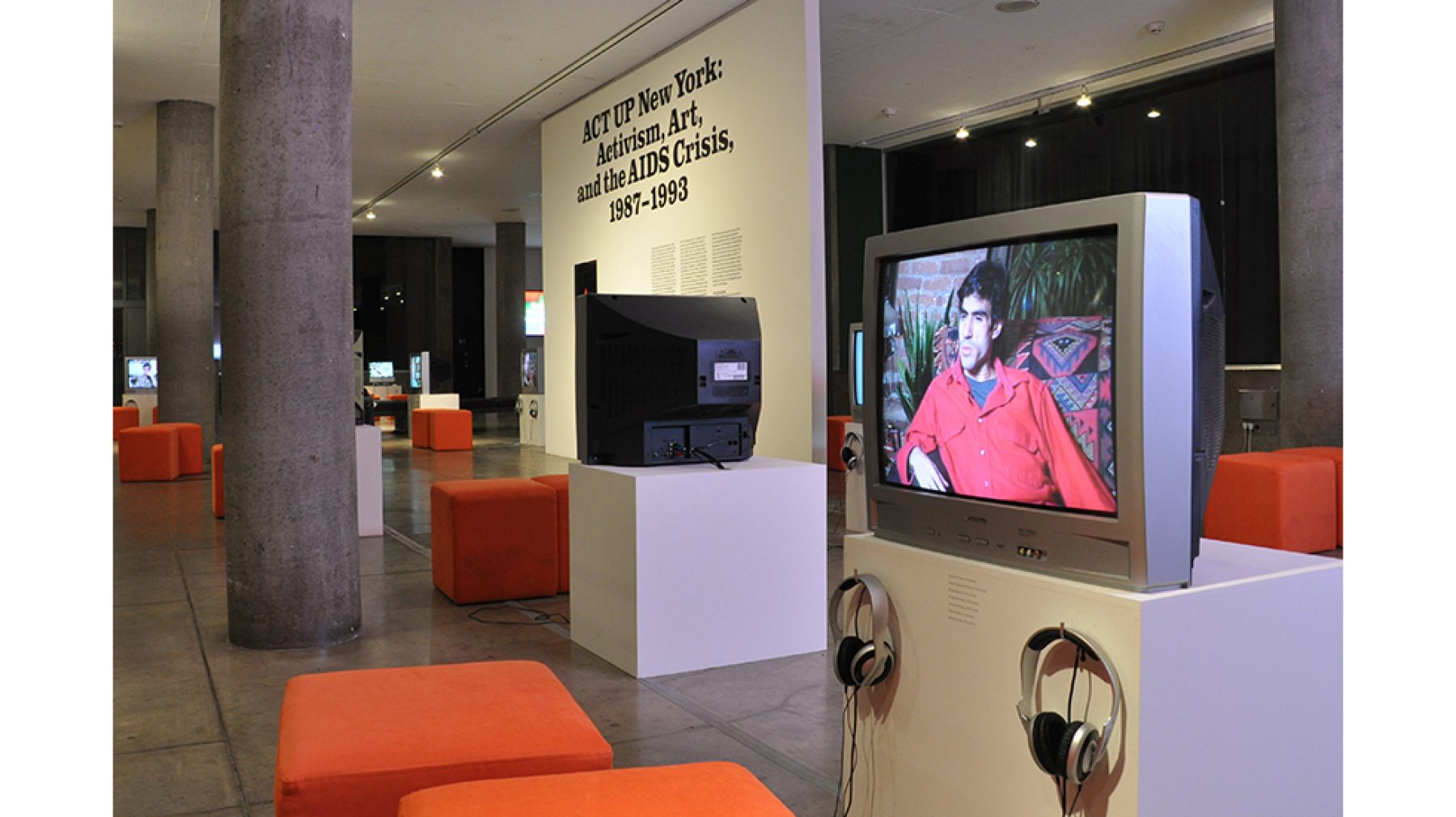
Installation view, ACT UP New York: Activism, Art, and the AIDS Crisis, 1987–1993, Carpenter Center for the Visual Arts, Harvard University. On view Oct 15–Dec 23, 2009.
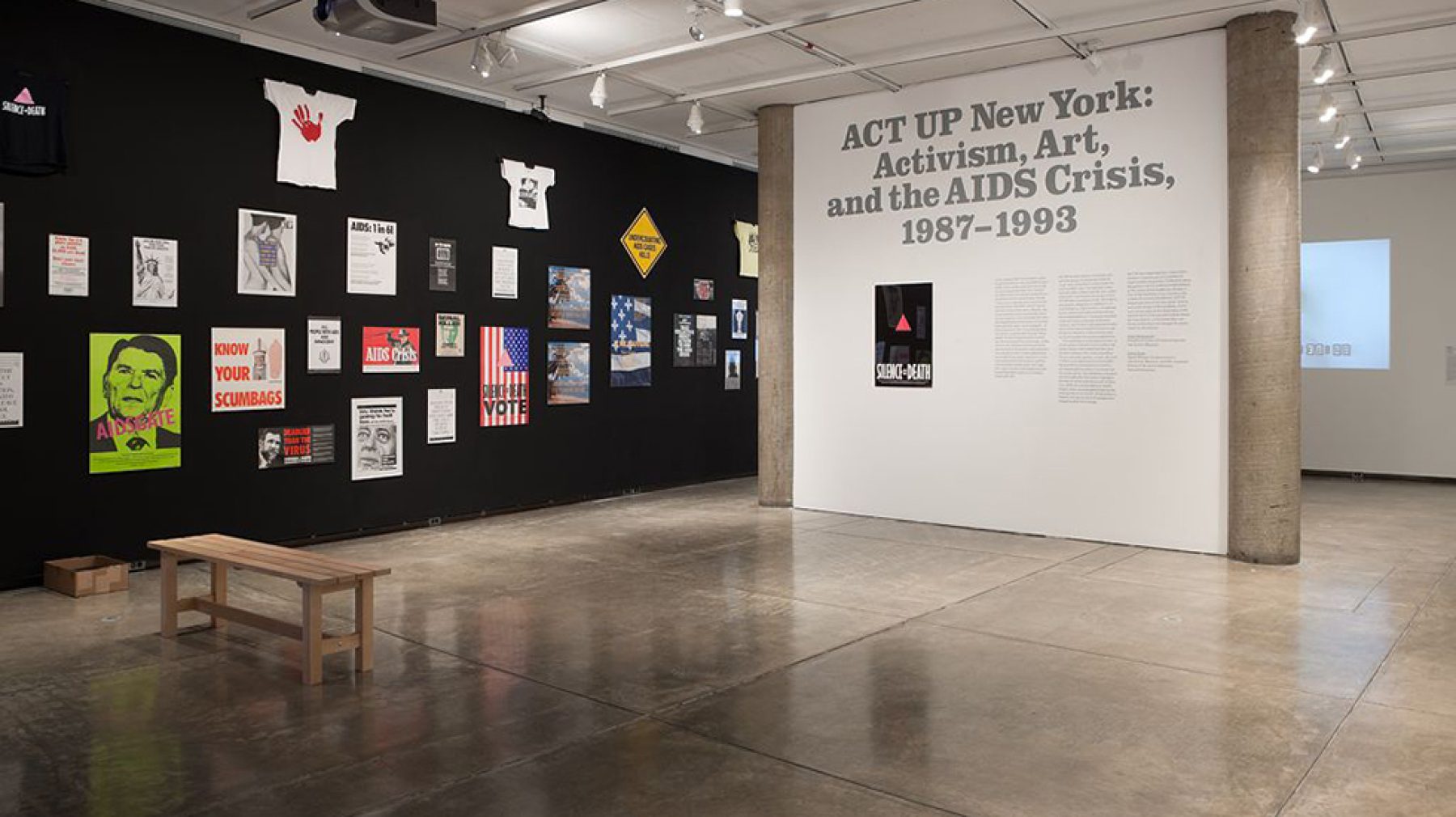
Installation view, ACT UP New York: Activism, Art, and the AIDS Crisis, 1987–1993, Carpenter Center for the Visual Arts, Harvard University. On view Oct 15–Dec 23, 2009.
February 19–April 5, 2009
William Pope L.: Corbu Pops
Commissioned for the Carpenter Center’s Level 1 gallery, Pope.L’s 2009 exhibition Corbu Pops consisted of an installation of eponymous sculptures accompanied by drawings and assemblages, as well as a video documenting a performance staged at the exhibition’s opening that included the artist alongside twelve student performers.
When creating his commission Corbu Pops (2009) for the Carpenter Center’s level 1 space, Pope.L referred to the building as a “confusing machine,” one that “manufactures disorientation in the form of a dark, viscous liquid. Unlike a washing machine, this machine creates opacity.” The site-specific project consisted of an elevated stage with head holes for actors, hand-crafted masks, a video documenting Dada-inspired performance rehearsals, photocopies of modernist architectural critique, cast scale models of the Carpenter Center mounted on sticks like large popsicles, a glass of water, sound, and drawings made of stationary. The video element of the installation entitled Modernism, Race, and Mr. C fuses narration on the formation of the project, art historical debates about modernism’s indebtedness to African visual culture, an interview with Sheldon Cheek from the Image of the Black Archive and Library at Harvard University, and an amalgam of other archival materials.
Video of the performance, and various installation elements of this pivotal work were restaged in 2023 on the occasion of the Carpenter Center's 60th anniversary for the exhibition, This Machine Creates Opacities. With its title borrowed from statements the artist Pope.L made about navigating the Carpenter Center building upon an invitation to make a new commission in 2009.
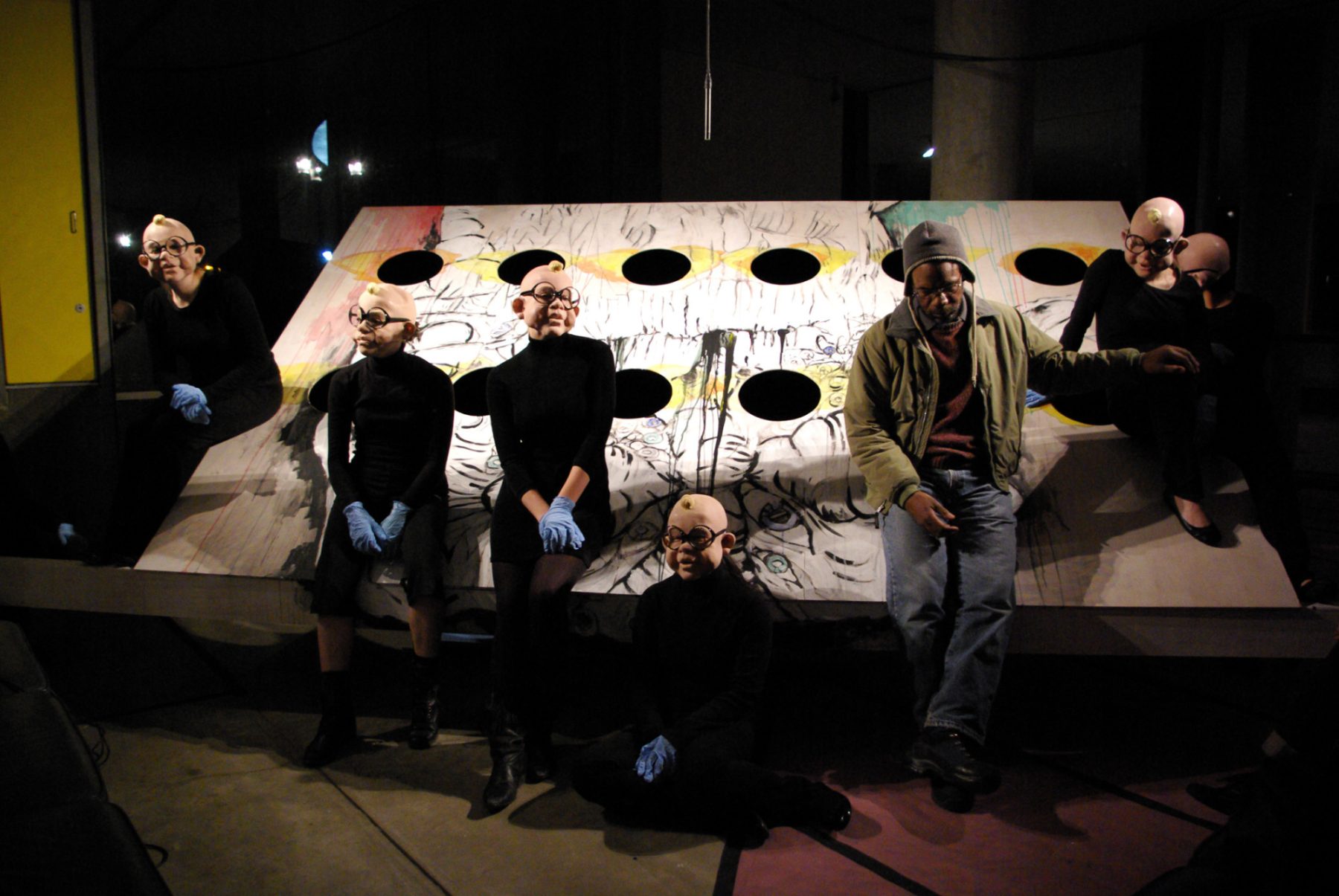
William Pope L., Corbu Pops, 2009. Courtesy of the Carpenter Center for the Visual Arts and William Pope L. Photo by Shiloh Cinquemani.
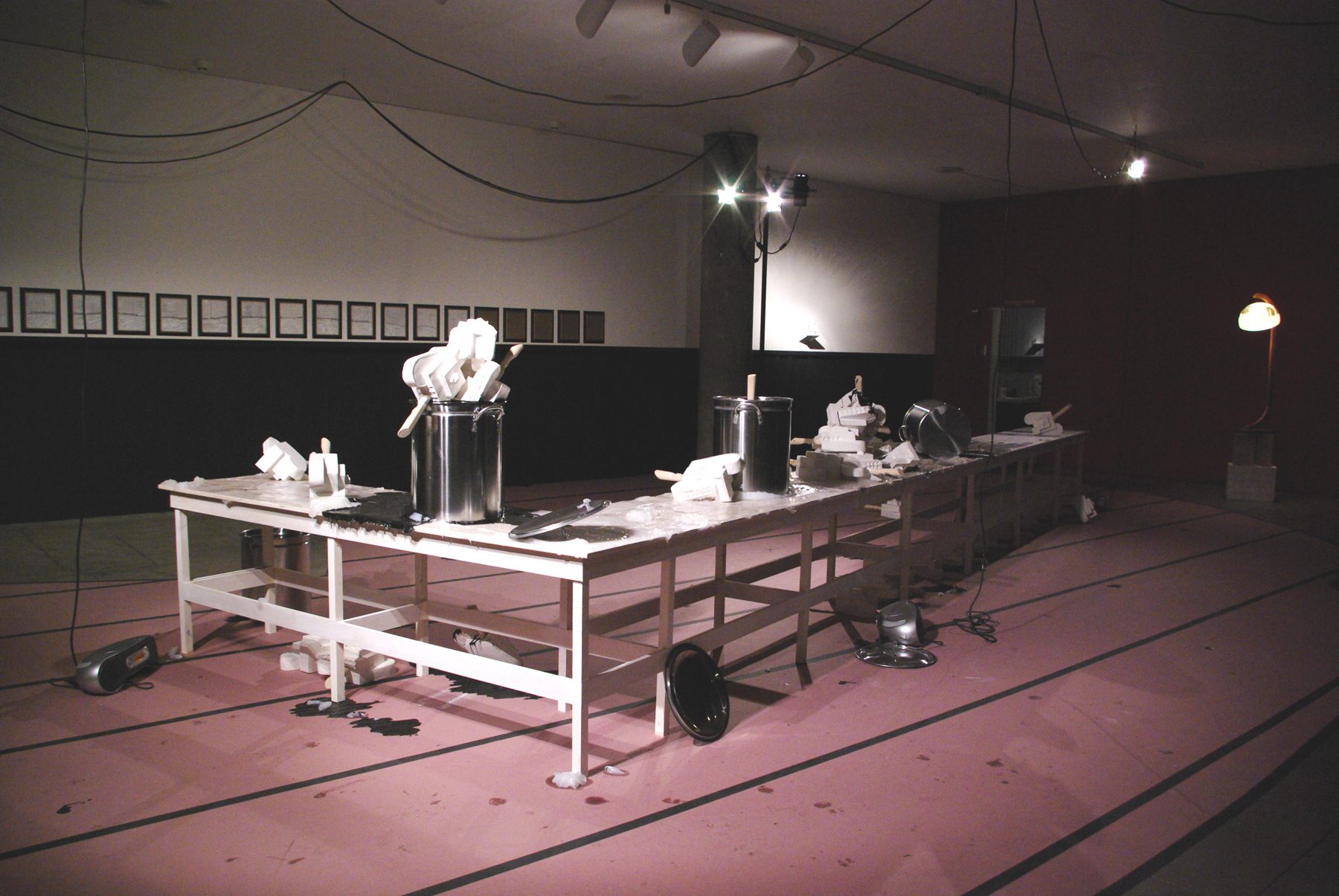
William Pope L., Corbu Pops, 2009. Courtesy of the Carpenter Center for the Visual Arts and William Pope L. Photo by Shiloh Cinquemani.
November 6, 2008–January 4, 2009
Paul Chan: Three Easy Pieces
The Carpenter Center for the Visual Arts at Harvard University presented Paul Chan: Three Easy Pieces. This installation showcased two digital projections and a single-channel video piece.
Paul Chan’s work uses animation and video projection to probe historical concepts of utopia as well as interrogating the psychological ramifications of the so-called war on terror. In a May 2008 New York article, Kathy Hallbreich, the new associate director of MOMA, said, “[Chan’s] work is really about dissolution. Dissolution of faith, dissolution of the worlds we know. . . . He has figured out a way to make the perils of our time accessible.” From November 6, 2008–January 4, 2009, the Carpenter Center for the Visual Arts will show three of Chan’s pieces: Happiness (Finally) After 35,000 Years of Civilization—after Henry Darger and Charles Fourier; 5th Light; and Baghdad in No Particular Order. In conjunction with the exhibition, Chan will give a talk on his work on November 13 at 6:00 p.m.
Happiness (Finally) After 35,000 Years of Civilization (after Henry Darger and Charles Fourier) is an animated digital video projection on a sparkle vellum screen that conflates Charles Fourier’s utopian aspirations with Chicago-based outsider artist Henry Darger’s mythical Vivien Girls. The result is a simultaneously bawdy and lyrical work that exemplifies our struggles to create a fair, pleasurable and self-sustaining society. It speaks to Chan’s uncanny ability to intertwine the social and the aesthetic, offering both an escape from and a critique of our current conditions. Baghdad in No Particular Order similarly straddles the seeming divide between social and aesthetic as Chan turns his lens on the conflict between the current administration’s drive for war and the civilians of Iraq forced to live through it. Traveling to Iraq at the end of 2002 as a member of the Nobel Peace Prize-nominated group Voices in the Wilderness, Chan used footage from that trip to create Baghdad in No Particular Order. Rounding out the installation is 5th Light, a video projection in which silhouettes magically float upwards, in defiance of gravity, a somber and moving elegy to the losses—both human and material—of 9/11.
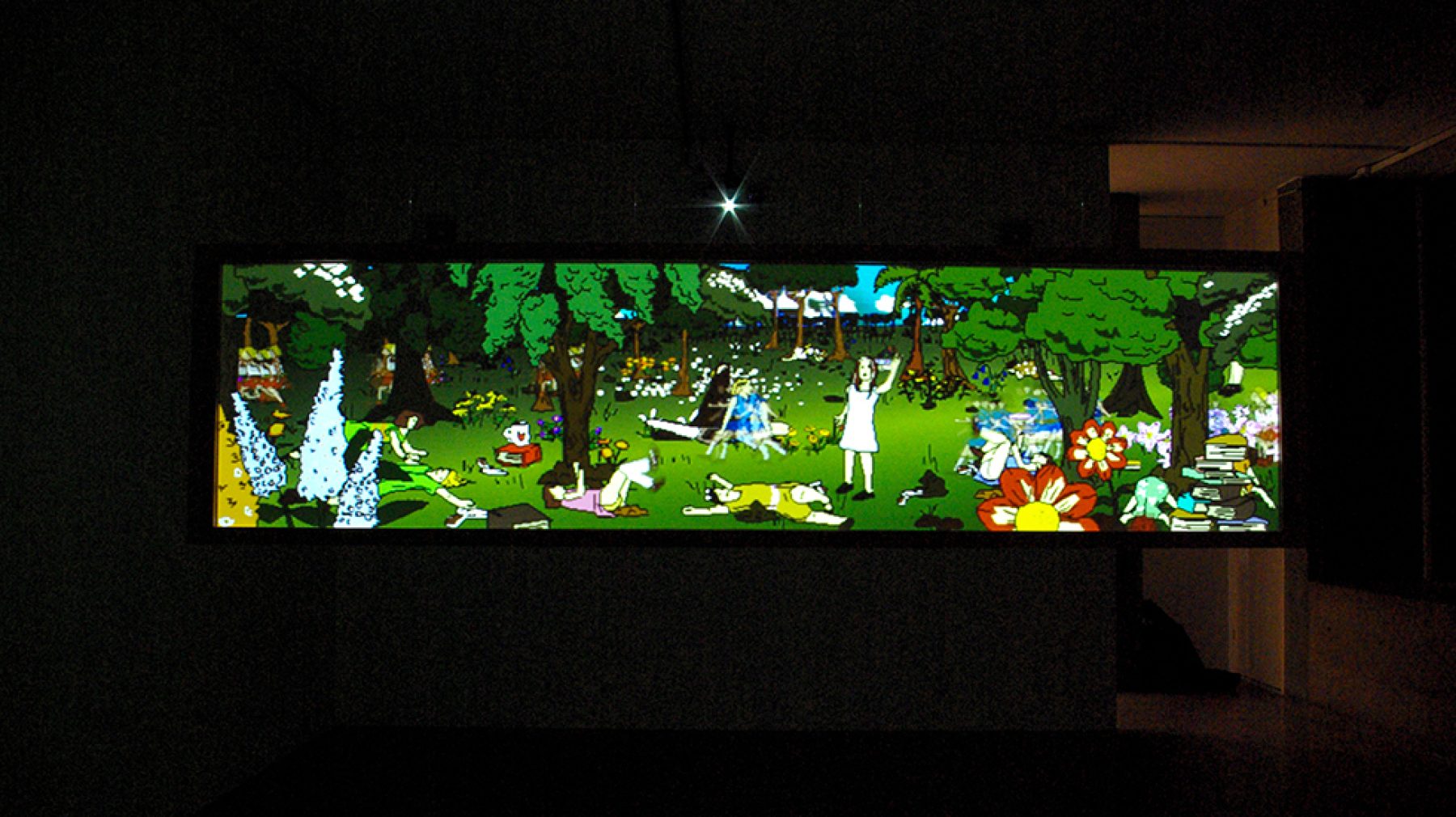
Installation view, Paul Chan: Three Easy Pieces, Carpeter Center for the Visual Arts, Harvard University, on view Nov 6, 2007–Jan 4, 2008. Image courtesy Carpenter Center for the Visual Arts, Harvard University and artist.
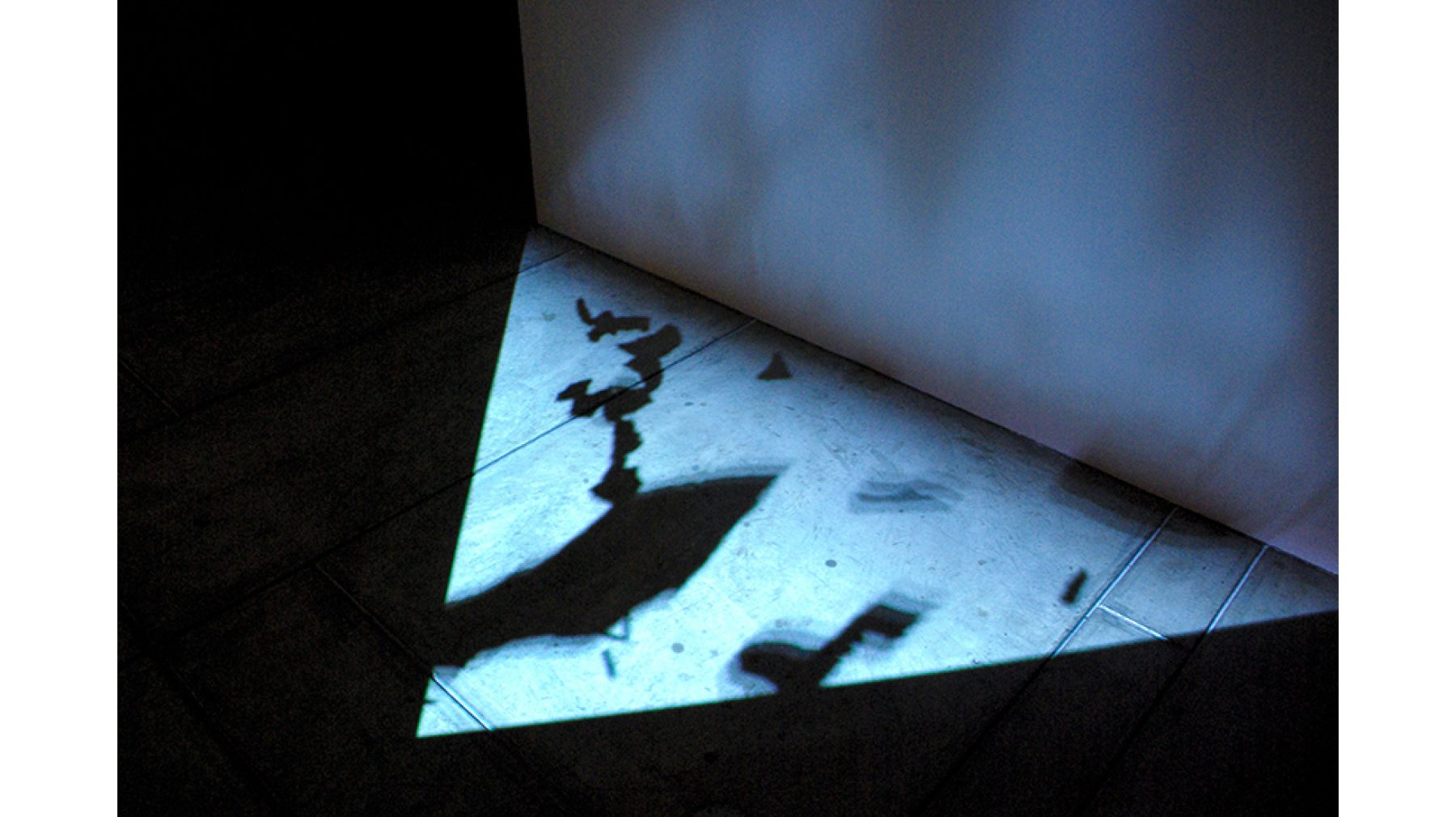
Installation view, Paul Chan: Three Easy Pieces, Carpeter Center for the Visual Arts, Harvard University, on view Nov 6, 2007–Jan 4, 2008. Image courtesy Carpenter Center for the Visual Arts, Harvard University and artist.
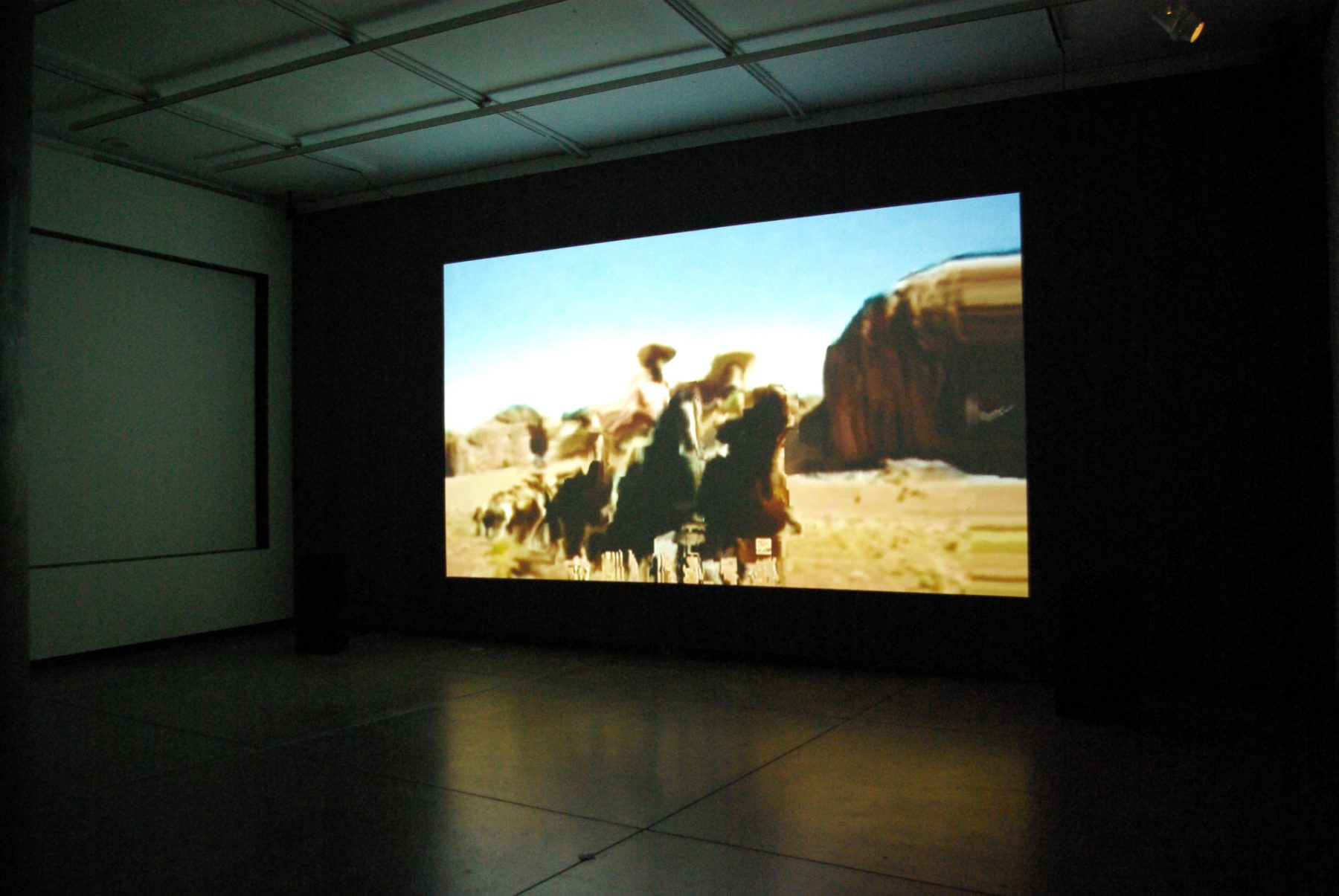
Photography by Shiloh Cinquemani
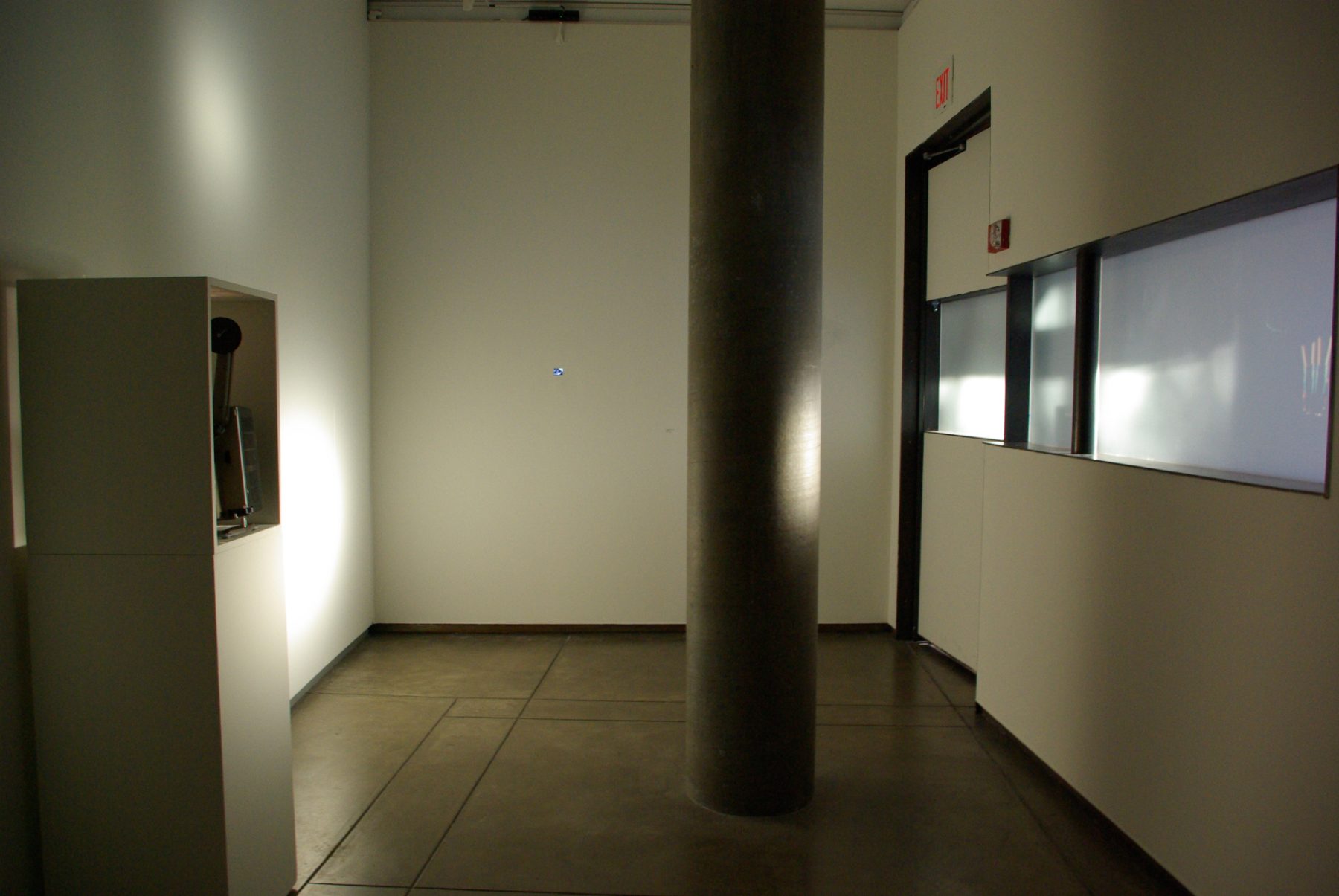
Photography by Shiloh Cinquemani
2007-2008
November 8, 2007–January 4, 2008
Feliz Gonzalez-Torres
The Carpenter Center for the Visual Arts has mounted one of Gonzalez-Torres's signature works. "Untitled (Placebo - Landscape - for Roni)" (1993) is a sumptuous carpet of hard candy spilling over the concrete floor, warming the modernist chill of the Le Corbusier building. Each candy is wrapped in gold cellophane, and visitors are invited to take a piece to eat.
Felix Gonzalez-Torres, Untitled (Placebo – Landscape – for Roni). Candies individually wrapped in gold cellophane, endless supply. Overall dimensions vary with installation. Ideal weight: 1200 pounds. © The Felix Gonzalez-Torres Foundation.
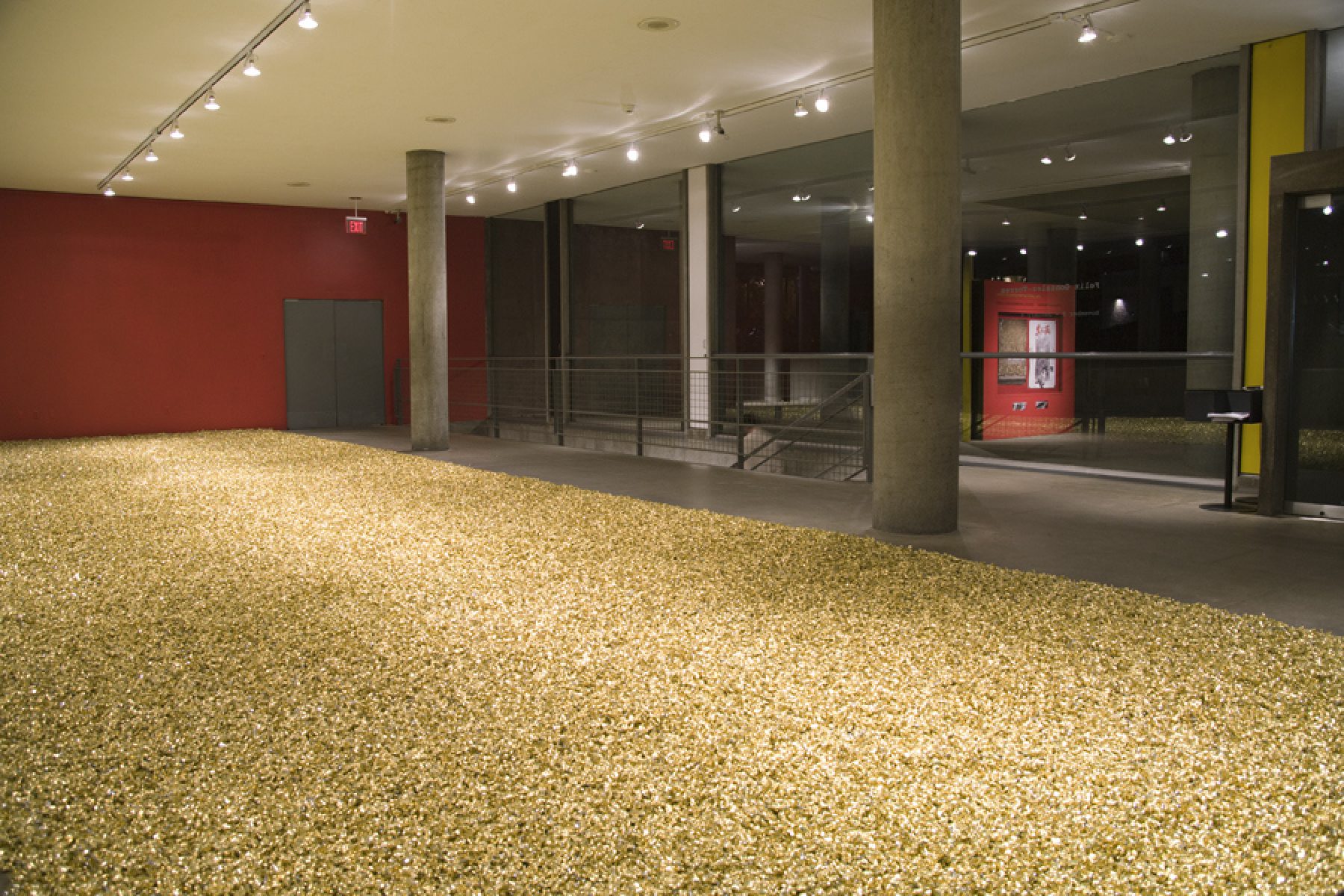
Installation view, Felix Gonzalez-Torres, Untitled (Placebo – Landscape – for Roni), Carpenter Center for the Visual Arts, November 8, 2007–January 4, 2008. Courtesy Carpenter Center for the Visual Arts and The Felix Gonzalez-Torres Foundation.
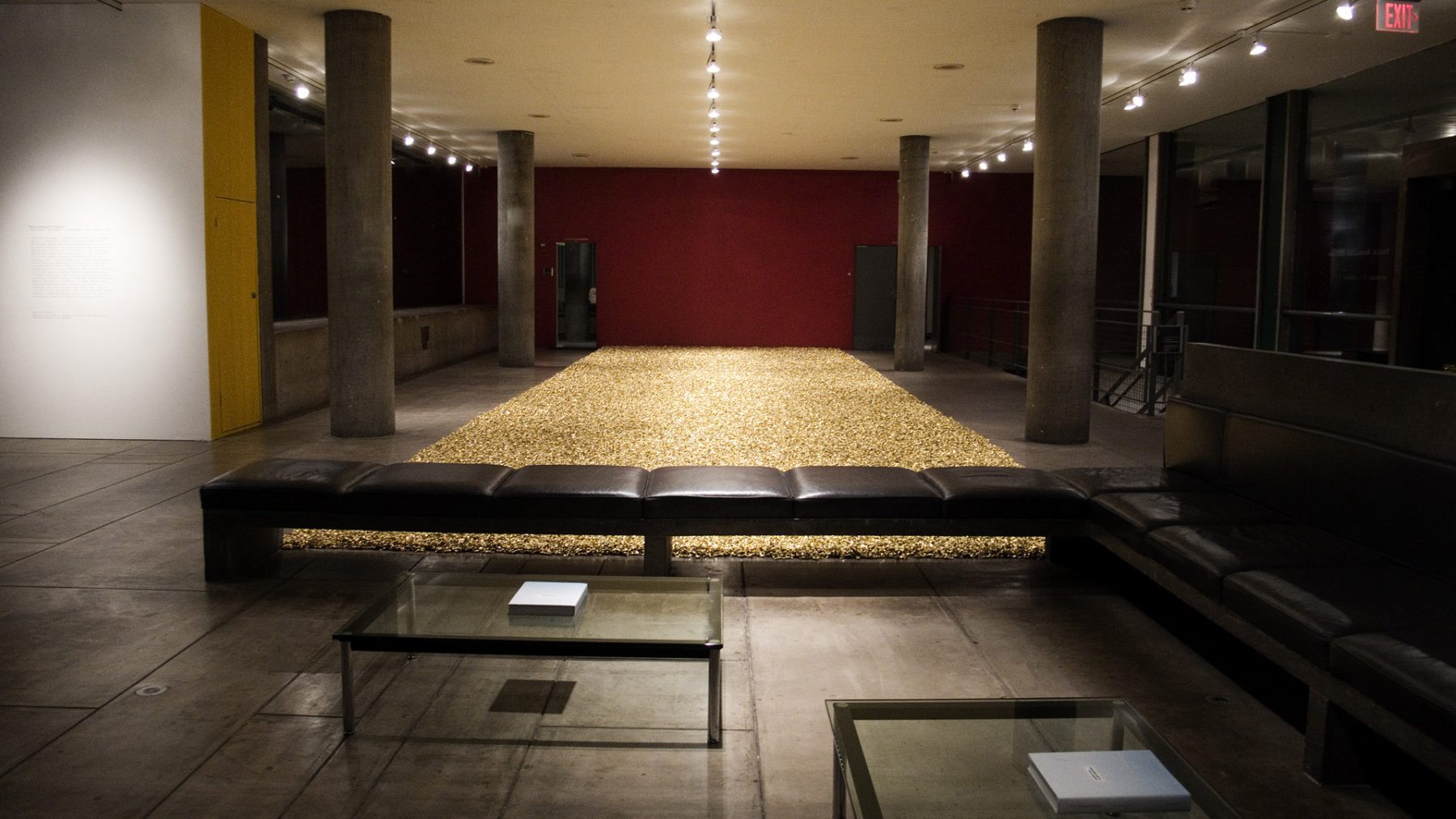
Installation view, Felix Gonzalez-Torres, Untitled (Placebo – Landscape – for Roni), Carpenter Center for the Visual Arts, November 8, 2007–January 4, 2008. Courtesy Carpenter Center for the Visual Arts and The Felix Gonzalez-Torres Foundation.
February 8–April 13, 2007
E-flux Video Rental
Conceived by Anton Vidokle and Julieta Aranda in 2004 as a video rental shop that operates for free, e-flux video rental was a project proposing an alternative means of distributing and circulating video art. In spite of the fact that many artists of the 1960s and 70s were drawn to working with video because it was relatively inexpensive and easy to reproduce and distribute, the subsequent assimilation of video art into the precious-object economy of the art market has significantly limited access to video works.
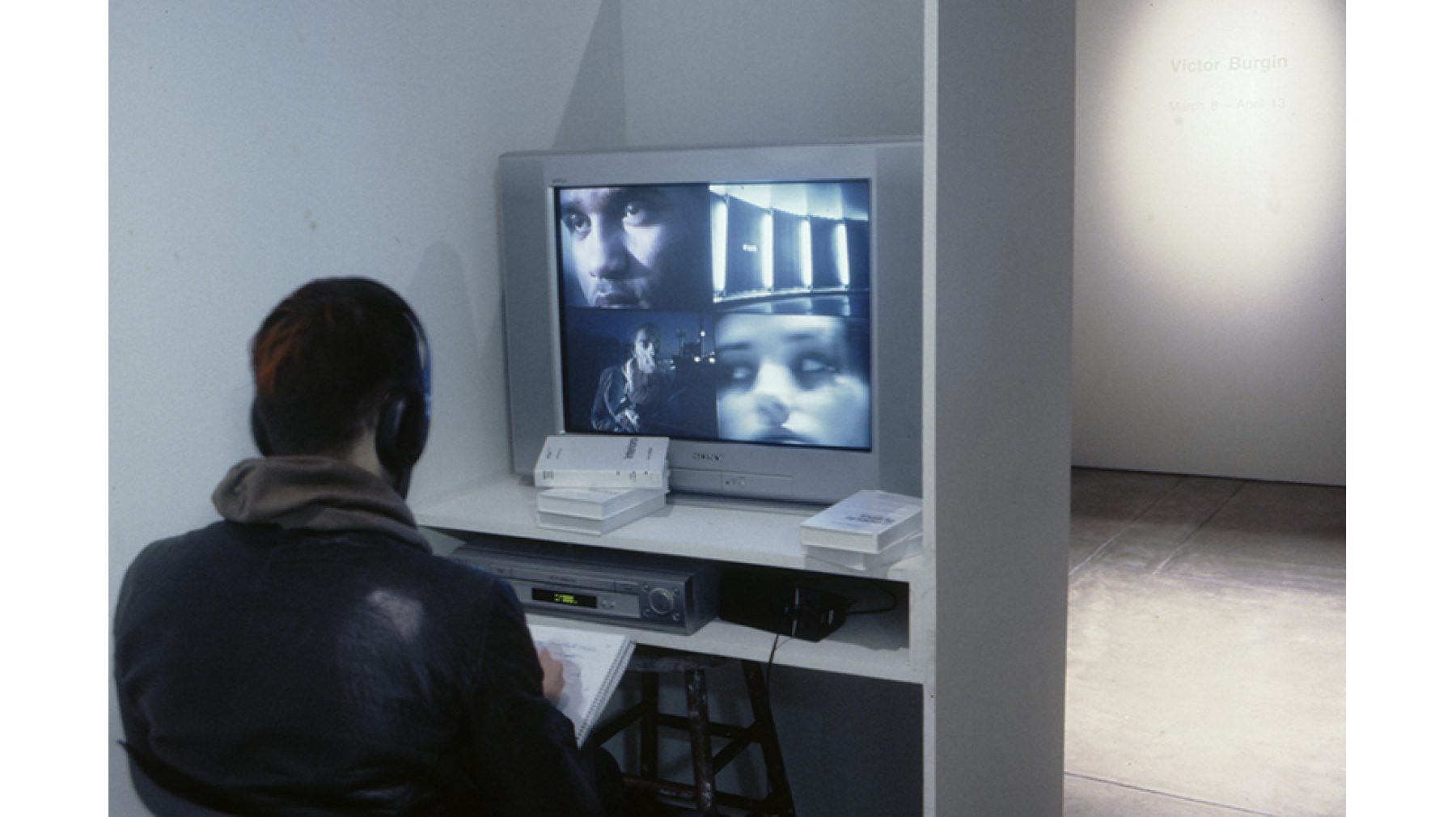
Installation view, E-Flux Video Rental, Carpenter Center for the Visual Arts, February 8–April 13, 2007. Courtesy Carpenter Center for the Visual Arts, Harvard University and the artist.
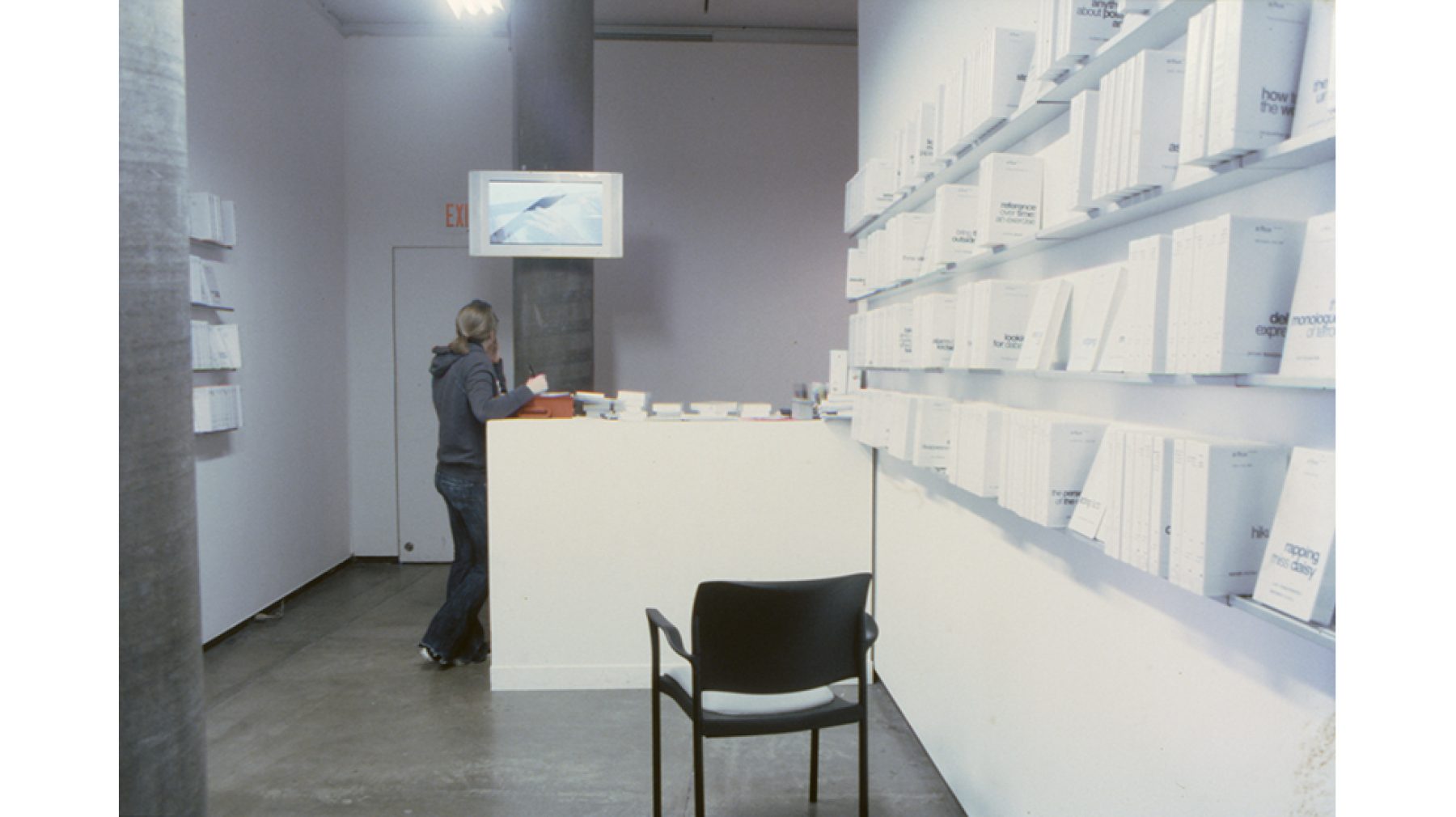
Installation view, E-Flux Video Rental, Carpenter Center for the Visual Arts, February 8–April 13, 2007. Courtesy Carpenter Center for the Visual Arts, Harvard University and the artist.
October 26, 2006–January 7, 2007
Pedro Reyes: Ad Usum: To Be Used
Organized with the David Rockefeller Center for Latin American Studies and curated by José Falconi.
This project was co-sponsored by the Carpenter Center for the Visual Arts, the Latin American and Latino Art Forum of the David Rockefeller Center for Latin American Studies at Harvard, the Cultural Agents Initiative, and Yvon Lambert New York/Paris.
The accompanying publication, Ad Usum / To Be Used, is a survey of Reyes’s projects. The publication is a collection of images, interviews, and critical essays intended as an apparatus for multiplying the possibilities when art becomes a resource for the common good.
For more than a decade the Mexico City–based artist, architect, and cultural agent Pedro Reyes has been turning existing social problems into opportunities for effecting tangible change through collective imagination. By breaking open failed models and retooling them with space to project alternatives, Reyes’s art enables productive diversions of otherwise destructive forces. Ad Usum: To Be Used is the second volume in the series Focus on Latin American Art and Agency, which is dedicated to contemporary cultural agents, a term that is perhaps best understood through the words of Reyes himself: “changing our individual habits has no degree of effectiveness” as “progress is only significant if you start to multiply by 10, by 100, by 1,000.”
This full-color illustrated survey is published by Harvard University Press, and includes critical essays by José Luis Falconi, Robin Greeley, Johan Hartle, Adam Kleinman, and Doris Sommer, as well as interviews between the artist and such seminal thinkers as Lauren Berlant, Michael Hardt, Alejandro Jodorowsky, and Antanas Mockus. The book will be available for sale during the event.
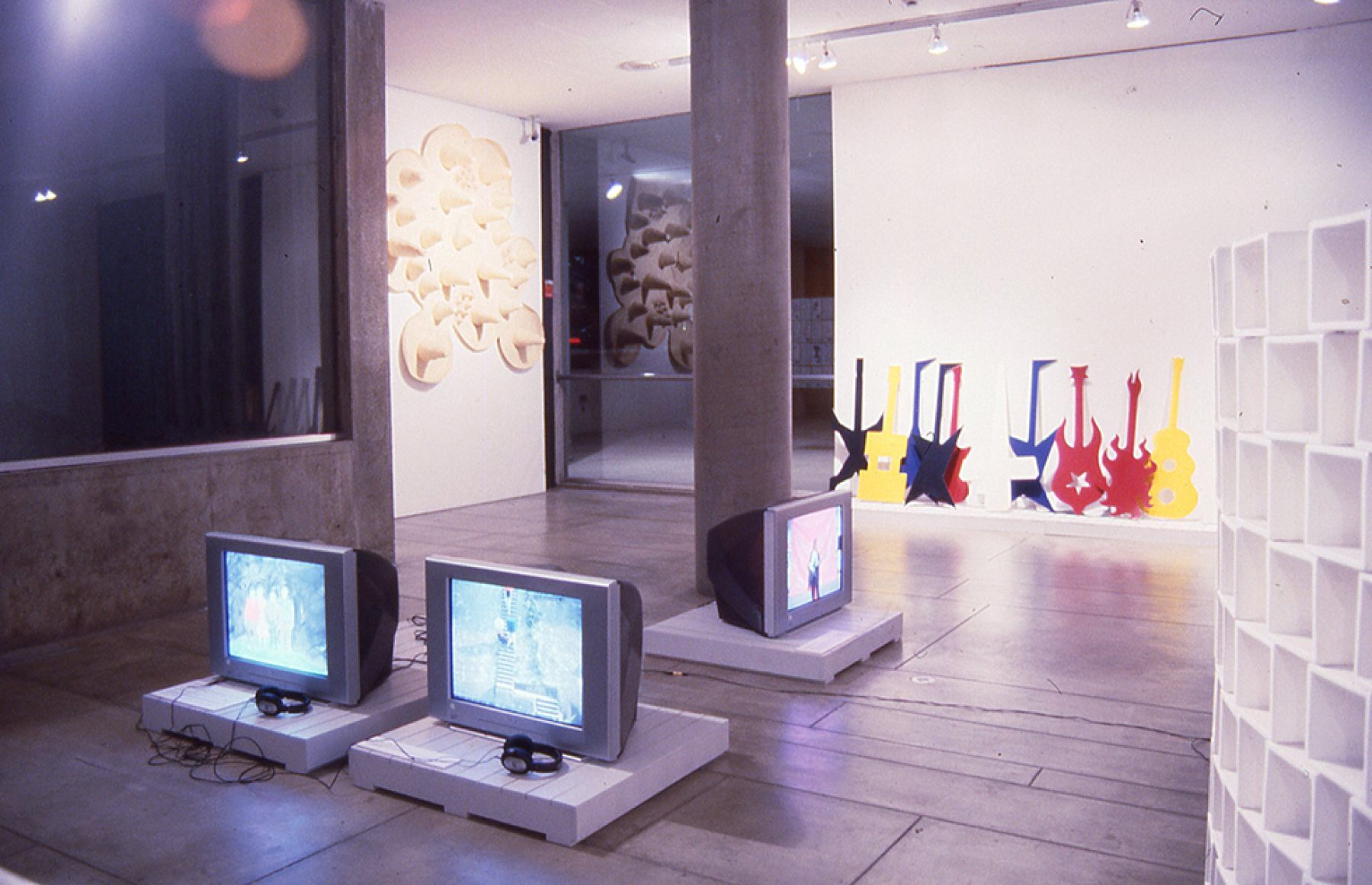
Installation view, Pedro Reyes: ad usum: To Be Used, Carpenter Center for the Visual Arts, October 26, 2006–January 5, 2007. Courtesy Carpenter Center for the Visual Arts and artist.
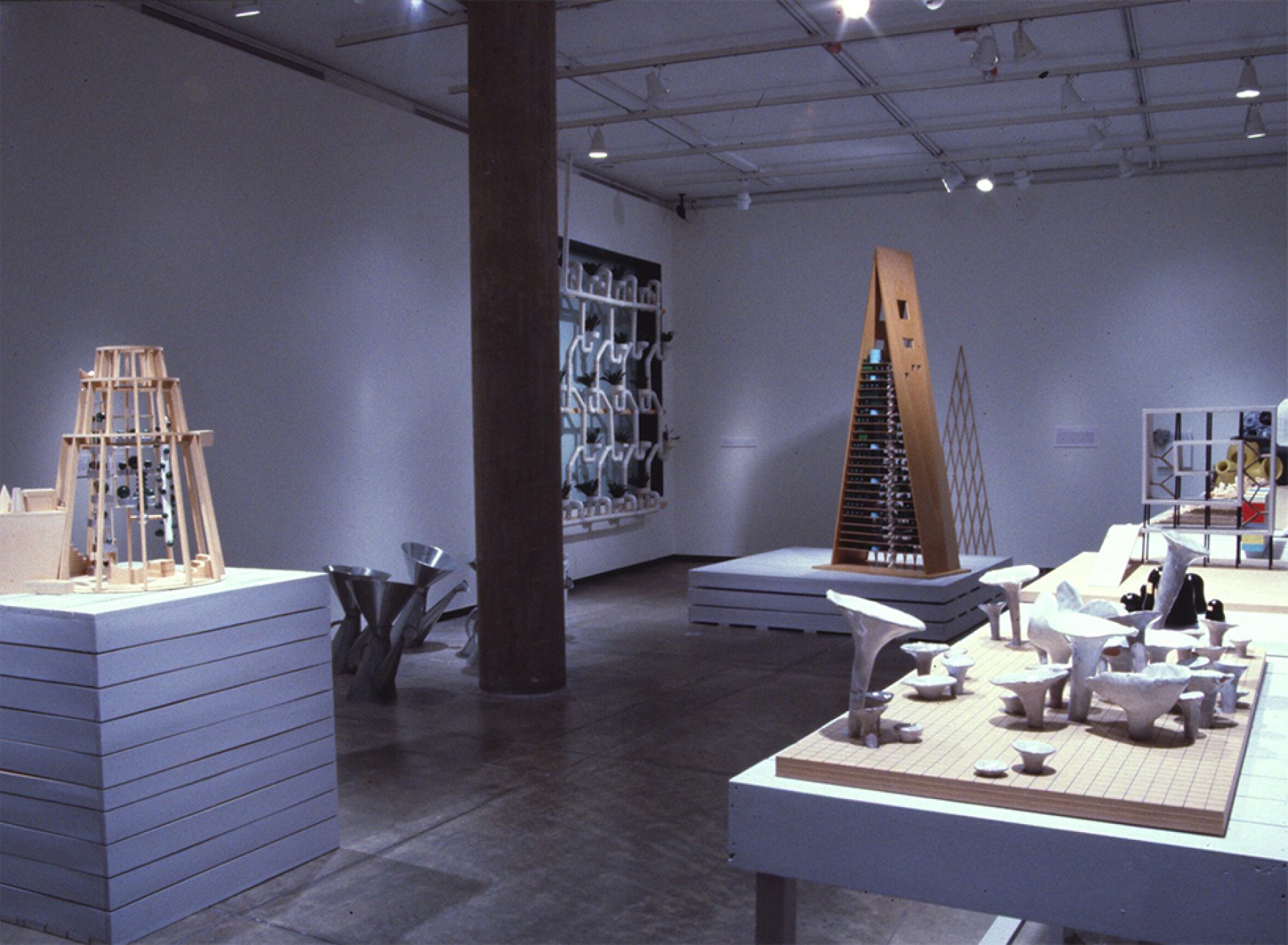
Installation view, Pedro Reyes: ad usum: To Be Used, Carpenter Center for the Visual Arts, October 26, 2006–January 5, 2007. Courtesy Carpenter Center for the Visual Arts and artist.
2005
October 20, 2005–January 5, 2006.
Modest Sublime
Modest Sublime featured work from artists Sarah Bedford, Ann Craven, Brady Dollarhide, Bart Domburg, Todd Hebert, Laura Stein, and Debora Warner. The exhibition is curated by Lelia Amalfitano.
This group exhibition confronted the contradictory relationships contemporary culture constructs which are internalized as part of our concept of nature and the ideal of landscape – both as a genre and in terms of direct experience. Monk by the Sea, and Ansel Adams’ grand scenic vistas of the American West to the abstract works of Barnett Newman and his essay “The Sublime is Now,” from the New Topographic photographers of the 70’s to the contemporary New Romantic photographers, the tradition of the grand romantic landscape as transcendent and sublime has been transformed through the post modern filter. Transformed perhaps from the ecstatic, aesthetic experience but still haunting our engagement with the art object.
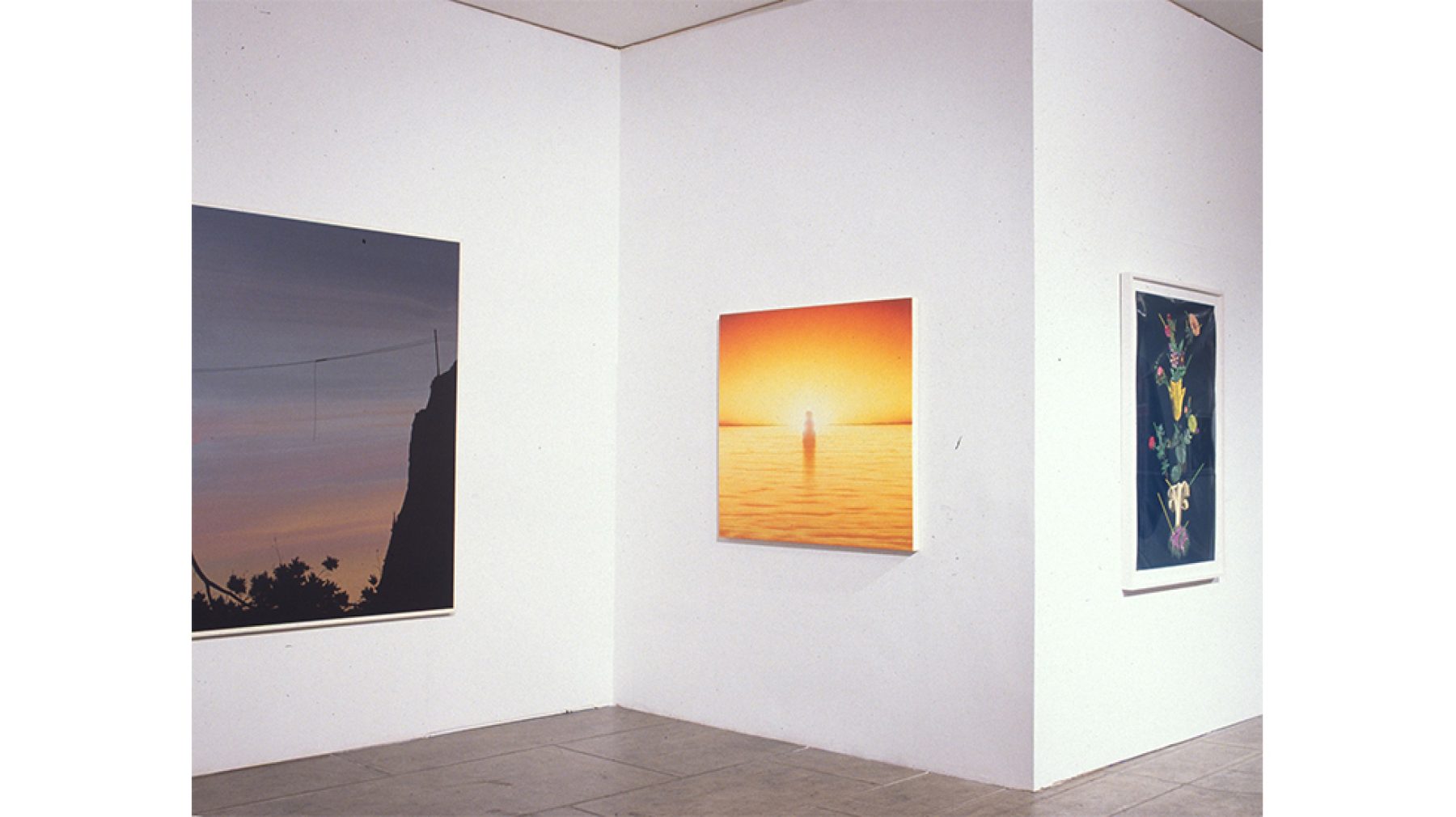
Installation view, Modest Sublime, Carpenter Center for the Visual Arts, October 20, 2005–January 5, 2006. Courtesy of Carpenter Center for the Visual Arts and artists.
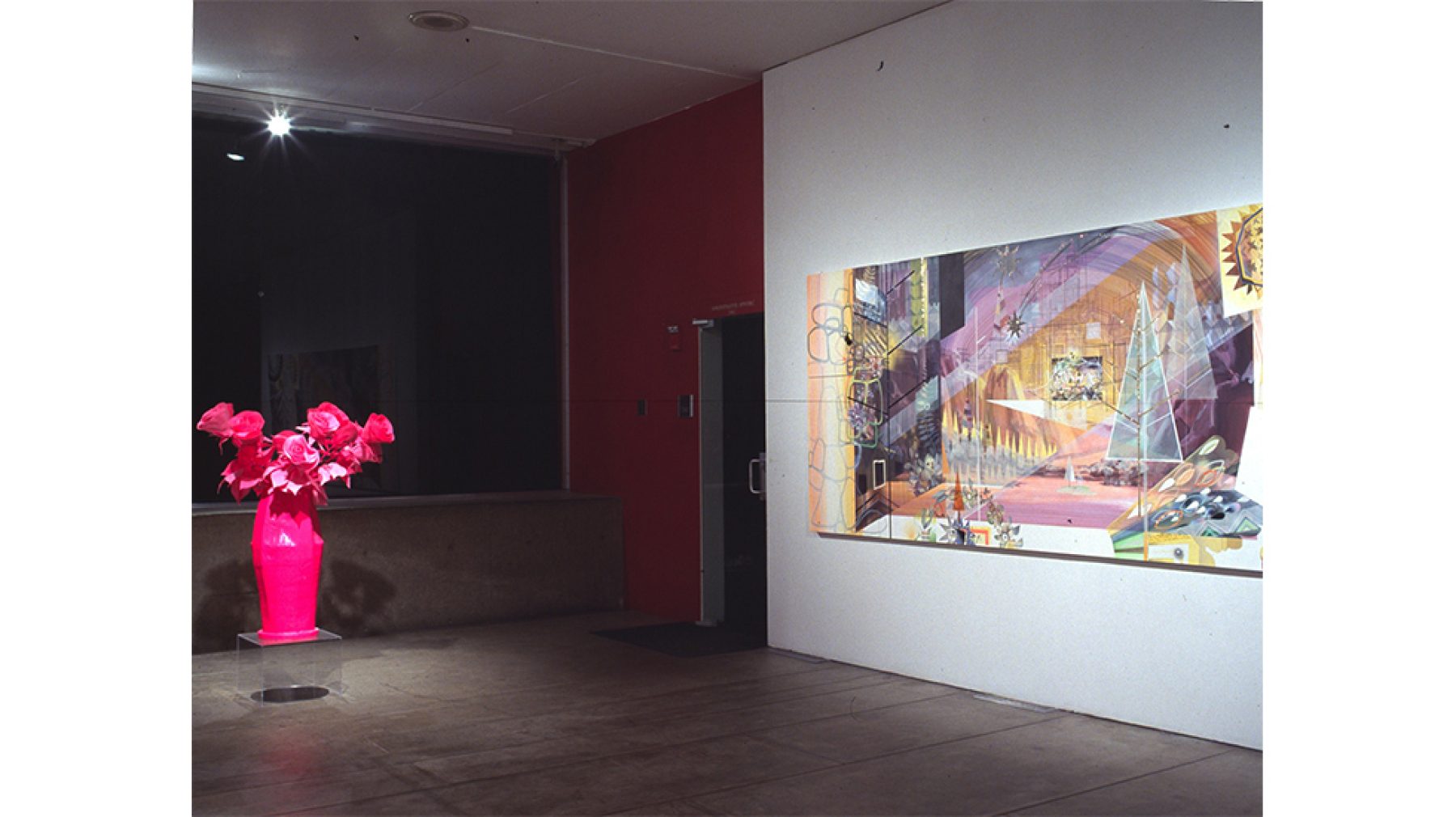
Installation view, Modest Sublime, Carpenter Center for the Visual Arts, October 20, 2005–January 5, 2006. Courtesy of Carpenter Center for the Visual Arts and artists.
March 17–April 22, 2005
Yvonne Rainer: Radical Juxtapositions 1961–2002
An important retrospective exhibition that reexamined the career of this extremely influential artist and great innovator in Minimalism. Rainer has incorporated experimental cinema, choreography and movement, feminism, politics, writing, and visual art into her forty-year practice. Organized by Sid Sachs of Rosenwald-Wolf Gallery of The University of the Arts in Philadelphia, where the exhibition first appeared in 2002, the exhibition consisted of two major new video installations, a reconstruction of a set of an early performance piece, vintage photographs, posters, documents, dance notations, manuscripts, as well as an arrangement of video monitors running Rainer’s five feature length films and early dance documentation.
Yvonne Rainer was born in San Francisco in 1934. She trained as a modern dancer in New York from 1957 and began to choreograph her own work in 1960. She was one of the founders of the Judson Dance Theater in 1962, the beginning of a movement that proved to be a vital force in modern dance in the following decades. Between 1962 and 1975 she presented her choreography throughout the United States and Europe, notably on Broadway in 1969, in Scandinavia, London, Germany, and Italy between 1964 and 1972, and at the Festival D'Automne in Paris in 1972. In 1968 she began to integrate short films into her live performances, and by 1975 she had made a complete transition to filmmaking.
When Rainer made her first feature-length film in 1972, she had already influenced the world of dance and choreography for nearly a decade. From the beginning of her film career she inspired audiences to think about what they saw, interweaving the real and fictional, the personal and political, the concrete and abstract in imaginative, unpredictable ways. Her bold feminist sensibility and often controversial subject matter, leavened with a quirky humor, has made her, as the Village Voice dubbed her in 1986, "the most influential American avant-garde filmmaker of the past dozen years, with an impact as evident in London or Berlin as in New York"
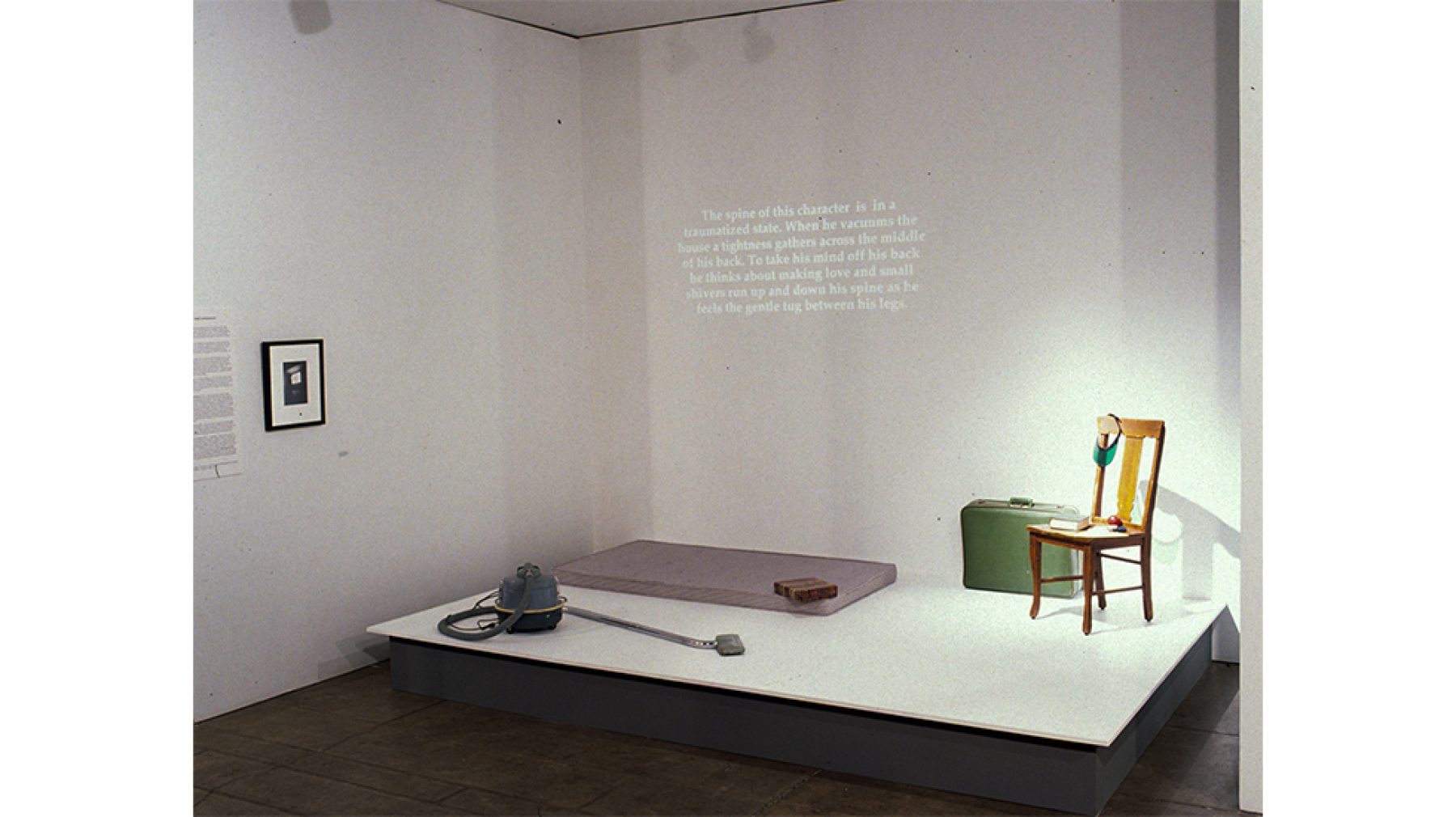
Installation view, Yvonne Rainer: Radical Juxtapositions 1961–2002, Carpenter Center for the Visual Arts, March 17–April 22, 2005. Courtesy Carpenter Center for the Visual Arts and artist.
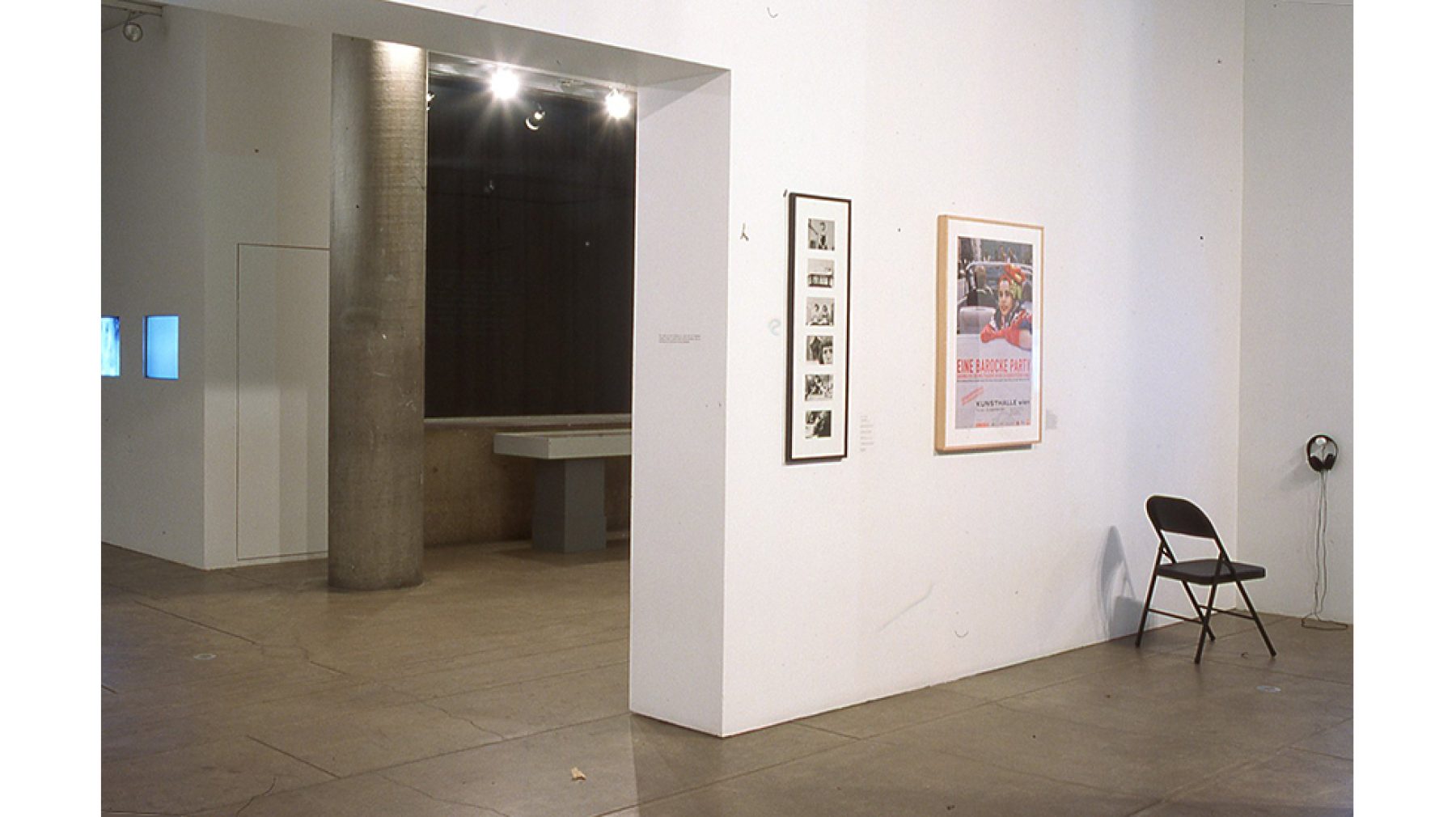
Installation view, Yvonne Rainer: Radical Juxtapositions 1961–2002, Carpenter Center for the Visual Arts, March 17–April 22, 2005. Courtesy Carpenter Center for the Visual Arts and artist.
2004
December 2, 2004–January 7, 2005
Stephen Prina: Retrospection Under Duress, Reprise
This exhibition presented a truncated, fragmentary, and abridged survey of work by Stephen Prina, then newly appointed Professor of Visual and Environmental Studies.
Tom Holert says of Vinyl II, a film by Stephen Prina: "…Prina much prefers the appellation "cultural producer" to "artist," valuing the special force and clumsiness of the term—a term that lends itself to the problematization of cultural expectations and the ideological maneuvers involved in fulfilling them. What is expected? By whom and why? What is the nature of the disappointment that results from the mismatch between a name and an image, a signature and a style? And what does it look like when Prina makes such a disappointment productive?"Artforum May 2000
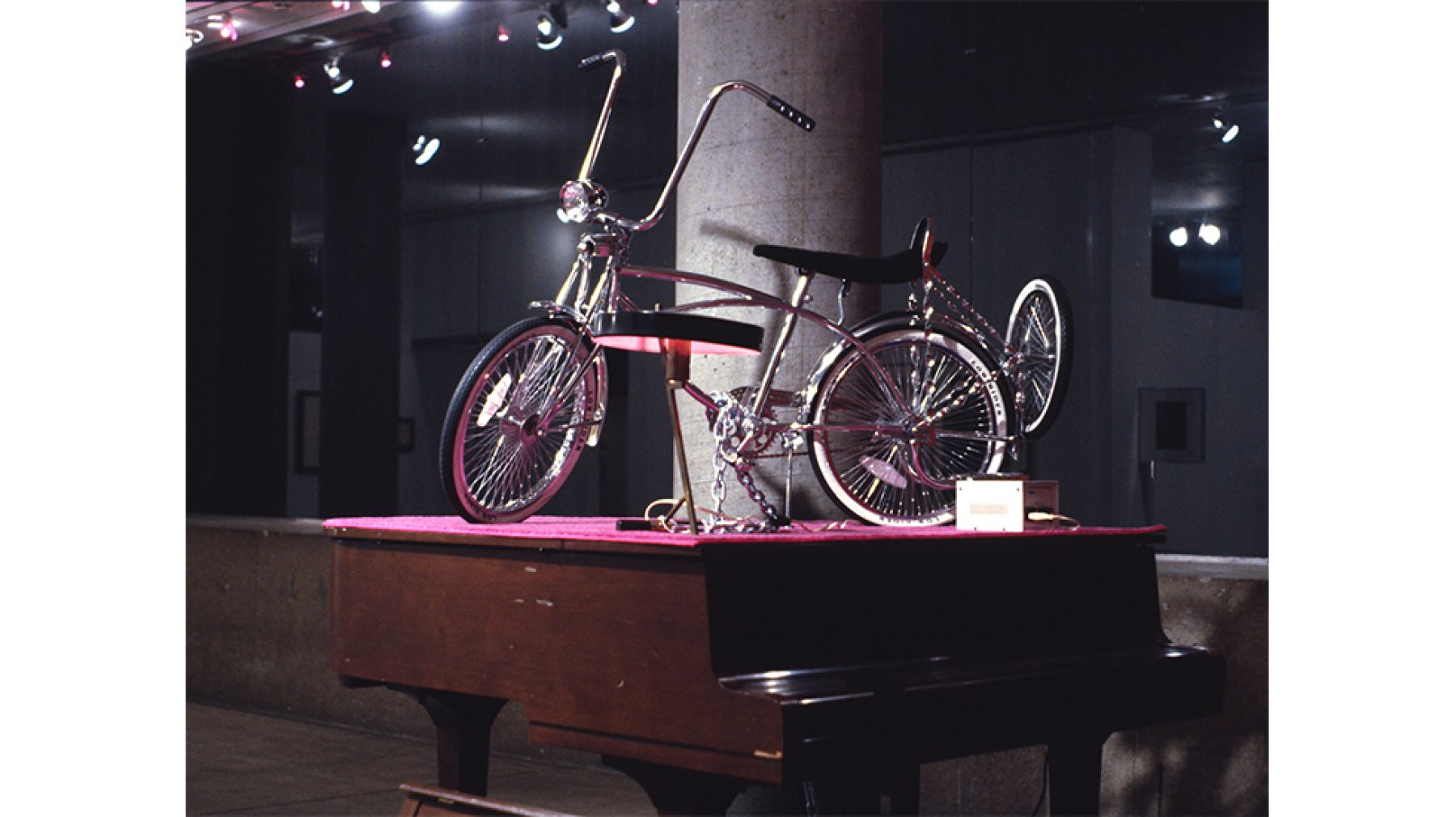
Installation view, Stephen Prina: Retrospection Under Duress, Reprise, Carpenter Center for the Visual Arts, December 2, 2004–January 7, 2005. Courtesy of the Carpenter Center for the Visual Arts and the artist.
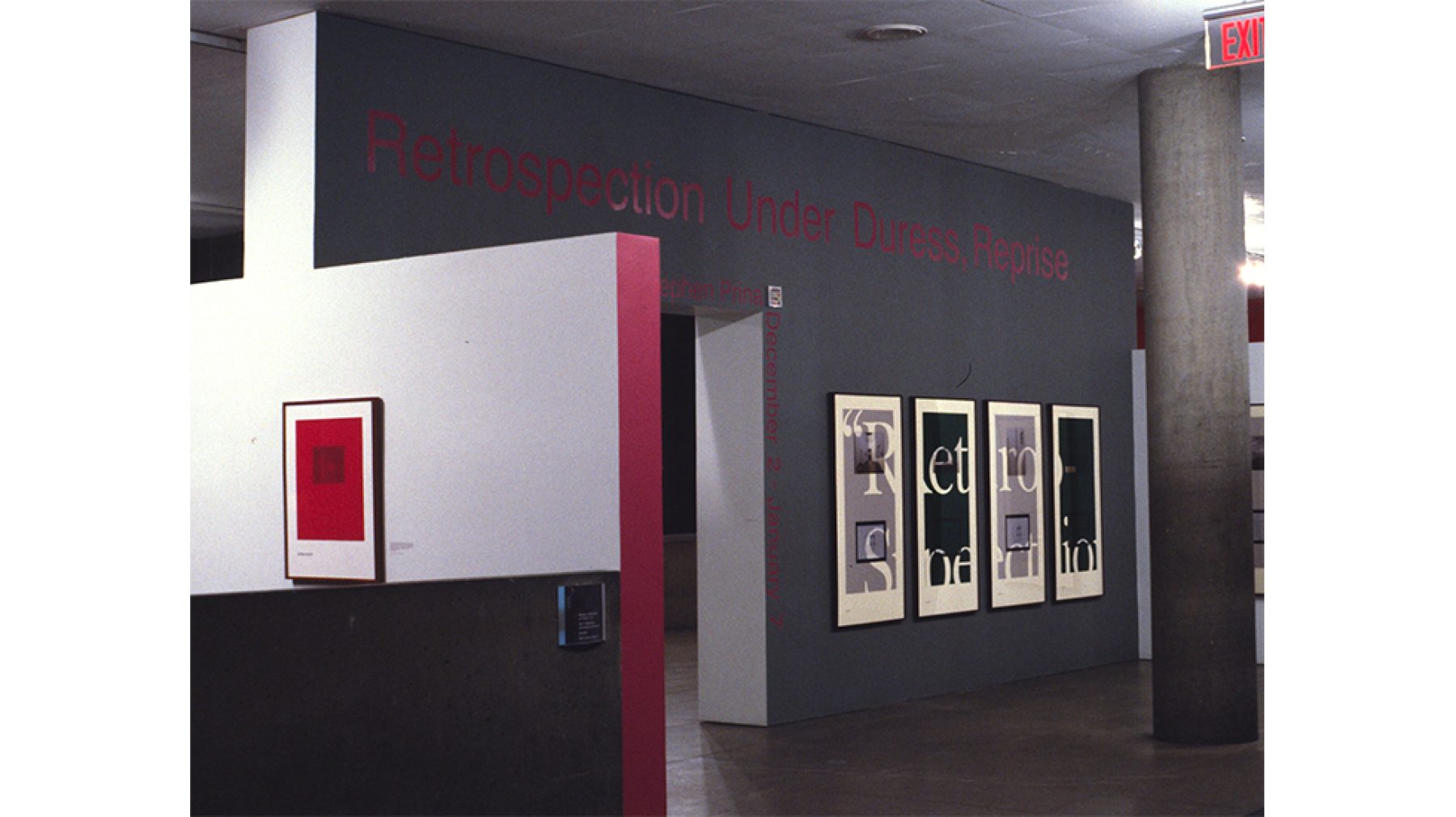
Installation view, Stephen Prina: Retrospection Under Duress, Reprise, Carpenter Center for the Visual Arts, December 2, 2004–January 7, 2005. Courtesy of the Carpenter Center for the Visual Arts and the artist.
November 18, 2004–April 17, 2005
Huyghe + Corbusier: Harvard project
Pierre Huyghe created a multi-media project for Harvard University as part of an inter-faculty collaboration among the Harvard University Art Museums, The Harvard Design School, and Harvard’s Department of Visual and Environmental Studies. Huyghe + Corbusier: Harvard Project explored Le Corbusier’s vision for Harvard’s Carpenter Center for the Visual Arts, the only building in North America designed by the noted architect and then home to the Department of Visual and Environmental Studies. The project premiered at the Carpenter Center on November 18, 2004, and continued in the building’s Sert Gallery through April 17, 2005.
Huyghe + Corbusier: Harvard Project included multiple components that respond to the design history of the Carpenter Center and its relationship to Harvard:
A “puppet opera” :
Huyghe’s twenty-minute puppet opera, a fanciful recounting of the story of the Carpenter Center’s conception and construction, was performed on November 18. The opera was staged using custom-crafted marionettes playing the parts of Le Corbusier and other key figures involved in the creation of the building. Huyghe interweaved the narrative of these historical characters with marionettes of himself and other contemporary figures, melding past and present. The puppet opera revealed the parallels between Le Corbusier’s creation of a home for the arts at Harvard and Huyghe’s task of creating a site-specific project within the building.
A temporary architectural extension:
Huyghe’s puppet opera was performed within a temporary architectural extension to the Carpenter Center designed in collaboration with Harvard Design School faculty member Michael Meredith. The theater took the form of a “moss covered shell” emerging from beneath a below-grade space defined by the center’s covered terrace—drawing attention to the building’s design while subtly changing it. By transforming a largely unused outdoor space into the site of a theatrical event with a stage for the marionettes and audience seating, the extension added a new function to a building designed for multiple artistic uses. The extension was taken down following the November 18 performance.
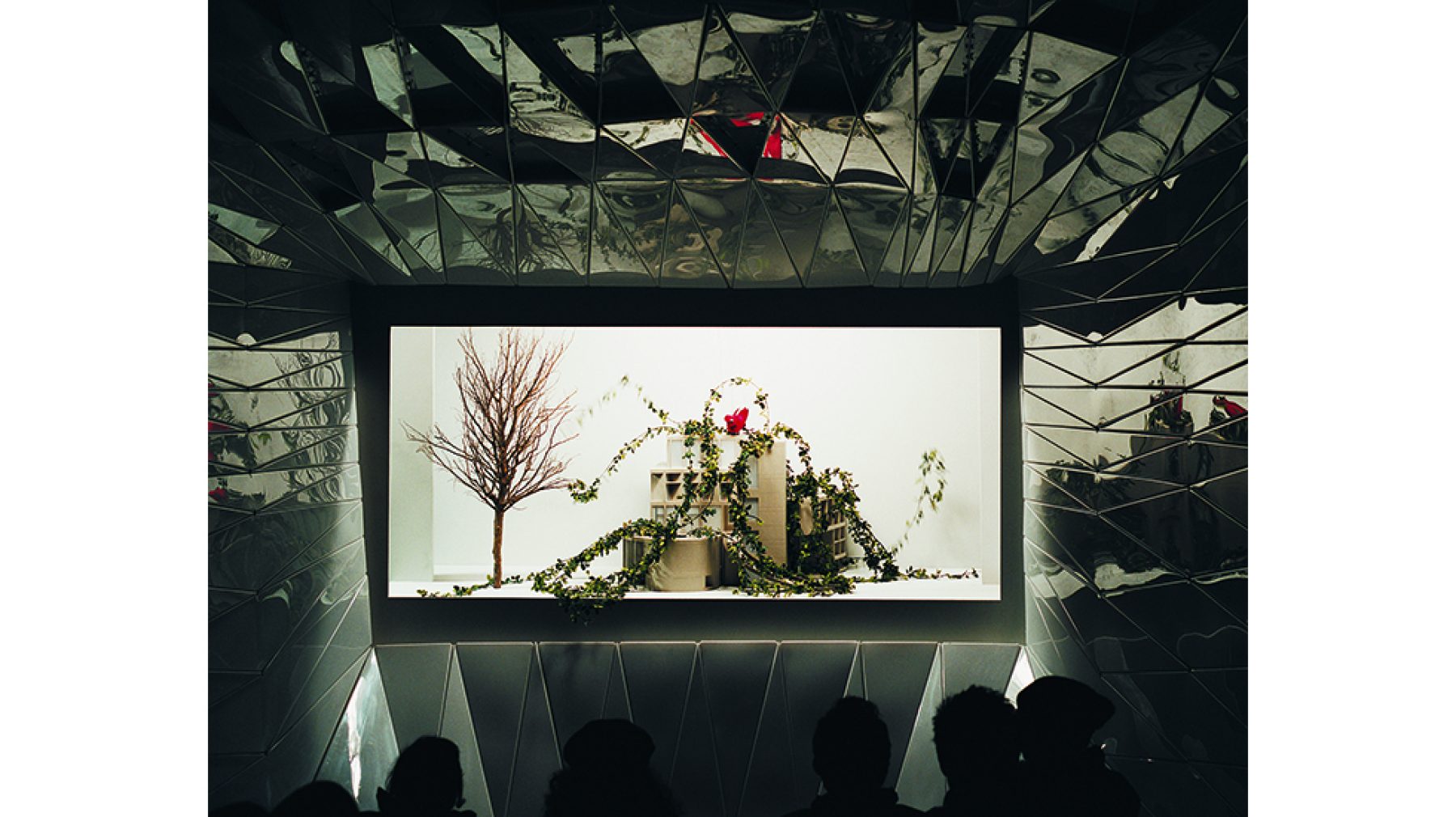
PIERRE HUYGHE. This is not a time for dreaming, 2004. Live puppet play and super 16mm film transferred to DigiBeta, 24 minutes, color, sound. Courtesy Mariam Goodman Gallery, New York/Paris. Photo Credit: Michael Vahrenwald.
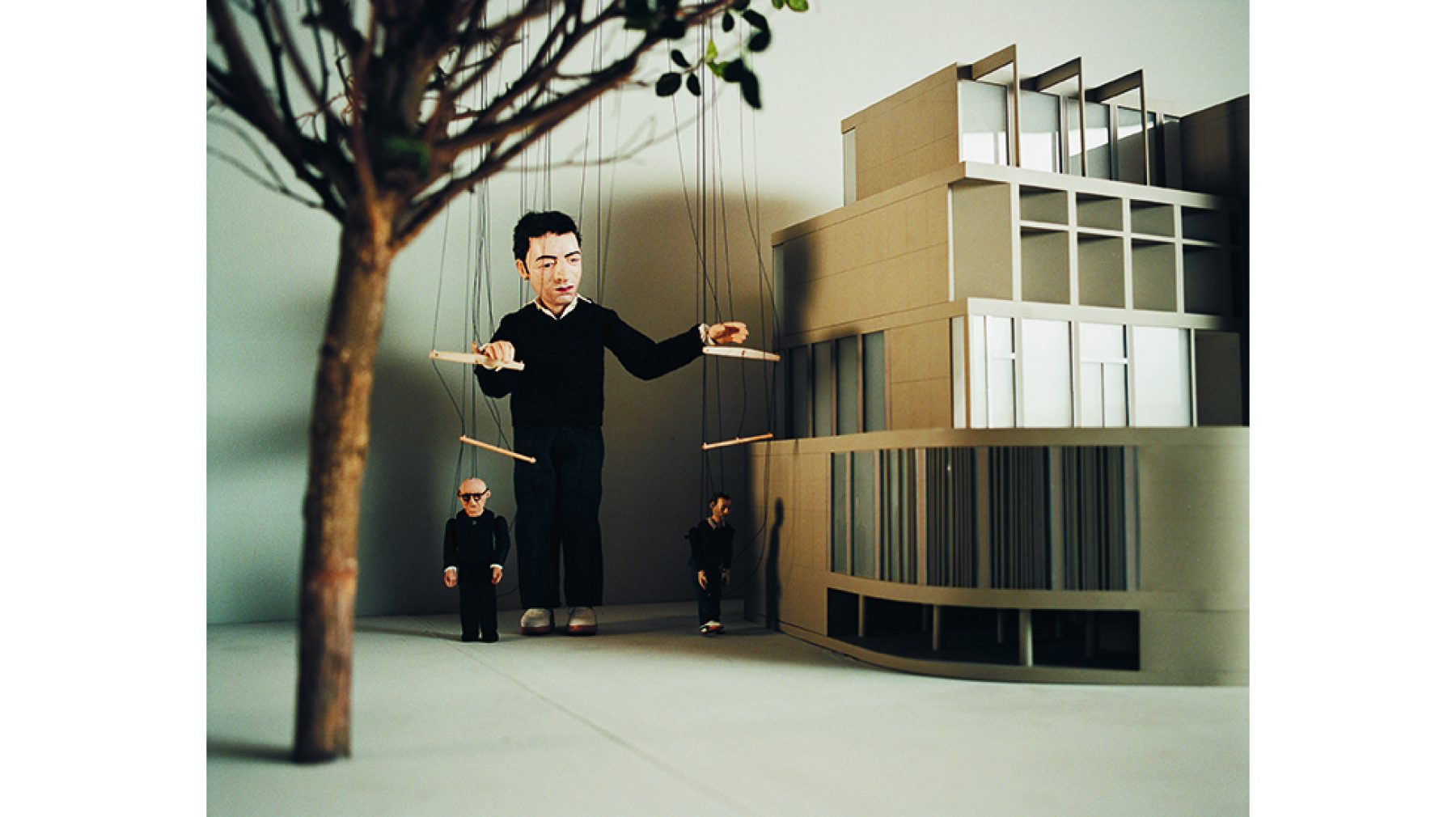
PIERRE HUYGHE. This is not a time for dreaming, 2004. Live puppet play and super 16mm film transferred to DigiBeta, 24 minutes, color, sound. Courtesy Mariam Goodman Gallery, New York/Paris. Photo Credit: Michael Vahrenwald.
October 21–November 19, 2004
Fabulous Histories: Indigenous Anomalies in American Art
Curated by graduates of the Department of Visual and Environmental Studies Brendan Greaves ('00) and William Pym ('02) with their colleague Jina Valentine, Fabulous Histories: Indigenous Anomalies in American Art juxtaposed nine artists in potent trios which illuminate the profoundly enmeshed conceptual and formal concerns of prominent artists both self-taught and trained. In addition to marquee names like Jim Nutt and Martin Ramirez, the exhibition took into account "dark horse" artists who are infrequently shown such as P.M. Wentworth, whose body of work is extremely limited, as well as then recently rediscovered Felipe Jesus Consalvos and emerging artist Anthony Campuzano. The influence of self-taught work on contemporary mainstream art practice has never been more evident. Authenticity and legitimacy are thorny issues in today's young, style-concious art world. Fabulous Histories offered the opportunity to view masterworks by important artists that are unfamiliar to many, and by establishing and exploring the relationships between self-taught, marginal, and mainstream art practice, the exhibition allows the viewer to more easily discern which contemporary bodies of work will find their place in the art-historical narrative. The exhibition drew from the collections of the Fleisher-Ollman Gallery Philadelphia, and major private and public collections Fleisher-Ollman has helped build over the last thirty-five years.
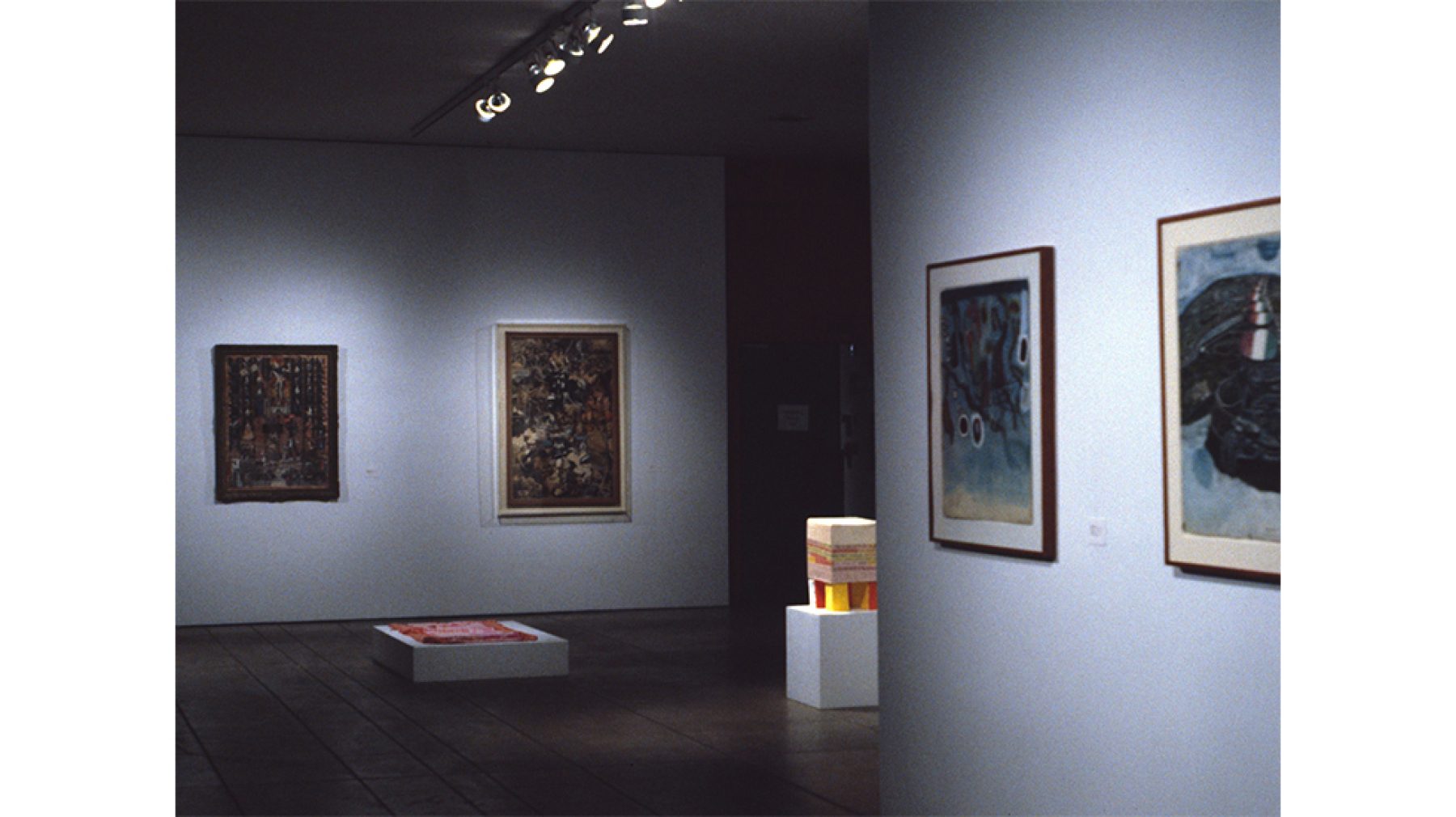
Installation view, Fabulous Histories: Indigenous Anomalies in American Art, Carpenter Center for the Visual Arts, October 21–November 19, 2004. Courtesy of Carpenter Center for the Visual Arts and artists.
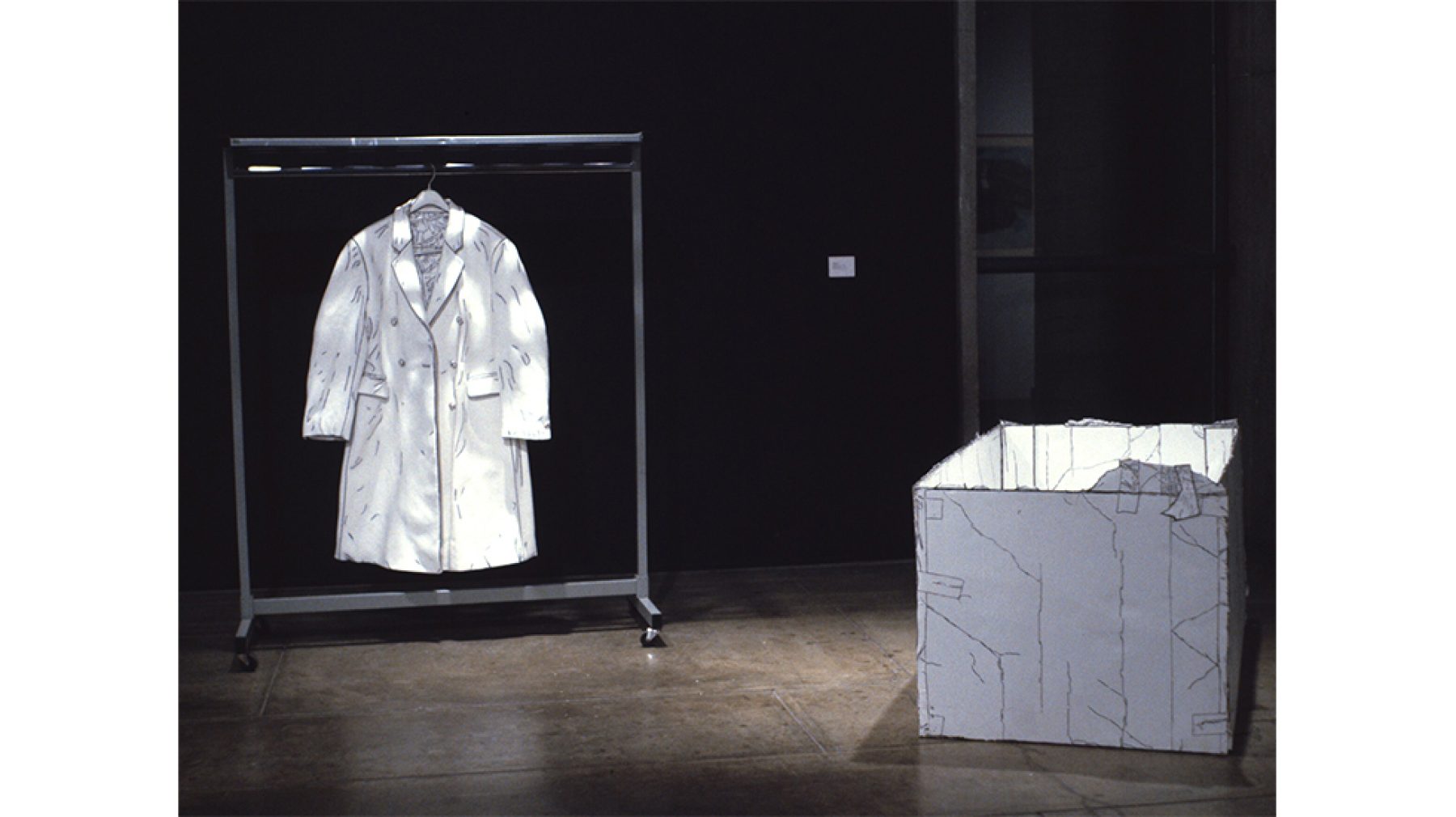
Installation view, Fabulous Histories: Indigenous Anomalies in American Art, Carpenter Center for the Visual Arts, October 21–November 19, 2004. Courtesy of Carpenter Center for the Visual Arts and artists.
2001
October 21
Yoko Ono Mend Piece
"It was arts and crafts night with a twist...Sunday evening (Oct. 21) in the Carpenter Center pit, as glue, tape, twine, shattered pottery, and Yoko Ono all came together to commemorate her...installation, 'Mend Piece to the World.' The outdoor exercise of mending shattered pottery offered the large crowd an opportunity not only to get up close and personal with the prolific pioneer of experimental art, music, performance, and cinema, but also to reflect – constructively – on the events of Sept. 11.
Ono’s very public appearance preceded a sold-out lecture sponsored by the Department of Visual and Environmental Studies. 'An Evening with Yoko Ono,' held inside the center’s auditorium, was presented in conjunction with a retrospective exhibit of her 40-year career...on display at the Massachusetts Institute of Technology’s List Visual Arts Center." - The Harvard Gazette
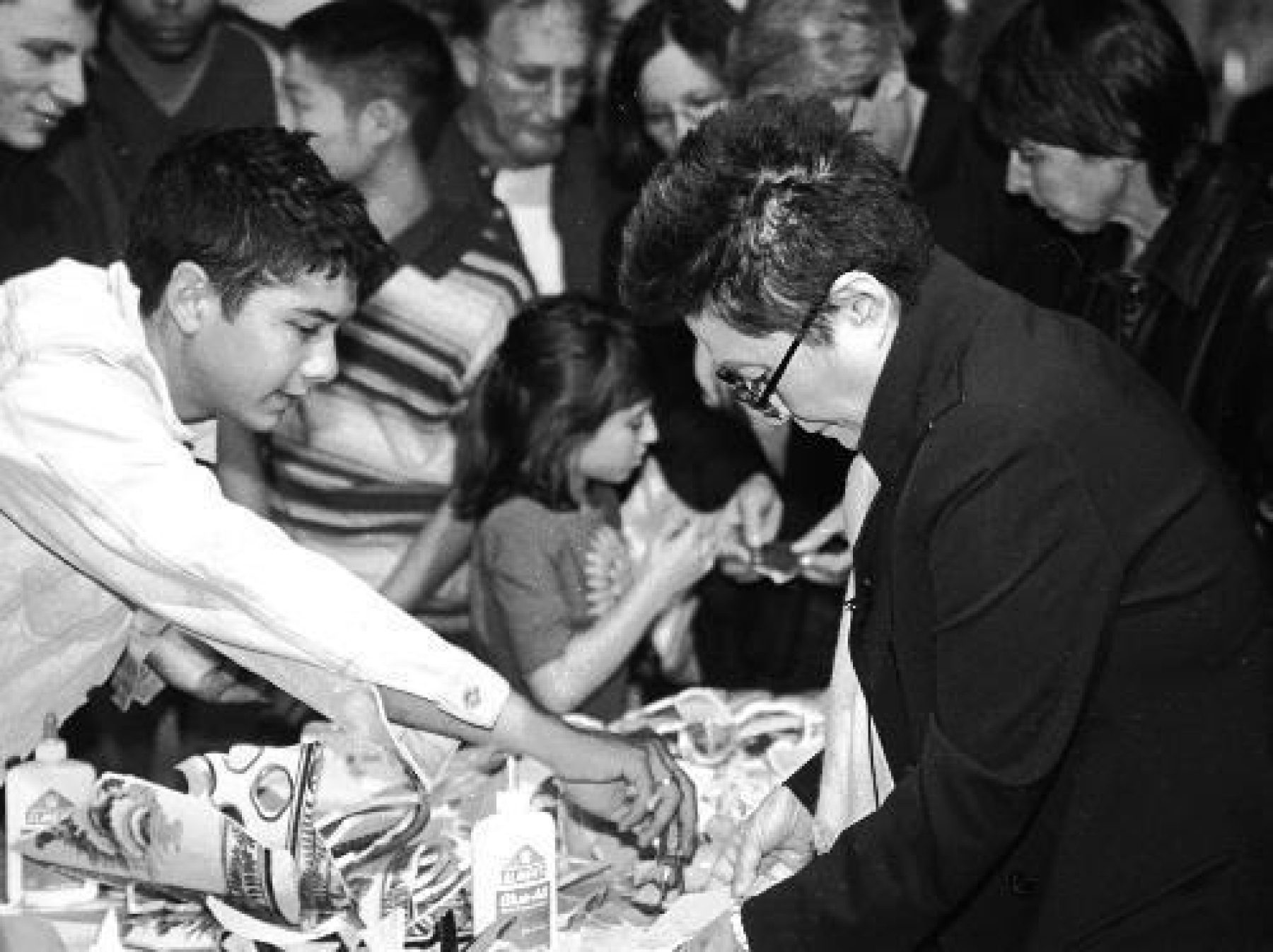
Yoko Ono inaugurates her art installation “Mend Piece to the World” at the Carpenter Center for Visual Arts. Via The Harvard Crimson
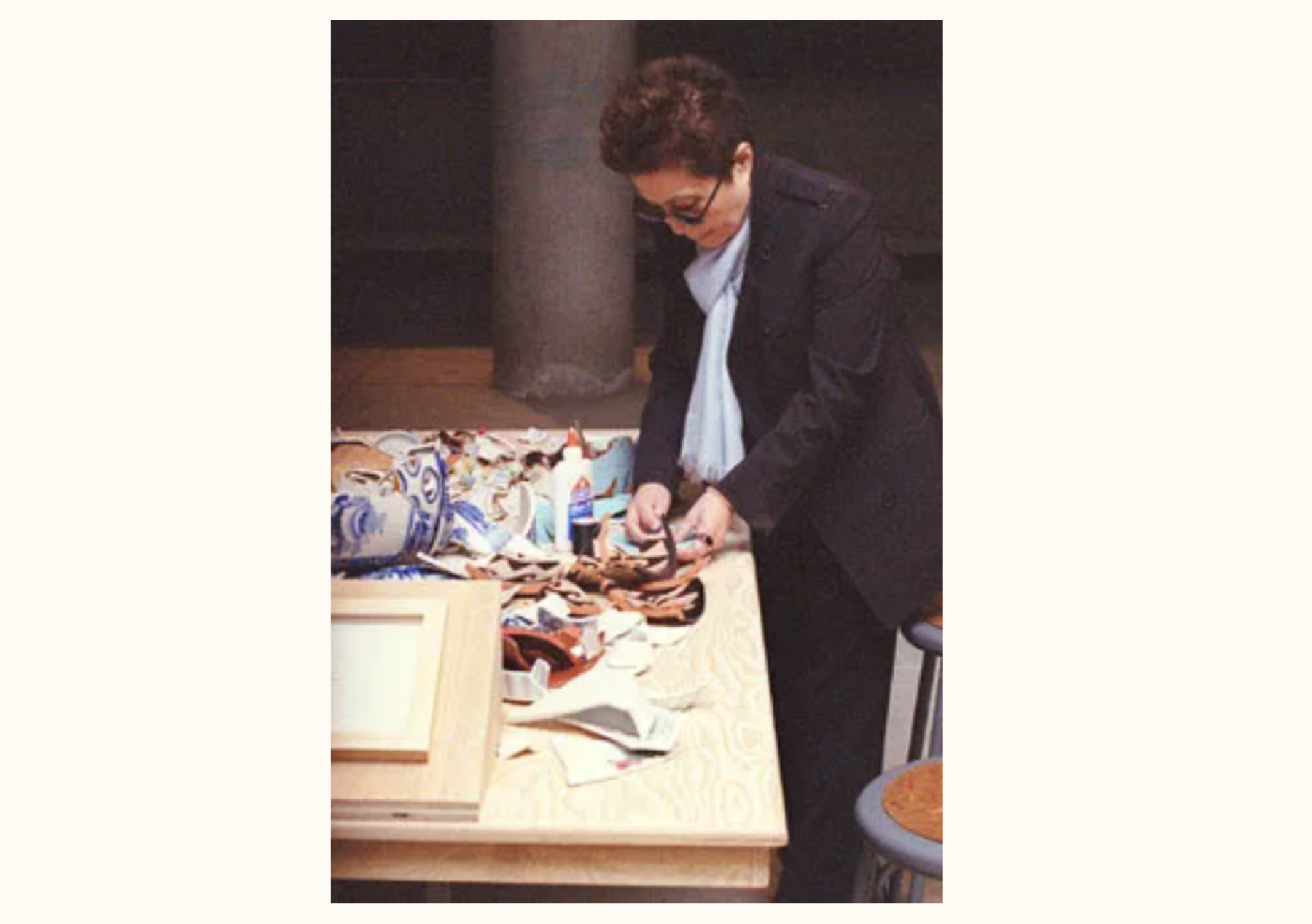
Yoko Ono is an active participant in her ‘Mend Piece’ installation at the Carpenter Center. (Photo by Lindsay Coleman). Via The Harvard Gazette
2000
Peter Rose + Partners Sert Gallery
The Harvard University Art Museums required the creation of a new art gallery within the Carpenter Center, the only building by Le Corbusier in North America. An environmentally independent space was created, ideal for the display of contemporary art. The gallery can accommodate a broad range of exhibits, including paintings, drawings, sculpture, photographs, and video. An adjacent café and roof terrace were also added.
The Carpenter Center’s listing on the National Register of Historic Places required that the work proceed in close collaboration with the National Park Service as well as the Le Corbusier Foundation in Paris. As a result, the gallery, café, and support infrastructure were designed to be completely removable, leaving no permanent marks on the existing building. This led to a structural system consisting of hydraulic jacks that anchor the partition system to the floor and ceiling of the existing building. These walls are then sheathed in plywood, and, in select areas, hot-rolled steel panels. The exterior wall of the gallery forms a more public display area which is visible from the open-air ramp that traverses the building.
© 2025 Peter Rose + Partners
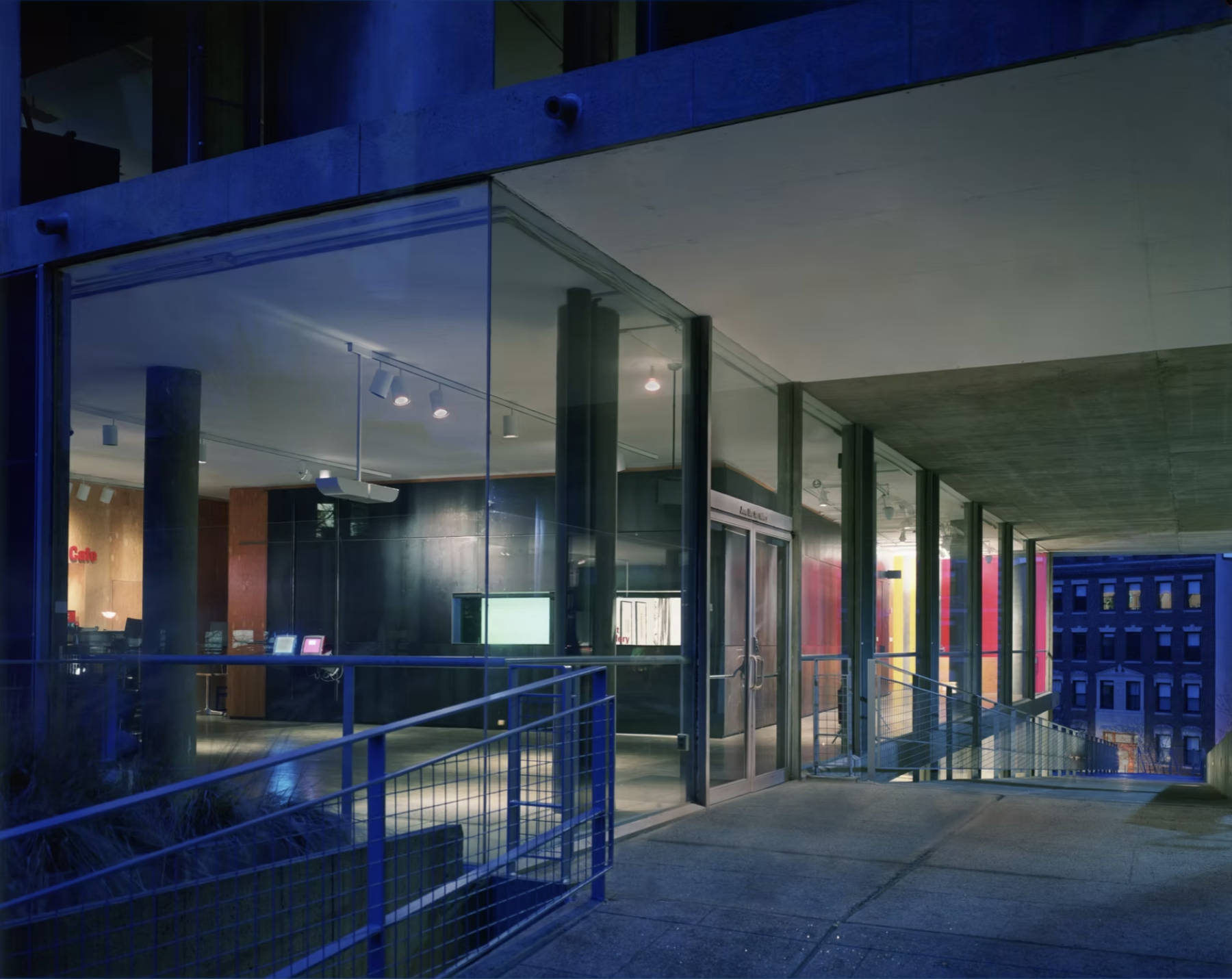
© 2025 Peter Rose + Partners
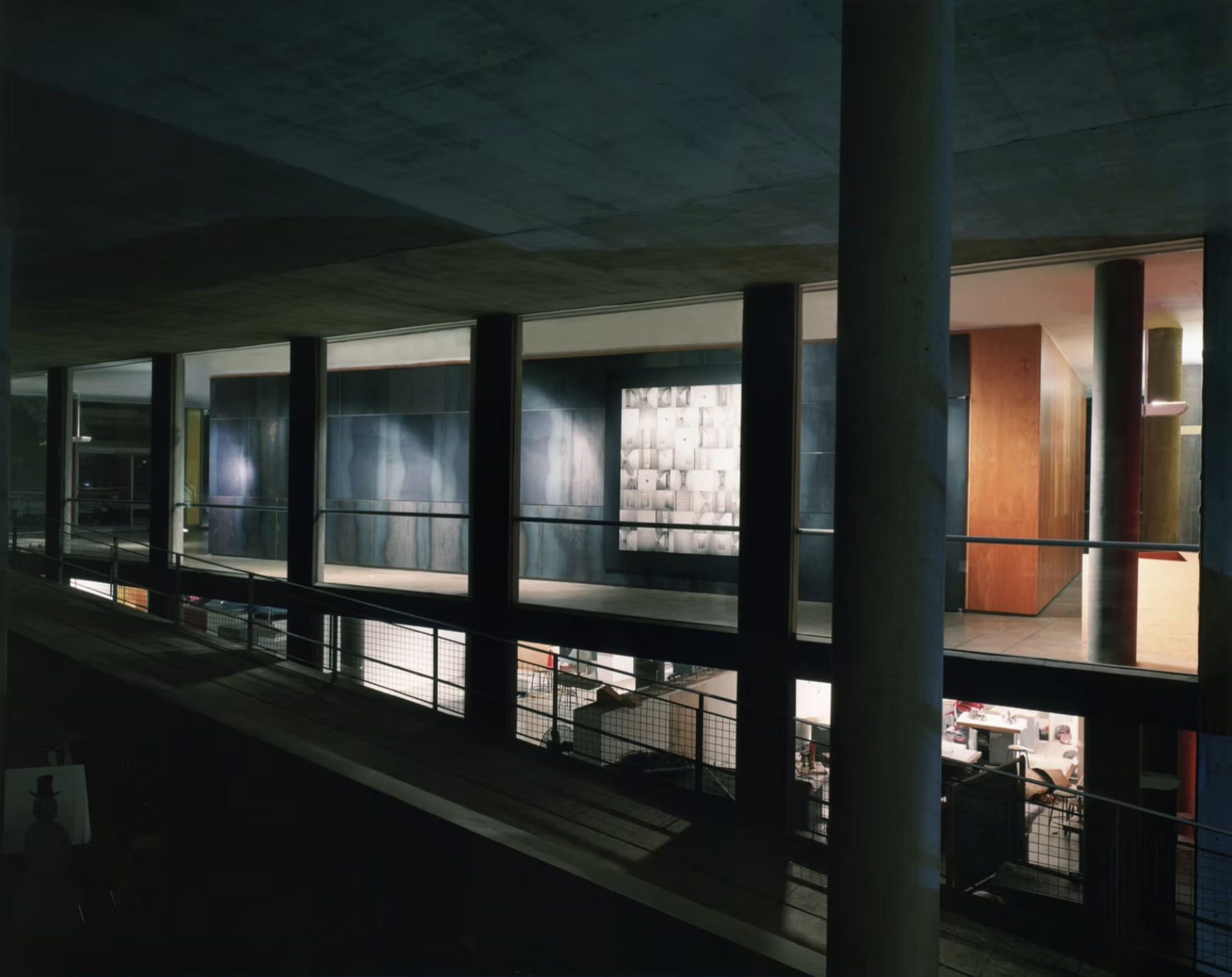
© 2025 Peter Rose + Partners
1990's
Before the Carpenter Center’s current curatorial approach, which emphasizes artist-centered exhibitions, new commissions, public programs, publications, and residencies, the Sert Gallery hosted a wide range of solo and group exhibitions featuring contemporary and visiting artists. The gallery also presented exhibitions of faculty and student work from Harvard’s former Department of Visual and Environmental Studies (VES).
This timeline traces the history of exhibitions at the Carpenter Center, highlighting the range of artistic practices and approaches that have shaped its programming over the years.
1999
December 19–January 9 — Student Show and Sale
November 11–December 7 — Richard Artschwager and Ross Bleckner
September 15–October 28 — (Some) Aspects of Contemporary Still Life Painting
June 1–10 — Thesis Show Rehung
May 18–31 — Juried Student Show
May 6–15 — Senior Thesis Show
April 5–30 — Painters
March 4–26 — Faculty Show II
January 30–February 24 — Faculty Show I: Four Painters
1998
November 30–December 31 — Sean Scully: Works of Art on Paper, 1975–1996
October 16–November 20 — Metaphor, Allegory, Illustration, and Narrative
September 10–October 10 — VES Visiting Faculty Fall ’98 Exhibition
May 15–17 — Open House Exhibition
May 7–June 7 — VES Senior Thesis Show
April 10–26 — Self-Portrait/Autobiography: Work in Progress by Chantal Akerman
March 5–April 2 — Presenting Negro Scenes Drawn Upon My Passage Through the South and Reconfigured for the Benefit of Enlightened Audiences Wherever Such May Be Found, By Myself, Missus K.E.B. Walker, Colored
January 28–February 26 — Five Artists: The Body/The Figure
January 28–February 25 — On the Skin of a Doll
1997
December 4–January 12 — Holiday Show and Sale of [title incomplete]
October 17–November 16 — Barbara Norfleet: A Retrospective “Archives and Archetypes”
September 4–28 — Fall Faculty Exhibition
May 22–June 6 — Spring Term Student Show
April 17–May 15 — VES Visiting Faculty
March 26–April 16 — From the Harvard Photo Archive’s Collection
March 13–April 6 — Printed Landscape
January 30–March 30 — Mission/Missions (How to Build Cathedrals)
January 14–18 — Student Work
1996
December 5–28 — Photography into Painting
October 24–November 17 — Nagasaki Journey
October 16–November 13 — At Work in the Fields of the Bomb
October 11–12 — Le Corbusier’s Le Poème de l’Angle Droit
September 11–October 9 — Death in Bosnia
September 1–30 — Visiting Faculty
May 10–June 9 — Student Work
April 15–May 5 — T.A.’s Exhibition
March 5–April 7 — Noah’s Raven
January 25–February 24 — New Spring Faculty
1995
December 8–January 2 — T.A.’s Exhibition
October 20–November 17 — Parallels in Creativity
September 15–October 13 — New Faculty Show
May 1 — Student Show: Senior Theses
April 13–May 14 — Toshi Katayama’s 30 Years at Harvard
March 13–April 2 — Yvonne Jacquette/Rudy Burckhardt: Prints and Photographs
January 13–15 — Studio Exhibition of Students’ Work
1994
December 9–January 27 — Printmakers at Harvard
September 19–October 28 — New Faculty Show
June 22–September 25 — Contraptions
June 22–September 25 — Visiting Artistry
May 20–27 — Student Work
May 10–22 — Canopy
April 28–June 12 — Sharp Appetites/Mandala
March 24–April 11 — Ingmar Bergman 75
March 2–23 — Photographs
February 14 — Three Visions, Annette Lemieux
1994 (dates unspecified) — Blinks and Bushes
1993
December 15–January 29 — Eingang: The Way In
November 18–December 5 — Photography
March 23–April 14 — Harmony/Sculpture & Environment, Photographs of Works in Forty-Seven Cities Around the World
March 5–April 5 — Looking at Death, Photographs from the Harvard University Collections
February 12–March 12 — Antoni Tàpies, Prints and Illustrated Books
1992
December 14–June 1 — Stephen Antonakos: Neon Project
December 11–January 30 — Every Picture Tells a Story: The Fine Art of Children’s Book Illustration
October 9–November 15 — Sean Scully: Painting 1973–92
September 15–October 2 — Tony Fair, Prints – Jennifer Peabody, Photographs
September 15–October 2 — Photographs of South Africa by David Goldblatt
May 8–June 4 — Student Thesis Work from the VES Department
April 22–June 5 — An Uncertain Grace: Photographs by Sebastião Salgado
April 2–26 — Witty Machines: Kinetic Sculptures by Arthur Ganson
March 6–April 5 — Le Corbusier Domestique
February 27–March 22 — Sakai and Fisher, Computer Art
January 24–February 17 — The Innerscape Series: Paintings by Nobuhiko Utsumi
1991
December 12–February 7 — Collaborations in Monotype, from Garner Tullis Workshop
December 6–January 31 — Center for Advanced Whimsy
November 1–24 — First Light: Prints by James Turrell
October 7–20 — Fragments of China: Photographs by Mark Leong
September 28–November 30 — Contemporary German Drawings: Baselitz, Polke, Lüpertz, Kiefer, Immendorff, Penck
September 8–30 — Bunny Harvey, Nan Freeman, Chris Killip: New Faculty
May 1–June 6 — Artists of “The Nation”: An Exhibition Celebrating the 125th Anniversary of “The Nation”
April 24–October 1 — Geo-Luminescence: Installation by Ritsuko Taho
April 15–May 6 — Wayne Thiebaud: Prints
April 11–28 — Kimura/Sonobe: Computer-Generated Photography
February 15–March 31 — Nancy Hemenway
February 7–March 17 — Bernd and Hilla Becher: Typologies
January 4–25 — Emerging Japanese Architects of the 1990s
1990
November 9–December 9 — Berlin Wall Art
October 19–December 9 — Le Corbusier: A Marriage of Contours, Drawings from the Collection of Constantino Nivola
October 9–November 4 — Herman Heller: Artist, Anatomist, Mariner, 1866–1949
September 1–30 — Chuck Holtzman, Susan Meiselas, Rosamund Purcell, Derek Lamb, Janet Perlman: New Faculty
July 25–August 31 — The Dawn of Sound
April 19–June 8 — Richard Estes: New Prints and the Japan Paintings
April 9–29 — Jan Lenica: Posters
March 8–April 1 — Lahore: The City Within
February 22–March 25 — Contemporary Aboriginal Art
February 7–28 — 1989: 100th Show of the American Center for Design