This exhibition was on view from June 18 to October 4, 2026.
No Slop, No Second Screen: Animation—the hard-won image
No Slop, No Second Screen: Animation—the hard-won image
On View June 18 - October 4, 2026
AUX: Intermedia Gallery, Level 1
Screening: Thursday, September 10, 2026
6:00–7:30pm
Screening and Closing Reception: Thursday, September 24, 2026
6:00–8:00pm
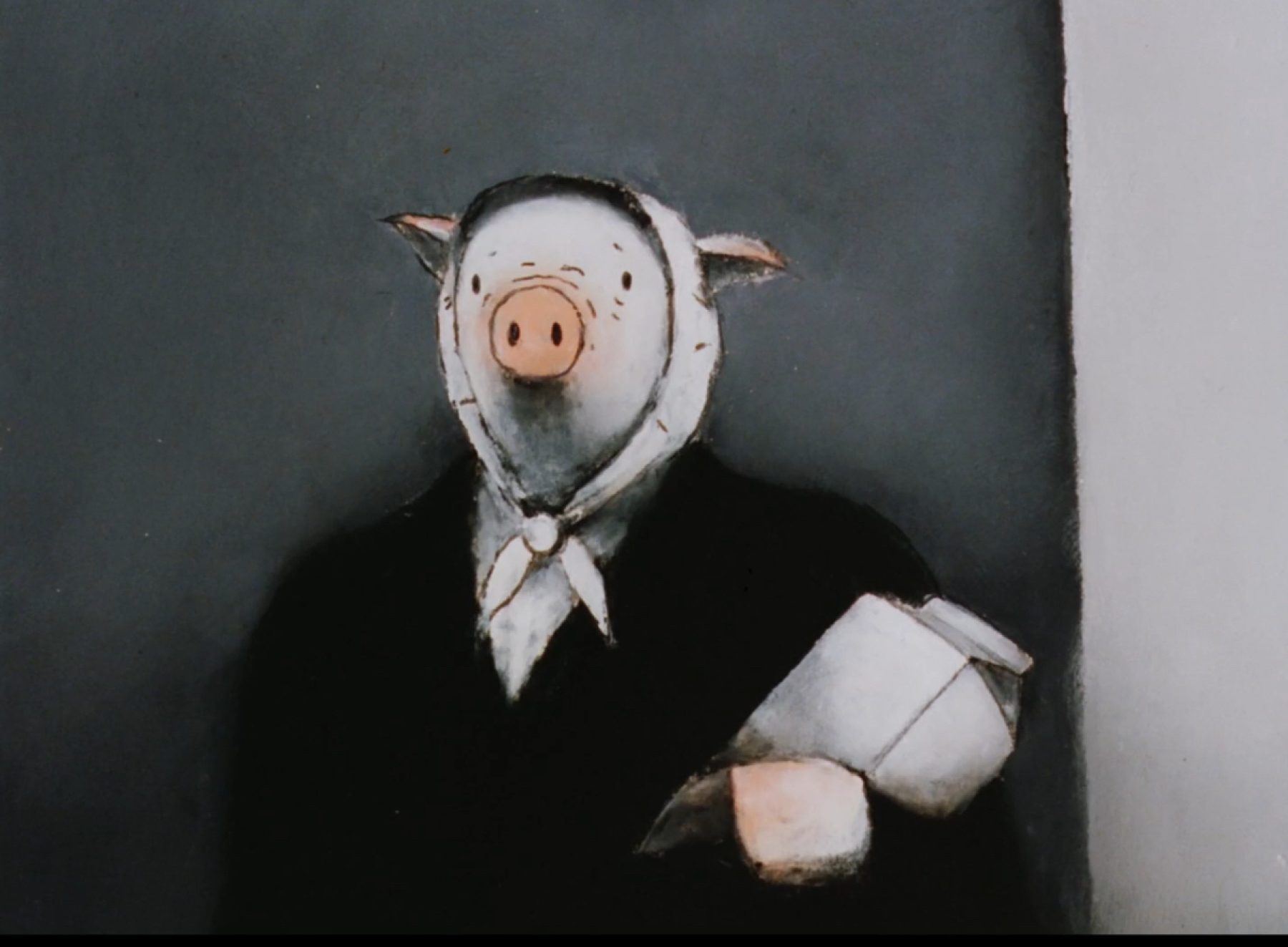
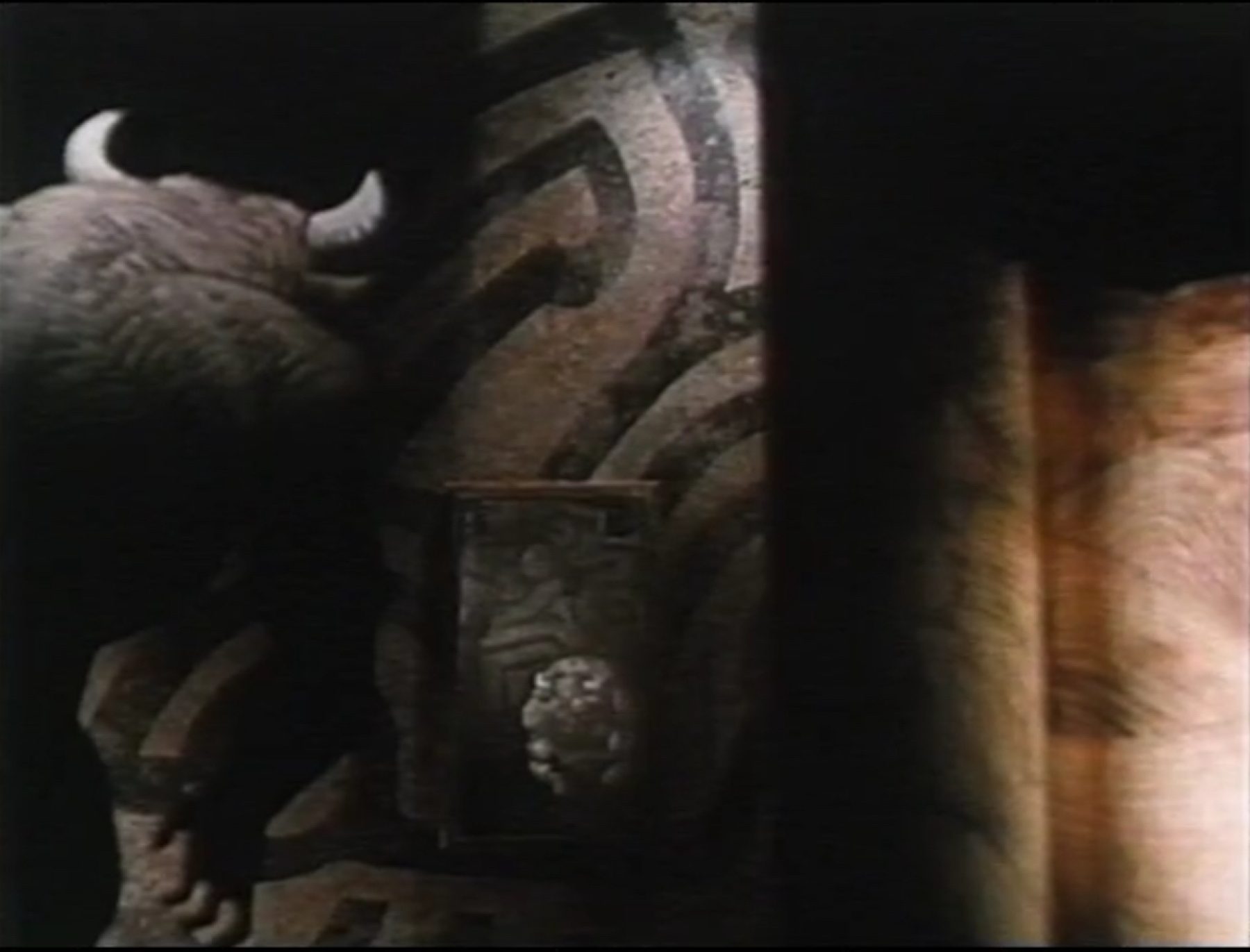
Animation – moving image that is created or mediated frame-by-frame – is a famously (and sometimes fetishistically) laborious, time-intensive process. It demands our undivided attention.
This exhibition and associated screenings showcase work by Harvard students, faculty and visiting artists. Animation at Harvard started with a focus on materials, and the hand-made has always been a strong strand of student work, alongside some classes in newer approaches including VR and coding.
The birth of animation at Harvard goes back to the opening of the Carpenter Center in 1963. Former director Robert Gardner engaged John and Faith Hubley as teachers, the first in a long line of distinguished animators to teach at Harvard. In the mid-1960s, Derek Lamb, via the Film Board of Canada in Montreal, taught and mentored Caroline Leaf and Eli Noyes, both pioneers in their field. Subsequent faculty in animation have included Jan Lenica, George Griffin, Mary Beams, Frank Mouris, David Anderson, Dennis Pies, Janet Perlman, Suzan Pitt, Caroline Leaf, Piotr Dumala, Steven Subotnick, Wendy Tilby, Simon Pummell, and Andreas Hykade.
Animation tends to be a condensed art form, using metamorphosis and metaphor to collide and expand meaning. In this way it resembles poetry. It is a way of expressing and communicating invisible, abstract ideas, allowing us to analyze and deconstruct time and to understand movement as both a liquid flow and a sequence of distinct infinitesimals. While only a few students specialize in animation for their final thesis work, a wide range of students take one or two animation classes during their time at Harvard. Students are encouraged to use the particular demands and rewards of animation to develop and visualize their ideas in any discipline.
This exhibition is organized by Ruth Lingford, Senior Lecturer on Art, Film, and Visual Studies.
About
Ruth Lingford has been making short animated films since studying fine art and art history at Middlesex (1987–1990) and animation at the MA level at the Royal College of Art (1990–92). Her films have been broadcast by Channel 4 in the UK, and have won many awards all over the world. She taught in the MA animation program at the Royal College of Art and at the National Film and Television School. Her films are made using 2D digital techniques, often combining drawing and treated live footage. She is known for making “feelbad films” which use the seductive medium of animation to draw the audience in and take them to uncomfortable places. The Old Fools (2002, 6 min.) is a film of a poem by Philip Larkin, voiced by Bob Geldof. The film looks with a mixture of fear, disgust, and compassion at senile decay and the inevitability of death. An Eye for an Eye (2002, 5 min., 30 sec.), codirected with the Shynola collective, is a music video for UNKLE. An epic and multi-layered fantasy, it has been acclaimed variously as an anti-war film, a psychoanalytic exploration of infantile oral aggression, and a cool pop promo. Pleasures of War (1998, 11 min.) is a retelling of the Biblical story of Judith and Holofernes, and explores female aggression and the links between war and sexual desire. It was devised in collaboration with the novelist Sara Maitland, and was featured as one of the 150 Best Films Ever Made in Film: The Critic’s Choice, edited by Geoff Andrew. Death and the Mother (1997, 11 min.) is based on a Hans Christian Andersen story, and invites the audience to contemplate the things that are worse than death. What She Wants (1994, 4 min.) is a film about sex and shopping, the social deployment of sexuality, and capitalism in detumescence. She animated sequences for the film Secrecy by Peter Galison and Robb Moss, which premiered at Sundance Film Festival in 2008, and for the award-winning documentary We Still Live Here, directed by Anne Makepeace. She was the recipient of a 2008–09 Harvard Film Study Center Fellowship for Little Deaths, a short animated film using recorded interviews, which has won awards at three international festivals and been shown in over 40 festivals and theaters around the world. Recently she has worked on documentaries for PBS and NBC. In Summer 2017, she completed Trump Dreams, a short film based on dreams about Donald Trump collected from 2016-2017.
Material
No-Slop_Gallery-Guide.pdf
View related public programs
Archive
Explore more of our rich history through our archive.