This exhibition is on view from October 1 to December 13, 2026.
Knowledge Is Myth: Chimeric Continuities
Knowledge Is Myth: Chimeric Continuities
October 1—December 13, 2026
Knowledge Is Myth: Chimeric Continuities features works by four artists and collectives Enzo Camacho & Ami Lien, Candice Lin, Cole Lu, and AYDO (Ayoung Yu & Nicholas Oh) that complicate the binaries of mythology and knowledge, and their constructs. The title Knowledge Is Myth plays off the phrase “knowledge is power,” popularized by Sir Francis Bacon in the late sixteenth century at the height of the European Enlightenment, globalization, and religious conflict. Drawing from diasporic as well as chimeric and hybrid subjectivities, these works reconfigure colonial hierarchies of being that separate human and nonhuman realms, while embracing what decolonial writers Walter Mignolo and Catherine E. Walsh describe as an ecology of knowledge informed by non-Western epistemologies,[1] carried through myths and the power of storytelling.[2]
Enzo Camacho & Ami Lien explore mythologies of truth, reason, and the common good as instruments of democracy, empire, and colonialism, highlighting agrarian resistance and postcolonial ecological legacies. waves move bile (2020), their pulsating light installation sculpted from foraged organic material, recreates a female chimeric folklore spirit (ahp) that haunts the region once known as French Indochina. Though traditionally a figure of otherness and suspicion, the artist duo embraces her as an uncanny spirit for understanding postcolonial and diasporic conditions of fracture and survival. Candice Lin’s multimedium work interrogates histories of science, colonialism, and diaspora by challenging socially constructed ideas of gender, sexuality, and autonomy. Lin’s series of works on paper from her 2015 exhibition, You are a spacious fluid sac, draws inspiration from an eclectic range of sources, including parasitic insects and scientist Lynn Margulis’s theory on coevolution, to critique Western notions of autonomy and power. The works reimagine obsolete models of science to disrupt assumed categories of classification, while suggesting possible knowledges within new interspecies relationships. Cole Lu combines pyrography (drawing by fire), mythological storytelling, and autobiographical narrative to examine trans identity and longing. Lu examines established social hierarchies and their myth-making origins, such as Western folklore, where monsters are misunderstood, feared, and eternally othered from humans. In a new site-specific installation, the artist reimagines what it means to become monstrous, or more-than-human, throughout time as well as modes of display. Ayoung Yu and Nicholas Oh investigate chimeric, folkloric, and shamanic traditions through performance video and ceramic installations. Their new large-scale ceramic fountains and video work Fermented Dreams (2026) center pre-colonial Korean performance rituals across eco-political and spiritual narratives across contested sites, such as the Korean DMZ, Jeju Island, Busan, U.S.–Mexico borderlands, and Hokkaido.
Knowledge Is Myth: Chimeric Continuities reflects on a paradoxical turn in history, when the very dualisms of knowledge and mythology break down: while modern myths that have justified colonial conceptions of the “human” versus “nonhuman,” the “primitive” and “subhuman,” and the “other” as knowledge are upturned, time-honored mythologies come to the fore that help us understand more vital ways of being in the world. A new wave of posthumanism draws upon such reciprocal and biocentric worldviews, or knowledges of “nature” that do not ostracize the spiritual or social. As critical humanities scholar Zakiyyah Iman Jackson asks in her seminal book Becoming Human (2020), what does it mean to be homo-narrans, storytelling human, more than just homo-sapiens, thinking and reasoning human? Both bios and mythos?[3] What does it mean to “know” but also to “not know”? With such questions in mind, Knowledge Is Myth also reflects on the practice of art as being radically irreducible to our “knowledge society,” where knowledge functions in service of social stratification, capital, and empire building, rather than as forms of open-ended inquiry.[4]
Situated within the context of a research institution that maintains the official motto veritas, Latin for “truth”, this exhibition draws on a selection of rare books, manuscripts, charts, and artworks across the university’s collections—from zoologist and physician Louis Agassiz’s research on polygenism, arts and sciences and museum display from the eighteenth-century, to ritual objects imbued with premodern cosmologies. Further text contributions from scholars and curators from Harvard and beyond, annotate an institutional archive of both epistemological and mythological proportions.
This exhibition is organized by Danni Shen, Senior Curatorial & Public Programs Assistant
Funding is provided by the Harvard University Committee on the Arts (HUCA) with additional support from the Recharge Foundation Fund for Contemporary Art. Generous support for Carpenter Center programming is provided by the Friends of the Carpenter Center. Special thanks to the Harvard Art Museums, Harvard-Yenching Library, Countway Library’s Center for the History of Medicine at Harvard Medical School, and the Harvard Fine Arts Library. Thank you to 47 Canal, New York and Francois Ghebaly Gallery, Los Angeles.
[1] Walter D. Mignolo and Catherine E. Walsh, On Decoloniality, “Epistemology: ‘World sense projected into storytelling and argument, coded, in every culture and/or civilization, as knowledge.’”
[2] Walter D. Mignolo and Catherine E. Walsh, On Decoloniality: Concepts, Analytics, Praxis (Durham, NC: Duke University Press, 2018), p. 167.
[3] Zakiyyah Iman Jackson, Becoming Human: Matter and Meaning in an Antiblack World (New York: New York University Press, 2020), p. 34.
[4] Tom Holert, Knowledge Beside Itself: Contemporary Art's Epistemic Politics (Berlin: Sternberg Press, 2018), p. 24.
About the Artists
Enzo Camacho & Ami Lien are artists, writers, and activists from the Philippines and the US, respectively. They have had solo exhibitions at MoMA PS1, New York; Glasgow Gallery of Modern Art; Center for Contemporary Art Berlin; Para Site, Hong Kong; 47 Canal, New York; and Green Papaya Art Projects, Quezon City, Philippines. They have been included in group exhibitions at Tai Kwun Contemporary, Hong Kong; Asia Pacific Triennial, Queensland Art Gallery, Brisbane; New Museum Triennial, New York; Manifesta 13, Marseille; Drawing Center, New York; Kuandu Museum of Fine Arts, Taipei; the Brunei Gallery, SOAS University of London; NTU Center for Contemporary Art, Singapore; UCCA Center for Contemporary Art, Beijing; and Green Papaya Art Projects, Manila. They are currently exhibiting at the 2026 Whitney Biennial, New York.
AYDO was founded in 2020 by artists Ayoung Yu and Nicholas Oh in New York; the multidisciplinary, collaborative artist duo centers their practice on explorations of cultural inheritance, colonial histories, and eco-spirituality. AYDO has exhibited and performed at venues including: The Pacific Asia Museum, University of Southern California, CA; Bauhaus Museum Weimar, Germany; Stedelijk Museum Schiedam, The Netherlands; The Shed, NY; Bronx Museum of the Arts, NY; Apex Art, NY; Cantor Art Center, Stanford University, CA; Museum of Art and Design, NY; Canal Projects, NY; AHL Foundation, NY; The Immigrant Artist Biennial, NY; among others. AYDO has been awarded artist residencies at Bemis Center for Contemporary Art, Art Omi, Skaftfell Art Center, Recess Art, Sculpture Space, Catwalk Institute, and Dongguk University (South Korea).
Candice Lin is an interdisciplinary artist who works with installation, drawing, video, and living materials and processes, such as mold, mushrooms, bacteria, fermentation, and stains. Lin has had recent solo exhibitions at Whitechapel Gallery, London; Jameel Arts Center, Dubai; Talbot Rice Gallery, Edinburgh, Scotland; Canal Projects, New York; Spike Island, Bristol, UK; Walker Art Center, Minneapolis; and Guangdong Times Museum, Guangzhou, China. Lin’s work was included in the 59th Venice Biennale, The Milk of Dreams, Prospect.5 Triennial Yesterday We Said Tomorrow, and both the 13th and 14th Gwangju Biennales. She is the recipient of the 2024 Ruth Award, the 2023 Arnoldo Pomodoro Sculpture Prize, a 2022 Gold Art Prize, and a 2019 Joan Mitchell Foundation Award, among numerous other recognitions. Candice Lin lives and works in Los Angeles. She is an Associate Professor of Art at the University of California Los Angeles.
Cole Lu lives and works in New York. Working across sculpture, installation, drawing, and writing, Lu’s practice explores myth, memory, and the architectures of displacement. His work engages material translation through wood burning, fire, linen, copper, found objects, and concrete, materializing poetics of survival, orientation, and coded refusal. Language operates as text and texture, carving lexicons into matter and myth into structure. Lu presented the solo project The Engineers at the 2024 Bangkok Art Biennale. His solo exhibitions include at Herald St, London; the Institute of Contemporary Art at MECA, Portland; and the Contemporary Art Museum St. Louis. Recent and forthcoming exhibitions include at the Museum of Contemporary Art Tokyo; the University of Applied Arts Vienna; Aranya Art Center, Qinhuangdao; Bortolami, New York; Kunsthal N, Copenhagen; and Nova Contemporary, Bangkok.
Material
Extended Wall Labels
Material
Interinstitutional Loan Checklist
View related public programs
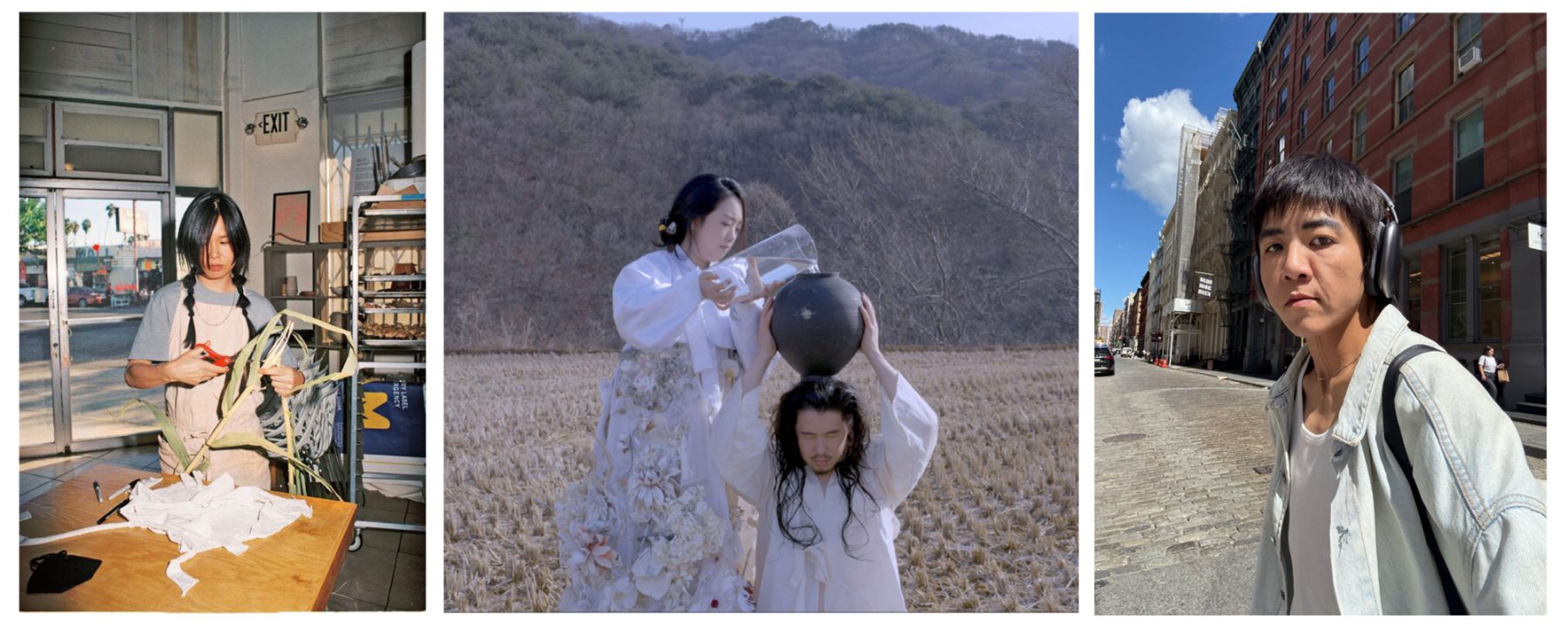
Artist Talk and Opening Reception for Knowledge Is Myth: Chimeric Continuities
October 1–October 2, 2026
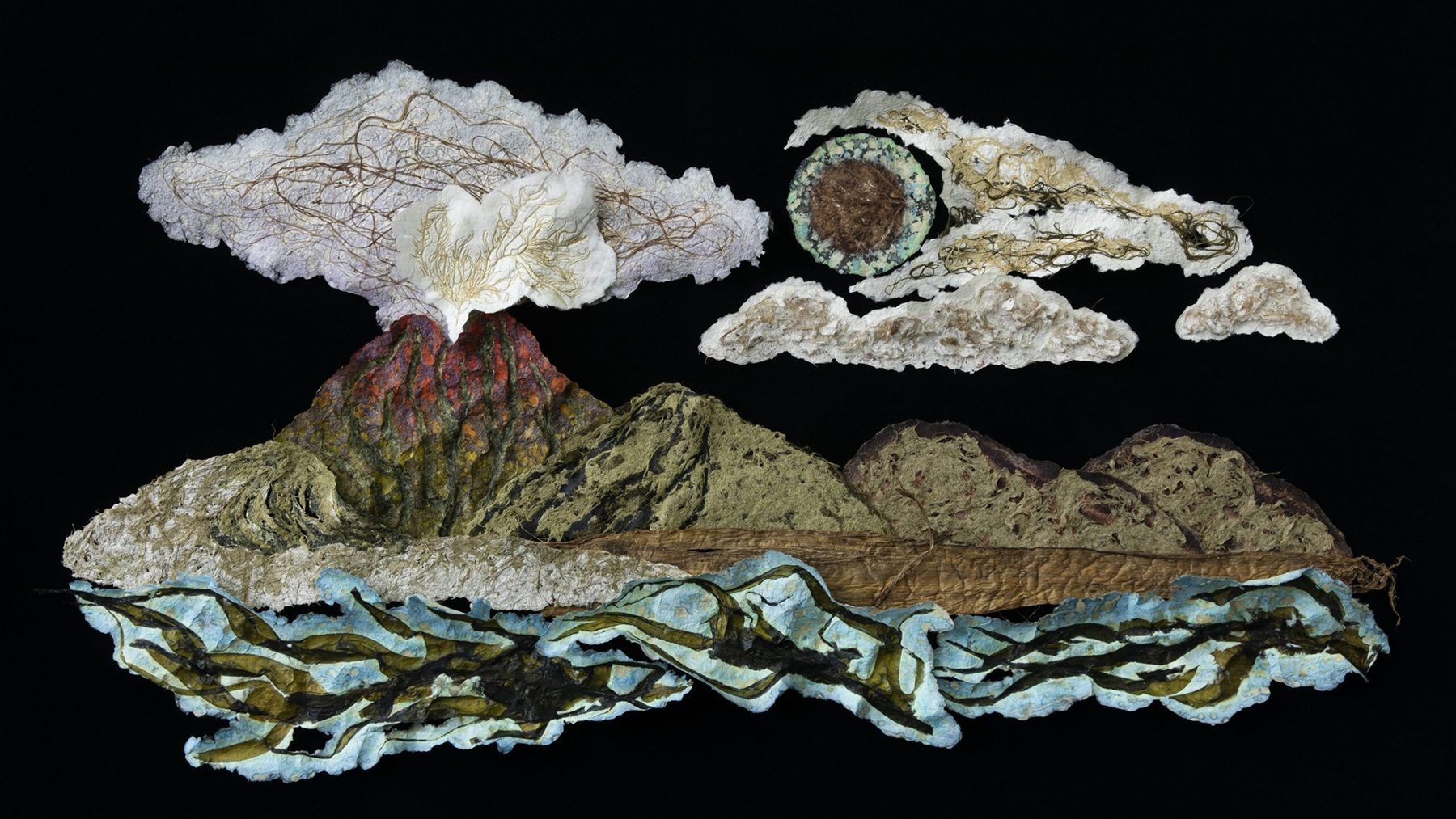
Multi-Site Exhibition Tours with Curators Ally Cirelli and Danni Shen
October 28–December 9, 2026
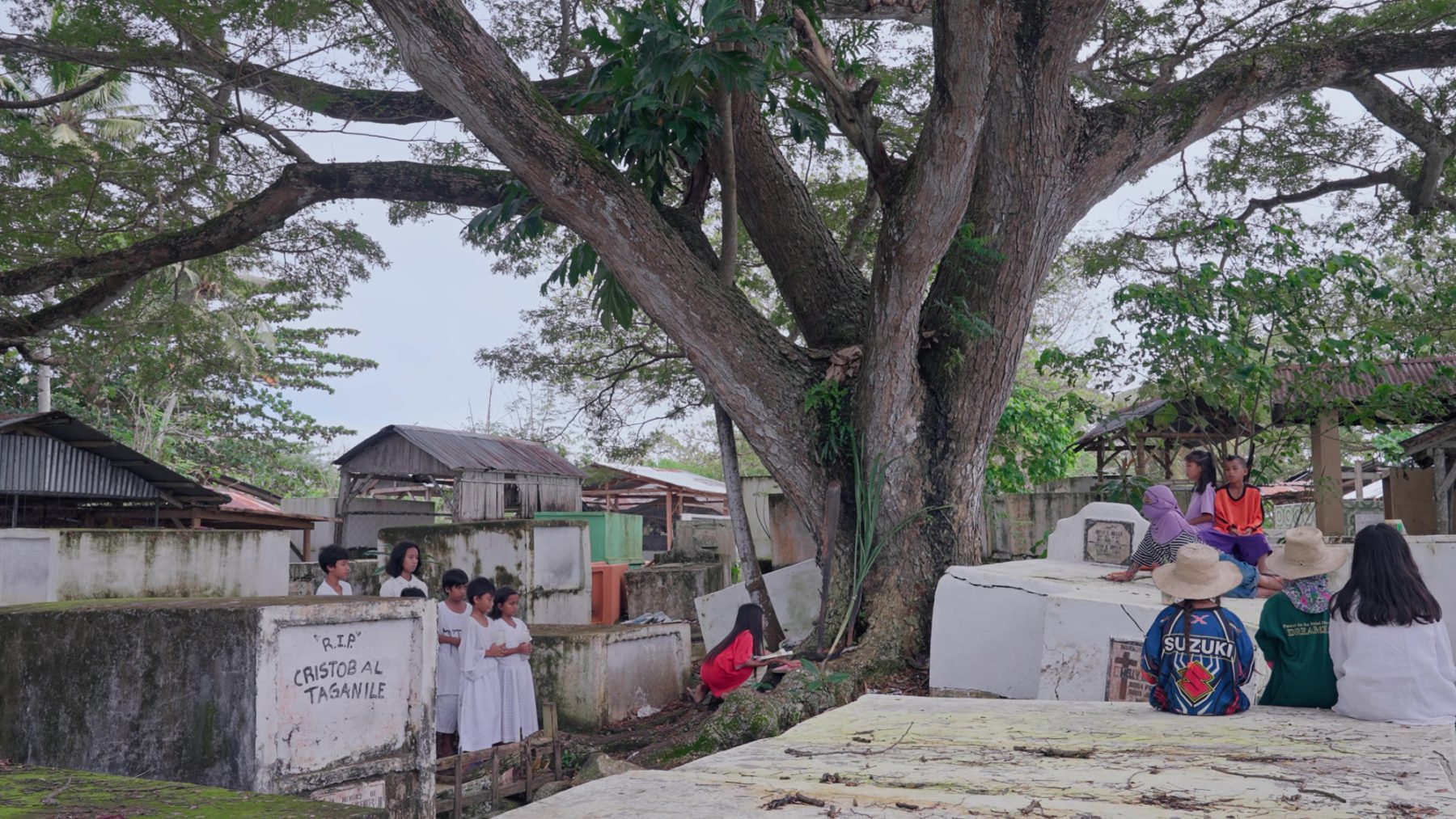
Screening and Artist Conversation with Artists Enzo Camacho & Ami Lien
November 5–November 6, 2026
Archive
Explore more of our rich history through our archive.